• KGS/USD = 0.01144 0%
  • KZT/USD = 0.00200 0%
  • TJS/USD = 0.10475 -0.19%
  • UZS/USD = 0.00008 0%
  • TMT/USD = 0.28490 0%
  • KGS/USD = 0.01144 0%
  • KZT/USD = 0.00200 0%
  • TJS/USD = 0.10475 -0.19%
  • UZS/USD = 0.00008 0%
  • TMT/USD = 0.28490 0%
  • KGS/USD = 0.01144 0%
  • KZT/USD = 0.00200 0%
  • TJS/USD = 0.10475 -0.19%
  • UZS/USD = 0.00008 0%
  • TMT/USD = 0.28490 0%
  • KGS/USD = 0.01144 0%
  • KZT/USD = 0.00200 0%
  • TJS/USD = 0.10475 -0.19%
  • UZS/USD = 0.00008 0%
  • TMT/USD = 0.28490 0%
  • KGS/USD = 0.01144 0%
  • KZT/USD = 0.00200 0%
  • TJS/USD = 0.10475 -0.19%
  • UZS/USD = 0.00008 0%
  • TMT/USD = 0.28490 0%
  • KGS/USD = 0.01144 0%
  • KZT/USD = 0.00200 0%
  • TJS/USD = 0.10475 -0.19%
  • UZS/USD = 0.00008 0%
  • TMT/USD = 0.28490 0%
  • KGS/USD = 0.01144 0%
  • KZT/USD = 0.00200 0%
  • TJS/USD = 0.10475 -0.19%
  • UZS/USD = 0.00008 0%
  • TMT/USD = 0.28490 0%
  • KGS/USD = 0.01144 0%
  • KZT/USD = 0.00200 0%
  • TJS/USD = 0.10475 -0.19%
  • UZS/USD = 0.00008 0%
  • TMT/USD = 0.28490 0%

Viewing results 1 - 6 of 14

On the Eve of Valentine’s Day: Customs of Love and Marriage in Central Asia

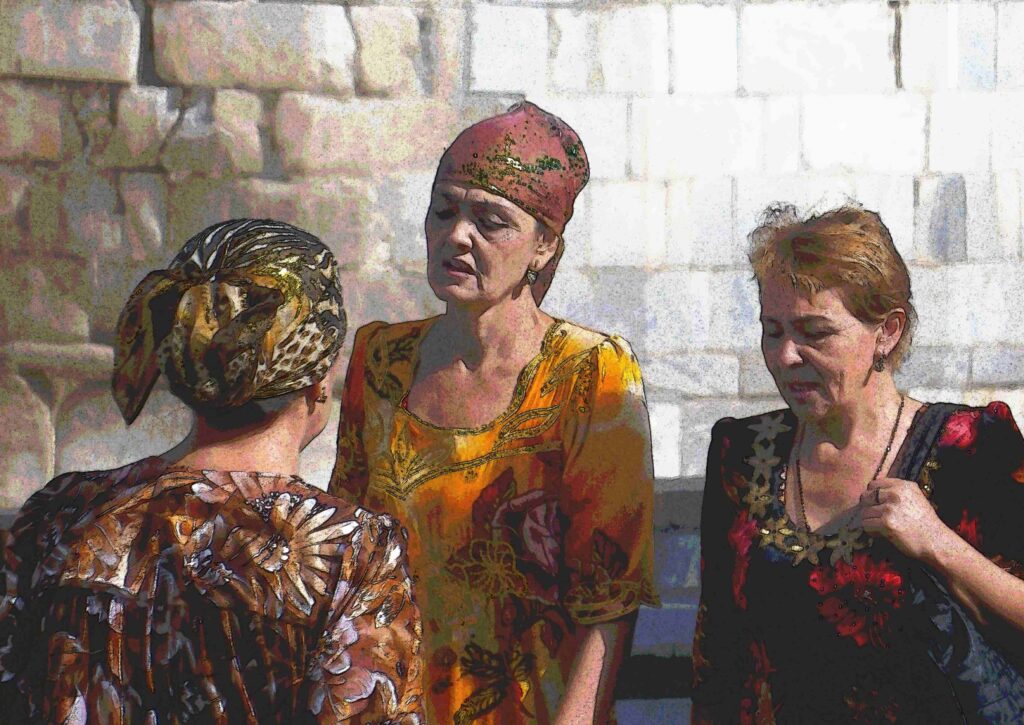
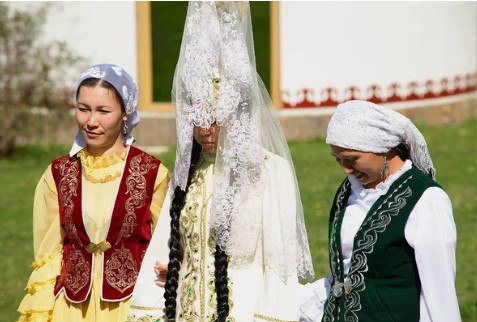
On the eve of Valentine’s Day, Central Asia is once again debating whether to celebrate the holiday or regard it as a symbol of foreign influence. Yet the region has its own rich and diverse customs related to love, matchmaking, and marriage. Accusations of Alien Influence and “Corruption” Valentine’s Day, like Halloween, spread to the former Soviet republics after the collapse of the USSR. In the first decades, young people embraced the new holidays. In recent years, however, critics have increasingly argued that commemorating a Catholic saint in a format centered on romantic love contradicts the traditions of the region’s peoples. For example, in Kazakhstan last year, deputies of the Mazhilis, the lower house of parliament, sharply criticized Valentine’s Day. Some deputies argued that it corrupts young people, promotes “free love,” and even carries “homosexual overtones.”  It is worth noting that Kazakhstan recently adopted legislation prohibiting so-called “propaganda of non-traditional sexual relations.” The Spiritual Administration of Muslims of Kazakhstan has also stated that Valentine’s Day promotes alien values and encourages promiscuity. Gratitude for Raising a Daughter Many matchmaking and marriage customs remain common across Central Asia, particularly the significant role of the bride’s and groom’s parents in ceremonies and celebrations. While traditions have evolved, many are still practiced in modern engagements and weddings. The well-known custom of paying bride price, kalym, has been preserved, though it has undergone significant change. Today, kalym varies depending on the wealth of the families. It may include apartments or cars, or it may amount to several hundred dollars. Importantly, kalym is now generally regarded as financial support for the young family and, as a rule, remains at the disposal of the bride and groom. Historically, in Kazakhstan and Kyrgyzstan, kalym was paid in livestock, and wedding celebrations could last more than a month.  One of the main Kazakh wedding rituals is the groom’s visit to the bride’s village or, in modern practice, her home. Before his first visit, the groom sends gifts to the bride’s family, known as Ilu,  an expression of gratitude for raising their daughter. In some regions of Kazakhstan, this ritual is called ana suty (“mother’s milk payment”). In the past, it included horses, camels, sheep, and riding equipment for the bride’s father. Today, it may consist of any valuable gift, and jewelry is often presented to the women in the bride’s family. The bride traditionally gives the groom a scarf as a symbol of her purity. Festivities then begin, with singing and dancing. Kazakh traditions often involve two weddings: one at the bride’s home and one at the groom’s. The bride’s farewell from her family home remains especially significant, reflecting her relatives’ wishes for her future life. Today, this ceremony is often held in a restaurant. The bride does not wear a white wedding dress at the farewell celebration but appears in an elegant outfit and a traditional headdress known as a saukele. During the farewell, the groom and his friends are subjected to playful pranks, for which they must...

East Kazakhstan Falconry Festival Brings Together Guardians of Steppe Traditions

The fifth International Falconry Festival was held this month in East Kazakhstan, bringing together falconry masters and custodians of ancient culture from seven countries. A Festival That Brings the Steppe to Life Traditionally held in Ulan district near the village of Bozanbay, the event, also known as Shygys Salburyny, drew more than 100 participants, including falconers and cultural figures from Kazakhstan, as well as guests from Spain, Hungary, Russia, Mongolia, China, and Kyrgyzstan. [caption id="attachment_37948" align="aligncenter" width="1280"] @TCA[/caption] Shygys Salburyny is a celebration of nomadic civilization, where customs and crafts are revived, ancestral songs are sung, ancient rituals performed, and golden eagles once again soar over the steppe. Every gesture of the participants reflects respect for the past, for the harmony between humans and nature, and for the spirit that nurtures strength and nobility. 'Berkutchi' and Golden Eagles: Guardians of the Sky and Steppe For as long as the Kazakh steppe has existed, golden eagles have ruled its skies. Revered for their strength and freedom, their cries louder than the wind, their flight graceful over mountains and rivers, the birds inspired the development of sayat, the art of hunting with birds of prey. From this tradition emerged the berkutchi, a unique brotherhood of falconers. A berkutchi is more than a hunter. He understands nature’s rhythm, reads the wind’s breath, and senses his bird’s mood. The bond between falconer and eagle cannot be imposed; it must be earned. Historically, hunting with golden eagles was a matter of survival, especially in the harsh winter months when eagles provided both meat and feathers for warmth. Over time, sayat evolved into a symbol of spiritual strength, courage, and reverence for nature. A true berkutchi was revered like a batyr, a warrior, respected for his calm, fairness, and poise. [caption id="attachment_37950" align="aligncenter" width="1280"] @TCA[/caption] Training a young eagle is an intricate art, requiring patience and reverence. Eaglets are taken from the nest and slowly trained to accept the falconer’s hand and voice. Trust is built gradually, as the bird learns to recognize and respond to its handler. Every detail is vital from hand movements to shadows on the ground. Before a hunt, the falconer dons an iyanga (sturdy glove) and fits a tomaga (leather hood) on the bird’s head to block light until the moment of release. A whispered prayer to the spirits of the steppe precedes the flight, reminding all that hunting is not conquest, but a respectful exchange with nature. Sayat Today The sayat tradition endures in many parts of Kazakhstan, but East Kazakhstan remains its heartland. “Not every bird flies in immediately,” said Daniyar Nurbek, chief judge of the festival, speaking to The Times of Central Asia. “What matters isn’t force, but mutual understanding. There must be a deep, almost spiritual bond between hunter and eagle, it cannot be commanded, only nurtured.” [caption id="attachment_37951" align="aligncenter" width="600"] @TCA[/caption] Youngsters and Masters The festival welcomed both seasoned falconers and novices. Among them, seven-year-old Abdurashid Mamyrkhan drew particular attention. His father, Mamyrkhan Manayuly, explained that...

Kyrgyzstan Hosts Inaugural World Festival of Traditional Culture and Music “Rukh Sanat”

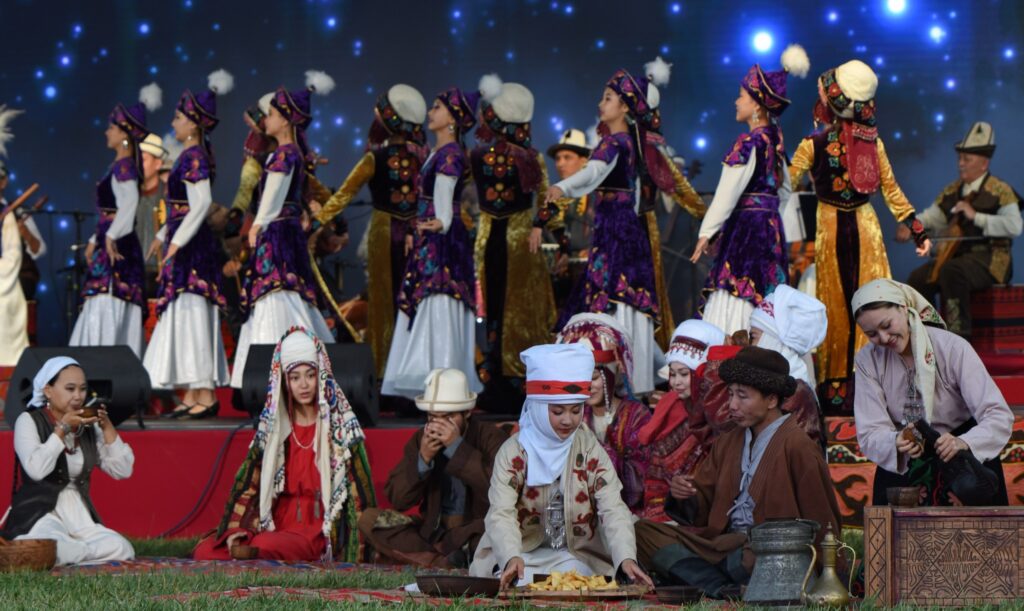
From August 1-3, the cultural and ethnographic complex Rukh Ordo, on the shores of Lake Issyk-Kul, hosted Kyrgyzstan’s first World Festival of Traditional Culture and Music, Rukh Sanat. The event brought together more than 130 performers, researchers, and artisans from 37 countries. The festival opened with a parade of participants and a theatrical ceremony celebrating nomadic traditions and harmony with nature. Kyrgyz Minister of Culture, Information and Youth Policy Mirbek Mambetaliev described Rukh Sanat as “a new cultural doctrine” where tradition “sounds, lives, and interacts.” [caption id="attachment_34893" align="aligncenter" width="2560"] Image: TCA/Maria Malinovskaya[/caption] [caption id="attachment_34892" align="aligncenter" width="2560"] Image: TCA/Maria Malinovskaya[/caption] The program included an International Competition of Oral-Professional Musical Art, featuring 82 soloists and ensembles from 14 countries. The Grand Prix was awarded to the Kyrgyz ensemble Akak, while laureates included performers from Kazakhstan, Uzbekistan, Russia, South Korea, and India. [caption id="attachment_34895" align="aligncenter" width="2560"] Image: TCA/Maria Malinovskaya[/caption] [caption id="attachment_34896" align="aligncenter" width="2560"] Image: TCA/Maria Malinovskaya[/caption] Alongside the performances, the International Council for Traditional Music and Dance (ICTMD) held a symposium attended by more than 100 scholars from 40 countries, addressing the preservation and transformation of intangible cultural heritage. The festival concluded on August 3 with a gala concert of laureates. Deputy Chairman of the Cabinet of Ministers Edil Baisalov announced that the next Rukh Sanat will be held in Kyrgyzstan’s Jalal-Abad region in 2027. [caption id="attachment_34897" align="aligncenter" width="2560"] Image: TCA/Maria Malinovskaya[/caption] [caption id="attachment_34898" align="aligncenter" width="2560"] Image: TCA/Maria Malinovskaya[/caption] Organizers see the festival as an important step toward strengthening Central Asia’s cultural presence on the global stage.

How Kazakhstan Revives National Traditions Through Cinema

At a recent press screening of the Kazakhstani fantasy comedy All on Mosles: Battle of the Generations, the audience laughed, applauded and, perhaps most tellingly, relived childhood memories. Some even left wanting to play asyki again. The film’s creators achieved what seemed nearly impossible: they transformed an almost forgotten traditional game into a vibrant cinematic adventure appealing to both adults and children. The Times of Central Asia spoke with the film's authors, Yerken Gubashev, Yerkebulan Bekturov, and Mikhail Ulanov, about how the project came to life, the challenges they encountered, and why asyk atu is more than just a game. Now showing across Kazakhstan, the film centers on asyk atu, an ancient game where players aim to knock opponents’ asyk (ram’s knuckle bones) from a designated area using a special, often weighted and decorated, throwing asyk known as a sak. Popular across Soviet Kazakhstan until the 1990s, the game has since been revived by cultural activists. Today, asyk atu is included on UNESCO's Representative List of the Intangible Cultural Heritage of Humanity. [caption id="attachment_30806" align="aligncenter" width="797"] Image: TCA, Askar Kubaizhanov[/caption] TCA: Tell us about your film. How did the idea come about? Yerken Gubashev: I was really the initiator of the whole project. I co-wrote the script, co-produced the film, and played one of the lead roles. But more than that, it was my dream to bring asyki back and turn them into something grand. Watching my son and his friends sitting on the street, absorbed in their phones, was tough. When we were kids, asyki was real life. We played for hours, competing, learning dexterity, patience, and respect. I started imagining a world where asyki was the number one sport, with world championships and a whole culture surrounding it. I shared the idea with Yerkebulan and Mikhail, and we couldn’t stop. Mikhail Ulanov: We began to imagine: What if asyks could fly? What if each player had a unique technique? What if one could come to life or transform into a weapon? From this, a fantastical world emerged, rooted in tradition but filled with comedy, fantasy, and even superhero parody. Yerkebulan Bekturov: We shaped the film to resonate with modern youth: short, dynamic scenes, sharp transitions, and vivid visuals. Yet it tells a complete story. We believe it will appeal not just to Kazakhstani audiences but also internationally. There are lots of nods to Hollywood, The Gentlemen, Kill Bill, and others, which helps bridge cultures. TCA: The film isn’t just entertainment, is it? Is there a cultural mission here? Yerken Gubashev: Absolutely. Our goal is to bring asyki back to the playgrounds so kids share, compete, and step away from social media. More broadly, it's about reconnecting with our roots. Kazakh traditional culture is rich but underrepresented in cinemas. Importantly, asyki isn’t only Kazakh, it’s a Turkic game played by Uzbeks, Kyrgyz, Bashkirs, Tatars, Yakuts, and even in the Caucasus. It’s a vast cultural universe that unites Turkic peoples. Today, even the U.S., Norway, and Finland have national teams. A...

Celebrating Global Family Day: Honoring Uzbek and Kazakh Traditions That Unite Generations

Every year, January 1 marks Global Family Day, an idea first introduced in 1997, when the United Nations launched the International Decade for the Culture of Peace and Non-Violence for the Children of the World. By 1999, the had UN invited its members to dedicate the first day of the year to developing strategies for peace, and since then this day has been observed annually as a reminder of the role families play in fostering a peaceful and compassionate world. This year, The Times of Central Asia takes a closer look at family customs in Uzbekistan and Kazakhstan, nations where family values are deeply woven into the fabric of life. In Uzbekistan, family is at the heart of society. Respect for elders and care for the young are not just taught — they are lived and celebrated daily. Parents and children share close relationships, turning to one another for advice and support. [caption id="attachment_27179" align="aligncenter" width="1217"] Chimildiq canopy; image: Facebook Discover Kashkadarya[/caption] Traditions add a rich layer to these connections, keeping families united. Weddings, for example, are deeply symbolic. One notable custom is the Chimildiq, a ceremonial canopy for newlyweds which marks the start of their life together and serves as a space for blessings and well-wishes for their future. Another beloved tradition is the Beshik tuyi, a joyous celebration of a baby’s first cradle wherein relatives and neighbors come together to share in the happiness of welcoming a new life, underscoring the communal nature of Uzbek culture. “As an Uzbek woman, I’ve always been fascinated by the beauty and meaning behind our customs,” Rohila Mullayeva told TCA. The mother-in-law to three brides, for more than 20 years Mullayeva has been serving as a kayvoni, one appointed by women to preside over table work at weddings and other ceremonies. “They’re not just rituals but expressions of love, respect, and hope for the future,” she said. “Take Chimildiq, for instance - a special moment for young couples starting their journey together. One of the rituals in the ceremony is when the bride and groom give each other honey on their fingers. This is a sweet symbol of the joyful moments they hope to share in their life ahead. Another part of the ceremony is both meaningful and playful — when the groom attaches boiled eggs his bride’s dress. This gesture is a heartfelt wish for the couple to have many children. “Then there’s the Beshik tuyi, the cradle ceremony, which is one of the most cherished traditions in our culture. When a bride gives birth to her first child, she is honored in a beautiful custom called Sallabandon, which is part of Beshik tuyi. An elderly grandmother, someone respected for having a big family, places a salla, a headdress wrapped in a special cloth, on the bride’s head,” Mullayeva explained. “During this ceremony, a kurpacha — a soft, colorful quilt — is placed under the bride’s feet, a gesture of respect and care. The meaning behind Sallabandon is deeply symbolic; it...

Exploring Uzbekistan’s Cultural Tapestry – Trio Fadolín’s From Near and Far in NYC

Earlier this month, the Library for the Performing Arts at Manhattan’s Lincoln Center resonated with the vibrant sounds of From Near and Far, a new musical project by the New York-based ensemble Trio Fadolín. The performance, part of the New York Public Library’s cultural programming, captivated audiences with its rich exploration of Uzbek musical traditions and beyond. Suspense, melancholy, and drama were interwoven with personal stories shared by Ljova (Lev Zhurbin), a member of the ensemble and virtuoso of the fadolín — a one-of-a-kind string instrument custom-made for him — blending the tonal depth of the violin, viola, and cello. The program featured compositions by Ljova, Uzbek composer Dmitry Yanov-Yanovsky, and Ljova’s father, the renowned Soviet-era composer Alexander Zhurbin. Adding a poignant layer to the evening, Alexander Zhurbin attended the concert in person, providing a tangible connection to the ensemble’s exploration of cultural and familial roots. [embed]https://www.youtube.com/watch?v=guMv_IRHstg[/embed] Alexander Zhurbin, 1985 Much of Ljova’s career has been dedicated to uncovering and performing music from underrepresented regions, introducing audiences to sounds often unfamiliar in the West. Born in Moscow, he immigrated to New York in 1990 with his parents, quickly immersing himself in the city’s multicultural and musical landscape. As a composer, arranger, and bandleader for his ensemble, Ljova and the Kontraband, he has collaborated with globally acclaimed groups including the Yo-Yo Ma-founded Silkroad Ensemble (now called Silkroad). Ljova’s work defies boundaries, blending Eastern and Western influences to honor and innovate musical traditions. The trio's members — Ljova, violinist Sabina Torosjan (born in Estonia), and cellist Valeriya Sholokhova (born in Ukraine) — found a shared connection to Uzbekistan through their personal histories, which became the foundation for From Near and Far. TCA spoke with the trio about their musical and familial ties to Uzbekistan.   TCA: Can you share how your personal histories connect you to Uzbekistan? Ljova: My father, Alexander Zhurbin, wrote the Soviet Union's first rock opera, Orpheus and Eurydice, in 1975. It played in stadiums and was in the Guinness Book of Records as the longest-running musical in Russia. He was born in Tashkent and lived there until his mid-20s when he moved to Leningrad — now St. Petersburg — to study, and then to Moscow to work as a composer in film, TV, musicals, and the concert stage. Sabina: Just like many people from the former Soviet Union, I have a mixed background. I grew up in Estonia. My mother’s side of the family was Ukrainian Jews and my father’s side was Armenian. The interesting connection to Uzbekistan is that it is where my father was born. His father was sent to work there as a veterinarian at the time, in Biruni, Uzbekistan. But shortly after my father was born, his family returned to Yerevan. Valeriya: My grandfather’s family sought refuge there during World War II and survived those difficult years in Uzbekistan. However, they returned to Ukraine as soon as they were able. There are pictures of my grandfather as a child wearing an Uzbek tyubeteyka, and...