• KGS/USD = 0.01144 0%
  • KZT/USD = 0.00200 0%
  • TJS/USD = 0.10475 -0.19%
  • UZS/USD = 0.00008 0%
  • TMT/USD = 0.28571 0.28%
  • KGS/USD = 0.01144 0%
  • KZT/USD = 0.00200 0%
  • TJS/USD = 0.10475 -0.19%
  • UZS/USD = 0.00008 0%
  • TMT/USD = 0.28571 0.28%
  • KGS/USD = 0.01144 0%
  • KZT/USD = 0.00200 0%
  • TJS/USD = 0.10475 -0.19%
  • UZS/USD = 0.00008 0%
  • TMT/USD = 0.28571 0.28%
  • KGS/USD = 0.01144 0%
  • KZT/USD = 0.00200 0%
  • TJS/USD = 0.10475 -0.19%
  • UZS/USD = 0.00008 0%
  • TMT/USD = 0.28571 0.28%
  • KGS/USD = 0.01144 0%
  • KZT/USD = 0.00200 0%
  • TJS/USD = 0.10475 -0.19%
  • UZS/USD = 0.00008 0%
  • TMT/USD = 0.28571 0.28%
  • KGS/USD = 0.01144 0%
  • KZT/USD = 0.00200 0%
  • TJS/USD = 0.10475 -0.19%
  • UZS/USD = 0.00008 0%
  • TMT/USD = 0.28571 0.28%
  • KGS/USD = 0.01144 0%
  • KZT/USD = 0.00200 0%
  • TJS/USD = 0.10475 -0.19%
  • UZS/USD = 0.00008 0%
  • TMT/USD = 0.28571 0.28%
  • KGS/USD = 0.01144 0%
  • KZT/USD = 0.00200 0%
  • TJS/USD = 0.10475 -0.19%
  • UZS/USD = 0.00008 0%
  • TMT/USD = 0.28571 0.28%

Viewing results 1 - 6 of 14

How Christmas is Celebrated in Central Asia

In predominantly Islamic countries, celebrating Christian Christmas reflects a spirit of tolerance and peaceful coexistence. On December 25, people of all backgrounds are welcome to join the celebrations. Catholics and Protestants are minority Christian groups in Central Asia. Catholicism was introduced to the region as early as the 12th century, but Christianity was eradicated during the Timurid era and later revived under the Russian Empire. Today, Catholics and Protestants in the region are largely descendants of German and Polish immigrants, as well as employees of foreign embassies and international companies. Kazakhstan In Kazakhstan, unlike Orthodox Christmas on January 7, December 25 is not a public holiday. There are no large-scale national festivities, but many Kazakhstani people extend warm greetings to their Catholic neighbors. According to the 2021 census, Catholics account for 0.57% of the population (about 19,000 people) and Protestants 0.28% (approximately 9,500) within a total Christian population of over three million​. Despite the small number of adherents, festive services are held in major cities. The Church of the Holy Trinity in Almaty hosts Midnight Mass and other celebrations, and St. Joseph's Church in Astana also offers services. Both cities organize organ music concerts that attract many non-Catholic attendees. Other cities, including Karaganda, Atyrau, Pavlodar, Petropavlovsk, Kostanai, and Ust-Kamenogorsk, also have Catholic parishes​. Kazakhstan’s Catholic communities observe traditions that appeal to many, regardless of religion. Christmas fairs, nativity scenes, and festive dishes such as roasted goose, ducks, pies, and Christmas cookies add to the celebrations. Carols and children’s theatrical performances are also a highlight. Christmas services are conducted in Russian, Polish, and English, reflecting the region’s diversity​. Kyrgyzstan Catholic communities in Kyrgyzstan are notably multi-ethnic. At the Roman Catholic parish of St. Michael the Archangel in Bishkek, attendees include professionals and students from India, Pakistan, and other nations. According to estimates, the Catholic population in Kyrgyzstan is approximately 1,500, with numbers growing due to newcomers​. A unique tradition in Kyrgyzstan is the preparation of twelve fasting dishes on Christmas Eve, symbolizing the months of the year and the twelve apostles. This tradition marks the end of the four-week Advent fast and the beginning of the festive mass on the evening of December 24​. Tajikistan, Turkmenistan, and Uzbekistan The Catholic community in Tajikistan is small, numbering about 100, mostly foreigners. The two parishes in the country include one in Dushanbe, while missionaries manage a kindergarten at a correctional labor colony in Nurek. In Turkmenistan, the congregation in Ashgabat is also small, with Christmas services conducted in Russian, English, and Turkmen​. In Uzbekistan, Christmas celebrations are held in Tashkent and Samarkand, with services occasionally conducted in Korean. The Catholic communities in these countries, while small, maintain vibrant celebrations, with Protestants and some Orthodox Christians also participating​. A Time for Unity and Celebration In Central Asia, Protestant and Orthodox Christians often join Catholic Christmas celebrations. The festivities on December 25, featuring Santa Claus and other traditions, mark the beginning of winter holidays and are cherished by people of all faiths.
Kazakh Rituals Included in UNESCO’s Intangible Cultural Heritage List

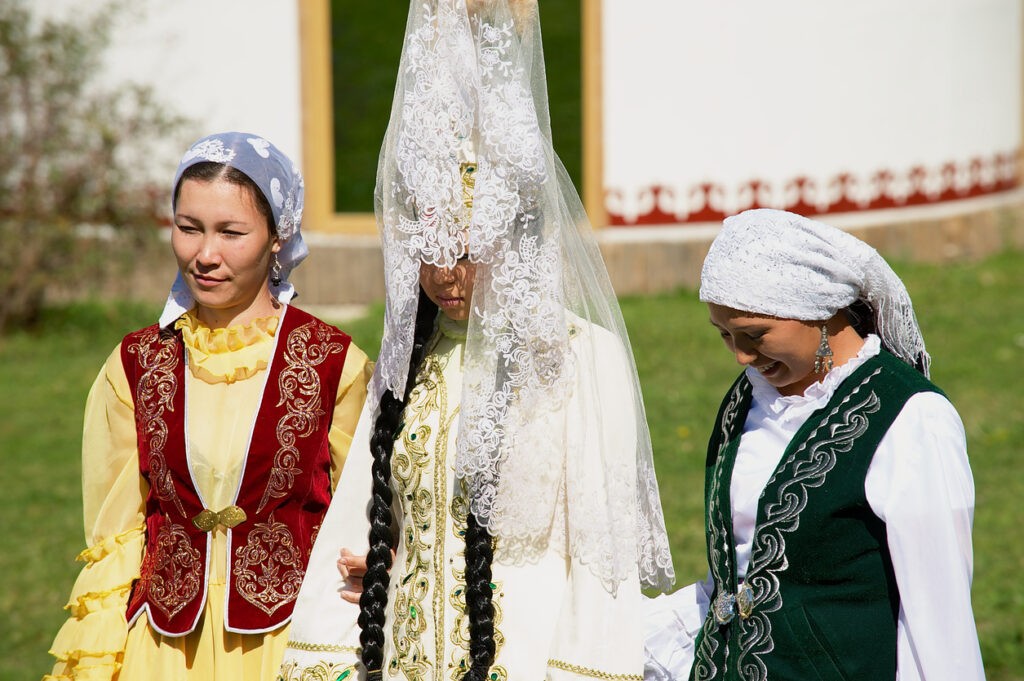
The Kazakh wedding ritual of Betashar has been officially recognized by UNESCO as part of the Representative List of the Intangible Cultural Heritage of Humanity. This inclusion highlights the enduring beauty and cultural significance of Kazakhstan's ancient traditions. In this article, we explore the Betashar ritual, other celebrated customs, and the challenges posed by certain archaic practices in modern times. Betashar: Revealing the Bride's Face During the UNESCO Committee for the Safeguarding of the Intangible Cultural Heritage meeting in Asunción, Paraguay, Betashar was officially added to the list of intangible cultural heritage. State Counselor Yerlan Karin announced the decision, which underscores Kazakhstan's commitment to preserving its rich cultural legacy. Kazakhstan ratified UNESCO’s Convention for the Safeguarding of the Intangible Cultural Heritage in 2011, pledging to protect and promote cultural traditions. Today, 13 Kazakh practices are on UNESCO’s list, including kiiz үi (yurt), kүi (instrumental music), aitys (improvised poetry duels), Nauryz (spring festival), kүres (wrestling), and togyzkymalak (a traditional board game). Betashar—literally "revealing the face"—is a wedding rite introducing the bride to her husband's family. Historically, the bride spent three days secluded with the women of her community before being ceremonially presented to her new family. Her face, hidden under a large cloth, was uncovered in front of the gathered relatives while a zhirshy (singer-improviser) performed the betashar zhyry, a song introducing the family members. In return, they pledged gifts to the couple. The ritual concluded with the bride serving tea to her in-laws. While modern weddings often simplify Betashar, its symbolic meaning remains deeply cherished. Preserving Other Traditions Another ritual presented to UNESCO is Salburyn, an ancient hunting custom. Hunters once gathered on horseback for multi-day expeditions, accompanied by falcons and hounds. These hunts began with feasts and competitions, emphasizing camaraderie and skill. Today, while hunting is less necessary, Salburyn is celebrated as part of cultural events, such as during the Nauryz festivities in Kyzylorda region. The custom of Tusau Kesu—cutting a child’s “fetters”—is a joyous milestone in Kazakh culture. When a child begins to walk, their legs are symbolically tied with a colorful string, which is then cut by a respected relative. The ceremony includes laying out a symbolic “white path” (ak zhol), representing a prosperous future. Items such as money, a whip, a dombra, or a book are placed along the path to hint at the child’s potential destiny. Addressing Harmful Practices Not all traditions are compatible with contemporary values or legal norms. Bride kidnapping, an archaic practice still occurring in some regions, has drawn criticism and calls for stricter legal measures. Mazhilis deputy Murat Abenov recently urged tougher penalties for bride abduction, highlighting gaps in the Criminal Code that leave many cases unresolved. “Many victims are coerced into claiming they went voluntarily,” Abenov explained, citing examples where cultural products like songs and videos romanticize the practice. Despite its criminalization after the October Revolution, the issue persists. In 2023, there were 13 officially recorded cases of bride abduction, though Abenov believes the real figure is higher due to...

Kumys, Beshbarmak, and Other Wonders of the Kazakh Feast

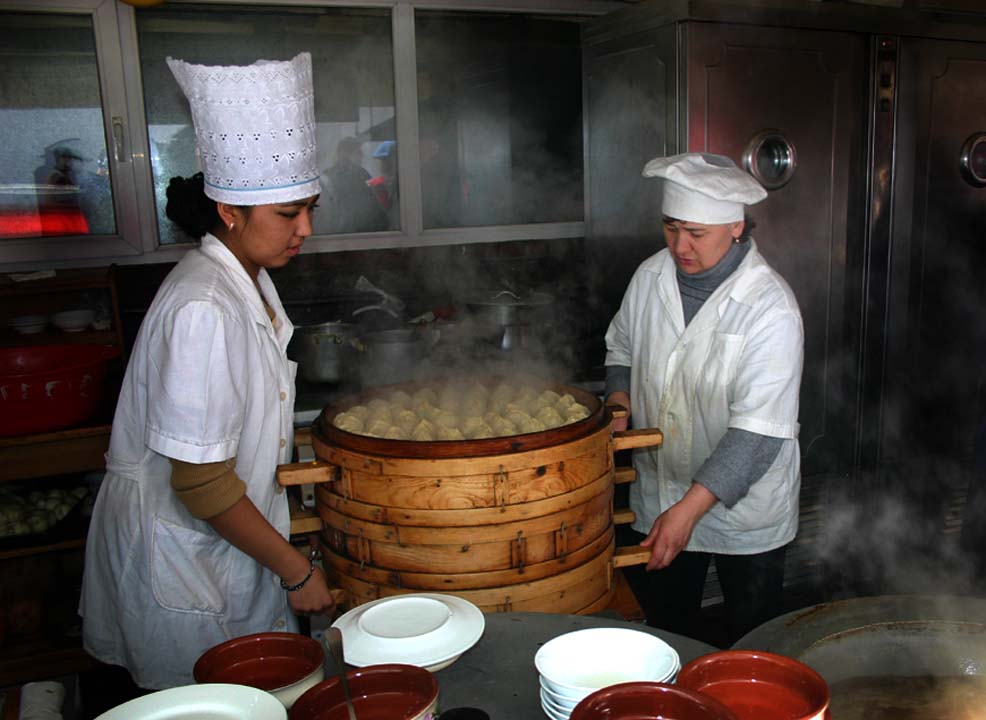
Autumn in Kazakhstan is traditionally a time of abundant treats. Today, local chefs and experts are trying to break the stereotype of Kazakhstan having a bland and unhealthy national cuisine, and are actively marketing it to foreign guests. The modern cuisine of Kazakhstan has absorbed a variety of Asian dishes, but also includes dishes from Soviet cuisine. Almost every Kazakhstani family is familiar with borscht and dumplings borrowed from Russians and Ukrainians, pilaf and samsa brought by Uzbeks, shashlik taken from the Caucasian peoples, and funchoza (Asian salad with noodles) and kuksi (cold noodle soup) adopted from Koreans. Of course, as in many parts of the former Soviet Union, Olivier salad is traditionally prepared on New Year's Eve in Kazakhstan. Turkish dishes have also become part of the daily diet in the years since independence. For example, it is impossible to imagine today's fast food without the doner kebab. International fast food, such as pizza, hamburgers, and sushi, have also become popular in big cities. Nevertheless, traditional Kazakh dishes form the basis of the country's eclectic cuisine. Beshbarmak is truly a Khan's dish. Any festive occasion is unthinkable without it, and restaurants specializing in traditional cuisine must include it in their menus. In its original version, beshbarmak is prepared from salted horse meat, including kazy, shujuk, and karta (horse intestines). Unleavened dough, potatoes, onions, and spices are also added. However, today, a variant using beef is also widespread. [caption id="attachment_25083" align="aligncenter" width="1254"] Kazakh national dish, beshbarmak; image: iStock[/caption]   Beshbarmak, like many Turkic dishes, is the subject of constant dispute between Kazakhs and Kyrgyz. The neighboring peoples will always espouse different views on the question of whom created the dish. The differences in the recipe are not very significant; in Kazakhstan, the dough is usually cut into large rhombuses, and in Kyrgyzstan, into small oblong pieces. Tatarstan and Bashkiria also lay claim to the Khan's dish. There, mutton rather than beef is most often added to horse meat. Another pillar of Kazakh cuisine is kuirdak. Each family cherishes its version of the recipe, and kuirdak must be served in any restaurant claiming to serve the national cuisine. The dish starts with cuts of mutton and organ meat, such as heart, liver, and kidneys. These cuts are fried in sheep fat alongside potatoes, onions, parsley, and spices. [caption id="attachment_25084" align="aligncenter" width="1254"] Traditional dish kuirdak; image: iStock[/caption]   Unfortunately, the most traditional Kazakh dishes are not always available to foreigners, as some can now be tasted only in villages. For example, in honor of the arrival of guests, before the main meal, guests are offered a boiled sheep's head. It is cut right at the table, and each part (ears, eyes, tongue, etc.) is served according to the status of the guests. Another dish rarely served in restaurants is baked mutton brains. Ethnographers continue to search for and re-popularize national dishes that were common before the Russian Revolution but have now virtually disappeared in cities. For example, the ritual dish Ylpershek was...

Turkmen Designers Present Their Works at an Evening of Art in Brussels

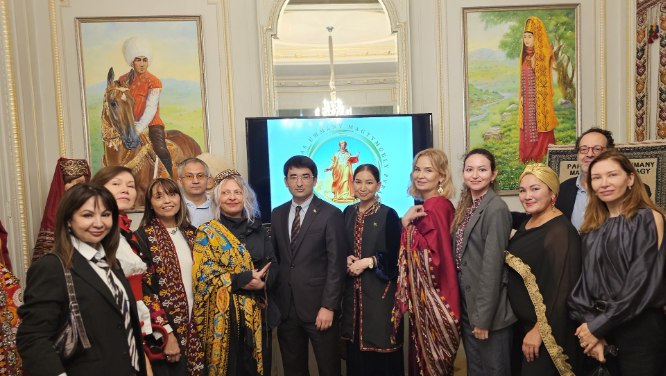
An evening dedicated to Turkmen art and traditions, organized by the Embassy of Turkmenistan within the framework of cultural exchange, was held in Brussels. The event brought together cultural sector representatives from Central Asia and Europe, including fashion and art figures. The Ambassador of Turkmenistan to Belgium, Sapar Palvanov, opened the meeting, noting that Turkmen culture is a heritage that needs to be protected and passed on to new generations. The diplomat emphasized the role of cultural diplomacy as a means of strengthening ties between peoples. “Culture has always been a neutral sphere that unites people," Palvanov stated. An essential part of the program was a speech dedicated to the 300th anniversary of the great poet, Makhtumkuli. The Ambassador spoke about how his ideas continue to inspire not only Turkmen, but people of other nations, influencing Turkmenistan's cultural ties with Europe. The evening's guests were presented with the works of talented Turkmen designers, Sheker Akiniyazova, Shemshat Tachmammedova, and Ogulbeg Berdimiradov. Their collections combined traditional elements with modern fashion. The designers also participated in the Brussels cultural program and presented at European institutions. Elena Kharitonova, founder of Caravan Cultura CreArt Agency in the Netherlands who co-organized the event emphasized the preservation of cultural values through modern projects and her support for young Turkmen designers.