• KGS/USD = 0.01144 0%
  • KZT/USD = 0.00207 0%
  • TJS/USD = 0.10419 -0.1%
  • UZS/USD = 0.00008 0%
  • TMT/USD = 0.28571 0%
  • KGS/USD = 0.01144 0%
  • KZT/USD = 0.00207 0%
  • TJS/USD = 0.10419 -0.1%
  • UZS/USD = 0.00008 0%
  • TMT/USD = 0.28571 0%
  • KGS/USD = 0.01144 0%
  • KZT/USD = 0.00207 0%
  • TJS/USD = 0.10419 -0.1%
  • UZS/USD = 0.00008 0%
  • TMT/USD = 0.28571 0%
  • KGS/USD = 0.01144 0%
  • KZT/USD = 0.00207 0%
  • TJS/USD = 0.10419 -0.1%
  • UZS/USD = 0.00008 0%
  • TMT/USD = 0.28571 0%
  • KGS/USD = 0.01144 0%
  • KZT/USD = 0.00207 0%
  • TJS/USD = 0.10419 -0.1%
  • UZS/USD = 0.00008 0%
  • TMT/USD = 0.28571 0%
  • KGS/USD = 0.01144 0%
  • KZT/USD = 0.00207 0%
  • TJS/USD = 0.10419 -0.1%
  • UZS/USD = 0.00008 0%
  • TMT/USD = 0.28571 0%
  • KGS/USD = 0.01144 0%
  • KZT/USD = 0.00207 0%
  • TJS/USD = 0.10419 -0.1%
  • UZS/USD = 0.00008 0%
  • TMT/USD = 0.28571 0%
  • KGS/USD = 0.01144 0%
  • KZT/USD = 0.00207 0%
  • TJS/USD = 0.10419 -0.1%
  • UZS/USD = 0.00008 0%
  • TMT/USD = 0.28571 0%

Viewing results 1 - 6 of 59

Kazakhstan Unveils Green Energy Transition Strategy at London Forum

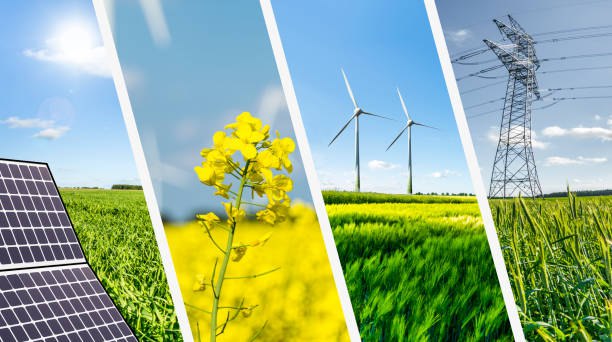
Kazakhstan aims to increase the share of renewable energy in its power mix to 50% by 2050, Deputy Minister of Energy Sanzhar Zharkeshov announced at the Future Resilience Forum in London. The international gathering brought together global policymakers, business leaders, and experts to address sustainable development and climate-related challenges. Zharkeshov stated that Kazakhstan is modernizing its energy legislation to accelerate the green transition. Measures include the introduction of transparent auctions and revised subsoil use regulations, steps that have helped reduce wind and solar tariffs and position Kazakhstan as one of Central Asia’s most attractive clean energy markets. The country currently operates 158 renewable energy facilities with a combined capacity exceeding 3 GW. By 2035, it plans to add another 8.4 GW. According to the Ministry of Energy, the national targets include reaching a 15% renewable share by 2030 and 50% by 2050. Kazakhstan’s green energy agenda focuses on two key priorities: expanding power grids to integrate renewable energy sources and deploying energy storage solutions, including pumped storage hydropower stations. Natural gas remains a strategic “transitional” fuel in Kazakhstan’s energy mix, offering stability while contributing to emissions reductions. The government is actively expanding gasification across regions, converting coal-fired thermal power plants to gas, and upgrading storage and transport infrastructure. Zharkeshov noted that Kazakhstan remains a reliable energy supplier and a responsible participant in the global energy system. The country supplies about 13 percent of the European Union’s oil imports and is working with Azerbaijan and Uzbekistan to develop alternative export routes across the Caspian Sea. “The global energy sector is undergoing a transformation driven by emission reduction policies and the shift to low-carbon sources. Kazakhstan is pursuing a balanced approach, reducing greenhouse gas emissions while maintaining energy security,” he said. He added that despite global economic challenges, Kazakhstan’s energy sector continues to show resilience and is attracting strong interest from international investors. As previously reported by The Times of Central Asia, Kazakhstan also plans to construct several nuclear power plants, including a joint project with China National Nuclear Corporation (CNNC).

Is TAPI Just ‘TA’ for Now?

The idea for the 1,800-kilometer Turkmenistan-Afghanistan-Pakistan-India (TAPI) natural gas pipeline project has been around for 30 years. There has not been much progress in building the pipeline during those decades. The chances of seeing TAPI realized seem far away at the moment, considering Pakistan and India were involved in fighting in May of this year, and in October, there were battles along the Pakistan-Afghanistan border. However, Turkmenistan and Afghanistan are still interested in TAPI, and top officials from those two countries just met along the border to inaugurate a new section of the pipeline, and it looks like, for now, these two countries are enough. Another Ceremony Gurbanguly Berdimuhamedov, the chairman of Turkmenistan’s Halk Maslahaty (People’s Council), went to the Turkmen-Afghan border on October 20 to meet with Afghanistan’s Deputy Prime Minister for Economic Affairs, Mullah Abdul Ghani Baradar, for an event inaugurating a new section of TAPI. The ceremony for the Serhetabat-Herat section of TAPI took place just inside Afghanistan, not far from where top officials from the four countries involved, including Berdimuhamedov, gathered in February 2018 to launch construction of the Afghan section of TAPI. Berdimuhamedov made his only previous visit to Afghanistan during that ceremony, when he, the Afghan president, Pakistani prime minister, and Indian minister for state and external affairs, briefly flew to Herat to continue celebrations marking the launch. The location of the October 20 inauguration was also not far from the Islim Chesme border crossing, where Berdimuhamedov met with Afghan officials in September 2024 to again launch construction of the Afghan section of TAPI. Baradar and Berdimuhamedov spoke about the project’s importance in fostering greater regional cooperation, the economic benefits of which include creating jobs and providing energy to areas that greatly need it. Similar remarks were made by Berdimuhamedov and others at previous TAPI launches. Work did finally start after the 2024 launch. Afghanistan’s Tolo News reported that according to the country’s Ministry of Mines and Petroleum, 14 kilometers of the pipe have been laid, and 70 more kilometers of the route are set for pipeline installation. Turkmen state media always refers to Berdimuhamedov as “Arkadag,” which means “protector” in the Turkmen language. According to Turkmen state media, the Serhetabat-Herat section of the pipeline is called “Arkadagyn Ak Yoly,” or “Arkadag’s White Road.” Tolo News also reported that, “Recently, a large quantity of gas transmission pipes was imported from Turkmenistan into Afghanistan.“ It appears the Serhetabat-Herat section of TAPI is making progress, but it could be years before the pipeline goes any farther. A More Modest Goal For nearly the entire history of the TAPI project, the major obstacle to actually building the pipeline was the security problem inside Afghanistan. That problem is not over, but it is significantly reduced now that the Taliban are again imposing brutal control over the country. Military conflicts in recent months between Pakistan and both the other partners in the TAPI project shine a spotlight on another problem that has always raised questions about the viability of...

High Praise, Empty Pockets: Turkmenistan May Scrap Benefit Hikes

It seems that average Turkmen citizens will again have to find ways to ration their spending in 2026, and beyond, thanks to a proposal from a member of the country’s Council of Elders. At a session of the Halk Maslahaty (People’s Council) on September 19, Elders’ Council member Yazmyrat Atamyradov, who, in fairness, probably drew the short straw before the session started, said that socio-economic conditions in Turkmenistan have reached such a high level that there is no longer a need for cost-of-living increases for salaries, pensions, stipends, and other benefits. "You are bestowing such blessings upon our people, Hero Arkadag!” Atamyradov said in his address. “Our sons and daughters, grandchildren, and great-grandchildren go to school and work without a care in the world. A peaceful, carefree life itself is a priceless treasure and a great asset.” Most of Turkmenistan’s people likely would not agree with Atamyradov’s suggestion, but his words were meant for only one person, Halk Maslahaty Chairman Gurbanguly Berdimuhamedov, who was in attendance and thanked Atamyradov for the recommendation. Most of the effusive praise for Turkmenistan’s alleged astounding socio-economic achievements was also directed at Berdimuhamedov, who served as Turkmenistan’s president from late 2006 until March 2022, when he stepped down and his son Serdar took the helm. Changes to Turkmenistan’s constitution in early 2023 made the Halk Maslahaty chairman the highest post in the country. A Deteriorating Economy There is no basis for Atamyratov’s assertion that living conditions are improving in Turkmenistan. The suggestion to cut annual payment increases more likely means the authorities can no longer afford to continue funding cost-of-living increases. Turkmenistan has the fourth largest reserves of natural gas in the world, and in the early years after independence, in late 1991, then-President Saparmurat Niyazov forecast the country would soon become a second Kuwait and everyone would be driving Mercedes. It has not worked out like that at all. Turkmenistan has a lot of gas, but only a few customers. The steep drop in gas prices in 2015 devastated Turkmenistan’s economy, which is about 80% dependent on revenue from gas sales, and has never recovered. The first food shortages independent Turkmenistan had ever seen started in 2016. Flour, cooking oil, sugar, eggs, and other basic goods were often not available at state stores where goods are sold at a subsidized price, but have always been available at privately-owned stores and at bazaars, where the price is two or three times more expensive. Eventually, rationing was introduced on bread. Customers were limited to two and sometimes only one churek (flat, round bread) per person. In some areas, police were tasked with monitoring sales to ensure no one bought more than their allotment. Often, there were more customers than bread, and in many places, including the capital, Ashgabat, lines started forming outside state stores before the sun came up. The authorities responded by telling people to line up behind the store so they could not be seen from the street. Fast forward to 2025, where in...

Outdated Infrastructure Threatens Central Asia’s Energy Security

Central Asia’s natural gas sector is facing mounting pressure as population growth and rising consumption outpace production, SpecialEurasia reports. The region’s population now exceeds 70 million, with annual growth rates surpassing 2% in many republics. Kazakhstan, Uzbekistan, and Turkmenistan together account for more than 95% of Central Asia’s gas reserves. Combined, they hold approximately 3.5 trillion cubic meters (tcm) of proven reserves. Turkmenistan alone possesses an estimated 17 tcm, giving it the world’s fourth-largest proven gas reserves outside the Middle East and Russia. Despite these substantial reserves, aging infrastructure and insufficient investment continue to hamper production capacity. Kazakhstan produces around 59 billion cubic meters (bcm) of gas annually, Uzbekistan 45 bcm, and Turkmenistan 81 bcm. However, surging domestic demand has outstripped supply, compelling Kazakhstan and Uzbekistan to import gas from Russia, a dependency that dates back to the 1990s but is becoming increasingly fraught amid current geopolitical tensions. Much of the region’s pipeline infrastructure remains from the Soviet era and lacks the capacity to meet contemporary needs, according to SpecialEurasia. Turkmenistan remains heavily reliant on a single pipeline route to Russia, while Kazakhstan and Uzbekistan depend on Russian energy giants Gazprom and Rosneft for imports and infrastructure maintenance. Efforts to diversify export routes beyond Russia have encountered difficulties due to limited infrastructure and geopolitical uncertainty. China has emerged as a dominant player in the region, funding pipeline and transportation projects through the Belt and Road Initiative. These investments have enhanced connectivity with Chinese markets but have also increased Central Asia’s economic dependence on Beijing. Meanwhile, the European Union has advocated for green energy and digitization, though its financial commitments remain modest compared to those of Russia and China. Iran is positioning itself as a potential transit corridor, offering Central Asia access to seaports. However, international sanctions and persistent geopolitical tensions continue to limit broader cooperation. Russia’s invasion of Ukraine has further strained Moscow’s regional relationships, diminishing its capacity to provide the kind of support it once did. Central Asian governments now face the challenge of maintaining a strategic balance among Russia, China, and Western powers to ensure both economic resilience and political autonomy. SpecialEurasia concludes that without substantial investment in infrastructure, greater economic diversification, and a more balanced approach to foreign partnerships, Central Asia will remain vulnerable despite its abundant natural gas resources.

Turkmenistan’s Diplomatic Moves Amid Iran-Israel Tensions

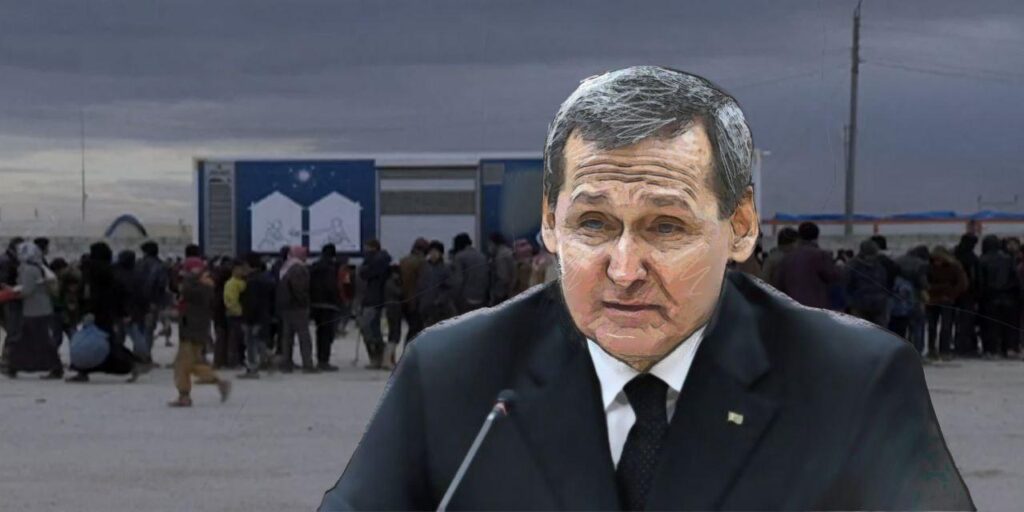
One of the elements most highlighted by the recent military confrontation between Israel and the U.S. on one side and Iran on the other is the geographical relevance of Central Asia to the situation. This is particularly true in the case of Turkmenistan, a country that shares a border of almost 1,200 kilometers with Iran. During the most intense days of the conflict, in a particularly unusual move, Turkmenistan opened its borders to foreign citizens seeking to escape from Iranian territory, which was under Israeli air strikes at the time. On the diplomatic front, there have also been several high-level meetings and talks involving Turkmenistan; just after his meeting in Moscow with Russian President Vladimir Putin, the Iranian Foreign Minister, Abbas Araghchi, travelled to Ashgabat for a meeting with his Turkmen counterpart, Rashid Meredov. The day after, Meredov had a telephone conversation with U.S. Secretary of State Marco Rubio, and Russian Foreign Minister Sergey Lavrov arrived in Ashgabat for a meeting with the Turkmen leader, Serdar Berdimuhamedov. Focusing primarily on the mutual isolation of Turkmenistan and Iran, Luca Anceschi, Professor of Eurasian Studies at the University of Glasgow, gave The Times of Central Asia his interpretation of these developments: “In my opinion, there is a fundamental issue, which is Turkmen isolation. When we see a small shift, we think that things are changing, but nothing changes. The second isolation is that of Iran, which in this case is not intentional. The reality we have seen in recent days is that Iran is isolated at the regional level. Russia has made it clear that Iran is expendable, and has not given reassuring answers. We see that there is an attempt to remedy this forced isolation on the part of Iran. To get out of these regional arrangements, they have tried to go everywhere, including Ashgabat.” Operational agreements on the energy side are certainly weighing on Tehran's desire to reassure Turkmenistan about the stability of the theocratic regime that rules Iran. These agreements are particularly useful to Iran in meeting the energy needs of the northern part of the country, which is remote and poorly connected to the south, where the country’s main natural gas fields are located. According to Temur Umarov, a Fellow at the Carnegie Russia Eurasia Center, “Since 2022, Turkmenistan's visibility in Eurasian politics has certainly increased, and this is also the result of geopolitical changes that have taken place in the region in recent years,” Umarov told TCA. “What happened in Iran further increases Ashgabat's visibility, but it was coincidental that Lavrov's visit to Turkmenistan took place during the clash between Israel and Iran, as it was part of a wider tour of the region by the Russian Foreign Minister.” Another aspect that should be considered is the change in tone on the part of Turkmen diplomacy, which at first glance appears much more assertive than in the past. A few weeks ago, Ashgabat issued a very harsh statement regarding Trump's decision to include Turkmenistan among the countries...

Central Asia and Israel, a Pragmatic Relationship That Never Truly Blossomed

The conflict between Israel and Iran is having both international and regional repercussions. The situation has been further inflamed by the U.S. bombing of several Iranian nuclear sites over the weekend, with Tehran responding by threatening retaliation on U.S. soil through the use of sleeper terrorist cells and the possible closure of the Strait of Hormuz, through which over a fifth of the world’s oil supply passes. While Israel's geographical position places it at the heart of the Middle East, Iran's location brings the Islamic Republic into close contact with Central Asia. The consequences of the conflict are therefore likely to be felt heavily in the Central Asian region. The close relations between Tehran and the capitals of Central Asia, due in part to their geographical proximity, are often highlighted. Less explored is the nature of the relationship between Tel Aviv and Central Asia and the lines along which it has developed since the dissolution of the Soviet Union. On both the Israeli and Central Asian sides, despite all the differences, relations began in the early 1990s, mainly based on certain mutual interests. From Israel's point of view, relations with Central Asia would mean expanding the circle of Muslim countries with which it had friendly ties, gaining greater influence in the region, and reducing its diplomatic isolation. From the Central Asian perspective, the appeal lay in increasing the number of its international partners, coupled with a desire to access Israeli know-how in numerous fields, and the possibility, through relations with Tel Aviv, of having a privileged channel of dialogue with the United States. More than three decades after the dissolution of the Soviet Union, relations remain good for the most part. “The positive relationship between Israel and Central Asia is driven by a combination of strategic, economic, and geopolitical factors,” Dr Zeev Levin, Coordinator of the Central Asian Research Unit at the Harry S. Truman Institute, told The Times of Central Asia. “One of the primary drivers is mutual interest in security and counterterrorism. Economically, Israel’s expertise in water management, agriculture, and technology is highly attractive to the arid, resource-seeking nations of Central Asia that aim to modernize their infrastructure and diversify their economies beyond oil and gas. Additionally, fostering ties with Israel provides a means of diversifying the foreign policy portfolios of the Central Asian republics.” This positive relationship, however, seems to have lost momentum in recent years due to several factors. Central Asian republics have increasingly oriented towards the East, moving closer to China and other players such as South Korea, Japan, and India, or towards other partners, such as the European ones, with Italy at the forefront in this regard. As Levin points out, the relation has cooled due to several factors: “Central Asian republics did look to Israel in the first decade of independence, but in the last decade to a much lesser extent, since Turkey and China are less complicated and cheaper options. For Israel, the region was never a priority or a point of...