• KGS/USD = 0.01144 0%
  • KZT/USD = 0.00216 0%
  • TJS/USD = 0.10659 0%
  • UZS/USD = 0.00008 0%
  • TMT/USD = 0.28530 0%
  • KGS/USD = 0.01144 0%
  • KZT/USD = 0.00216 0%
  • TJS/USD = 0.10659 0%
  • UZS/USD = 0.00008 0%
  • TMT/USD = 0.28530 0%
  • KGS/USD = 0.01144 0%
  • KZT/USD = 0.00216 0%
  • TJS/USD = 0.10659 0%
  • UZS/USD = 0.00008 0%
  • TMT/USD = 0.28530 0%
  • KGS/USD = 0.01144 0%
  • KZT/USD = 0.00216 0%
  • TJS/USD = 0.10659 0%
  • UZS/USD = 0.00008 0%
  • TMT/USD = 0.28530 0%
  • KGS/USD = 0.01144 0%
  • KZT/USD = 0.00216 0%
  • TJS/USD = 0.10659 0%
  • UZS/USD = 0.00008 0%
  • TMT/USD = 0.28530 0%
  • KGS/USD = 0.01144 0%
  • KZT/USD = 0.00216 0%
  • TJS/USD = 0.10659 0%
  • UZS/USD = 0.00008 0%
  • TMT/USD = 0.28530 0%
  • KGS/USD = 0.01144 0%
  • KZT/USD = 0.00216 0%
  • TJS/USD = 0.10659 0%
  • UZS/USD = 0.00008 0%
  • TMT/USD = 0.28530 0%
  • KGS/USD = 0.01144 0%
  • KZT/USD = 0.00216 0%
  • TJS/USD = 0.10659 0%
  • UZS/USD = 0.00008 0%
  • TMT/USD = 0.28530 0%

Viewing results 1 - 6 of 14

Kazakhstan Expands Kashagan Legal Fight as Arbitration and Claims Mount

For several years, Kazakhstan has been engaged in arbitration proceedings worth billions of dollars, many of which have been conducted behind closed doors. Recently, new details have emerged about one of the largest disputes, involving the North Caspian Operating Company (NCOC).  The dispute stems from environmental violations identified during a 2022 inspection at the Kashagan field. Environmental authorities found that the operator, NCOC, had stored approximately 1.2 million tons of sulfur in excess of permitted limits. As a result, the company faced a fine of around $5 billion. Kashagan is one of the largest and most technically complex offshore oil fields ever discovered, with proven hydrocarbon reserves estimated at 4.65 billion tons. The consortium includes seven major international energy companies: KazMunayGas (16.88%); Eni (16.81%); Shell (16.81%); ExxonMobil (16.81%); TotalEnergies (16.81%); CNPC (8.33%); and INPEX Ltd (7.56%). A lawsuit was filed by all consortium members except KazMunayGas, Kazakhstan’s national oil company. The field has long been central to Kazakhstan’s oil production and relations with international investors. Kazakhstan’s interests in the Kashagan dispute are represented by the Ministry of Ecology and the Ministry of Justice. According to the Vice Minister of Justice, Daniel Vaisov, a trial court has already ruled in favor of the state. “A first-instance court has ruled in Kazakhstan, recognizing the state’s position as lawful. Six contractors — excluding KazMunayGas — filed an appeal in March,” Vaisov said. NCOC challenged the environmental inspection results. In June 2023, a court in Astana partially upheld the company’s claims. However, this was overturned in February 2024, when an appellate court ruled in favor of the government, confirming the inspection’s legality. Subsequent developments have further complicated the case. In August 2025, an Astana court overturned the environmental agency’s order, citing procedural violations. The case is once again under appeal. At the same time, the contractors have challenged the $5 billion fine through international arbitration. The proceedings are set to take place in Washington at the International Centre for Settlement of Investment Disputes (ICSID), where the arbitral tribunal is currently being formed, Vaisov said. The case is being closely watched as a test of how far Kazakhstan is willing to push legal pressure on major Western energy investors. Separately, Kazakhstan is pursuing much larger claims against Kashagan consortium members under the production-sharing agreement. In May 2024, Kazakhstan’s Ministry of Energy said claims against Kashagan project developers could reach up to $150 billion. Initially, the government sought $15 billion from NCOC. It later increased its claims by a further $138 billion, citing lost profits linked to oil volumes that investors had committed to supply to the state. The Ministry of Energy has described the dispute as purely commercial, relating to Kazakhstan’s rights under the production-sharing agreement. Officials maintain that the legal proceedings do not affect the investment standing of project participants. Separately, in January last year, an economic court in Astana ordered NCOC to pay 3.5 billion KZT (about $8 million) for excessive flaring of raw gas. In addition to Kashagan, Shell is involved in...

Kazakhstan–Kashagan Dispute Heads to International Arbitration

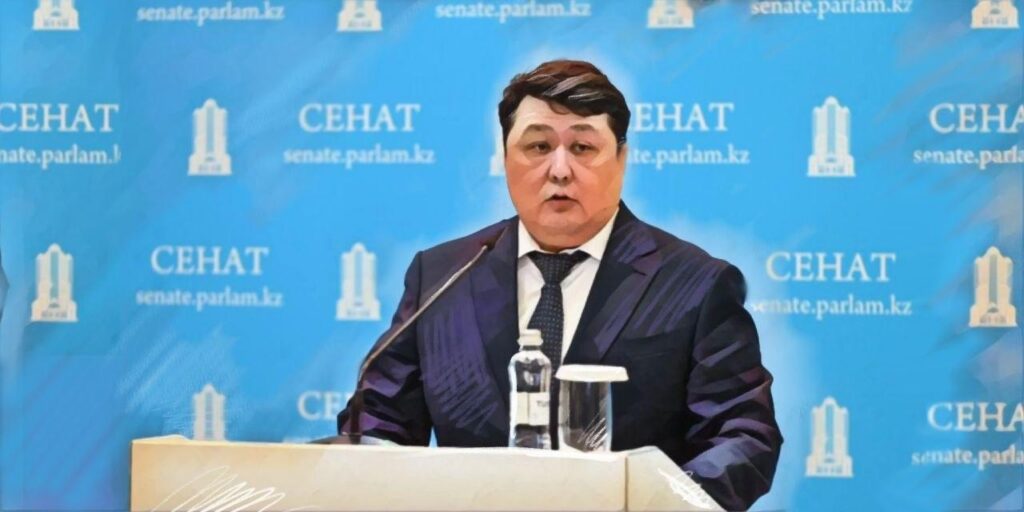
Kazakhstan’s Vice Minister of Justice, Daniel Vaisov, announced that the country’s claims over the removal of sulfur storage limits at the Kashagan field, operated by North Caspian Operating Company N.V. (NCOC), will be heard under the International Centre for Settlement of Investment Disputes framework, which is headquartered in Washington. NCOC includes Shell, TotalEnergies, Eni, ExxonMobil, CNPC, Inpex, and KazMunayGas. In March 2023, an inspection of the Kashagan consortium by Kazakhstan’s environmental authorities identified violations of environmental legislation, including the excessive storage of sulfur volumes exceeding permitted limits. The resulting claim was valued at around $5 billion, according to the authorities. A court of first instance in Kazakhstan ruled in favor of the environmental authorities, according to Vaisov. Six of the seven NCOC participants, excluding KazMunayGas, challenged the ruling in a Kazakh court in March this year. At the same time, the foreign investors initiated international arbitration proceedings. “This claim was filed under bilateral international agreements: the agreement between the Republic of Kazakhstan and the Republic of France, and the agreement between the Republic of Kazakhstan and the Kingdom of the Netherlands,” Vaisov said during a briefing. The Ministry of Justice, Ministry of Ecology, and Ministry of Energy are jointly handling the case. Kazakhstan has been steadily tightening its position in major energy projects, seeking a larger share of revenues from fields developed under production-sharing agreements signed in the 1990s. Disputes over Kashagan and Karachaganak reflect broader efforts to rebalance terms with foreign investors as production stabilizes and fiscal pressures grow. The outcome of these cases could reshape how Central Asia’s largest economy manages foreign participation in its energy sector. A separate dispute concerning project costs, reportedly exceeding $100 billion, is being handled under the framework of the Production Sharing Agreement (PSA), in line with government policy, Vaisov said. Kazakhstan maintains that under the current terms, participating oil companies receive up to 98% of revenue from oil production at Kashagan, leaving the state with comparatively limited income in the form of royalties. Astana’s claim related to this issue has been reported at approximately $160 billion. “As far as I know, an interim decision has been made regarding Karachaganak. Further work is currently underway,” Vaisov said. In January 2026, an international arbitration tribunal ruled in favor of Kazakhstan in its dispute with shareholders in the Karachaganak Oil and Gas Projects, Eni, Shell, Chevron, and Lukoil. Compensation for the shareholders’ unjustified reimbursement of expenses has yet to be determined, but experts estimate it at between $2 billion and $4 billion. Vaisov also noted that Kazakhstan has been reducing the cost of arbitration proceedings involving foreign investors. “The Ministry of Justice has managed to reduce spending on these matters each year. Since 2021, costs have been reduced by nearly threefold. At the same time, the Republic of Kazakhstan engages leading law firms for these proceedings, as contracting companies do the same,” he said.

Kashagan and Karachaganak: Will Kazakhstan’s Claims Lead to Changes in the Shareholder Structure?

The beginning of 2026 has been marked by a new round of confrontation between Kazakhstan and the international consortia developing the country’s largest oil and gas fields, North Caspian Operating Company N.V. (Kashagan) and Karachaganak Petroleum Operating B.V. (Karachaganak). Below is an overview of the current situation and the possible scenarios. Arbitration proceedings initiated in early 2023 have expanded from $16.5 billion to more than $170 billion. Over three years, Kazakhstan has secured preliminary victories on several claims, enough, in my view, to suggest that the era of foreign oil consortia dominating Kazakhstan’s strategic projects may be coming to an end. Ecology and NCOC Violations This week, Bloomberg reported in its article “Oil Majors Seek Arbitration Over $5 Billion Kazakh Sulfur Fine” that the NCOC consortium is filing in international arbitration to challenge a Kazakh court decision to collect 2.3 trillion tenge (KZT). The Bloomberg headline, however, presents the issue inaccurately. Environmental violations, including the excessive storage of approximately 1 million tons of sulfur, were identified during an inspection in March 2023, when the exchange rate stood at 451.71 KZT per $1. The rate later rose to 520-540 and currently stands at around 500 KZT per $1. According to investment forecasts, it may reach 600 KZT per $1 by the end of 2026. As a result, the dollar equivalent of the fine has decreased significantly. At the March 2023 rate, 2.3 trillion KZT amounted to approximately $5.1 billion. At 500 KZT per $1, it equals about $4.6 billion. At 600 KZT per $1, it would fall to roughly $3.8 billion, a difference of about $1.3 billion. After my earlier publications arguing that foreign consortia should be fined in foreign-currency equivalent at the exchange rate prevailing at the time of filing, the proposal was also raised in Parliament. Such an approach would be logical: the consortia export their oil and receive revenue in foreign currency, yet fines are imposed in tenge. After several rounds of appeals, the consortium lost what became the largest environmental dispute in Kazakhstan’s history, initially involving more than 20 systematic violations of environmental legislation. Correspondence between consortium members published in Western media indicated they were aware of the violations but considered remediation and compliance financially costly. NCOC’s annual revenue is approximately $10 billion. Media reports also stated that the consortium offered around $110 million, roughly 50 times less than the fine, for regional social programs in exchange for waiving environmental claims. Neither NCOC nor the Kazakh government confirmed such negotiations. In 2010-2011, similar environmental and tax claims against the Karachaganak consortium resulted in Kazakhstan receiving a 10% stake in the project. The current ownership structure of NCOC is: ENI (Italy) - 16.81% ExxonMobil (U.S.) - 16.81% CNPC (China) - 8.33% INPEX (Japan) - 7.56% TotalEnergies (France) - 16.81% Shell (UK) - 16.81% KazMunayGas (Kazakhstan) - 16.88% Total investment in Phase One of Kashagan is estimated at $60 billion. By analogy with Karachaganak, the environmental fine could hypothetically lead to an increase in Kazakhstan’s share by 5-7 percentage...

Kazakhstan vs Eni: How a Swiss Lawsuit Could Reshape the $160 Billion Kashagan Dispute

The legal landscape surrounding Kazakhstan’s energy sector has taken an unexpected turn. What began as a closed commercial arbitration dispute has now entered the public sphere in Switzerland’s courts. This marks a significant escalation in Astana’s confrontation with international oil and gas majors. According to Bloomberg, PSA LLP, a structure representing Kazakhstan’s interests in production-sharing agreements (PSAs), has significantly broadened its claims. The lawsuit now directly targets alleged schemes involving units and executives of the Italian company Eni. Kazakhstan alleges that during the early development of Kashagan infrastructure, including the Bolashak processing plant and pipeline systems, corruption and fraud may have occurred. Arbitration claims against the NCOC consortium, which includes Shell, ExxonMobil, TotalEnergies, and Eni, exceed $150 billion. Within this context, the Swiss case has become the most sensitive element. The Swiss case itself is much smaller – $15 million plus interest – and is being used to gather evidence and strengthen the larger arbitration case. While the financial stakes are high, the proceedings reflect a deeper political shift. Kazakhstan is moving away from the 1990s model of offering investors exceptional privileges. Under President Kassym-Jomart Tokayev’s “Fair Kazakhstan” policy, the state is aiming to secure more balanced and equitable cooperation with foreign partners. Distinctiveness of Swiss Proceedings The Swiss case is distinctive due to the nature of its allegations. The plaintiffs claim that during the tenure of Agip KCO (an Eni subsidiary) as project operator, contracts were awarded amid corrupt practices. Allegations include inflated prices and kickbacks to contractors. Targeting Eni is deliberate. The company led the project during its most troubled phase from 2001 to 2008. Kashagan’s budget swelled during this period, with repeated delays. Following a 2013 gas leak, production was halted for nearly three years. Kazakh officials have long linked Kashagan’s massive cost overruns and technical failures to poor procurement and mismanagement, and the current legal offensive zeroes in on alleged corrupt tenders. Cost estimates rose from a few tens of billions of dollars to around $60 billion, and by 2007, projections for total project costs had reached about $136 billion. Why Switzerland? The selection of the Swiss jurisdiction is strategic. Switzerland’s laws on corruption and financial crimes allow for the prosecution of both corporations and individual executives. Moreover, many entities connected to Kashagan’s operations are registered there. Another factor is the PSA’s stabilization clause, which forbids altering the contract’s terms. However, under international legal norms, if corruption is proven in the contract’s formation, such protections can be voided. This opens the door for Kazakhstan to challenge key financial terms of the agreement. Resource Nationalism 2.0: Legal Strategy Meets Political Logic Astana’s current posture can be described as a form of “new-generation resource nationalism.” Rather than using administrative leverage, the state is deploying legal tools to address grievances. This is driven in part by Kazakhstan’s fiscal needs, ranging from infrastructure upgrades to social spending. Amid these pressures, the vast expenditures reported by Kashagan operators have drawn public skepticism. Kazakhstan’s claims aim to re-evaluate the cost recovery model...

NCOC Wins Temporary Reprieve in Environmental Case in Kazakhstan

An Astana court has overturned a multi-billion-dollar environmental fine imposed on the North Caspian Operating Company (NCOC), the consortium developing the Kashagan oil field in Kazakhstan’s sector of the Caspian Sea. The ruling was based on procedural violations by Kazakhstan’s environmental authorities. However, the court made clear that the decision does not prevent the re-filing of claims once the procedural flaws are addressed. The NCOC consortium comprises KMG Kashagan B.V. (16.877%), Shell Kazakhstan Development B.V. (16.807%), Total EP Kazakhstan (16.807%), Agip Caspian Sea B.V. (16.807%), ExxonMobil Kazakhstan Inc. (16.807%), CNPC Kazakhstan B.V. (8.333%), and Inpex North Caspian Sea Ltd. (7.563%). In March 2023, the Ministry of Ecology and Natural Resources filed a $4.2 billion lawsuit against NCOC, based on a complaint from the Atyrau Region Department of Ecology. The agency alleged that more than 1.7 million tons of sulfur were being stored at the Kashagan site, far exceeding the 2022 legal limit of 730,000 tons. NCOC denied the allegations, stating that its sulfur production and storage practices fully complied with Kazakh legislation and international standards. In March 2025, an arbitration court ruled in favor of NCOC. The case then proceeded to the appellate level, where the Administrative Chamber of the Astana Court annulled the initial enforcement order due to violations of the Administrative Procedure Code by the environmental authorities. “It has been established that the authorized body committed violations of the Administrative Procedure Code of the Republic of Kazakhstan when issuing the order, which was the basis for overturning the contested order,” the court’s press service stated. The court emphasized that its ruling was procedural and did not address the substance of the environmental claims. “The court did not assess the validity of the conclusions of the Department of Ecology on the merits. Thus, the decision does not affect the substance of the violations identified and does not prevent the authorized body from taking further action after the procedural errors have been corrected,” the statement continued. As previously reported by The Times of Central Asia, this is not Kazakhstan’s only legal dispute with NCOC. An international arbitration case remains ongoing, in which the government is seeking $150 billion in lost profits, citing delays in the Kashagan field’s launch and the failure to meet oil delivery commitments.

Kazakhstan Likely To Insist on Revisions to Kashagan Oil Contracts

Kazakhstan is demanding compensation for lost profits from the North Caspian Operating Company (NCOC), the consortium that manages the Kashagan oil field, and arbitration claims have risen to $150 billion. Sources close to Kashagan told The Times of Central Asia that this should send the message to western energy companies that Kazakhstan is looking to revise previously signed contracts. While Bloomberg has reported the sum of the claims, citing people familiar with the matter, Kazakh government officials have declined to comment on the situation, claiming that it is a "commercial dispute." In April 2023, proceedings against the companies developing the Kashagan and Karachaganak fields began as part of a dispute over cost deductions from oil-sale proceeds of more than $13 billion and $3.5 billion, respectively. An additional $138 billion claim relates to the calculation of the cost of oil production "that was promised to the government but not delivered by the field developers," according to Bloomberg. The Ministry of Energy has not yet commented on the new claims. It states that the Kazakh authorities seek to maximize profits from their oil-production projects with the participation of foreign investors, but have been relatively flexible in previous disputes with oil corporations. International sources note that Eni, Shell, Exxon and TotalEnergies have already invested around $55 billion in Kashagan, and currently the field produces about 400,000 barrels of oil per day. NCOC investors, led by Italy's Eni, are convinced that production can be increased to 1.5 million barrels per day. NCOC has stated that it acts in strict compliance with the contract. Representatives of Eni confirmed that the Kazakh authorities have applied to the court for arbitration settlement, but did not disclose details. Earlier, Kazakhstan won a lawsuit against the Kashagan consortium which required them to pay $5.1 billion for damage to the environment. Kashagan is developed by the NCOC consortium, which includes the national company KazMunayGas (KMG) and several foreign energy companies: Eni, Shell (Great Britain), ExxonMobil (USA), Total (France), Inpex (Japan), and CNPC (China). Member of the Public Council of the Kazakh Ministry of Energy, Olzhas Baidildinov believes that the sharp increase in the amount of the lawsuit is a signal from the Kazakh side to the consortium to revise the contracts. "In my opinion, it's obvious that Kazakhstan wants to revise the terms of work on large consortia. At the same time, I have proposed many times to exchange the frozen assets of the Russian Federation for stakes in major projects: Tengiz, Karachaganak and Kashagan. There is a nuance here: for example, the shares in Karachaganak and Kashagan are managed by PSA LLP, which is determined by the authorized body, while the share in Tengiz is managed by KazMunayGas. As we see, on Kashagan and Karachaganak there are arbitration claims filed in international arbitration, there is an environmental issue - but on Tengiz they are silent for some reason. This is either KMG's unprofessionalism, because the amount of investment expense is very high, or some other unknown issues that need...