• KGS/USD = 0.01144 0%
  • KZT/USD = 0.00216 0%
  • TJS/USD = 0.10616 -0.19%
  • UZS/USD = 0.00008 0%
  • TMT/USD = 0.28530 0%
  • KGS/USD = 0.01144 0%
  • KZT/USD = 0.00216 0%
  • TJS/USD = 0.10616 -0.19%
  • UZS/USD = 0.00008 0%
  • TMT/USD = 0.28530 0%
  • KGS/USD = 0.01144 0%
  • KZT/USD = 0.00216 0%
  • TJS/USD = 0.10616 -0.19%
  • UZS/USD = 0.00008 0%
  • TMT/USD = 0.28530 0%
  • KGS/USD = 0.01144 0%
  • KZT/USD = 0.00216 0%
  • TJS/USD = 0.10616 -0.19%
  • UZS/USD = 0.00008 0%
  • TMT/USD = 0.28530 0%
  • KGS/USD = 0.01144 0%
  • KZT/USD = 0.00216 0%
  • TJS/USD = 0.10616 -0.19%
  • UZS/USD = 0.00008 0%
  • TMT/USD = 0.28530 0%
  • KGS/USD = 0.01144 0%
  • KZT/USD = 0.00216 0%
  • TJS/USD = 0.10616 -0.19%
  • UZS/USD = 0.00008 0%
  • TMT/USD = 0.28530 0%
  • KGS/USD = 0.01144 0%
  • KZT/USD = 0.00216 0%
  • TJS/USD = 0.10616 -0.19%
  • UZS/USD = 0.00008 0%
  • TMT/USD = 0.28530 0%
  • KGS/USD = 0.01144 0%
  • KZT/USD = 0.00216 0%
  • TJS/USD = 0.10616 -0.19%
  • UZS/USD = 0.00008 0%
  • TMT/USD = 0.28530 0%

Viewing results 1 - 6 of 13

Tokayev Proposes Turkestan as Venue for Middle East Peace Talks

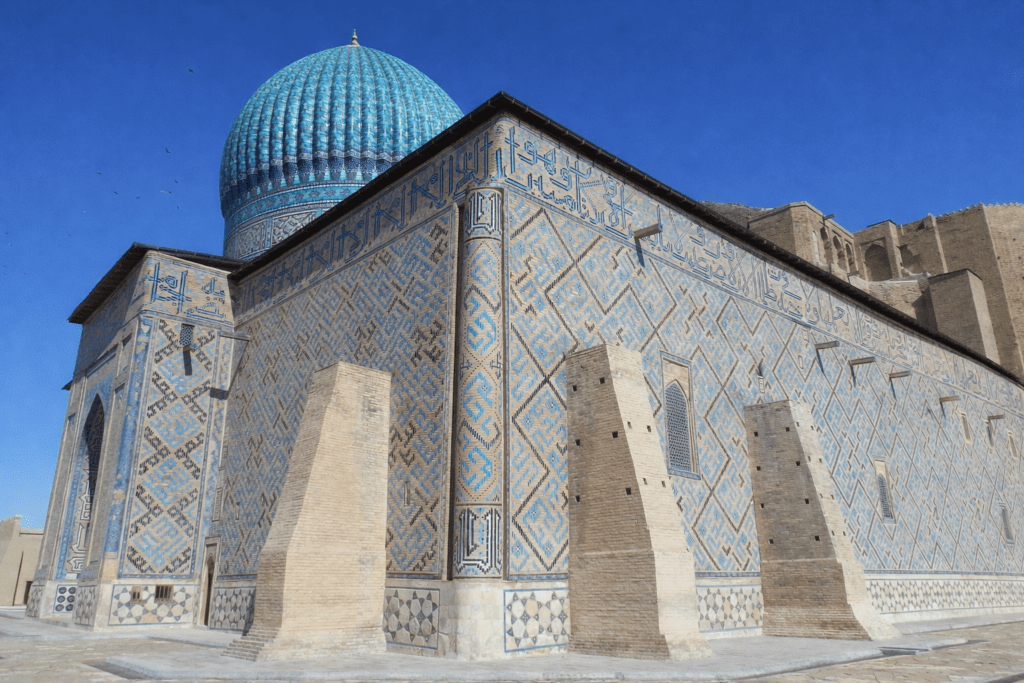
Kazakhstan’s president, Kassym-Jomart Tokayev, has called for immediate negotiations to resolve the conflict in the Middle East and proposed the city of Turkestan as a venue for talks. Tokayev made the remarks during a visit to the Turkestan region, warning that escalating conflicts worldwide, including the conflict involving Iran, the United States, and Israel, are harming global stability and trade conditions for countries not directly involved in the hostilities. He said the situation in the Middle East has reached a critical stage and that further escalation by Iran, the United States, or Israel would benefit none of the parties. “First and foremost, I call for an end to armed attacks on civilian and economic targets. Then it is necessary to sit down at the negotiating table,” Tokayev said. The president said Kazakhstan is not seeking to mediate in the conflict but is prepared to offer its territory as a neutral platform for negotiations. “I believe such a dialogue could be organized in Turkestan. This would demonstrate the goodwill of the Kazakh people,” Tokayev added, noting that the final decision depends on the parties involved. The choice of Turkestan is both geographic and symbolic. The city is regarded as one of Central Asia’s spiritual centers and an important destination for pilgrims. It is home to the mausoleum of Khoja Ahmed Yasawi, a prominent Sufi poet and thinker. The structure, commissioned in the 14th century by Amir Timur, adds historical resonance to Tokayev’s proposal and is included on the UNESCO World Heritage List. Turkestan’s historical legacy and religious significance make it a potentially neutral and symbolically meaningful setting for peace talks. The proposal also reflects Kazakhstan’s long-standing effort to position itself as a neutral diplomatic platform. Astana has previously hosted international negotiations, including talks on Syria, and has sought to build a reputation as a venue for dialogue between competing powers. Offering Turkestan, rather than the capital, reinforces both the initiative's symbolic and political neutrality. Tokayev’s proposal comes amid continued escalation in hostilities involving Iran and a U.S.-Israel coalition, which intensified in late February following exchanges of missile strikes and air attacks. For Kazakhstan and other Central Asian states, the conflict carries direct implications. Iran’s status as a Caspian littoral country raises additional security concerns for Kazakhstan’s western regions in the event of further escalation. The Times of Central Asia previously reported on disruptions to regional supply chains and transport routes. Volatility in global oil prices and the risk of disruption across Caspian-linked trade routes add further pressure, underscoring how conflicts far beyond Central Asia’s borders can quickly translate into economic and security risks for the region.

Kazakhstan Seeks to Mitigate Impact of U.S. Tariffs

Kazakhstan is working to minimize the economic damage from newly imposed U.S. tariffs, the highest levied on any Central Asian country. The government is assessing the scope of potential losses and pursuing diplomatic efforts to reverse or reduce the trade measures. A New Front in the Trade War On April 2, U.S. President Donald Trump announced sweeping new tariffs on imports from over 180 countries. Kazakhstan was subjected to a 27% tariff rate. In contrast, most other post-Soviet countries, including Uzbekistan, Kyrgyzstan, Armenia, and Tajikistan, were assigned a 10% tariff, described by the U.S. administration as the “base rate” for countries that “trade fairly” with the United States. Russia and Belarus, whose trade with the U.S. is effectively suspended due to sanctions, were exempt from the increase. Only Moldova, which reportedly imposes a 61% duty on U.S. goods, received a higher rate than Kazakhstan. According to Washington, Kazakhstan applies a 54% tariff on U.S. imports, prompting a reciprocal response, though the methodology behind the administration’s calculations has been questioned by many analysts. Moldova’s higher rate of 61% led to a 31% U.S. tariff. Limited Exposure for Key Exports U.S. President Trump announced a 90-day reprieve for affected countries on April 9, allowing time for negotiations to take place. While the move signals potential flexibility, the economic impact remains uncertain. Kazakh Trade Ministry representative Serik Ashitov stated on April 29 that only 4.8% of Kazakhstan’s exports to the U.S. would be affected by the tariffs. Crucially, major exports, such as oil, uranium, silver, and ferroalloys stand to remain untouched. These commodities account for approximately 90% of Kazakh shipments to the U.S. Despite fears of a broader economic fallout, Kazakhstan's stock market showed resilience in the first quarter of 2025, according to financial news channels. However, the trade conflict has had a deflationary effect on key exports. Oil prices have dropped below projected baselines amid concerns about declining global demand driven by slowing industrial activity, especially in Asia. “We’re observing falling oil prices and reduced global trade. The tariffs are cutting into industrial output in China and other key consumers of raw materials, which affects oil demand directly,” noted a representative of the Kazakhstan Stock Exchange. As of late April, Brent crude was trading at approximately $64 per barrel. Negotiations and Constraints In response, Kazakhstan has initiated diplomatic talks with the United States and plans to raise the issue at the World Trade Organization (WTO). “At present, there is no reason to believe these measures will significantly affect our exports. Nonetheless, we will continue working with American counterparts to mitigate the consequences of these unilateral measures,” Ashitov said during a press briefing. However, analysts caution that Kazakhstan may face structural limits in attempting to resolve this dispute. As a member of the Eurasian Economic Union (EAEU), Kazakhstan does not set its tariff policy independently. “Our customs duties are EAEU duties,” economist Almas Chukin explained. “If we wanted to unilaterally lower tariffs for the U.S., as Israel did, it would require the approval...

Trump-Putin Deal Talks: Central Asia at the Nexus of Global Power Shifts

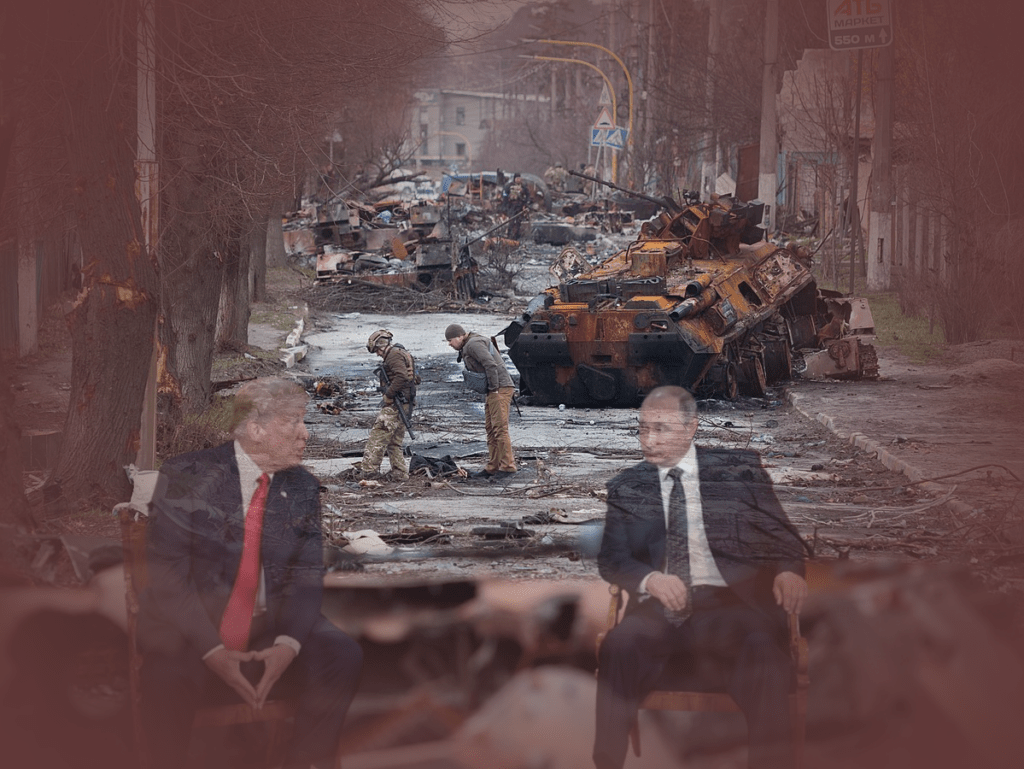
The reported discussions this week between Donald Trump and Vladimir Putin have become a central focus for global media and analysts. However, for Central Asia, the most pressing question is not when the war in Ukraine will end—an outcome that could occur as unexpectedly as the contact between U.S. and Russian leaders—but what Russia’s next move will be. The future actions of Moscow remain a primary concern for the five Central Asian countries. On February 12, Donald Trump announced via his social network, Truth Social, that he had a lengthy phone conversation with Vladimir Putin. His main message was that both leaders had agreed on the need to end the war and would take immediate action. The day before, Trump told reporters at the White House that members of his negotiating team and Putin’s representatives would meet in Munich. Despite skepticism from many analysts who anticipated a longer negotiation process, talks are already scheduled to begin on Valentine’s Day. In the same post, Trump revealed the composition of his negotiating team: “I have asked Secretary of State Marco Rubio, CIA Director John Ratcliffe, National Security Advisor Michael Waltz, and Ambassador and Special Representative Steve Witkoff to lead the negotiations.” Although the details of Trump’s proposed peace plan remain under discussion, a rough outline has emerged from various sources which involve: A freeze in fighting along the current front line. The establishment of a demilitarized zone spanning the entire 1,300-kilometer front. Deployment of a European military contingent, including UK troops, to patrol the demilitarized zone (U.S. troops will not be involved, but may provide training and logistical support). A 20-year postponement of Ukraine’s NATO membership bid in exchange for continued Western arms supplies. Recognition of Russian sovereignty over occupied territories. Security guarantees for Ukraine from European countries. A possible EU membership pathway for Ukraine by 2030. A 10-year reconstruction plan for Ukraine, funded by European countries and Russian contributions. A gradual lifting of sanctions on Russia’s energy sector over several years. Reimbursement of U.S. military aid to Ukraine through Ukrainian natural resource revenues. Presidential and parliamentary elections in Ukraine in 2025, especially if a settlement is reached between Kyiv and Moscow. If Russia accepts these terms, they are likely to be included in the final draft of the agreement. Notably, Trump’s plan takes Moscow’s interests into account, though some points were reportedly rejected during the February 12 call. The depth of the proposal suggests that Trump’s team and Putin’s representatives have been in contact for some time, well before Trump’s formal inauguration as U.S. president. Trump first hinted at such talks in March 2023,  when he claimed he could resolve the Russia-Ukraine conflict within 24 hours of taking office. At the time, many dismissed this as election rhetoric. However, recent events suggest that he is following through on his promises. A striking example is the release of Mark Vogel, an American sentenced in Russia to 14 years in prison for marijuana possession. His return to the U.S. was part of a...

Uzbekistan and Kyrgyzstan Leaders Discuss Regional Cooperation and Tourism Development

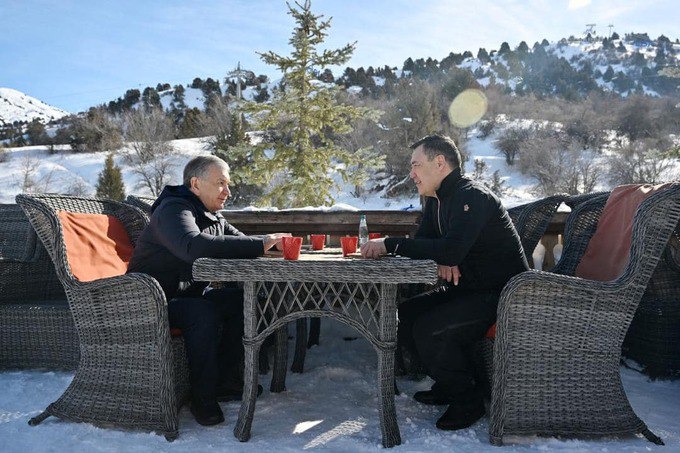
On January 25, Kyrgyz President Sadyr Japarov paid a visit to Uzbekistan, where he held an informal meeting with Uzbek President Shavkat Mirziyoyev at the Amirsoy resort complex in the Tashkent region. During their meeting, the two leaders discussed a range of topics, including bilateral relations, regional cooperation, and international politics. The relaxed setting allowed for a candid exchange of ideas about enhancing collaboration between the neighboring countries. President Japarov commended the modern infrastructure of the Amirsoy ski resort, describing it as meeting international standards. Both leaders expressed a shared vision for developing joint tourism projects that capitalize on the unique natural landscapes of Uzbekistan and Kyrgyzstan. This cooperation, they noted, could help create resort and recreation centers in both countries, boosting tourism and local economies. President Japarov shared his impressions of Amirsoy in a Facebook post, accompanied by aerial photographs of the resort. Reflecting on Kyrgyzstan's missed opportunities in tourism development, he wrote: “Mountains occupy 94% of the territory of our country. Each of our seven regions could have such resorts. But we hardly have them. Why? Because since we gained independence, from ordinary people to presidents, we have only been engaged in politics. Every day we held meetings, and every day there were weddings. We did not pay attention to the economy, tourism, and other important areas.” Japarov praised Mirziyoyev's efforts in building Amirsoy from scratch, highlighting its economic and social benefits. “Looking at the Amirsoy ski resort, I was amazed. My colleague Shavkat Mirziyoyev built this resort from scratch. No problem. Blessed. How many people are employed? Millions of tourists come here to relax. The level of service is not inferior to that of Europe. Everything is at a high level,” Japarov wrote. The informal meeting highlights the strengthening relationship between Uzbekistan and Kyrgyzstan, as both countries seek to enhance cooperation in various fields, including tourism, economic development, and regional stability.

Kazakhstan’s Middle Power Strategy Captures U.S. Focus in Trump-Tokayev Talks

On December 5, a telephone conversation took place between Kazakhstan's President Kassym-Jomart Tokayev and U.S. President-elect Donald Trump. According to Akorda, the official residence of the Kazakh president, Tokayev congratulated Trump on his election and both leaders expressed a commitment to strengthening their strategic partnership in trade, investment, and nuclear non-proliferation. They also agreed to maintain regular contact to sustain the momentum of bilateral cooperation. Kazakhstan as a Mediator This brief but significant interaction has fueled speculation that Trump may view Kazakhstan as a potential mediator in negotiations between Russia and Ukraine. International expert Arkady Dubnov has suggested that Astana could become a platform for dialogue involving Trump, Vladimir Putin, and Volodymyr Zelensky, or other high level representatives. This aligns with Kazakhstan’s diplomatic efforts to promote mediation and its firm belief that the ongoing conflict can only be resolved at the negotiating table. Tokayev and the Role of Middle Powers Under Tokayev’s leadership, Kazakhstan has consolidated its status as a “Middle Power.” The term gained prominence in May during Tokayev’s Singapore Lecture, part of a prestigious series organized by the Yusof Ishak Institute (ISEAS). In his speech, “Kazakhstan and the Role of Middle Powers: Promoting Security, Stability, and Sustainable Development,” Tokayev emphasized the risks of global polarization and the need for middle powers to act against a new Cold War. Tokayev revisited this concept in an article for the French newspaper Figaro, highlighting the growing influence of middle powers amidst the deadlock faced by global superpowers, such as the United States and China. Tokayev wrote, “The economic and political importance of these countries is growing, and their balanced and constructive position is becoming an advantage in the face of global uncertainty.” At the Astana Think Tank Forum in October, Tokayev reiterated this idea, calling for the reform of the UN Security Council to amplify the voices of regional and middle powers. “The Security Council is in a deadlock, and we need to find a way out,” Tokayev stated. Trump's Strategy Trump’s outreach to Tokayev appears to validate these concepts. Following his election, Trump has engaged with the leaders of regional and middle powers, including India, Israel, Canada, and South Korea, signaling a possible strategy to build a coalition of such nations for his proposed reforms to the global security architecture. Kazakhstan's balanced and constructive foreign policy, combined with its emphasis on multilateralism, positions it as an effective interlocutor in global conflicts. Tokayev’s vision of middle powers as mediators may prove instrumental in shaping a more inclusive and cooperative international order.

Trump’s Bid for Ukraine-Russia Peace: Could Kazakhstan Be the Key Mediator?

One of the anticipated top priorities of Donald Trump’s presidency is ending Russia's war in Ukraine while normalizing relations with Moscow. Writing on his Truth Social channel, Trump stated that, “Together, we will secure PEACE THROUGH STRENGTH, and Make America, and the World, SAFE AGAIN!” Trump’s nominee to serve as Special Envoy for Ukraine and Russia, 80-year-old former national security advisor, General Keith Kellogg, laid out his plan in writing for the America First policy institute, whilst focusing on characterizing the war “an avoidable crisis that, due to the Biden Administration’s incompetent policies [which] has entangled America in an endless war.” There are fears, however, that Kellogg’s proposal to reach a ceasefire by freezing the frontlines and forcing both sides the negotiating table will lead to a tumultuously violent period as Moscow seeks to swallow up territory. Meanwhile, NATO’s new secretary-general, Mark Rutte, has warned that compelling Ukraine into a “bad peace” would pose a “dire threat” to the U.S. itself. Whilst the framework for bringing a pause to hostilities is becoming clearer, it appears that Trump (or his representative) will need to meet with Vladimir Putin, and Kazakhstan has emerged as a potential venue for this high-stakes meeting. Kazakhstan's Role as Mediator Russian political analyst, Arkady Dubnov, has argued that Putin’s recent state visit to Astana may be an indication that Kazakhstan could play a pivotal role, and that given Putin’s limited travel options due to the International Criminal Court’s arrest warrant against him, Kazakhstan, with its reputation for diplomacy, would be a logical choice. “Putin is essentially restricted from visiting most of the Western Hemisphere,” Dubnov explained. “This leaves the Eurasian East, and among its cities, Astana stands out. Kazakhstan has hosted OSCE and CICA summits, mediated in the Syrian conflict, and facilitated peace talks over the future of the South Caucasus.” Dubnov sees Putin’s visit to Astana as indirectly tied to a possible meeting with Trump. “The Kremlin trusts Kazakhstan as an ally while respecting its constructive relations with the U.S. and the broader West,” he stated. Kazakhstan has long been recognized as a neutral ground where East and West can find commonality. The Astana process on Syria, initiated in 2017, helped prevent the escalation of hostilities for years, whilst Kazakhstan has mediated in other long-standing disputes, such as the conflict between Armenian and Azerbaijan. Given this history, it is conceivable that a reconciliation process between Russia and Ukraine could start in Astana. Neither the Minsk agreements of 2014, nor discussions in Istanbul in 2022 achieved lasting peace, but Kazakhstan’s diplomatic efforts could provide fresh impetus. Early Peace Efforts In March 2022, Kazakh President Kassym-Jomart Tokayev spoke with Ukrainian President Volodymyr Zelensky, emphasized the urgency of negotiations to bring a halt to hostilities, a stance that has since gained momentum as the war drags on. By 2024, the validity of Tokayev’s view — that negotiations are the only viable path to end the bloodshed — has become increasingly apparent. Kazakhstan’s diplomatic corps has actively pushed for peace....