• KGS/USD = 0.01144 0%
  • KZT/USD = 0.00207 0%
  • TJS/USD = 0.10415 -0.19%
  • UZS/USD = 0.00008 0%
  • TMT/USD = 0.28571 0%
  • KGS/USD = 0.01144 0%
  • KZT/USD = 0.00207 0%
  • TJS/USD = 0.10415 -0.19%
  • UZS/USD = 0.00008 0%
  • TMT/USD = 0.28571 0%
  • KGS/USD = 0.01144 0%
  • KZT/USD = 0.00207 0%
  • TJS/USD = 0.10415 -0.19%
  • UZS/USD = 0.00008 0%
  • TMT/USD = 0.28571 0%
  • KGS/USD = 0.01144 0%
  • KZT/USD = 0.00207 0%
  • TJS/USD = 0.10415 -0.19%
  • UZS/USD = 0.00008 0%
  • TMT/USD = 0.28571 0%
  • KGS/USD = 0.01144 0%
  • KZT/USD = 0.00207 0%
  • TJS/USD = 0.10415 -0.19%
  • UZS/USD = 0.00008 0%
  • TMT/USD = 0.28571 0%
  • KGS/USD = 0.01144 0%
  • KZT/USD = 0.00207 0%
  • TJS/USD = 0.10415 -0.19%
  • UZS/USD = 0.00008 0%
  • TMT/USD = 0.28571 0%
  • KGS/USD = 0.01144 0%
  • KZT/USD = 0.00207 0%
  • TJS/USD = 0.10415 -0.19%
  • UZS/USD = 0.00008 0%
  • TMT/USD = 0.28571 0%
  • KGS/USD = 0.01144 0%
  • KZT/USD = 0.00207 0%
  • TJS/USD = 0.10415 -0.19%
  • UZS/USD = 0.00008 0%
  • TMT/USD = 0.28571 0%

Viewing results 1 - 6 of 13

Uzbekistan’s 2026 Reform Program Introduces Life Imprisonment for Pedophilia

President Shavkat Mirziyoyev has approved draft reform programs setting out priority measures for 2026, along with the State Program for implementing the “Uzbekistan-2030” Strategy during what has been declared the “Year of Community and Social Prosperity,” according to the presidential press service. The documents were presented to the president at a briefing that highlighted a new methodology drawing on advanced international experience. Officials stated that the drafts define the main policy directions and target indicators for the coming year, in line with the President’s Address to the public and the Parliament, the Oliy Majlis, and outline specific implementation mechanisms. A distinction was drawn between the reform programs and the State Program. The reform programs consolidate initiatives proposed by the president and identify the most urgent reforms for 2026. These include modernizing mahalla infrastructure in line with the concept of a “New Uzbekistan,” shifting the economy toward technology and innovation-driven growth while stimulating domestic demand, upgrading professional training systems and reshaping the labor market, ensuring environmental sustainability and rational water use, strengthening public administration and the judicial system, and reinforcing social cohesion. Officials emphasized a shift from “document development” to measurable results. Each initiative is accompanied by defined implementation mechanisms and key performance indicators to assess progress by the end of the year. Individual officials have been assigned personal responsibility and coordinating state bodies have been designated. The State Program structures the implementation of the Uzbekistan-2030 Strategy targets for 2026 and includes 337 specific measures. It included the preparation of 59 key legislative and regulatory drafts across sectors, along with 12 additional drafts related to major strategic reforms. Public consultation played a significant role in shaping the document. From January 23 to February 1, the draft State Program was published for public discussion. According to official data, more than 5 million users viewed the document online, and over 22,000 comments and proposals were submitted. More than 50 discussions were held at universities and state institutions, involving approximately 10,000 students, faculty members, and civil servants. Nearly 1,000 proposals were incorporated into the final draft. Among the approved initiatives are stricter penalties for violence against women and children, the introduction of life imprisonment for pedophilia, reforms to mortgage and electric vehicle lending mechanisms, an increase in the share of renewable energy to 30%, strengthened anti-corruption measures, and the introduction of juries in criminal proceedings. In a related regional context, discussions on criminal justice reform have also intensified elsewhere in Central Asia. In Kazakhstan, the Health Ministry previously proposed tightening procedures related to chemical castration for individuals convicted of sexual crimes against minors, reflecting a broader regional debate on the protection of vulnerable groups. The Uzbek government plans to allocate 250.5 trillion UZS (more than $20.4 billion) from budgetary sources and attract an additional $50.4 billion to finance the 2026 programs. The Ministry of Justice and the Chamber of Accounts will conduct ongoing monitoring, while the Cabinet of Ministers will review progress quarterly. Reports are to be submitted to the Legislative Chamber every six...
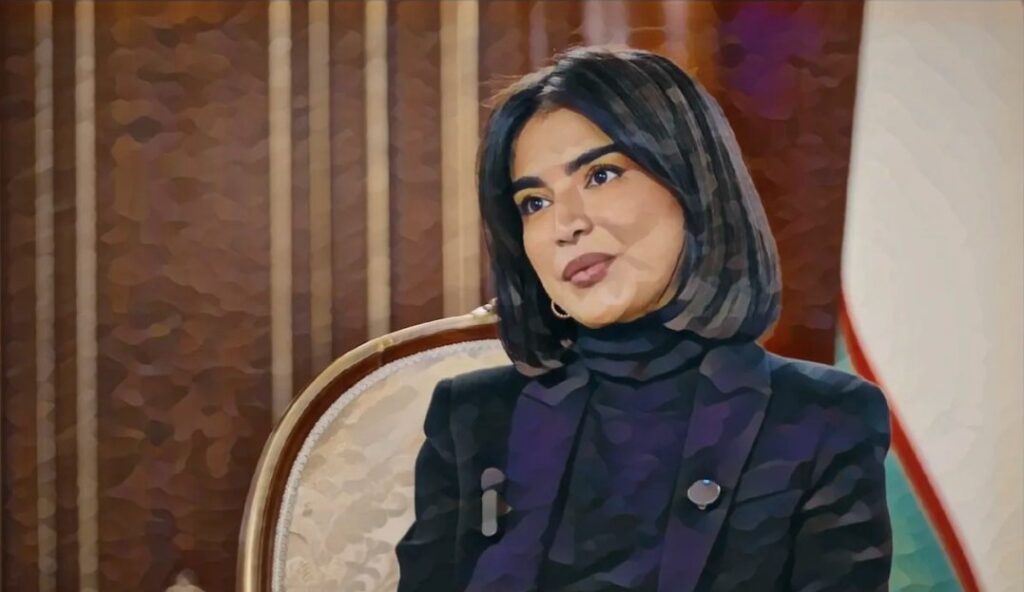
Uzbekistan Has “Only Just Begun” Reforms, Says Saida Mirziyoyeva

Saida Mirziyoyeva has said that the country’s reform agenda remains at an early stage, arguing that the scale of change should be measured in years rather than months. In her first major interview since becoming Head of the Presidential Administration, Mirziyoyeva said Uzbekistan had “only just begun” large-scale reforms. Expectations of rapid results, she warned, often overlook structural limits, including weak infrastructure, uneven regional development, and tight public finances. Mirziyoyeva spoke about decision-making inside the presidential system and outlined what she described as the administration’s main policy priorities, including water management, education, healthcare, the business climate, and reform of the judicial and legal system. “Our goal is to improve people’s lives,” she stated, emphasizing that improvements in courts and law enforcement were essential for other reforms to succeed. Without legal guarantees, she argued, investment and social policy changes would fail to deliver lasting results. She said the reforms now underway are intended to address long-standing systemic problems rather than produce quick political gains, and rejected the idea that reform momentum has slowed, arguing that many of the most complex changes require time and careful implementation to succeed. Water management featured prominently in her remarks. Mirziyoyeva described it as one of Uzbekistan’s most urgent challenges, pointing to climate pressures, ageing infrastructure, and rising demand. Education and healthcare were also presented as priorities, with reforms focused on improving quality and access rather than simply expanding state programs. The judicial system, however, emerged as the central theme. Mirziyoyeva said that without independent and predictable courts, reforms in other areas would not deliver lasting results. Legal uncertainty, she said, discourages investment and undermines public trust, making the rule of law essential for both economic reform and the protection of citizens’ rights. Mirziyoyeva also addressed the business environment, arguing that excessive regulation and administrative pressure continue to constrain private enterprise. The state, she said, should act as a partner to entrepreneurs rather than an obstacle, and reforms should create conditions in which businesses can operate transparently and competitively. Mirziyoyeva described her role as focused on coordination and execution rather than public visibility. The task of the Presidential Administration, she said, is to ensure that decisions taken at the top translate into practical change on the ground. Public service, she added, should be judged by outcomes, not rhetoric. The interview comes more than nine years after President Shavkat Mirziyoyev took office in December 2016 and launched a reform agenda that marked a break with the isolationist policies of his predecessor. Early measures included the liberalisation of the foreign exchange market in September 2017, easing trade restrictions, and reducing state control over prices. International financial institutions have described Uzbekistan’s economic transition as ambitious, while noting that progress has been uneven. Political reform has proceeded more cautiously. In its 2024 Nations in Transit assessment, Freedom House classified Uzbekistan as a consolidated authoritarian system, citing restrictions on opposition activity and independent media. Against that backdrop, Mirziyoyeva said reforms should be judged by tangible outcomes rather than timelines. Reliable access...

The New Geoeconomics of Uzbekistan: Insights from ISRS Director Eldor Aripov

The Times of Central Asia presents a two-part interview in Washington, D.C. with Eldor Aripov, Director of the Institute for Strategic and Regional Studies under the President of Uzbekistan. Dr. Aripov sat down with our Washington Correspondent, Javier M. Piedra, to discuss Uzbekistan’s strategic thinking regarding its diplomatic posture, regional integration, and relations with Central Asian and global partners. The conversation includes commentary on “Great Game” geopolitics, U.S.–Uzbekistan relations, trade, the meaning of “Uzbekistan First,” the historically explosive Ferghana Valley, and water management. Recognizing the link between investment, a stable geopolitical ecosystem, and the need to de-risk potentially conflictive issues, Aripov further sheds light on Tashkent’s practical approach to internal governance and business development. [caption id="attachment_40284" align="aligncenter" width="2360"] Central Asia on the Front Lines; image: Defense.info[/caption] TCA: “America First” refers to U.S. policies prioritizing national interests, often associated with non-interventionism, nationalism, and protectionist trade. Given Uzbekistan’s pragmatic foreign policy, can we speak of an “Uzbekistan First” policy? It is certainly not isolationist — but how is it manifested on a day-to-day basis? Aripov: What you describe as “Uzbekistan First” is, in our understanding, fundamentally about prioritizing national interests – stability and predictability for the people of Uzbekistan. Yet Uzbekistan’s uniqueness lies in the fact that our national interests are closely intertwined with those of the entire region – this means shared upsides at the transactional and strategic levels and thinking long-term. We border every Central Asian country as well as Afghanistan, and therefore any issue — security, trade, transport, or water management — directly depends on the quality of our relationships with neighbors. From his first days in office, President Shavkat Mirziyoyev — with his strategic vision and deep understanding of regional dynamics — declared that regional unity and mutual benefit stand at the core of Uzbekistan’s foreign policy. The essence of his doctrine is to resolve agreeably any historically or materially problematic issues with neighbors, remove barriers to understanding, and create predictable, stable conditions for mutually beneficial cooperation and the free movement of goods, ideas, and people. That is the true meaning of “Uzbekistan First”: not isolation, but openness, predictability, and regional consolidation. TCA: How are you realizing “Uzbekistan First” in practice? Aripov: Uzbekistan is strengthening its economy domestically and global track - putting in place the building blocks for internal sustainable development and accelerating accession to the World Trade Organization. The latter means expanding the geography and composition of exports and increasing the country’s investment attractiveness. This approach is rooted in the logic of sustainable development within the broader international context: long-term national interests are best served by Uzbekistan integrating into global value chains and markets. The results speak for themselves: in 2024, Uzbekistan’s GDP grew by 6.5%, foreign direct investment increased by more than 50% to reach $11.9 billion, and the target for 2025 is to attract $42 billion. This performance is also a tribute to our style of diplomacy, grounded in respect and having a constructive attitude towards others. Thus, “Uzbekistan First” represents a modern model...

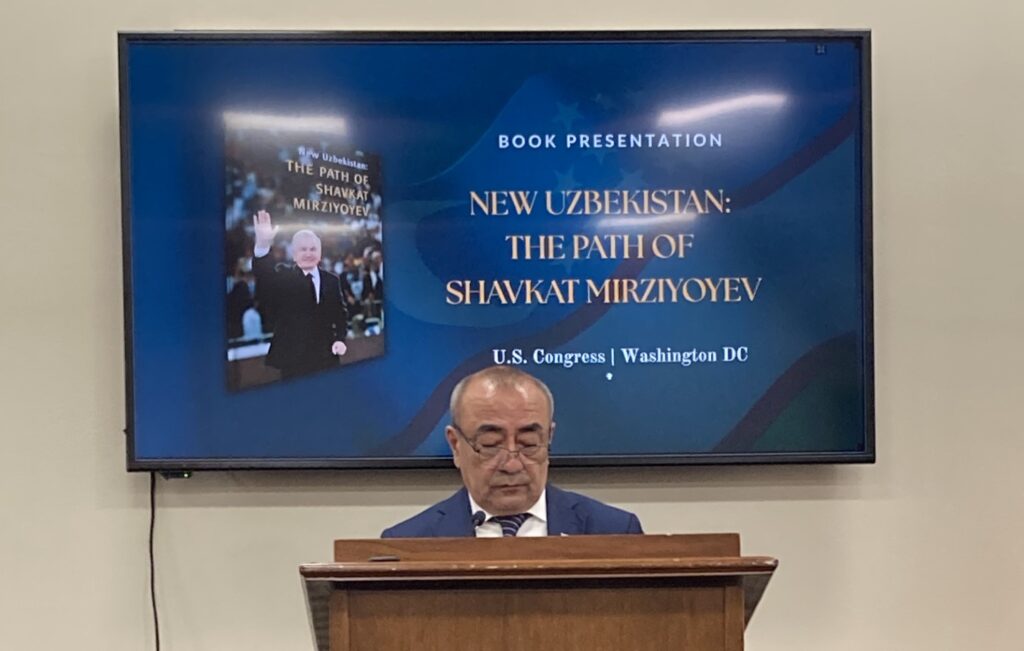
Book Launch at the U.S. Capitol: New Uzbekistan: The Path of Shavkat Mirziyoyev

On September 16, the Embassy of Uzbekistan in Washington, D.C., hosted a book launch at the Rayburn Building on Capitol Hill for New Uzbekistan: The Path of Shavkat Mirziyoyev. The event drew diplomats, congressional staff, and representatives from companies such as General Motors and Boeing. The keynote address was delivered by Sodyq Safayev, First Deputy Chairperson of Uzbekistan’s Senate. Other speakers included Husan Ermatov, the book’s Uzbek-language editor and advisor to Uzbekistan’s Ishonch newspaper; Eldor Aripov, Director of the Institute for Strategic and Regional Studies under the President of Uzbekistan; Lisa Choate, President and CEO of American Councils; and Elena Son, Executive Director of the American-Uzbekistan Chamber of Commerce. Speakers highlighted Uzbekistan’s recent trajectory, noting shifts from a state-controlled economy and limited international engagement (1993–2016) to more market-oriented policies and broader foreign relations (2017–present). They also framed today’s Uzbekistan as shaped by historical experiences and cultural development, which some described as an “Uzbek Renaissance.” According to the speakers, President Mirziyoyev has promoted reforms in areas including governance, socio-economic development, and international outreach. Safayev remarked: “this [book signing] is not just about diplomacy but about shared values, mutual understanding, and a common vision of the future. The book before you, authored by Qudratilla Rafiqov, Uzbek scholar and political scientist, is a chronicle of change, resilience, and hope. The most difficult part of this book is a [description of the] transformation of hearts and minds. Its central message is simple and powerful: the history of Uzbekistan is written by people through their interactions and aspirations. And justice lies at the heart of reform.” By justice, he clarified, he meant fairness—ensuring that citizens have opportunities for family stability, safety, and employment. While the book presents Uzbekistan’s current government agenda in a favorable light, it also introduces new readers to the President’s stated priorities: attracting investment, promoting rule of law and fairness, liberalizing the economy, restructuring social policies, contributing to global peace efforts, and maintaining pragmatic security and foreign policy strategies. Aripov emphasized that the book is “not really about reforms, or about a leader who has been able to initiate and implement large-scale transformation in a very short period of time. It is a testimony to a new era into which Uzbekistan is entering. Today, hopes are rising in Uzbekistan, a sense of national pride is strengthened, and ambitions are being achieved that only recently seemed unattainable. These changes are being felt by ordinary citizens. They see how their lives are improving, how opportunities are expanding, and how confidence in the future is becoming a reality. That is why this book is not only a chronicle of, but also a symbol of faith that Uzbekistan can become one of the centers of sustainable development, openness and cooperation in Eurasia and the wider world. Why do I believe this to be the case? Because, under my President, the country has moved from ‘guarded isolation’ to ‘post-purposeful openness,’ from managing risks to exporting stability, and from ad hoc transactions to rules-based cooperation.” The Uzbek Embassy,...

Insider’s View: From Reform to Rights – Strengthening Uzbekistan’s Legal Foundations

New Uzbekistan is pressing ahead with democratic reforms while pursuing a pragmatic foreign policy, deepening dialogue with the international community, and rolling out reforms that reinforce guarantees for human rights and fundamental freedoms. Within the framework of the Uzbekistan–2030 Strategy - now paired with the State Program, “Year of Environmental Protection and the Green Economy” – the authorities are upgrading legal safeguards and institutional mechanisms aimed at protecting citizens’ rights. As President Shavkat Mirziyoyev stated, “The dreams and aspirations of our people, shaped over centuries through diverse ideas and practical endeavors, are today embodied in the concept of New Uzbekistan.” That vision has coincided with rapid socioeconomic change: GDP has topped $110 billion; preschool enrollment has risen sharply since 2017; higher-education participation has climbed from about 9% in 2017 to roughly 42%; and elite public schools - creative, specialized, and presidential - have taken root. Uzbek athletes placed among the top national teams at recent global competitions, and football milestones at both the youth and senior levels have broadened the country’s international profile. Together, these gains bolster Uzbekistan’s status as a sovereign, democratic, legal, social, and secular state, and as a more reliable partner on the global stage. The Pragmatic Diplomacy of New Uzbekistan Against a backdrop of armed conflicts, environmental emergencies, trade frictions, and evolving security threats, Uzbekistan has worked to strengthen peace and regional stability while educating its youth in the spirit of both national and universal values. In recent years, high-level outreach has rebuilt trust with neighbors and helped popularize concepts such as a “Central Asian spirit” and “Central Asian identity.” The March unveiling of a Friendship Stele at the junction of the Uzbekistan–Kyrgyzstan–Tajikistan borders symbolized this thaw, while cooperation on transit, water and energy exchanges, and security has become more predictable. A “New Central Asia” is taking shape as a unified transport and logistics space. Mutual trade volumes in the region have multiplied, investment flows have increased, and cross-border ventures have expanded. Major projects—from the China–Kyrgyzstan–Uzbekistan railway to rising cargo across the Uzbekistan–Turkmenistan–Iran–Türkiye corridor—are laying the ground for a trans-continental transit hub. At the same time, Uzbekistan’s convening role has grown. In April 2025, Samarkand hosted the first EU–Central Asia Summit, chaired by President Mirziyoyev and attended by EU leaders and all five Central Asian presidents - an event that elevated ties to a strategic partnership and set a broader agenda on connectivity, critical raw materials, energy, and digital links. Environmental diplomacy has also moved up the agenda. The Samarkand Climate Forum gathered UN deputy secretary generals, heads of major environmental organizations, and experts from dozens of countries, signaling a step-change in the region’s engagement on ecology, desertification, and resilience. The Parliamentary Dimension of New Uzbekistan Tashkent’s rising parliamentary diplomacy culminated in the 150th Inter-Parliamentary Union (IPU) Assembly, held between 5–9 April 2025 - the first of its kind in Central Asia – which brought together some 2,000 parliamentarians from more than 140 countries, plus over 20 international organizations. The proceedings, themed “Parliamentary Action for Social...

Opinion: Over the Past Eight Years, New Uzbekistan Has Absorbed Over $113 Billion in Foreign Investments

On the eve of the 34th anniversary of our country’s independence, the Executive Board of the International Monetary Fund finalized the 2025 consultations under Article IV of the IMF Agreement. The Fund’s main conclusion is that Uzbekistan’s economic outlook remains positive amid continued progress in the transition to a market economy. According to the published document, headline indicators are strong, including sustained growth, a reduced consolidated budget deficit, a narrower current account deficit, and an adequate level of international reserves. IMF staff note that the successful implementation of structural reforms supports a favorable baseline. Despite a high degree of uncertainty in global trade policy, the IMF projects real GDP growth will remain robust in the coming years. These trends reflect greater economic openness, ongoing industrialization, active investment policy, and measures designed to build the export potential of promising industries. The reform package - and the decisions already put into effect - aligns with available domestic resources and reserves, supporting long-term, sustainable development across the country and its regions. The commitment to irreversible market transformation allows Uzbekistan to combine targeted state support with space for private entrepreneurial initiative on the path to building a “New Uzbekistan.” In recent years, rising openness and growing investor confidence have driven a steady increase in capital formation. From 2017 to 2024, total foreign investment exceeded $113 billion, more than 80% of which comprised foreign direct investment and loans. Financing activity has been particularly strong in leading industries and the fuel and energy complex, accelerating industrialization in virtually every region. Deepening investment links with China, Russia, Germany, Turkey, Saudi Arabia, the Netherlands, the United States, the United Kingdom, and others is bringing advanced technologies and expertise, modern management practices, expanded localization, and stronger export capacity to priority sectors and regions. These resources are primarily directed to technological upgrades and modernization of existing facilities, as well as the creation of new production sites. Over the past eight years, investment programs have launched more than 96,000 projects worth about $100 billion, creating 1.8 million jobs. In 2024 alone, the value of commissioned projects was nearly eight times higher than in 2017, while the number of jobs increased by 2.6 times. Active involvement by the Head of State has been pivotal. Since the start of this year, visits and high-level events have produced 366 investment agreements totaling $75 billion. Roadmaps have also been approved for 222 projects worth about $45 billion. At the IV Tashkent International Investment Forum held in June, agreements were reached on investments exceeding $30 billion for 144 joint projects. In April 2025, on the sidelines of the 5th International Industrial Exhibition “INNOPROM. Central Asia” in Tashkent, 43 additional investment agreements were signed, with plans to attract a further $1 billion to the industrial sector. Uzbekistan has also intensified outreach to the international community about project opportunities. This year, Investors’ Day events took place in 13 foreign countries, drawing representatives of 700 well-known companies. More than 200 investment projects worth $6 billion were presented to potential...