
• KGS/USD = 0.01143 0%
  • KZT/USD = 0.00206 0%
  • TJS/USD = 0.10811 -0.18%
  • UZS/USD = 0.00008 0%
  • TMT/USD = 0.28571 0%
  • KGS/USD = 0.01143 0%
  • KZT/USD = 0.00206 0%
  • TJS/USD = 0.10811 -0.18%
  • UZS/USD = 0.00008 0%
  • TMT/USD = 0.28571 0%
  • KGS/USD = 0.01143 0%
  • KZT/USD = 0.00206 0%
  • TJS/USD = 0.10811 -0.18%
  • UZS/USD = 0.00008 0%
  • TMT/USD = 0.28571 0%
  • KGS/USD = 0.01143 0%
  • KZT/USD = 0.00206 0%
  • TJS/USD = 0.10811 -0.18%
  • UZS/USD = 0.00008 0%
  • TMT/USD = 0.28571 0%
  • KGS/USD = 0.01143 0%
  • KZT/USD = 0.00206 0%
  • TJS/USD = 0.10811 -0.18%
  • UZS/USD = 0.00008 0%
  • TMT/USD = 0.28571 0%
  • KGS/USD = 0.01143 0%
  • KZT/USD = 0.00206 0%
  • TJS/USD = 0.10811 -0.18%
  • UZS/USD = 0.00008 0%
  • TMT/USD = 0.28571 0%
  • KGS/USD = 0.01143 0%
  • KZT/USD = 0.00206 0%
  • TJS/USD = 0.10811 -0.18%
  • UZS/USD = 0.00008 0%
  • TMT/USD = 0.28571 0%
  • KGS/USD = 0.01143 0%
  • KZT/USD = 0.00206 0%
  • TJS/USD = 0.10811 -0.18%
  • UZS/USD = 0.00008 0%
  • TMT/USD = 0.28571 0%

Viewing results 1 - 6 of 9

An Early European View of Nomadic Central Asia

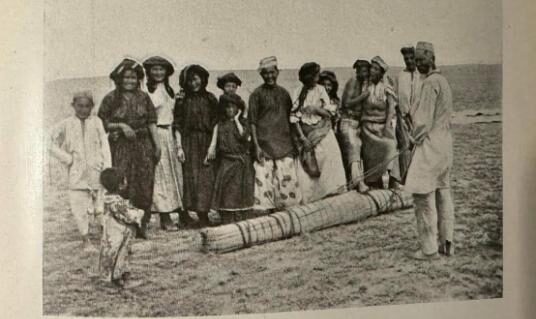
During a period when Central Asia remained largely unknown to European audiences, Among Kirghiz and Turkimans offered Western readers a rare first-hand account of the vast steppe and desert regions. The book was written in the late nineteenth century by Richard Karutz, a German traveler whose work belongs to the broader tradition of European exploratory travel literature. I first encountered this book while studying in the United States and later incorporated it into my research. A copy preserved in the library of the Catholic University of America in Washington, D.C., was published in Leipzig in 1911. Since then, it has been regarded as one of the more noteworthy works in early European writing on Central Asia. Who Was Richard Karutz? Richard Karutz was a late nineteenth-century German traveler and writer who journeyed through parts of the Russian Empire’s Central Asian territories. Though not widely known today compared to some British or Russian explorers, Karutz represents a generation of European intellectuals fascinated by the perceived “frontier zones” of empire, regions seen as remote, exotic, and culturally distinct. [caption id="attachment_44400" align="aligncenter" width="312"] Richard Karutz[/caption] He was neither a colonial administrator nor a military officer; rather, he traveled as an independent observer. His writings reflect the curiosity of an educated European shaped by the intellectual currents of his era, including Orientalism and the growing interest in ethnography. Like many travelers of his time, Karutz sought to document ways of life he believed were on the verge of transformation under imperial modernization. Across the Steppe and Desert In Among Kirghiz and Turkimans, Karutz traveled among communities then commonly referred to in Russian and European sources as “Kirghiz”, a historical term often applied to Kazakhs, as well as Turkmen tribes. His route took him across vast grasslands, caravan routes, and oasis settlements shaped by pastoral migration, tribal organization, and Islamic traditions. Rather than producing an official report or military survey, Karutz wrote in a personal and descriptive style typical of travel literature. His narrative often reads as impressionistic reflection rather than systematic analysis. He documents everyday life, including nomadic encampments and felt yurts, equestrian culture and elaborate codes of hospitality, tribal leadership and clan loyalty, as well as desert trade routes and caravan movement. Mangyshlak, a peninsula on the eastern coast of the Caspian Sea in present-day Kazakhstan, features prominently in his descriptions. Significant mineral deposits were later discovered there, leading to its designation as a “peninsula of treasures.” Mangyshlak is characterized by stark desert landscapes and was once described as a barren land consisting largely of sand and stone. In the Middle Ages, it served as a gateway for trade between East and West. The region also played a role in the early history of Turkmen communities. Karutz’s writing attempts to capture both the hardship and the quiet grandeur of steppe existence. Depicting Nomadic Society A central strength of the book lies in its attention to social organization. Karutz was particularly struck by the mobility of Kazakh life, seasonal migrations, a livestock-based economy, and...
Beyond the Yurt: Rethinking Nomadism in Kazakh Contemporary Art

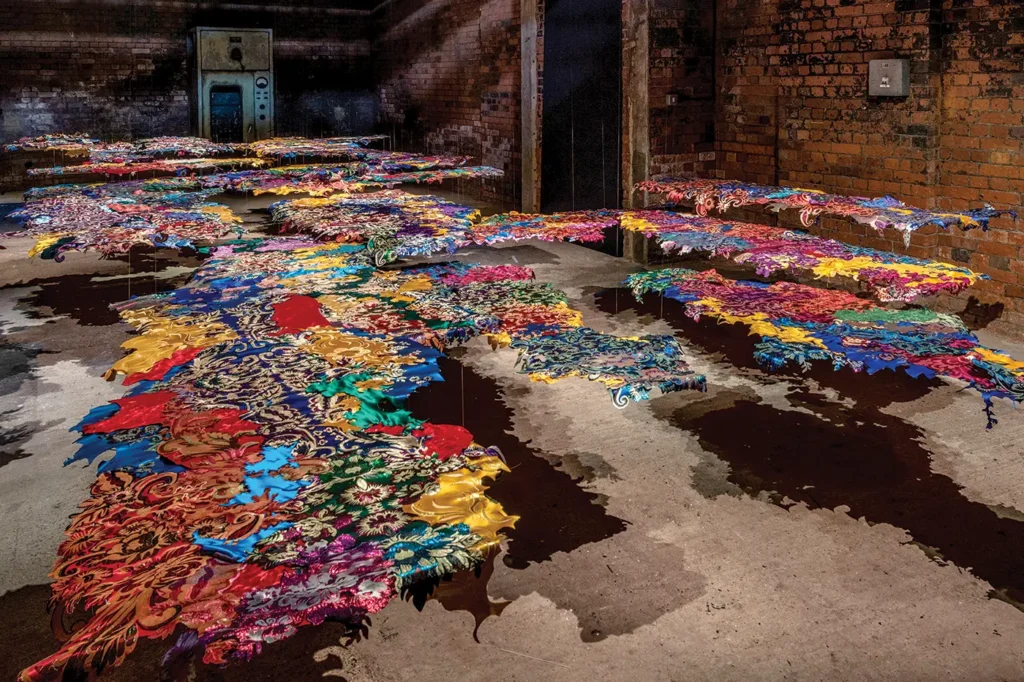
At a moment when Kazakhstan is building new cultural institutions and asking bigger questions about what contemporary art should do, one curator has been quietly learning how power, taste, and narrative are shaped inside major museums. Akmaral Kulbatyrova, the first representative of Kazakhstan to receive the U.S.-based ArtTable Fellowship, spent 2025 working in the Exhibitions and Curatorial Projects Department at The Bass Museum of Art in Miami Beach, gaining rare inside access to how global exhibitions are conceived and positioned. Her work sits at the intersection of institutional practice and cultural repair, focused on reframing nomadic culture, Central Asian heritage, and Kazakh craft not as static tradition but as a current language. Akmaral’s experience links ambition and execution, showing how local histories can enter international spaces without being flattened. In this interview with The Times of Central Asia, we asked her what comes next. TCA: Nomadic imagery has become central to Kazakhstan’s national identity since independence. How are contemporary artists reshaping these symbols, and why does that matter for how the country sees itself today? AK: Kazakh contemporary artists briefly challenged Kazakh art in early avant-garde experiments in the 1960s. However, it stopped because of the huge presence of Socialist Realism, which was one of the movements where symbols like horses and yurts prevailed. Most of the contemporary artists reshape not the symbols; they reimagine nomadic culture, contextualizing pre-Soviet culture through researching how it changed over time. Many artists look back to pre-Soviet nomadic practices to explore how these traditions were disrupted by colonial and Soviet policies, yet continue to influence Kazakh identity today. By using installation, performance, and video, they move beyond decoration and folklore to show nomadism as a living culture rather than a museum image or symbols. This matters because it helps Kazakhstan see itself not through simplified national symbols, but as a society shaped by change, cultural mixing, and an ongoing negotiation between past and present. [caption id="attachment_42899" align="aligncenter" width="1536"] Qyz Zhibek, designed by Nikolai Vladimirovich Tsivchinsky and Moldakhmet Syzdykovich Kenbaev, 1971; image: TCA[/caption] TCA: Nomadism now circulates widely in pop culture, often detached from its historical meaning. Why does contemporary art provide a more critical way to examine what nomadic identity represents? AK: It’s typical that symbolic images prevail in pop culture, especially for countries that have not experienced a long artistic tradition. It is one of the ways to be acknowledged by the privileged cultures through the symbols that are easy to recognize and quickly signal national identity. In Kazakhstan, these images became important after independence, as they cover the main question of cultural uniqueness after colonial influence. Contemporary art takes slower and more contextual approaches rather than easy recognition. That’s why most modern scholars criticize symbolic language and would like to see art that explores unresolved histories and how nations were challenged or used their experience to construct their identity. [caption id="attachment_42900" align="aligncenter" width="750"] Anvar Musrepov, IKEA KZ; image courtesy of the Aspan Gallery[/caption] TCA: Many artists use nomadic motifs with irony rather...

Kazakhstan’s Tazy: The Ancient Hunting Dog of the Steppe

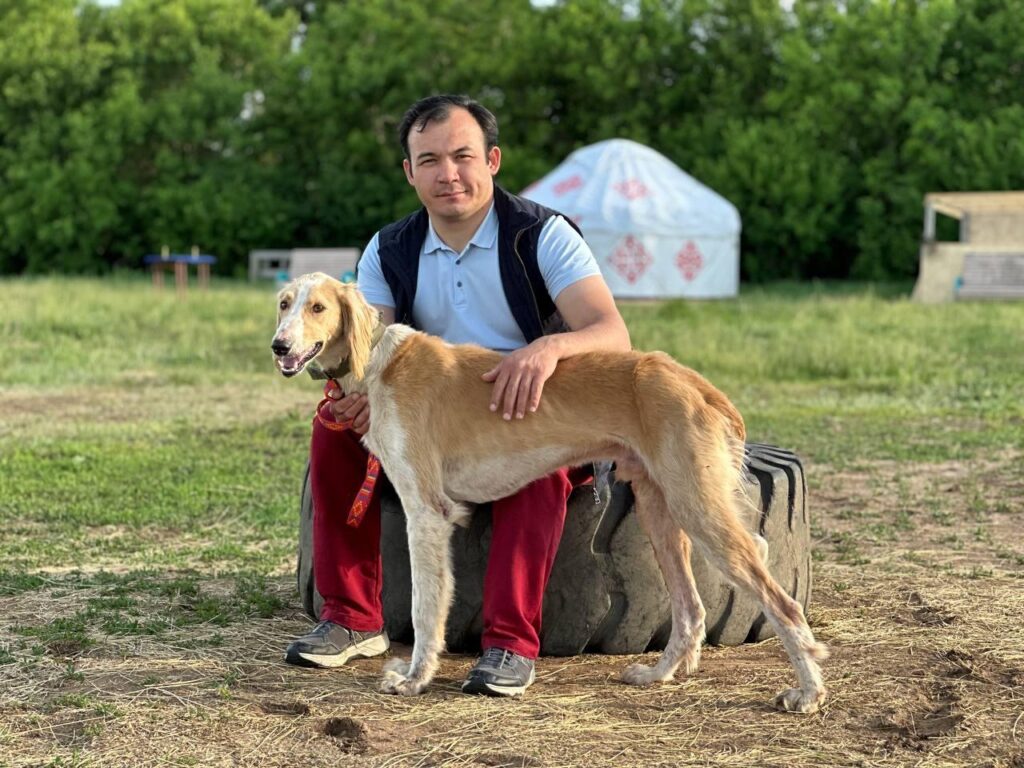
For centuries, nomadic tribes across the steppe that now forms modern Kazakhstan absorbed outside influences and adapted them to local conditions, creating something uniquely Kazakh. This adaptability is evident in many aspects of steppe life, including the development of the Tazy, the Kazakh greyhound. Bred over generations to protect what nomads valued most, their livestock, the Tazy is now considered one of the seven national treasures of Kazakhstan. “If we look at history, we can say that the progenitor of the Kazakh breed, the Tazy, was the Arabian greyhound saluki,” said breeder Abzal Dosyman in an interview with The Times of Central Asia. “Arab missionaries brought it to our lands. The Tazy and the saluki are similar, but over time, given the needs of the nomads and the harsh climate of the steppe, the breed adapted and transformed. Here, their descendants were trained to guard livestock and protect people from wolves.” Dosyman described the unique methods traditionally used to raise Tazys for such a role. As soon as puppies were born, wolf skin was placed nearby so they would learn the predator’s scent. At four or five months, the young dogs were taken on hunts, but only after a brief starvation period. They were then fed wolf meat, which, after the fast, was considered a delicacy. “Some may see this as cruel,” he acknowledged. “But this is how hunters were raised who dared to face wolves on the steppe. For centuries, Tazys helped Kazakhs protect their herds, which were their livelihood.” Though known for their gentle nature, Tazys transform during a hunt, becoming fast, fearless, and relentless. “They are friendly toward people and non-aggressive with other animals, but they are implacable toward the grey predator,” Dosyman said. He noted that many countries have their own hunting greyhounds. Russia has the Borzoi, Kyrgyzstan the Taigan, meaning “graceful,” and Spain the Galgo. All descend, like the Tazy, from the ancient Arabian saluki. But it was in Kazakhstan that the Tazy acquired its distinct characteristics, shaped by the local way of life. In 2024, the General Committee of the Fédération Cynologique Internationale granted provisional recognition to the Kazakh Tazy as an official breed, confirming Kazakhstan as the holder of its breed standard. The FCI currently recognizes 350 breeds worldwide. Tazy Diplomacy Following independence, Kazakh enthusiasts began reviving the Tazy and promoting national traditions. In 2019, Dosyman presented a Tazy puppy to President Kassym-Jomart Tokayev, who named it Ronnie. He later received Nancy, and another dog named Nauryz was gifted by breeder Anna Zakharova. These steps helped draw state-level support for efforts to preserve and expand the Tazy population. A photograph of the grown Tazys at a reception hosted by the French president for the King of Denmark even appeared in international media, symbolizing what Dosyman calls “Tazy diplomacy.” “This is the moment the Kazakh greyhound becomes a national brand,” he said. “The French have the rooster, the Chinese the panda. Remember when China gifted a panda to another country and it later died...
