
• KGS/USD = 0.01144 0%
  • KZT/USD = 0.00216 0%
  • TJS/USD = 0.10663 0%
  • UZS/USD = 0.00008 0%
  • TMT/USD = 0.28530 0%
  • KGS/USD = 0.01144 0%
  • KZT/USD = 0.00216 0%
  • TJS/USD = 0.10663 0%
  • UZS/USD = 0.00008 0%
  • TMT/USD = 0.28530 0%
  • KGS/USD = 0.01144 0%
  • KZT/USD = 0.00216 0%
  • TJS/USD = 0.10663 0%
  • UZS/USD = 0.00008 0%
  • TMT/USD = 0.28530 0%
  • KGS/USD = 0.01144 0%
  • KZT/USD = 0.00216 0%
  • TJS/USD = 0.10663 0%
  • UZS/USD = 0.00008 0%
  • TMT/USD = 0.28530 0%
  • KGS/USD = 0.01144 0%
  • KZT/USD = 0.00216 0%
  • TJS/USD = 0.10663 0%
  • UZS/USD = 0.00008 0%
  • TMT/USD = 0.28530 0%
  • KGS/USD = 0.01144 0%
  • KZT/USD = 0.00216 0%
  • TJS/USD = 0.10663 0%
  • UZS/USD = 0.00008 0%
  • TMT/USD = 0.28530 0%
  • KGS/USD = 0.01144 0%
  • KZT/USD = 0.00216 0%
  • TJS/USD = 0.10663 0%
  • UZS/USD = 0.00008 0%
  • TMT/USD = 0.28530 0%
  • KGS/USD = 0.01144 0%
  • KZT/USD = 0.00216 0%
  • TJS/USD = 0.10663 0%
  • UZS/USD = 0.00008 0%
  • TMT/USD = 0.28530 0%

Viewing results 1 - 6 of 5

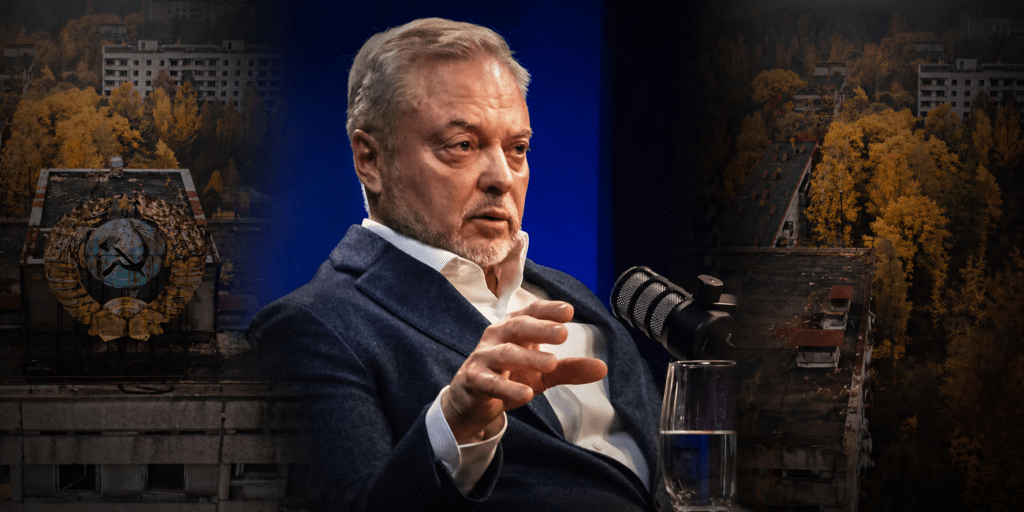
Ukrainian Ambassador to Kazakhstan: From Chornobyl to Zaporizhzhia – Lessons Humanity Risks Forgetting

April 26 marks a date that changed the course of world history. This year marks the 40th anniversary of the Chornobyl nuclear disaster, one of the world’s worst nuclear accidents, the consequences of which are still felt today. In an interview with The Times of Central Asia, Ukraine’s Ambassador Extraordinary and Plenipotentiary to Kazakhstan, Victor Mayko, spoke about the scale of the tragedy and emerging threats to nuclear safety. TCA: Forty years have passed. Why does Chornobyl remain a relevant issue today? Ambassador Mayko: Because it is not a story that has ended. It is an ongoing process, the consequences of which continue to unfold. Chornobyl is not only the explosion of a reactor; it is the long-term impact on people, nature, and the economy. In terms of scale, it is, without exaggeration, the largest manmade disaster in human history. TCA: What exactly defines that scale? Ambassador Mayko: First and foremost, the territory. Around 150,000 square kilometers were contaminated. The most dangerous area is the 10-kilometer zone. Isotopes were recorded there that had not previously been observed; they were formed as a result of processes during the explosion. According to estimates, this territory will only become suitable for habitation in about 20,000 years, once the decay of radioactive isotopes reaches safe levels. These were fertile lands, chernozem soils suitable for agriculture. Today, the area is a protected zone, essentially a vast natural reserve where wild animals live. But this is a forced outcome. TCA: As far as we know, you were personally a liquidator. What did you witness? Ambassador Mayko: I was sent there through mobilization. I spent almost a month at the plant, in two rotations. I saw people working on the reactor roof, clearing debris and removing radioactive materials. These were difficult, frightening scenes. People went there understanding the risk, but not always fully realizing its scale. TCA: How many people were affected? Ambassador Mayko: We still don’t know the exact figures. The Soviet system concealed information. I believe the immediate death toll was at least 10,000. But if we include those who later died from radiation-related illnesses, thyroid cancer, stomach cancer, and others, the number rises into the hundreds of thousands. In total, around 600,000 people took part in the cleanup. That is an enormous figure. TCA: Why was information about the accident concealed for so long? Ambassador Mayko: Because the system was built that way. Until the radioactive cloud moved beyond the borders of the USSR, there was silence. Only when elevated radiation levels were detected in Sweden, Finland, and the United Kingdom did international inquiries begin. Then the Soviet Union was forced to acknowledge the accident. TCA: How did this affect people in the first days? Ambassador Mayko: People continued living their normal lives. On May 1, there was a public demonstration. I was there myself with my family, with a small child. No one warned us about the danger. Many felt throat irritation and coughing, but didn’t understand the cause. If people had been...

Exile and Empire: Dostoevsky’s Years in Semey, Kazakhstan

Semey, Kazakhstan – In the windswept, seemingly infinite steppe of eastern Kazakhstan stands a city with a dual, haunting legacy. It is a place where one of the world's literary giants plumbed the depths of the human soul, and where, a century later, humanity sought to master the power to extinguish itself. This is Semey, formerly Semipalatinsk, a city whose soil is steeped in the memory of both Fyodor Dostoevsky's exile and the Soviet Union's atomic ambition. For Fyodor Dostoevsky, one of Russia’s most celebrated writers, Semey was not a destination of choice but of punishment. Arrested in 1849 for his involvement with the Petrashevsky Circle — a group of intellectuals who read and discussed banned political texts — Dostoevsky was sentenced to death, only to be spared at the last moment in a mock execution ordered by Tsar Nicholas I. His sentence was commuted to four years of hard labour in the Omsk fortress, followed by compulsory military service in Semipalatinsk. Arriving in 1854, Dostoevsky spent nearly five years in Semipalatinsk, a provincial outpost on the Russian Empire’s edge, where exiles, soldiers, and bureaucrats mingled with Kazakh nomads and merchants. Though his official role was that of a soldier in the Siberian Line Battalion, his time here marked a critical period of transformation — politically, spiritually, and literarily. Semey offered isolation, but also introspection. Deprived of literary contact, Dostoevsky was forced inward. His exposure to suffering — in prison, in exile, and his struggles with epilepsy — sharpened the moral and psychological vision that would later define Crime and Punishment, The Idiot, and The Brothers Karamazov. In letters from this time, he describes long walks through the barren steppe and his growing fascination with the Kazakh people, whose customs and resilience left a lasting impression. During his years in Semey, Dostoevsky also began to reengage with the intellectual world. Thanks to the leniency of local officials, he was able to read, write, and eventually re-enter literary circles. It was here he completed Uncle’s Dream and The Village of Stepanchikovo, and began work on Notes from the Dead House, a fictionalised account of his time in prison that marked a decisive shift from romanticism to the raw psychological realism for which he became renowned. Despite its remoteness, Semey in the 1850s was not without its cultural encounters. Dostoevsky formed a lasting friendship with Chokan Valikhanov, a Kazakh nobleman, ethnographer, and military officer, whose liberal views and deep knowledge of Central Asian culture helped broaden Dostoevsky’s perspective on the empire’s outer subjects. Their conversations influenced Dostoevsky’s thinking on race, empire, and the spiritual dignity of non-Russian peoples — ideas that subtly permeate his later works. In 1853, aged 18, Valikhanov graduated from the Cadet Corps and was commissioned as a cornet in the Army Cavalry. He was then assigned as an officer to the 6th Regiment of the Siberian Cossack Army. Later, through the Main Administration of the Region, he was appointed as an officer of special assignments. In 1858–1859, he...

Uzbekistan to Join International Nuclear Liability Agreement

Uzbekistan is set to join the 1963 Vienna Convention on Civil Liability for Nuclear Damage, following its approval by the Senate during the chamber’s eighth plenary session. According to the Senate press service, lawmakers reviewed and passed the legislation confirming Uzbekistan’s accession to the international treaty. By joining the convention, Uzbekistan will adopt globally recognized legal standards for managing nuclear incidents. The treaty establishes a framework for liability in the event of nuclear accidents and sets out rules for compensating damages. It also mandates that nuclear facility operators provide financial guarantees to cover potential claims. Senators emphasized that accession will strengthen the country's legal framework on nuclear safety, enhance public trust, and promote international cooperation in the sector. “Joining the Vienna Convention means that in the event of a nuclear incident, Uzbek citizens will be better protected, and the country will be part of a global system that ensures compensation is paid fairly,” one official said. The core aim of the convention is to define the legal responsibilities of nuclear operators and ensure a minimum level of financial protection for victims. Officials noted that the move would integrate Uzbekistan into the global nuclear legal regime, enhance systems for insurance and compensation, and clarify the government’s role in regulating the industry. Kazakhstan is currently the only Central Asian country that is party to the Vienna Convention, according to the International Atomic Energy Agency (IAEA). Uzbekistan’s accession will make it the second country in the region to join. Officials also said the decision will deepen collaboration with the IAEA and enable Uzbekistan to participate in additional international initiatives related to nuclear energy and safety. The Senate approved the legislation unanimously at the end of the session.
