• KGS/USD = 0.01144 0%
  • KZT/USD = 0.00208 0%
  • TJS/USD = 0.10407 -0.29%
  • UZS/USD = 0.00008 0%
  • TMT/USD = 0.28571 0%
  • KGS/USD = 0.01144 0%
  • KZT/USD = 0.00208 0%
  • TJS/USD = 0.10407 -0.29%
  • UZS/USD = 0.00008 0%
  • TMT/USD = 0.28571 0%
  • KGS/USD = 0.01144 0%
  • KZT/USD = 0.00208 0%
  • TJS/USD = 0.10407 -0.29%
  • UZS/USD = 0.00008 0%
  • TMT/USD = 0.28571 0%
  • KGS/USD = 0.01144 0%
  • KZT/USD = 0.00208 0%
  • TJS/USD = 0.10407 -0.29%
  • UZS/USD = 0.00008 0%
  • TMT/USD = 0.28571 0%
  • KGS/USD = 0.01144 0%
  • KZT/USD = 0.00208 0%
  • TJS/USD = 0.10407 -0.29%
  • UZS/USD = 0.00008 0%
  • TMT/USD = 0.28571 0%
  • KGS/USD = 0.01144 0%
  • KZT/USD = 0.00208 0%
  • TJS/USD = 0.10407 -0.29%
  • UZS/USD = 0.00008 0%
  • TMT/USD = 0.28571 0%
  • KGS/USD = 0.01144 0%
  • KZT/USD = 0.00208 0%
  • TJS/USD = 0.10407 -0.29%
  • UZS/USD = 0.00008 0%
  • TMT/USD = 0.28571 0%
  • KGS/USD = 0.01144 0%
  • KZT/USD = 0.00208 0%
  • TJS/USD = 0.10407 -0.29%
  • UZS/USD = 0.00008 0%
  • TMT/USD = 0.28571 0%

Viewing results 1 - 6 of 51

From Test Sites to Power Plants: Kazakhstan’s Journey Towards a Nuclear Referendum

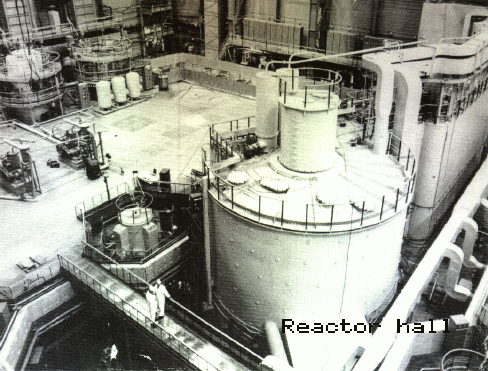
The history of nuclear power in Kazakhstan has many chapters: the arms race, the suffering of people due to test sites, the highest achievements in the name of science, and the service of the nuclear industry for the benefit of society are closely intertwined here. On the eve of the referendum on Kazakhstan's first atomic power plant, it is necessary to revisit these pages in history.   A dark past Construction of the Semipalatinsk nuclear test site began in the Kazakh Soviet Socialist Republic in 1947. The test site is located on the border of the Semipalatinsk (now Abay), Pavlodar, and Karaganda regions, 130 kilometers northwest of Semipalatinsk (now Semey), on the left bank of the Irtysh River. On its territory is the previously closed city of Kurchatov, renamed as such in honor of Soviet-era physicist, Igor Kurchatov. The first nuclear weapons test held in the Soviet Union was conducted at this site on August 29, 1949. The power of the bomb totaled 22 kilotons. From 1949 to 1989, at least 468 nuclear tests were conducted at the Semipalatinsk nuclear test site. The long-term operation of this site and its negative impact on residents' health and the surrounding environment help to explain the fear of nuclear energy in Kazakhstan. Two million people were affected across 300 square kilometers; with all agriculture banned, a vast swathe of land still remains off-limits. Pregnancies are still screened for possible termination, with 6% of babies born “polygon” (the name for the "closed zone".) [caption id="attachment_23475" align="aligncenter" width="1200"] Polygon baby, National Museum of Kazakhstan, Astana; image: TCA, Stephen M. Bland[/caption]   Shutdowns and shortages On August 29, 1991, Kazakhstan's first president, Nursultan Nazarbayev, closed the Semipalatinsk test site. Prior to this, citizens had held rallies protesting against nuclear testing and its development. By 1994, Kazakhstan had voluntarily relinquished its part of the USSR's nuclear arsenal. On May 15, 1992, the National Nuclear Center in the city of Kurchatov was established based on the complex of the former Semipalatinsk test site. The Center deals with eliminating the consequences of nuclear tests and also conducts active and multidisciplinary scientific activities on the remaining research reactors in Kurchatov. Scientific research occurs internationally and touches upon safety technologies, the space program, and more. In 1957, the Institute of Nuclear Physics of the Kazakh SSR Academy of Sciences was founded near Almaty (then Alma-Ata), where the VVR-K reactor, which is still operating today, was launched in 1967. The reactor was shut down in the late 1980s after the Chernobyl disaster and the earthquake in Spitak (Armenia); it was restarted in 1997, and the complex underwent safety and seismic reinforcement modernization. The Institute owns eight experimental facilities: the VVR-K research reactor, a "Критический стенд" lit. "critical stand," and six charged particle gas pedal complexes. In 1972, a unique fast neutron reactor BN-350 was launched in Aktau (then Shevchenko) at the Mangistau Atomic Energy Combine (MAEC). The reactor provided the Mangistau Peninsula with electricity and heat, and supported the operation of desalination plants...
Protocol Signed to Begin Work on Uzbekistan Nuclear Plant

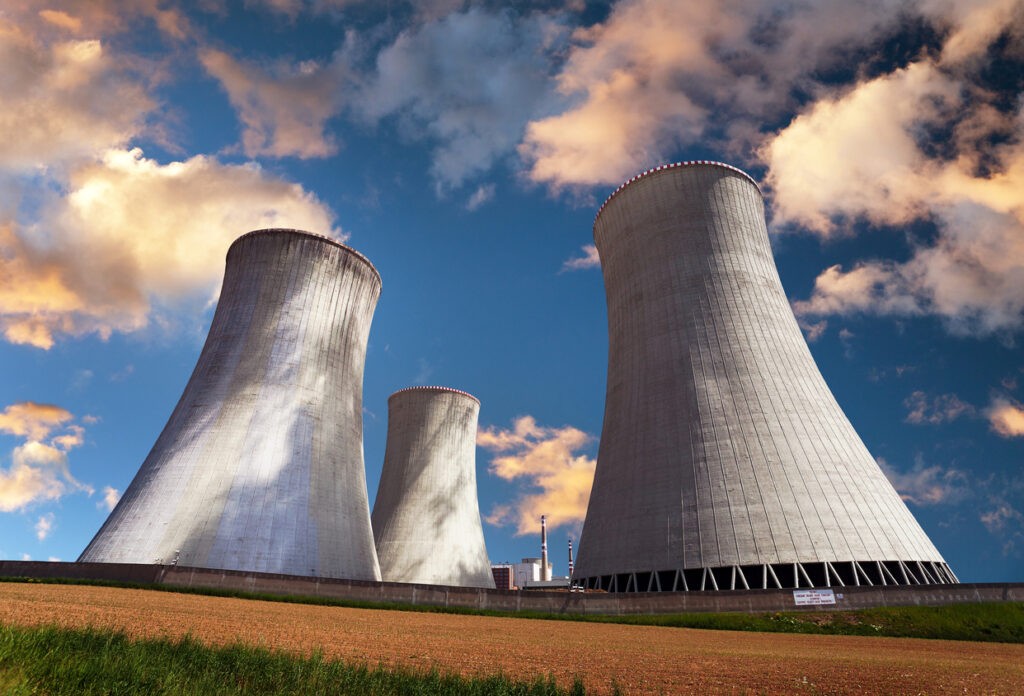
On September 10, Atomstroyexport, the engineering subdivision of Russia’s Rosatom State Corporation, and Uzbekistan’s Atomic Energy Agency signed a protocol on the commencement of works for the future low-power nuclear power plant (NPP) in Uzbekistan. Pavel Bezrukov, Atomstroyexport’s Director for NPP Construction Projects in Central Asia, commented that according to the protocol, Atomstroyexport will begin the documentation process for obtaining the required licenses. Otabek Amanov, Director of the NPP Construction Directorate at the Uzbek Atomic Energy Agency, added that the signing of the protocol “marks the transition to active work for implementation of the first low-power NPP project in Uzbekistan and will allow starting works at the construction site in the nearest future.” Late in August, work began to construct a residential settlement for builders of the future NPP. On May 27, Uzbekistan and Rosatom signed a contract to construct a 330 MW Russian-design low-power NPP in the Jizzakh region of Uzbekistan (6 reactors of 55 MW each). Atomstroyexport JSC is the project's general contractor. As natural gas reserves deplete and production decreases in Uzbekistan, the country strives to build new power-generating facilities, with a focus on renewable energy sources such as wind and solar power. The future nuclear plant, the first of its kind in Central Asia, is expected to help resolve the problem of Uzbekistan’s power shortages amid forecasts that the country’s demand for electricity will almost double by 2050. Neighboring Kazakhstan will hold a nationwide referendum on October 6 on whether to build its first nuclear power plant. The Kazakh government insists that building a nuclear power plant will help solve the problem of electricity shortages by 2030.

Empowering Kazakhstan’s Future: Navigating Diplomatic, Energy, and Geopolitical Challenges in the Nuclear Power Referendum

Never short of diplomatic acumen, on September 2, President Kassym-Jomart Tokayev signed a decree on holding a referendum on the construction of a nuclear power plant (NPP) in Kazakhstan. Tokayev’s goal is to ensure that arguments for nuclear energy are compelling and to involve citizens, scientists, and government officials in the decision-making process. However, it's crucial that the public are fully informed about these plans as Kazakhstan finalizes the first stage of its new nuclear development. With demand for electricity soaring, it can be argued that the case for the NPP is compelling. Officials forecast that electricity deficits are set to worsen, leading to a reliance on imports, such as was the case in the 1990s. In the first three months of 2024 alone, tariffs rose by 26%. Electricity in Kazakhstan is currently generated by 222 power plants under various forms of ownership, with 84% coming from fossil fuels, hydropower accounting for 12%, and less than 2% coming from solar and wind installations as of 2019. Renewables had expanded to 5.92% by 2023, but the deficit continues to grow.   Old-Timers and Newcomers On October 6 of this year, the Kazakhstani people will give the final answer in a referendum on whether nuclear power will become a component of their everyday lives or whether nuclear-phobia, connecting both the memory of atomic testing at Semipalatinsk and persistent distrust in the ability of officials to build something grandiose without embezzlement, will prevail. The example of the LRT (the project for elevated light-rail transportation in Astana, which was to be implemented back in 2013) stands as a stark monument to corruption which has even penetrated the cultural code of today's youth. One of the first episodes of a then-popular show hosted by politician and businessman, Bulat Abilov, was devoted to nuclear energy and the need to build nuclear power plants. Abilov's inspiration for this topic was Mukhtar Dzhakishev. The former Head of Kazatomprom and Deputy Minister of Energy and Mineral Resources, on November 10, 2009, Dzhakishev was charged with the theft of Kazatomprom property and the receipt of bribes, and was sentenced to fourteen years imprisonment. Subsequently found guilty on separate charges related to embezzlement, fraud, involvement in organized crime and the abuse of power, he was sentenced to a further ten years to run concurrent to his prior sentence. Dzhakishev was released in March 2020, but this episode has led neither man to change their position - nuclear power plants are the best thing for Kazakhstan in light of coming energy shortfalls. Agitators for the NPP, who also include the General Director of Kazakhstan Nuclear Power Plants JSC, Timur Zhantikin, and specialists from the Institute of Nuclear Physics of the Ministry of Energy, have, however, encountered vociferous opposition. Some still oppose the NPP, such as ecologist Mels Yeleusizov. The arguments among those resistant to construction of the NPP have long remained unchanged, with seismic hazards, radiophobia, and corruption at the forefront. The pressure on emotions has also remained unwavering, with slogans such...

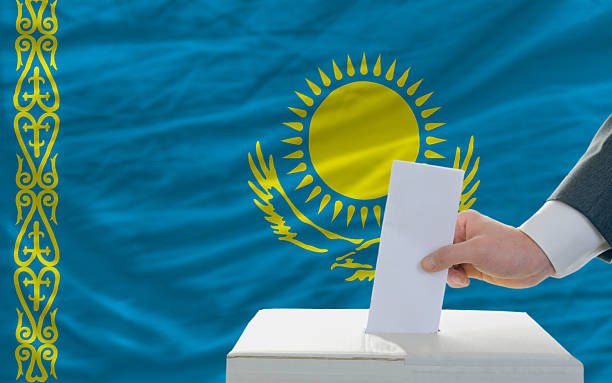
Nuclear Plant Referendum in Kazakhstan Will Cost $33 Million

Kazakhstan's Central Election Commission (CEC) has announced that 15.5 billion tenge ($33 million) will be allocated to hold a referendum on constructing a nuclear power plant. CEC member Sabila Mustafina said the amount includes organizational costs and holding the referendum at 78 foreign polling stations in 63 countries. The main part of the funds — 71% — will be spent on labor remuneration for more than 77,000 election commission members. The referendum will be held on October 6. Kazakhstan's president Kassym-Jomart Tokayev signed a decree on holding the referendum on September 2, 2024. In his address, Tokayev emphasized that constructing nuclear power plants is a strategically important issue for the country. Tokayev noted the need to use reliable and environmentally friendly energy sources in the context of the global energy deficit. He emphasized that today, about 200 nuclear power plants operate in 30 developed and developing countries. Tokayev noted that it is vital for Kazakhstan to consider long-term national interests, environmental safety, and the population's needs, as well as the need to make thoughtful decisions on constructing nuclear power plants. The president also emphasized the importance of public support in making important decisions for the country. He said that the population should have a say in every step related to major infrastructure projects, such as the construction of nuclear plants. Discussions on constructing a nuclear power plant in Kazakhstan have been ongoing for many years. The need for it first emerged after the closure of the Soviet reactor in Aktau in 1999.

Kazakhstan to Hold Nuclear Plant Referendum on October 6

A popular vote on the need to build a nuclear power plant in Kazakhstan will be held on October 6. President Kassym-Jomart Tokayev announced this during his annual address to the nation. “Given the growing global energy deficit, we need reliable and environmentally friendly energy sources. Therefore, I believe it is necessary to pay close attention to the development of nuclear energy. This type of generation can largely meet the rapidly growing needs of our economy. About 200 nuclear power plants are operating in 30 developed and developing countries,” the head of state said. Discussions on constructing a nuclear power plant in Kazakhstan have been ongoing for many years. The idea of the need for a nuclear power plant first appeared after the closure of the Soviet reactor in Aktau in 1999. Since then, the country has repeatedly raised questions about the development of nuclear power, especially in the context of improving energy security and climate change resilience. However, public opinion is divided: many people in the country remember the consequences of nuclear tests at the Semipalatinsk test site and fear environmental risks. In 2021, discussions about constructing a nuclear power plant intensified when a possible site for Kazakhstan's first atomic power plant began to be considered in Almaty region, near the village of Ulken. These plans sparked lively public debate and protests among residents and environmentalists. According to Tokayev, Kazakhstan should consider the future, taking into account long-term national interests and the country's specifics. “Every step important for the country's life should be made with the support of the people. So, it should be done by referendum on the nuclear power plant; this topic has been on the public agenda for a year. I believe this is the time for citizens to make an informed decision. The upcoming referendum will be another manifestation of a broad national dialog and a vivid example of realizing the concept of a 'listening state.' In fact, with such steps, we form a new socio-political culture and lay new standards for making key state decisions,” he said.

Who Will Benefit if Kazakhstan Refuses To Build Nuclear Power Plants?

Kazakhstan is facing a growing energy deficit while having large reserves of uranium which would allow the country to develop its nuclear power industry. However, so far, uranium mined in the country is used solely for export, and every year difficulties with supply chains only increase. All these problems can be solved in one elegant way, but this solution is what a part of the Kazakhstani public actively opposes.   Difficulties with production and supplies Kazakhstan ranks second in the world in terms of proven reserves of natural uranium. About 14% of the world's proven reserves are concentrated in the country's subsoil. According to estimates, the country's explored reserves contain more than 700,000 tons of uranium. In 2009, Kazakhstan became the world's largest uranium producer and continues to maintain its leading position in the global market, producing approximately 40% of the world's uranium. In 2021, uranium production in Kazakhstan amounted to 21,800 tons, but by 2023 this had decreased to 21,112 tons. Moreover, due to difficulties related to the availability of sulfuric acid, the national company Kazatomprom reduced production plans for 2024. According to the initial plan, between 25,000 and 25,500 tons were to be produced; now, the plan is to produce 21,000 to 22,500 tons. Kazatomprom has also stated that if limited access to sulfuric acid continues through 2024 and the company fails to reduce the construction backlog at new sites, it could have a negative impact on production plans for 2025. Uranium mining in Kazakhstan is carried out solely by in-situ leaching, the most environmentally safe and lowest-cost method available. The Russia-Ukraine conflict could not help but affect this area of Kazakhstan's exports. This year, it became known that Kazakhstan is working on diversifying its uranium export routes, bypassing Russia. This is stated in the report on implementing the concept of development of Kazakhstan's fuel and energy complex for 2023. As part of this, Kazatomprom is working on an agreement with the Chinese companies CNUS, CNEIC, and CNNC to provide uranium transit services through China. Kazakhstan currently transports uranium products to customers in North America and Europe through the port of St. Petersburg. An alternative way is to use the Trans-Caspian international transportation route, with shipments through the ports of Aktau (Kazakhstan), Alyat (Azerbaijan), and Poti (Georgia).   Nuclear deadlock Obviously, some of the concerns of Kazakhstan's leadership and Kazatomprom regarding the sale of uranium products could be alleviated by developing the country's own nuclear industry, meaning that uranium mined in the country would feed its own nuclear power plants. Talks about the need to build nuclear plants in the country have regularly been raised since the beginning of the 2000s. Kazakhstani nuclear physicists and nuclear specialists, with the persistence of a Don Quixote have periodically rush to attack the windmills of Kazakhstani radio-phobia, which, however, did not arise without reason. The Semipalatinsk Nuclear Test Site (SNTS) and the Chernobyl disaster are two significant elements of this phobia. In the early 1990s, when the SNTP was closed, the...