
• KZT/USD = 0.00218
  • TJS/USD = 0.10810
  • UZS/USD = 0.00009
  • TMT/USD = 0.29850
  • KZT/USD = 0.00218
  • TJS/USD = 0.10810
  • UZS/USD = 0.00009
  • TMT/USD = 0.29850
  • KZT/USD = 0.00218
  • TJS/USD = 0.10810
  • UZS/USD = 0.00009
  • TMT/USD = 0.29850
  • KZT/USD = 0.00218
  • TJS/USD = 0.10810
  • UZS/USD = 0.00009
  • TMT/USD = 0.29850
  • KZT/USD = 0.00218
  • TJS/USD = 0.10810
  • UZS/USD = 0.00009
  • TMT/USD = 0.29850
  • KZT/USD = 0.00218
  • TJS/USD = 0.10810
  • UZS/USD = 0.00009
  • TMT/USD = 0.29850
  • KZT/USD = 0.00218
  • TJS/USD = 0.10810
  • UZS/USD = 0.00009
  • TMT/USD = 0.29850
  • KZT/USD = 0.00218
  • TJS/USD = 0.10810
  • UZS/USD = 0.00009
  • TMT/USD = 0.29850
02 September 2026

Viewing results 1 - 6 of 94

KMG Pushes Back on Reports of European Asset Sale Amid Romania Refinery Losses

KazMunaiGaz (KMG) says it has no concrete plans to sell any of its European assets, though pressure is building to at least sell off some of the Kazakh company’s shares in oil refineries in Romania. Reports on November 21 said KMG was looking to privatize up to 50% of its shares in its subsidiary KMG International’s (KMGI) European operations in Europe. The reports were based on a list of recommendations from Kazakhstan’s Agency for the Protection and Development of Competition (APDC), which proposed, as part of the 2026-2027 strategy, that KMGI should have a two-stage tender to sell up to 50% of its stakes. On November 26, KMG denied making any decisions about KMGI businesses in Europe, adding that the APDC’s list of recommendations “includes assets from different sectors, but this in itself does not automatically trigger a sale.” Rompetrol KMGI has 28 companies operating in seven countries, four of them European, but the focus of reports was on the two oil refineries KMGI owns in Romania. KMGI purchased 75% of the shares in the Romanian oil company Rompetrol in 2007, and in 2009 bought the remaining 25% of shares in the company. That sale included the Petromidia oil refinery, with a capacity of some five million tons annually, and the smaller Vega refinery, with a capacity of some 350,000 tons that Rompetrol owns. KMGI also took ownership of the oil terminal near Constanta on the Black Sea coast, some 20 kilometers from the Petromidia refinery. The terminal imports mainly Kazakh oil. KMGI invested billions of dollars in upgrades and modernization of the refineries and the terminal, and finally, in 2017, operations of subsidiary Rompetrol Rafinare (54.63% KMGI and 44.7% Romanian state through the energy Ministry) showed a profit - $80 million. By 2022, profits had slightly increased to $90.3 million, but in December that year, the Romanian authorities changed tax regulations, and in 2023, Rompetrol Rafinare registered a net loss of some $270.5 million, and in 2024, a loss of $78 million. In the first six months of 2025, the company lost $53 million and paid some $771 million in taxes to the Romanian government. Rompetrol Rafinare has complained to the Romanian government that the tax burden is preventing the company from investing in new projects and has brought a legal challenge to the solidarity tax in court. In such a situation, it seems unlikely KMG would easily find a party interested in buying up to 50% of KMGI’s Romanian operation, unless the price was very low. Opponents of the proposed arrangement point to the $7 billion in investment KMG has made over nearly 20 years into upgrading the Romanian refineries as a reason to be patient for a while longer. KMGI KMG has subsidiaries operating in Switzerland, Bulgaria, Turkey, Moldova, and Georgia, as well as in Romania and Kazakhstan. At the start of 2025, there were reports that KMG was considering the acquisition of an oil refinery in Bulgaria from Russia’s LUKoil, so it appeared the Kazakh company...
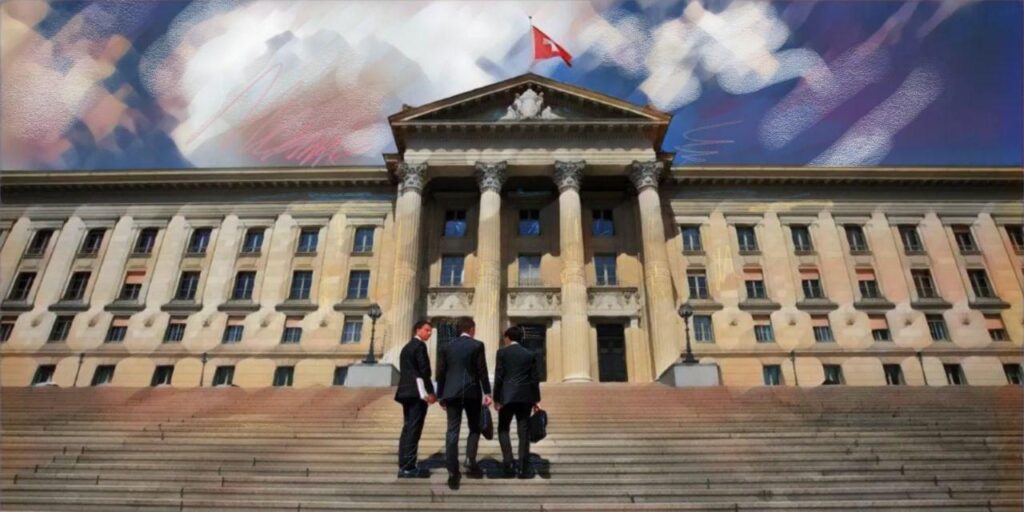
Kazakhstan vs Eni: How a Swiss Lawsuit Could Reshape the $160 Billion Kashagan Dispute

The legal landscape surrounding Kazakhstan’s energy sector has taken an unexpected turn. What began as a closed commercial arbitration dispute has now entered the public sphere in Switzerland’s courts. This marks a significant escalation in Astana’s confrontation with international oil and gas majors. According to Bloomberg, PSA LLP, a structure representing Kazakhstan’s interests in production-sharing agreements (PSAs), has significantly broadened its claims. The lawsuit now directly targets alleged schemes involving units and executives of the Italian company Eni. Kazakhstan alleges that during the early development of Kashagan infrastructure, including the Bolashak processing plant and pipeline systems, corruption and fraud may have occurred. Arbitration claims against the NCOC consortium, which includes Shell, ExxonMobil, TotalEnergies, and Eni, exceed $150 billion. Within this context, the Swiss case has become the most sensitive element. The Swiss case itself is much smaller – $15 million plus interest – and is being used to gather evidence and strengthen the larger arbitration case. While the financial stakes are high, the proceedings reflect a deeper political shift. Kazakhstan is moving away from the 1990s model of offering investors exceptional privileges. Under President Kassym-Jomart Tokayev’s “Fair Kazakhstan” policy, the state is aiming to secure more balanced and equitable cooperation with foreign partners. Distinctiveness of Swiss Proceedings The Swiss case is distinctive due to the nature of its allegations. The plaintiffs claim that during the tenure of Agip KCO (an Eni subsidiary) as project operator, contracts were awarded amid corrupt practices. Allegations include inflated prices and kickbacks to contractors. Targeting Eni is deliberate. The company led the project during its most troubled phase from 2001 to 2008. Kashagan’s budget swelled during this period, with repeated delays. Following a 2013 gas leak, production was halted for nearly three years. Kazakh officials have long linked Kashagan’s massive cost overruns and technical failures to poor procurement and mismanagement, and the current legal offensive zeroes in on alleged corrupt tenders. Cost estimates rose from a few tens of billions of dollars to around $60 billion, and by 2007, projections for total project costs had reached about $136 billion. Why Switzerland? The selection of the Swiss jurisdiction is strategic. Switzerland’s laws on corruption and financial crimes allow for the prosecution of both corporations and individual executives. Moreover, many entities connected to Kashagan’s operations are registered there. Another factor is the PSA’s stabilization clause, which forbids altering the contract’s terms. However, under international legal norms, if corruption is proven in the contract’s formation, such protections can be voided. This opens the door for Kazakhstan to challenge key financial terms of the agreement. Resource Nationalism 2.0: Legal Strategy Meets Political Logic Astana’s current posture can be described as a form of “new-generation resource nationalism.” Rather than using administrative leverage, the state is deploying legal tools to address grievances. This is driven in part by Kazakhstan’s fiscal needs, ranging from infrastructure upgrades to social spending. Amid these pressures, the vast expenditures reported by Kashagan operators have drawn public skepticism. Kazakhstan’s claims aim to re-evaluate the cost recovery model...

Kazakhstan vs. Eni: Who Is the Key Figure in the Swiss Lawsuit?

Kazakhstan’s $166 billion legal campaign against the oil majors, Shell, ExxonMobil, TotalEnergies, and Eni has expanded to Switzerland. According to Bloomberg, PSA LLP, representing Kazakhstan’s Ministry of Energy, has launched proceedings aimed at strengthening the country’s position in ongoing international arbitration. Astana is seeking roughly $15 million plus interest from several companies and individuals accused of corruption in projects managed by subsidiaries of Italy’s Eni. The Swiss case centers on evidence already presented in courts in the U.S. and Italy, which Kazakhstan aims to use to prove allegations of bribery in arbitration hearings. Documents submitted by Kazakhstan to a U.S. court claim that contractors providing services to Eni implemented an “illegal scheme” to secure inflated contracts. One such contract was allegedly amended eleven times, with its value rising from $88 million to more than $490 million. While several contractors were convicted by an Italian court in 2017, no Eni employees were found guilty. Kazakh journalist Oleg Chervinsky, known for his coverage of the oil and gas sector, has highlighted that Kazakhstan is requesting the Swiss court to look into Maksat Idenov, a former first vice president of KazMunayGas, who led negotiations with Kashagan project partners between 2007 and 2008. Chervinsky recalls a dramatic episode in 2010, when Idenov resigned from KazMunayGas via a letter sent from abroad using DHL. He subsequently took a senior role at Eni. A U.S. court has approved his questioning for use in the Swiss proceedings, and his representative says he has already testified. “New revelations await us!” Chervinsky asserted. That confidence may be justified. A glance at Idenov’s career reveals his central role in Kazakhstan’s energy sector since 1992, when he began as chief legal counsel at the state holding MunaiGas. In 1993, he became assistant to the Minister of Oil and Gas Industry, and by 1995, he was serving as deputy head of the Energy Department for Europe and Central Asia at the International Bank for Reconstruction in Washington, D.C. He returned to Kazakhstan in 1999 as an advisor to then-President Nursultan Nazarbayev on Caspian energy and oil and gas export pipelines. In that role, he worked on the legal status of the Caspian Sea and other strategic projects. Idenov joined Shell in 2004 as regional vice president for strategic and commercial development in the Middle East, South Asia, and the Caspian region. In 2007, he became the first vice president of KazMunayGas. Three years later, in July 2010, he was appointed senior vice president for strategic planning at Eni. During his time at KazMunayGas, Idenov appeared in U.S. embassy cables later released by WikiLeaks. In one, he reportedly told the U.S. ambassador during a private dinner that the four most influential figures around President Nazarbayev were the Presidential Chief of Staff, Sarybay Kalmurzaev, Head of the Presidential Administration, Aslan Musin, State Secretary and Foreign Minister, Kanat Saudabayev, and the tandem of Prime Minister Karim Massimov and Nazarbayev’s son-in-law, billionaire Timur Kulibayev. Another cable described the rationale for Idenov’s appointment as lead negotiator on...

Kazakh Oil Service Providers Urge Government to Curb Chinese Dumping

The Oil and Gas Council of Kazakhstan (PetroCouncil) has appealed to Prime Minister Olzhas Bektenov to address what it describes as unfair pricing practices by Chinese subcontractors in the oil and gas chemical industry. PetroCouncil, an association representing around 150 Kazakh oil service providers, engineering firms, and manufacturers, published an open letter to the prime minister on its Telegram channel. The letter highlights growing concern over the involvement of foreign companies, particularly from China, in major industrial and oil and gas chemical projects across Kazakhstan. “By offering services at prices up to 70% below market rates, they are effectively driving out domestic companies,” the council stated. “This creates risks of reduced Kazakhstani content, loss of tax revenue, job cuts, a decline in engineering expertise, and potential threats to quality and industrial safety.” PetroCouncil argues that the current situation demands systematic government intervention. The organization has proposed several measures aimed at restoring fair competition and supporting domestic industry players. Among its recommendations is a cap on price dumping in tenders, setting a minimum price threshold no more than 20% below the average market rate. The council also suggests strengthening the weight of the “Kazakh content” criterion when evaluating bids and introducing a “second-best price” principle, favoring local companies when cost differences with foreign bidders are minimal. Further proposals include stricter oversight of foreign worker permits, enhanced enforcement of labor laws, and the establishment of a national registry of domestic producers involved in oil and gas chemical projects. As previously reported by The Times of Central Asia, Russian energy giant Lukoil has announced plans to divest its international assets in response to Western sanctions. Kazakh authorities are assessing potential implications for the projects in which Lukoil is currently involved within the country.

The Power of Siberia 2 Project and Central Asia’s Gas Bargaining Power

The proposed Power of Siberia 2 (PoS-2) pipeline from Russia to China has re-entered the headlines on the strength of a new memorandum between Gazprom and CNPC. Russia calls the memorandum “legally binding,” but China has avoided the phrase, because the only thing that is legally binding is an agreement to negotiate. The memorandum affirms a design capacity up to 50 billion cubic meters per year (bcm/y), a route via Mongolia, and a total trunk length of roughly 2,600 kilometers (km) on the Russian side before crossing Mongolian territory. Feasibility work has highlighted a 1,420-millimeter (56-inch) pipe diameter, and an indicative cost cited in some trade reporting near $13–14 billion. The political signaling is strong, but pricing terms remain unresolved. For Central Asia, the significance is immediate: even without a final sales contract, the expectation of future Russian volumes tightens China’s negotiating posture with Turkmenistan, Kazakhstan, and Uzbekistan, the three states already connected to China by the Central Asia–China Gas Pipeline (CAGP). Central Asia's Gas Supplies to China China’s westbound import corridor from Central Asia consists today of three parallel pipelines that together provide a nominal capacity of 55 bcm/y (Lines “A” and “B” at 15 bcm/y each, and Line “C”  at 25 bcm/y). Construction of the first two lines began in 2008, with operations starting in 2009–2010; Line C entered service in 2014. Line D, planned at 30 bcm/y through Uzbekistan–Tajikistan–Kyrgyzstan to China, has been delayed for years; if completed, it would raise corridor capacity toward 85 bcm/y. Turkmenistan is the anchor supplier. The Oxford Institute for Energy Studies (OIES) estimates its deliveries to China at 32.9 bcm in 2022 (roughly 81% of the country’s gas exports that year), with long-term sales structured on formulas linked to the price of oil. Interfax reports that in the second quarter of 2025, the price for Turkmenistan’s gas fell below $290 per thousand cubic meters (mcm). This figure is consistent with oil-price linkage rather than hub-indexed European benchmarks. Recent industry and regional reporting puts Turkmenistan’s deliveries averaging approximately 35 bcm/y in the mid-2020s. Kazakhstan had committed to supply up to 10 bcm/y, but domestic constraints have kept actual flows lower. S&P Global cites 4.4 bcm in 2022 and 5.86 bcm in 2023, with winter interruptions to protect domestic consumers; of the 29.8 bcm of commercial gas produced in 2023, 19.4 bcm was consumed at home. Uzbekistan’s volumes have been more variable as Tashkent balances domestic demand, imports, and swap operations. Jamestown noted a fall in Uzbek gas export value to China from $1.07 billion in 2022 to $563.5 million in 2023, before a rebound in 2024 and 2025 according to Chinese customs-based press summaries. PoS-2’s Route, Mongolian Gatekeeping, and Central Asian Implications The geography of the route matters for Central Asia. On the Russian side, public summaries describe a corridor from Yamal via Urengoy through Krasnoyarsk and Irkutsk, then across Buryatia toward Kyakhta near the Mongolian border. In Mongolia, official communications stress underground installation across the steppes and local economic benefits, but final...

Opinion: Gas, Geopolitics, and Realism: U.S.–Turkmenistan Talks Signal Shift

U.S. Secretary of State Marco Rubio and his Turkmen counterpart Rashid Meredov wrapped up bilateral consultations last week in Washington, DC. The encounter suggested a new awareness on Washington’s part of Turkmenistan’s pivotal geostrategic location in the heart of Central Asia and its status as a major hub of natural resources. Since becoming head of state in March 2022, Turkmenistan’s President Serdar Berdimuhamedov has shifted his country’s foreign policy from one of strategic isolation to what might be called practical realism, whereby priority is given to fair trade and investments that are in line with national interests and long-term development. Like the other Central Asian heads of state, Berdimuhamedov also champions a pragmatic, interest-based foreign policy. Consequently, they find the current, pragmatic U.S. administration with its concern to work out deals (presumably mutually beneficial ones) more congenial than its predecessor, with its penchant for geostrategic maneuvering and ideology. Secretary Rubio recently observed: “A mature foreign policy requires a balancing of interests - that’s a fact.” This way of thinking goes over well in smaller independent states such as Turkmenistan and other Central Asian countries, whose key national priorities include establishing their statehood on a firm basis and safeguarding their sovereignty amid the turbulent great power politics being played out in their vicinity. Oil and Gas Over the years, Berdimuhamedov has insisted that foreign entities seeking access to the country’s vast natural gas reserves must play by Ashgabat’s rules. Home to the world’s fourth-largest gas reserves, Turkmenistan invites foreign participation in its energy sector, provided that agreements are structured as win-win arrangements and don’t give suitors the geostrategic upper hand. In this context, it would make sense for Washington to get the word out about two upcoming conferences in Ashgabat: The Turkmenistan Investment Forum, September 18– 19, 2025, which will serve to attract long-term investment into the country's economy, and the 30th Oil & Gas of Turkmenistan – 2025 International Conference & EXPO (OGT 2025) on 22–24 October. Turkmenistan had a strong 2024 in terms of energy, producing 77.6 billion cubic meters of natural gas and 8.3 million tons of oil. The OGT 2025  will showcase the country’s resource potential and new investment opportunities, focusing on upstream projects such as the Galkynysh gas field and the Caspian blocks, as well as on initiatives in the areas of renewable energy, methane mitigation, and infrastructure modernization. Moreover, Ashgabat wants to expand its Trans-Caspian and north-south economic corridors and complete the Turkmenistan-Afghanistan-Pakistan-India (TAPI) gas pipeline, among other initiatives in transport and logistics. U.S. companies may want to explore these new opportunities. Travel Limitations to the U.S. Ashgabat is working with the U.S. Department of State to lift recently imposed restrictions on Turkmen citizens wishing to travel to the U.S. Both sides are aiming to ensure that applicants are properly screened before a visa is granted and that recipients comply with its terms. To further deepen ties, Washington should view Turkmenistan’s neutrality towards others on the global stage in security and foreign-policy matters not as an obstacle, but as an advantage that facilitates dialogue. While maintaining its advocacy for democratic principles,...
