
• KZT/USD = 0.00226
  • TJS/USD = 0.10830
  • UZS/USD = 0.00009
  • TMT/USD = 0.29760
  • KZT/USD = 0.00226
  • TJS/USD = 0.10830
  • UZS/USD = 0.00009
  • TMT/USD = 0.29760
  • KZT/USD = 0.00226
  • TJS/USD = 0.10830
  • UZS/USD = 0.00009
  • TMT/USD = 0.29760
  • KZT/USD = 0.00226
  • TJS/USD = 0.10830
  • UZS/USD = 0.00009
  • TMT/USD = 0.29760
  • KZT/USD = 0.00226
  • TJS/USD = 0.10830
  • UZS/USD = 0.00009
  • TMT/USD = 0.29760
  • KZT/USD = 0.00226
  • TJS/USD = 0.10830
  • UZS/USD = 0.00009
  • TMT/USD = 0.29760
  • KZT/USD = 0.00226
  • TJS/USD = 0.10830
  • UZS/USD = 0.00009
  • TMT/USD = 0.29760
  • KZT/USD = 0.00226
  • TJS/USD = 0.10830
  • UZS/USD = 0.00009
  • TMT/USD = 0.29760
27 September 2026

Viewing results 1 - 6 of 416

Kyrgyz Fuel Rules Set to Raise Prices Amid Fight With Black Market

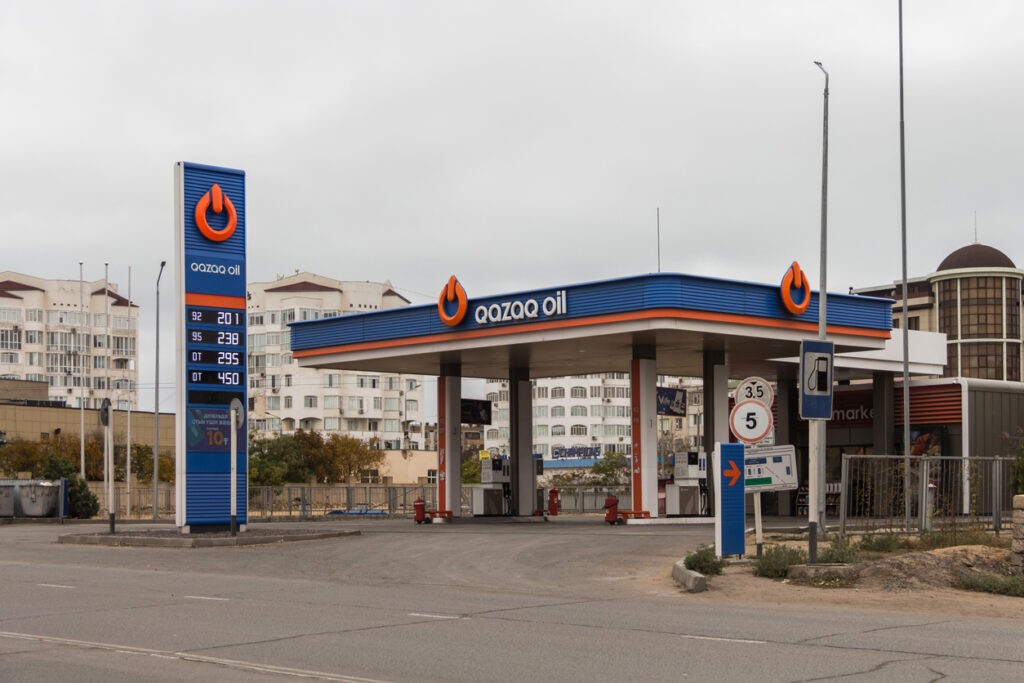
As part of the fight against the shadow gasoline market, the Kyrgyz authorities plan to introduce a rule that all gas stations in the country must label fuel from June 1 this year. The plan meant is to tighten control over the production, movement, storage, shipment and sale of motor fuels, and the initiator of the innovation is the tax service. The draft law was approved by the Ministry of Economy of Kyrgyzstan; the document is undergoing public hearings. According to the bill, from June 1, all gas stations in the country will be required to sell only labeled fuel. There will be an exception only for fuels and lubricants produced in Kyrgyzstan and exported. The requirement will be for vendors to add a small amount of a special molecular marker to each batch of fuel. The tax service said that such a marker cannot be faked and cannot be washed off or altered in any way. Once the law comes into force, tax officials plan to create a mobile laboratory that will travel around the country and check gasoline at gas stations. "Tax officials in any corner of the country will be able to check the legality of movement and sale of fuel and lubricants, and apply sanctions measures if necessary," the Kyrgyz tax service stated. Fuel markers will make it possible to determine the origin of gasoline and prevent the mixing of different brands of fuel. Tax officials said some gas stations currently mix various additives to gasoline to artificially increase its octane number or dilute the fuel to increase its volume. This isn't the first time the authorities have tried to introduce fuel-labeling in Kyrgyzstan, Kanat Eshatov, president of the republic's Association of Oil Traders commented, explaining that gas station owners include the cost of these substances in their pricing. This means that for the average consumer, gasoline will become more expensive. "So far we do not know how much such labeling will cost. We count gasoline by tons. So we will have to buy a certain amount of this substance per ton, and this amount will fall on the shoulders of the consumer," Eshatov explained to the Times of Central Asia. In their justification for the bill, Kyrgyz Economy Ministry officials said the country's fuel and lubricants trade has a high shadow, or unregulated market component. The shadow market of gasoline continues to grow. For example, on the bypass road near Bishkek, which runs along the border with Kazakhstan, one can find a dozen illegal sellers of gasoline, which they sell in plastic bottles. Gasoline is smuggled into Kyrgyzstan from neighboring republics. According to the Kyrgyz Tax Service, in 2023 the agency seized almost six times as much illegal fuel as in 2022 - 19,600 liters versus 3,400 liters in 2022. Legal gas stations sometimes also sell smuggled gasoline. With the introduction of labeling, this practice will stop, the tax service said.
Kazakh-Italian Project to Install New Hybrid Power Plant in Zhanaozen

On March 26 the chairman of Kazakhstan's state oil & gas company JSC KazMunayGas (KMG) Magzum Mirzaliyev met with Luca Vignati, a senior executive at the Italian oil & gas company Eni, to discuss the construction of a hybrid power plant in Zhanaozen. The parties discussed the current status of construction of a hybrid power plant in Zhanaozen, where wind (77 MW), solar energy (50 MW) and gas (120 MW) are planned to all be used in the energy mix. "We express our gratitude to Eni for fruitful cooperation and exchange of experience in the framework of this strategic energy project. We hope for further development of our cooperation in this area," said Mirzaliyev in a press release. On January 18 the parties signed an agreement in Rome for the construction of a hybrid power plant in the city of Zhanaozen, in Mangistau region. Additionally, the heads of KMG and Eni discussed drilling the first exploration well at the Abay site in the Caspian Sea -- as well as developing further stages of production at the Kashagan and Karachaganak fields, taking into account the priority to increase the production of marketable gas.

Kazakhstan’s Energy Ministry Lists Oil Reserves, Export Metrics

According to the Ministry of Energy of the Republic of Kazakhstan, at the beginning of 2024, oil reserves amounted to 4.4 billion tons. Those reserves are concentrated in Kazakhstan's largest oilfields, where 10 fields hold almost 80% of all recoverable reserves. They are: Kashagan (1.014 billion tons); Tengiz (899.2 million tons); Karachaganak (308.8 million tons, of which condensate: 242.3 million tons); Uzen (123.3 million tons); Korolevskoye (57.1 million tons); Zhanazhol (44.6 million tons, of which condensate: 8.8 million tons); Kalamkas (41.5 million tons); Karazhanbas (37.9 million tons); Buzachi Northern (35.1 million tons); Northern Truva (33.9 million tons, of which condensate: 1.4 million tons). The ministry of energy noted that total oil production is targeted to increase to 100 million tons per year. Work is already underway to expand production at the Kashagan and Tengiz fields, and exploration work to find new fields is also ongoing. Furthermore, the ministry names the countries which are the top importers of Kazakhstan's black gold exports. They included Italy, the Netherlands, China, Korea, Romania, France, Turkey, Greece, and Singapore. According to representatives of the Ministry of Finance of Kazakhstan, the income from oil production and export for the country consists of taxes paid by corporations within the oil sector. The amount of taxes the state receives depends on various factors, such as production volumes, depletion of reserves, tax exemptions, the world oil price, and transportation costs. The ministry of finance lists revenues for 2023 from oil production and exports as follows: customs export duties on crude oil (1.643 trillion tenge); mineral extraction tax from oil sector organizations (1.283 trillion tenge); rent tax on exports from oil-industry businesses (452 billion tenge). The total amount of tax received by Kazakhstan from the oil industry in 2023 amounted to about three trillion tenge ($6.6 billion). This year, the World Bank forecast a solid GDP growth rate of 3.4% for Kazakhstan's economy. The main driver of this growth will be the development of the hydrocarbon sector and increase in oil production. Experts note that increased oil production will increase export revenues and stimulate domestic economic growth.

Huge Increase in Gas Supplies to Uzbekistan Sparks Debate Over Russian Influence

In a significant development for energy dynamics in Central Asia, the volume of Russian natural gas transiting through Kazakhstan to Uzbekistan is poised for a substantial increase. By 2026, the annual transfer is set to leap from the current 3 billion cubic meters (bcm) to 11 bcm, as announced by Kazakhstan’s Minister of Energy, Almasadam Satkaliyev earlier this month. The genesis of this increase can be traced back to last year, when Uzbekistan began importing gas from Russia. This came after a pivotal agreement was signed between UzGasTrade and the Russian energy giant, Gazprom, delineating a daily gas supply of up to 9 million cubic meters, or equivalently, 2.8 bcm annually. This initial arrangement set the stage for further negotiations aimed at securing medium and long-term contracts to bolster Uzbekistan’s energy security and support its economic development. To accommodate this increase, substantial upgrades to Uzbekistan's main gas distribution system are underway. An investment of $500 million, sourced from foreign and multilateral loans, has been earmarked for this purpose. These enhancements are crucial to ensure the efficient and reliable delivery of the increased volumes to meet domestic demand. Adding another layer to this energy partnership, Gazprom’s CEO, Alexey Miller disclosed that discussions are ongoing for agreements that would solidify gas supply and transit obligations between Russia, Kazakhstan, Kyrgyzstan, and Uzbekistan for a duration of 15 years. Expected to be finalized by mid-2024, these agreements would signal a long-term commitment between the participating nations. This significant increase highlights the growing energy needs of Uzbekistan, but experts are divided as to whether it represents or will serve as a catalyst for a strategic and geopolitical alignment with Russia. Posting on Twitter, Dr. Luca Anceschi, Professor of Eurasian Studies at the University of Glasgow, argued that such “regimes have become even more entrenched in their authoritarian ways, [and] getting closer to the Kremlin - and this Kremlin more in particular - is a convenient move to establish an international environment conducive to regime maintenance.” In response, Professor at the National Defense University, Erica Marat cautioned against conflating “sentiments in the society” with the actions of the Uzbek authorities. Senior Lecturer at the OSCE Academy in Bishkek, Asel Doolotkeldieva, meanwhile, stated that “economic inter-dependence [will] be the last to wane in changing influences in the region… The argument about the increasing economic role of Russia does not take into account the diversification of Central Asia's other ties: with China, the Gulf States, and Asia.” Still, others have argued that since the invasion of Ukraine, Moscow’s influence has diminished, noting that Uzbekistan has “strictly [followed] international sanctions,” adopting a neutral stance. In October 2023, an Uzbek court even arrested a citizen for joining Russian troops fighting in Ukraine. Speaking to TCA about the increase in gas supplies and its possible implications, long-standing Central Asia journalist Bruce Pannier of the Davis Center at Harvard stated that “Uzbekistan has turned from a gas exporter to a gas importer in recent years, and its major foreign investors in developing...

Oil Products Were Kazakhstan’s Most Transported Cargo in 2023

In 2023, refined petroleum products became the most transported cargo by rail in Kazakhstan, according to the Ministry of Transport. Last year more than 27 million tons of cargo was transported by rail, up 18% from the 23.1 million tons of oil products shipped by rail in 2022, the ministry said. "Today, cargoes are mainly transported in the [directions of] China, Europe, the Russian Federation, Central Asia. Most of the transported goods are oil products," the ministry commented. The ministry also reported that under an agreement with the Eurasian Economic Union (EAEU), railway tariffs for the state railway company, Kazakhstan Temir Joly, for transportation are differentiated by type of cargo. Prices are set by the Committee for Regulation of Natural Monopolies of the Ministry of National Economy of Kazakhstan based on the national investment program. According to the Ministry of Energy of Kazakhstan, last year the country produced 89.9 million tons of oil. In January this year, crude oil production amounted to 6.7 million tons, which is 3.2% less than in January 2023.

North Caspian Operating Company Preparing for Onshore Oil Production at Kashagan

The drop in the surface level of the Caspian Sea has been of particular concern recently. The situation has led the North Caspian Operating Company (NCOC) -- which pumps oil at the Kashagan field in the northern part of the Caspian Sea -- to decide to implement onshore oil production. The current water level drop in the Caspian Sea has contributed to a decrease in the depth of the Ural River delta of up to 50cm in some places -- as well as the appearance of islands in the pre-delta area. Previously, NCOC had carried out improvement works and started dredging around the field's production facilities to ensure safe access for marine vessels. This increased the water depth to 4.3 meters from 2.5 meters. The NCOC's fleet consists of owned and chartered marine vessels, including hovercraft, and barges. The largest of them have a draft of 2.4-2.8 meters, which require an extra depth under the keel of 50cm for safe navigation. Emergency evacuation vessels have a draft of 2.2 meters. There have been no cases of stranding so far. The operator's representatives have stated that NCOC is constantly monitoring the level of the Caspian Sea, considering various possible scenarios, and ensuring proper conduct of operations at Kashagan. Kashagan is the largest oil & gas project in Kazakhstan. The level of oil production at Kashagan in 2023 showed record data of 18.8 million tons, or almost 380,000 barrels per day on average. In January of this year, total output from the field reached the milestone of 100 million tons of oil since the launch of production in 2013.
