• KZT/USD = 0.00226
  • TJS/USD = 0.10830
  • UZS/USD = 0.00009
  • TMT/USD = 0.29760
  • KZT/USD = 0.00226
  • TJS/USD = 0.10830
  • UZS/USD = 0.00009
  • TMT/USD = 0.29760
  • KZT/USD = 0.00226
  • TJS/USD = 0.10830
  • UZS/USD = 0.00009
  • TMT/USD = 0.29760
  • KZT/USD = 0.00226
  • TJS/USD = 0.10830
  • UZS/USD = 0.00009
  • TMT/USD = 0.29760
  • KZT/USD = 0.00226
  • TJS/USD = 0.10830
  • UZS/USD = 0.00009
  • TMT/USD = 0.29760
  • KZT/USD = 0.00226
  • TJS/USD = 0.10830
  • UZS/USD = 0.00009
  • TMT/USD = 0.29760
  • KZT/USD = 0.00226
  • TJS/USD = 0.10830
  • UZS/USD = 0.00009
  • TMT/USD = 0.29760
  • KZT/USD = 0.00226
  • TJS/USD = 0.10830
  • UZS/USD = 0.00009
  • TMT/USD = 0.29760
27 September 2026

Viewing results 1 - 6 of 416

Russia Reportedly Asks Kazakhstan for Extra Gasoline Amid Shortage From Drone Strikes

According to Reuters, Russia has asked Kazakhstan for 100,000 tons of gasoline, as Russian gasoline wholesalers hedge against possible fuel shortages due to Ukrainian drone attacks on Russian oil refineries. Reuters cited three people familiar with the matter. "Sources say Moscow has asked Kazakhstan to stockpile an emergency reserve of 100,000 tonnes of petrol for deliveries to Russia. Arrangements have already been made to provide Kazakh petrol to Russia. Belarus is also ready to help the neighbouring country with fuel," it reports. However, Kazakhstan's Ministry of Energy, through energy minister Shyngys Ilyasov, has not confirmed this information. Due to Ukrainian drone attacks on Russian refineries in early 2024, output of oil products in Russia fell by almost 14%. The drone strikes hit notable refineries such as Rosneft's Ryazan and Novokuibyshevsk complexes and Tatneft's Taneko refinery. The authorities claim that there is no fuel shortage on the Russian domestic market and that there is enough gasoline in stock. Nevertheless, Russia has introduced a temporary restriction on the export of fuel outside the country -- except to countries of the Eurasian Economic Union (EAEU). According to Reuters estimates, as of April 5, Russia's AI-92 gasoline reserves amount to 307,700 tons, AI-95 reserves were 58,000 tons, and diesel reserves were 435,300 tons. Meanwhile, since the beginning of this year, in Kazakhstan has stopped 171 cases of illegal export of oil products, as reported by the State Revenue Committee. Thousands of liters of Kazakhstan's subsidized gasoline were intended to be exported outside the country. Most of the shadow-economy exports were found at the Kazakh-Russian border. Currently, Kazakhstan has a ban on the export of certain types of petroleum products.
Lukoil to Invest $200 Million in Kazakhstani Oil & Gas Project

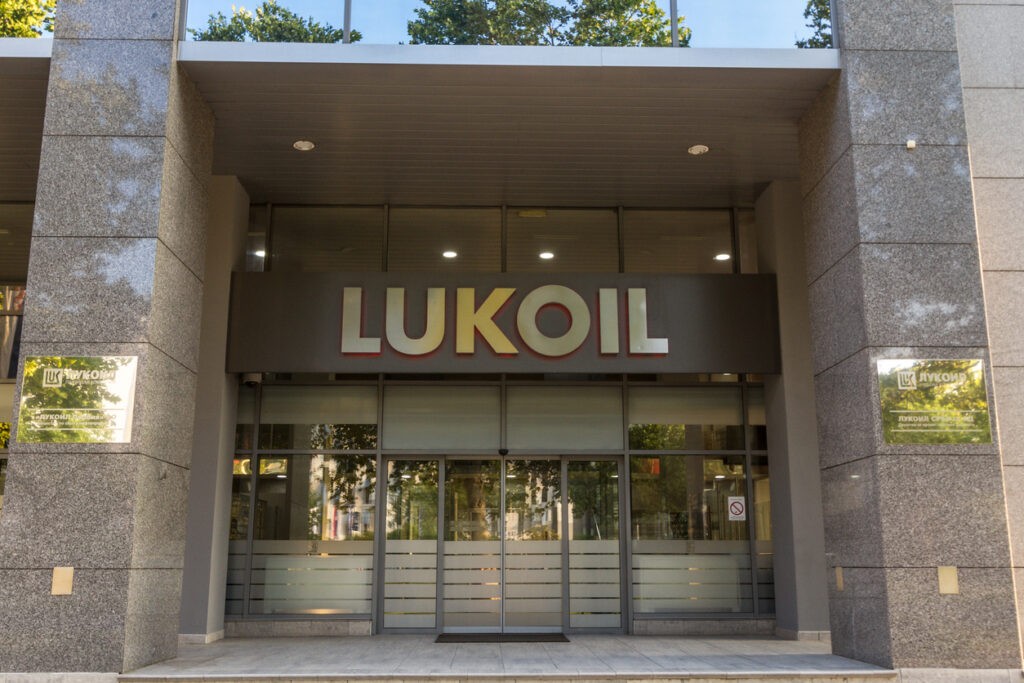
The Kalamkas Sea-Khazar project is expected to attract around $6.5 billion in total investment, and will be one of the first in Kazakhstan where oil production will be carried out from offshore platforms. In financial statements from Kazakh state energy company, KazMunayGas (KMG), it was stated that Russia's Lukoil has purchased a stake in the Kalamkas Sea oil & gas project in for $200 million. That amount was enough to buy a 50% stake in Kalamkas-Khazar Operating Co., which is engaged in hydrocarbon production at the subsoil areas of Kalamkas Sea, Khazar and Auezov. Furthermore, according to the terms of the agreement, Lukoil can pay another $100 million to increase its stake if it fulfills certain conditions. KMG made a solid profit on the deal, recognizing the additional cash from the sale as a financial asset, adding $29 million to their reserves. Lukoil has previously cooperated in similar projects in the Russian sector of the Caspian Sea, and has now become a strategic partners of KMG on the Kazakhstani side of the sea's border. KMG deputy chairman, Kuanysh Kudaibergenov explained that combining the Kalamkas Sea and Khazar projects into one subsoil use contract was a logical step. The fields were abandoned because they were not economically viable, but now they are back on the list for development thanks to a new approach and Russian investment.

Transport Diversification Allows Resumption of Kazakh Oil Product Exports to Europe

In March 2024, Kazakh state pipeline operator JSC KazTransOil again started loading of dark oil products produced at Kazakhstani refineries onto Aframax size tankers through the Republic of Georgia's Batumi Oil Terminal LLC. The shipments to European countries will total 60,000-80,000 tons. Aframax vessels are designed for the safe and efficient transportation of oil and oil products to various regions of the world, and can carry about 600,000 barrels of oil or petroleum products. The move is designed to diversify modes of transit, transportation routes and to improve economic efficiency. KazTransOil reports that it plans to load dark oil products of Kazakhstani origin regularly every month. This decision will allow customers of the Batumi Oil Terminal to reduce transportation costs, making the export route through Batumi more attractive, and should contribute to an increase in the volume of transported products. Over its more than twenty years of existence, KazTransOil has transported more than one billion tons of oil and has moved more than 825 billion ton-kilometers of cargo. To date, KazTransOil manages an extensive network of oil pipelines with a length of more than 5,400 kilometers, providing oil transportation both to domestic refineries and for export in different directions. The company remains in a leading position, providing transportation of about 40% of all oil produced in Kazakhstan and almost 90% of all crude supplies to domestic refineries.

South Korea Stops Importing Kazakh Oil Over Red Sea Ship Attacks

South Korea has suspended crude oil imports from Kazakhstan via the Caspian Pipeline Consortium (CPC), which yields the CPC Blend of crude oil made with Kazakh oil. No deliveries were made in February due to the Houthi attacks on ships in the Red Sea, according to a report by Standard & Poors (S&P). Against this backdrop, South Korea decided instead to increase purchases of West Texas Intermediate (WTI) crude from the U.S. "Local refiners consider the logistics of buying light, low-sulfur crude from Kazakhstan too costly and inefficient amid ongoing security concerns in the Red Sea," analysts from S&P wrote. A crude manager at one South Korea's two largest refineries commented: "Logistics to deliver CPC Blend have become very difficult because there are fewer ships in the Red Sea area, and delivery costs are still trending upward due to rising insurance premiums." South Korea is one of the main importers of Kazakhstan's CPC Blend crude as local refiners have favored light, low-sulfur crude with high middle-distillate yields and consumption averaging about 3-5 million barrels per month over the past decade. According to Korea's National Oil Corporation, zero oil shipments from Kazakhstan were recorded for the first time since October 2020. CPC Blend crude is first delivered from the refineries to the Russian Black Sea port of Novorossiysk via the Tengiz-Black Sea pipeline -- and then shipped via the Suez Canal to South Korean ports. However, according to refineries, since 2023 CPC Blend oil for South Korea has been delivered bypassing the Suez Canal, via a longer route around South Africa's Cape of Good Hope. According to analysts from the Korean Petroleum Association in Seoul, refineries in South Korea will significantly reduce their future purchases of Kazakh CPC Blend.

Will Europe Learn Lessons From Central Asian Gas Failures to Secure Oil Imports Bypassing Russia?

Despite loud statements and reports, alternative routes for transporting oil from Kazakhstan and Central Asia to Europe remain only intentions. The desire of the EU to diversify its hydrocarbon suppliers is running into internal bureaucracy and a lack of understanding of how things work in Central Asia, which is in fact seeking to ship its energy in different directions.   Lost gas To start, it is worth recalling the Turkmenistan-Russia gas dispute of 2009. Before that, Gazprom bought gas from Central Asian countries at the border, swapping some volumes of domestic supplies with Kazakhstan, Turkmenistan and Uzbekistan, and buying gas at prices lower than EU export rates. Gazprom explained this practice rather simply: there is no economic sense in transporting the gas through Russian territory, so at the border the price cannot be European (minus transportation) – this gas was consumed in Russia or supplied at preferential prices to Ukraine, while Russian gas was sent to Europe. In 2008, Turkmenistan produced 70.5 billion cubic meters (bcm) of gas, exporting 47 bcm, with an increase in production and exports planned for 2009. According to the Energy Institute, gas consumption by European countries in 2022 amounted to 498.8 bcm, meaning Turkmenistan alone, assuming export volumes stabilized at 50 bcm per year, could cover 10% of Europe’s needs. That amount, 50 bcm of gas, is the annual consumption of Switzerland, Sweden, the Czech Republic, Greece, Portugal, Slovakia, Slovenia, Bulgaria, Croatia, Denmark, Estonia, Finland, Ireland, Latvia, Lithuania, Luxembourg, Norway and North Macedonia combined. However, Turkmen gas would never reach Europe. When an agreement on the volumes and prices of gas purchases by Gazprom failed to be reached, 15 years ago, on April 9, 2009, there was an explosion and fire on the eastern branch of the Central Asia-Center (CAC) gas pipeline, at CAC-4. Subsequent negotiations to resume the transport of Turkmen gas between Russian President Dmitri Medvedev and Turkmen leader Gurbanguly Berdimuhamedov, which took place in September 2009 in Moscow, could not resolve the dispute. All these years, the media and European leaders have been talking about building the so-called Nabucco gas pipeline, which was to go from Central Asia, along the bottom of the Caspian Sea, through Azerbaijan and on to Germany and Austria. Its design began back in 2002. Note that by 2009, had the project been energetically implemented, Nabucco could have been built and the first deliveries would have begun. In 2022, gas consumption in Germany and Austria amounted to 77.3 bcm and 7.9 bcm, respectively, meaning supplies from Central Asia could cover at least half of their needs. This seemed like the perfect opportunity for a large-scale gas pipeline. The Central Asian countries wanted to supply gas to Europe via alternative routes, receiving European prices for their commodities, and Europe could have significantly diversified its gas imports. Another player, however, was closely watching Europe’s red tape and indecision – China.   Hidden dragon China understands how to work with Central Asia, and in 2007 construction of the first line of...

Experts Warn Kazakhstan Over Possible Consequences of Further Armenia-Azerbaijan Conflict

On March 31, the Azerbaijani Defense Ministry said on its website that provocations on the Armenian-Azerbaijani border have recently become more frequent - and warned the Armenian authorities that Baku could take tough retaliatory measures. The same day, the Armenian Defense Ministry on its website rejected the information that it was accumulating troops on the Armenian-Azerbaijani border. The EU Mission in Armenia also stated that “no such movements have been observed.” This turn of dialogue closely mirrors the events of autumn 2020, when there was a major military escalation. The Azerbaijani Defense Ministry then repeatedly warned Armenia against provocations in the conflict zone - and after that, hostilities started. If the Armenian-Azerbaijani conflict develops, Kazakhstan will have to stop oil supplies to Europe via Azerbaijan, as the country is a member of the regional Collective Security Treaty Organization (CSTO), notes economist Galym Khusainov. "It is necessary to prepare a plan of action in case the conflict intensifies and Kazakhstan's oil supplies through Azerbaijan may be cut off," he told the Times of Central Asia. Furthermore, Kazakhstan could face major losses if investments are made in developing the Zangezur transportation corridor, financier Rasul Rysmambetov said. "The most important strategy is to develop as many corridors as possible: Azerbaijan, the northern direction, the southern direction, [and] transit to Europe via Russia. In general, Kazakhstan mainly exports oil, so we just need to develop as many corridors as possible, so that the loss of one corridor or damage to one corridor will not affect the overall export of our goods," Rysmambetov told the Times of Central Asia. The conflict between Armenia and Azerbaijan escalated in the early 1990s after the collapse of the Soviet Union, centered around the dispute over control of the Karabakh region. As a result of the First Karabakh War, the region passed to Armenian jurisdiction. In the fall of 2020, after the Second Karabakh War, Karabakh passed to Azeri control. The United Nations (UN) recognizes Karabakh as the territory of Azerbaijan. Despite the population within its borders being 94% ethnically Armenian, the Bolsheviks eventually founded the Nagorno-Karabakh Autonomous Oblast as part of Soviet Azerbaijan in 1923. Whilst there was an economic logic in allowing farmers to reach their traditional grazing lands without the hindrance of borders, the decision also owed much to divide and rule politics and a desire to please their Kemalist allies in Turkey. In 1921, the Treaty of Kars saw Moscow cede "imperialist" Western Armenia to Turkey as part of a ‘friendship and brotherhood’ agreement, the Soviets even going so far as to arm Kemalist troops. Massacres continued, and in September 1922 an estimated 100,000 Christians - 25,000 of whom were Armenians - were killed in modern-day Izmir alone. Today, the threat of war between Armenia and Azerbaijan lingers in part because the issue of political control of several villages on the Armenia-Azerbaijan border in Armenia's Syunik region remains unresolved. Azerbaijan calls these territories its historical lands, while Armenia argues that they are its territory, as...