• KZT/USD = 0.00220
  • TJS/USD = 0.10850
  • UZS/USD = 0.00008
  • TMT/USD = 0.29850
  • KZT/USD = 0.00220
  • TJS/USD = 0.10850
  • UZS/USD = 0.00008
  • TMT/USD = 0.29850
  • KZT/USD = 0.00220
  • TJS/USD = 0.10850
  • UZS/USD = 0.00008
  • TMT/USD = 0.29850
  • KZT/USD = 0.00220
  • TJS/USD = 0.10850
  • UZS/USD = 0.00008
  • TMT/USD = 0.29850
  • KZT/USD = 0.00220
  • TJS/USD = 0.10850
  • UZS/USD = 0.00008
  • TMT/USD = 0.29850
  • KZT/USD = 0.00220
  • TJS/USD = 0.10850
  • UZS/USD = 0.00008
  • TMT/USD = 0.29850
  • KZT/USD = 0.00220
  • TJS/USD = 0.10850
  • UZS/USD = 0.00008
  • TMT/USD = 0.29850
  • KZT/USD = 0.00220
  • TJS/USD = 0.10850
  • UZS/USD = 0.00008
  • TMT/USD = 0.29850
30 October 2026

Viewing results 1 - 6 of 17

Turkic States Focus on AI and Trade at Kazakhstan Summit

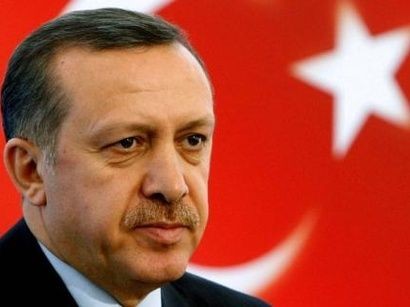
Leaders of the Organization of Turkic States (OTS) are holding an informal summit in the city of Turkistan, focused on artificial intelligence, digitalization, and economic integration, as Central Asia gains importance as an alternative trade corridor between Europe and China. The meeting brings together the leaders of Kazakhstan, Turkey, Azerbaijan, Uzbekistan, and Kyrgyzstan, along with representatives of observer states. Discussions are centered on digital platforms, joint AI projects, transport corridors, and industrial cooperation. The summit comes amid rapid growth of the Trans-Caspian International Transport Route, also known as the Middle Corridor, which links China and Europe through Central Asia and the Caucasus while bypassing Russia. According to analysts in Kazakhstan, cargo volumes along the route reached 3.3 million tons in 2024, almost six times the 2021 level. Turkish President Recep Tayyip Erdoğan arrived in Astana on a state visit ahead of the summit and held talks with Kazakh President Kassym-Jomart Tokayev. “Kazakhstan and Turkey are connected by enduring friendship, brotherhood, and eternal partnership,” Tokayev said following the meeting. Erdoğan thanked Kazakhstan for the reception and highlighted the escort provided by Kazakh military fighter jets after his aircraft entered the country’s airspace. According to participants at the OTS business forum, the combined GDP of member states exceeds $2.1 trillion, while their total population stands at 178 million people. Despite increasing political coordination, trade between OTS countries still accounts for only around 7% of their total foreign trade turnover, leaving considerable room for deeper economic integration, analysts say. OTS member states are increasingly seeking to expand cooperation beyond cultural and political ties by focusing on logistics, the digital economy, and joint investment projects. Kazakhstan views the organization as one of the instruments for diversifying its foreign economic relations and expanding its role as a transit hub between Asia and Europe.
Opinion: Turkey’s Third Vector: How the Turkic States Are Expanding Central Asia’s Room for Maneuver

President Recep Tayyip Erdoğan’s May 13-14 state visit to Kazakhstan and the May 15 informal summit of the Organization of Turkic States in Turkistan should not be read as isolated diplomatic events. Together, they point to a larger shift in Central Asia’s geopolitical architecture. During Erdoğan’s visit to Astana, Kazakhstan and Turkey signed the Declaration on Eternal Friendship and Expanded Strategic Partnership, along with agreements covering trade, transport, energy, education, investment, defense cooperation, oil and gas, and financial-sector collaboration. The two sides also reaffirmed their goal of raising bilateral trade to $15 billion. Erdoğan was awarded the newly established Khoja Ahmed Yassawi Order, a symbolic gesture tied to the summit being hosted in Turkistan, the city most closely associated with Yassawi’s legacy. A day later, Turkistan hosted the informal summit of the Organization of Turkic States under the theme “Artificial Intelligence and Digital Development.” The timing matters. Central Asia is no longer operating inside a simple Russia-China framework. Russia remains deeply embedded in the region through security history, infrastructure, language, labor migration, and energy networks. China remains the region’s main infrastructure and trade heavyweight. The West is increasingly focused on sanctions, critical minerals, connectivity, and the Middle Corridor. But Turkey is becoming something different: not a replacement for Russia or China, but a useful third vector. Its influence is built on identity, logistics, defense technology, education, digital cooperation, and institutional networking through the Turkic States framework, rather than overwhelming capital or military dominance. Turkey as a Corridor Power Turkey cannot match China’s investment scale in Central Asia. It also cannot match Russia’s historical security depth. Ankara does not need to replace either power to matter. Its comparative advantage is different. Turkey connects Central Asia westward, to the South Caucasus, the Black Sea, the Mediterranean, and Europe. It also offers a language of partnership that is culturally familiar and politically less threatening than great-power patronage. Tokayev captured this dimension during the joint statements in Astana, describing Turkey as a “golden bridge” connecting Europe and Asia. The framing is telling: not a partner of equal weight, but a connector, exactly the function of a corridor power. A corridor power does not dominate a region directly. It expands the routes, partnerships, platforms, and strategic options available to states that do not want to be trapped between larger powers. That is why the Erdoğan-Tokayev meeting and the Turkistan summit matter. The issue goes beyond bilateral trade. It is the gradual construction of a Turkic corridor linking identity, transport, defense, digital governance, and markets. The OTS as Identity Infrastructure The Organization of Turkic States is often dismissed as symbolic: summits, speeches, flags, cultural rhetoric, and references to shared history. That reading is incomplete. Identity is not just emotion. In international politics, identity can become infrastructure. Shared language, educational networks, media links, cultural affinity, and repeated institutional contact reduce the cost of trust-building. They make it easier to sign agreements, build transport projects, expand student exchanges, coordinate business forums, and create political habits of consultation. The...

Erdoğan Visit Puts Trade, Transit, and Turkic Economic Integration at Center of Kazakhstan’s OTS Push

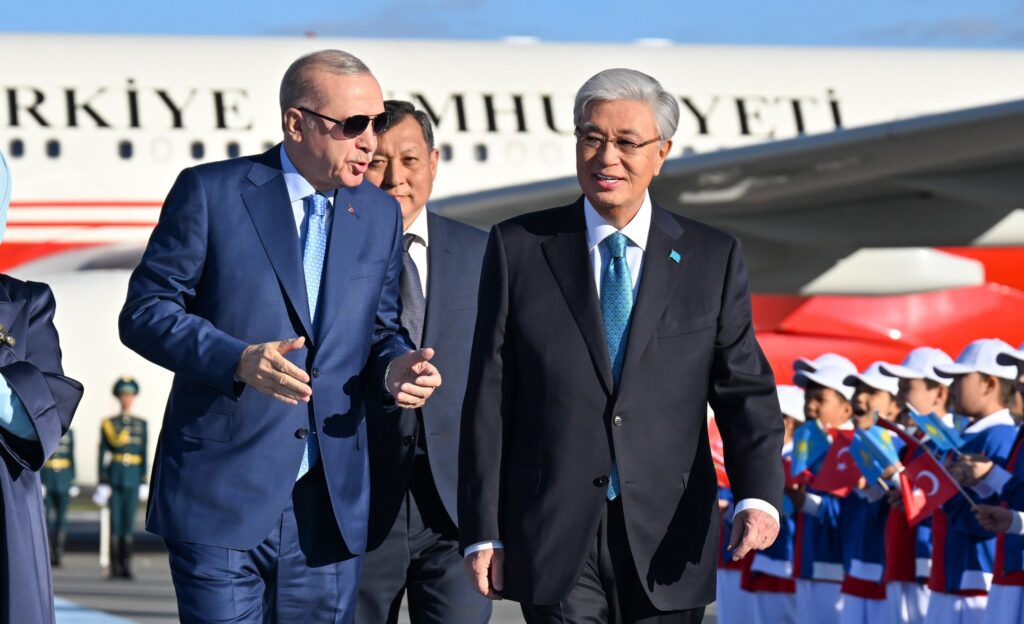
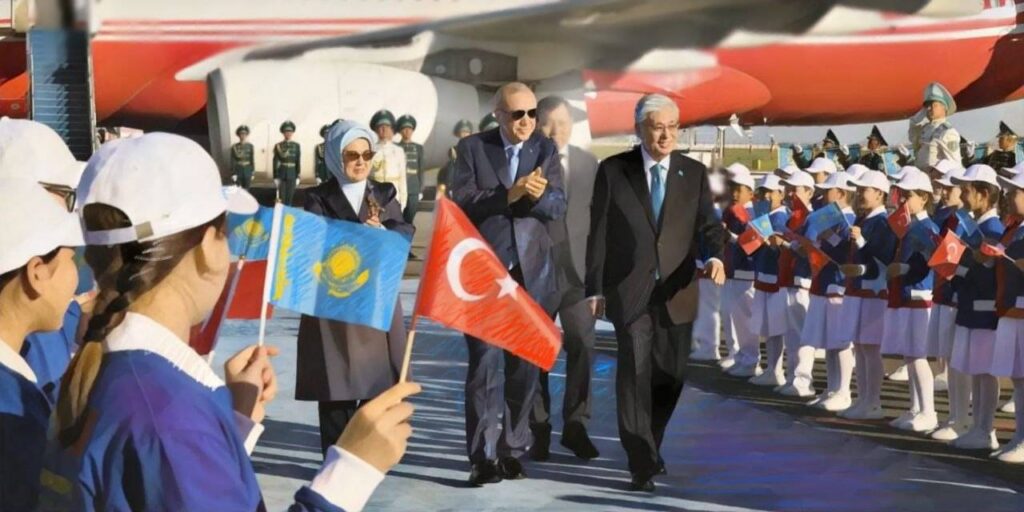
Turkish President Recep Tayyip Erdoğan’s visit to Kazakhstan comes as Astana is trying to give the Organization of Turkic States a more practical economic role, linking trade, investment, transport, digital development, and business financing across the Turkic world. The visit centered on three connected events: Erdoğan’s official visit to Astana, the sixth meeting of the Kazakhstan-Turkey High-Level Strategic Cooperation Council, and the informal summit of the Organization of Turkic States in Turkistan. Erdoğan arrived in Astana ahead of talks with President Kassym-Jomart Tokayev, while Turkish media reported that the agenda included transport links through the Middle Corridor, Caspian transit routes, energy security, logistics, defense industry cooperation, trade and investment. The visit also carried strong symbolic staging. According to Akorda, Erdoğan’s aircraft was escorted by Kazakh Air Defense fighter jets after entering Kazakhstan’s airspace. At Astana airport, he was greeted by an honor guard, children waving the flags of Kazakhstan and Turkey, and military helicopters displaying the national symbols of both countries. Erdoğan later said the welcome had brought his delegation “enormous joy,” adding, “We certainly will not forget this.” [caption id="attachment_48862" align="aligncenter" width="1280"] Kazakh aircraft fly over Astana during the ceremonial welcome for Erdoğan. Image: Akorda[/caption] The OTS summit is being hosted by Kazakhstan on May 15 in Turkistan under the theme “Artificial Intelligence and Digital Development.” According to the organization, the summit is intended to advance cooperation on artificial intelligence, digital innovation, emerging technologies, public services, sustainable economic growth, and regional connectivity. The digital theme reflects Kazakhstan’s effort to give the OTS a more practical economic role, beyond its cultural and diplomatic foundations. Ahead of the summit, Astana hosted a business forum on May 13 under the title “Economic Integration and Cooperation of the OTS Countries: New Opportunities in Industry, Agro-Industrial Complex, Logistics and Digitalization.” Kazakhstan’s prime minister’s office said the forum brought together state bodies, financial institutions, chambers of commerce, international organizations, and business representatives from OTS countries. Kanat Sharlapayev, chairman of the Union of Chambers of Commerce and Industry of Turkic States and of the presidium of Kazakhstan’s Atameken National Chamber of Entrepreneurs, urged Turkic countries to move toward deeper industrial and digital integration. He said the task was to create a unified digital environment, reduce the distance between producers and consumers, increase transparency, and speed up transactions. The forum also discussed plans for joint industrial facilities and manufacturing zones along transport corridors, an idea that would push OTS cooperation beyond transit toward processing and value-added production. Deputy Prime Minister and Minister of National Economy Serik Zhumangarin used the forum to frame OTS cooperation as one of Kazakhstan’s foreign economic priorities. He said the OTS countries form a market of more than 170 million people and have significant industrial, transport, agricultural, and human potential. He also said the main task was to move from declarations to joint projects, new production, technology alliances, and mutual investment. Silk Way TV reported that Murat Karimsakov, chairman of the Kazakh Chamber of International Commerce, said trade turnover among OTS countries increased...

Turkic States to Focus on Artificial Intelligence at Kazakhstan Summit

Kazakhstan will host an informal summit of the Council of Heads of State of the Organization of Turkic States (OTS) in the city of Turkistan on May 15, where participating leaders are expected to focus on artificial intelligence, digitalization, and expanding economic cooperation. Held under the theme “Artificial Intelligence and Digital Development,” the summit is expected to become one of the largest regional gatherings of Turkic states in 2026. Heads of state and government from member and observer countries, along with the OTS secretary-general, are expected to attend. According to the organization, participants will discuss the use of AI and digital innovation to stimulate economic growth, modernize public services, and improve regional connectivity. The agenda also includes joint initiatives involving Turkic digital platforms. Ahead of the summit, President Recep Tayyip Erdoğan of Turkey will make a state visit to Astana at the invitation of President Kassym-Jomart Tokayev. The leaders of Kazakhstan and Turkey are scheduled to hold the sixth meeting of the High-Level Strategic Cooperation Council and discuss the development of bilateral relations. In recent years, the OTS has gradually expanded cooperation beyond its traditional political and cultural agenda to include transport corridors, energy, and the digital economy. The summit in Turkistan is expected to represent an effort to shape a common regional agenda in the field of artificial intelligence. The OTS said holding the meeting in Turkistan, described by the organization as the “spiritual capital of the Turkic world”, symbolizes an attempt to combine shared historical heritage with technological modernization across the region. The organization’s members include Kazakhstan, Turkey, Azerbaijan, Uzbekistan, and Kyrgyzstan. Observer status is held by Turkmenistan, Hungary, and the Turkish Republic of Northern Cyprus. The economic dimension of the summit also remains central. According to Turkish sources, annual trade turnover between Turkey and OTS member states has approached $17 billion. Turkish exports to Kazakhstan, Azerbaijan, Kyrgyzstan, and Uzbekistan increased from $6.2 billion in 2021 to $10 billion in 2024. During the same period, imports rose from $4.2 billion to $6.5 billion. In 2025, Turkish exports to OTS countries totaled $9.6 billion, while imports reached $7.3 billion. Kazakhstan remains Turkey’s largest export destination among OTS member states, with Turkish exports to the country reaching $3.2 billion. During the first three months of 2026 alone, Turkish exports to Kazakhstan amounted to approximately $700 million. A Turkish-Kazakh business forum is also expected to take place during Erdoğan’s visit to Astana, with participation from business representatives from both countries and Turkey's Trade Minister Ömer Bolat. The forum is expected to focus on expanding trade and investment ties. As preparations for the summit intensify, Kazakhstan has increased security measures. Additional police forces from neighboring regions have reportedly been deployed to Turkistan, while military aviation training flights began in Astana on May 10 ahead of an aerial demonstration scheduled for May 15. Kazakhstan’s Defense Ministry said the flights would be conducted at safe altitudes and should not significantly affect daily life in the capital.

Central Asia Holds Back on Hungary Election as Orbán Era Ends

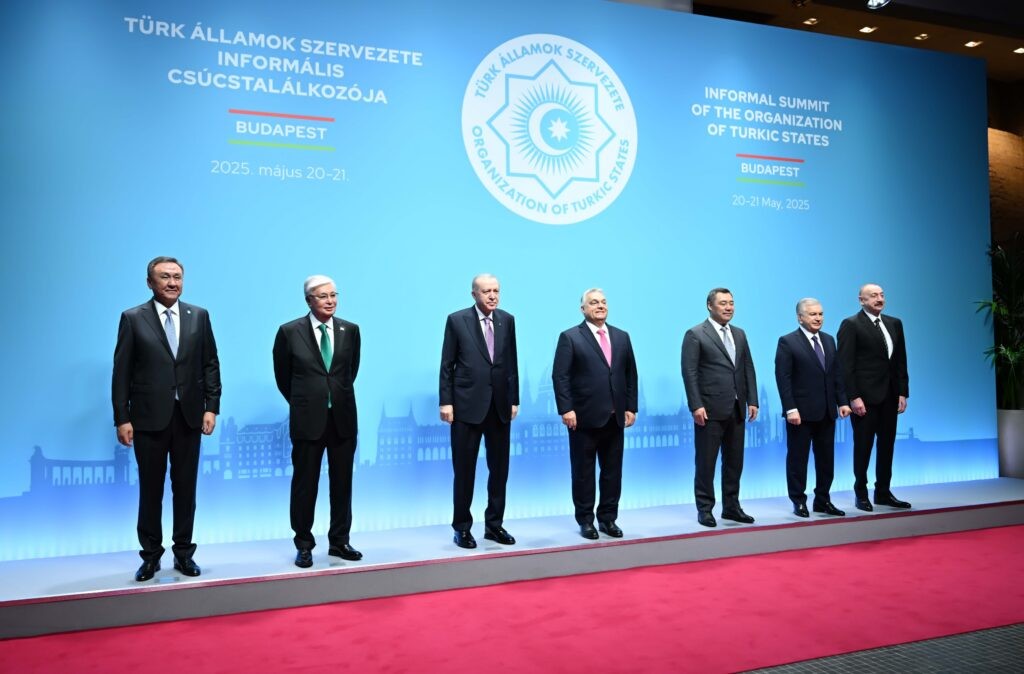
Central Asian governments have still yet to issue public statements on Hungary’s election, which brought an end to Viktor Orbán’s 16-year tenure. Hungary’s National Election Office published official updates after the April 12 vote, with Orbán conceding defeat after preliminary results indicated a landslide victory for Péter Magyar’s Tisza party. European leaders responded quickly, but no comparable messages have appeared on the main official channels in Astana, Tashkent, Bishkek, Dushanbe, or Ashgabat. The absence is not a breach of diplomatic protocol. Governments often wait for formal certification or initial contacts before issuing congratulations after parliamentary elections. Yet Hungary occupies a distinct place in Central Asia’s external relations. It is an observer in the Organization of Turkic States, and President Kassym-Jomart Tokayev attended the informal OTS summit in Budapest, where Viktor Orbán hosted regional leaders and promoted closer ties. Hungary has presented itself as a bridge between Central Asia and the European Union, with regular high-level exchanges and expanding economic links. Recent precedent underscores the contrast. Following Hungary’s 2022 election, Kazakhstan’s Akorda said Kassym-Jomart Tokayev sent Viktor Orbán a congratulatory telegram on April 4, the day after the vote, and Uzbekistan reported that President Shavkat Mirziyoyev phoned Orbán on April 14, 2022 to offer his congratulations. No similar outreach has been made public so far in 2026. The delay reflects a period of adjustment rather than a clear shift. Orbán’s government had cultivated close personal and political ties with Central Asian leaders, and Budapest played an active role in advancing cooperation through the Turkic framework. A new Hungarian administration may recalibrate those priorities as it seeks to strengthen relations within the EU, creating uncertainty for partners that had relied on Hungary as a consistent advocate in Europe. For now, the silence signals caution. Central Asian governments appear to be waiting for the formal transition in Budapest and for early indications of the new government’s foreign policy. If statements follow in the coming days, the current pause will look procedural. If it continues, it will carry more weight as a sign of recalibration in a relationship that had been unusually close.

Informal OTS Foreign Ministers’ Meeting Tests Limits of Turkic Coordination

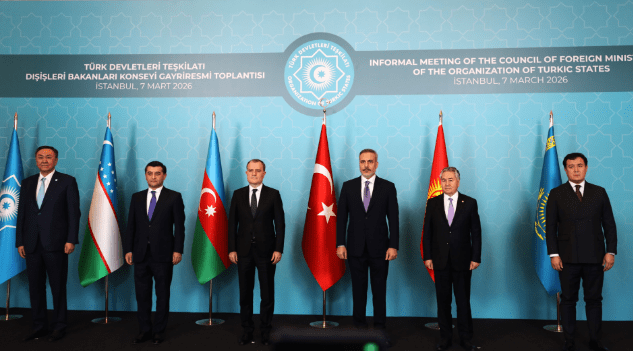
Escalating tensions linked to the widening conflict in the Middle East have tested the political cohesion of the Organization of Turkic States (OTS), according to Kazakh political commentator Dzhanibek Suleyev. Recent incidents affecting both Azerbaijan and Turkey — including drone strikes in Azerbaijan’s Nakhchivan Autonomous Republic and a missile intercepted by Turkish air defenses — have raised security concerns across the wider region. Suleyev argues that developments of this scale might normally prompt an urgent summit of heads of state. Instead, Turkey convened an informal meeting of foreign ministers and senior diplomatic representatives from OTS member states. The gathering took place on March 7, when officials convened at the invitation of Turkish Foreign Minister Hakan Fidan. According to Turkish media, ministers later met with President Recep Tayyip Erdoğan during their visit. Speaking to The Times of Central Asia, Suleyev drew attention to how the meeting was covered in the media of Central Asian member states. “In the Uzbek press, coverage was limited, and even on the website of their Ministry of Foreign Affairs, there is not a single word about the informal summit of OTS foreign ministers. Kazakhstan, moreover, was represented not by Foreign Minister Yermek Kosherbayev but by his deputy Alibek Bakayev. Kyrgyzstan’s Foreign Ministry issued four notes about the trip of its minister Jeenbek Kulubaev to Istanbul, three of which were devoted to the summit, but without any particular details,” Suleyev said. Kazakhstan’s Foreign Ministry published a short summary of the meeting, noting in broad terms that representatives discussed cooperation among Turkic states and regional developments. According to Suleyev, the joint statement adopted after the meeting was difficult to find outside of Azerbaijani media. One of the few outlets to publish the text in full was Azerbaijan’s APA news agency. Much of the statement focused on the incidents affecting Azerbaijan and Turkey, stressing that “any threat to the security of OTS member states causes concern for the entire Organization… The ministers strongly condemned the attacks carried out from the territory of the Islamic Republic of Iran against the Nakhchivan Autonomous Republic of the Republic of Azerbaijan, including strikes against civilian facilities and the territory of the Republic of Turkey,” the statement continued. “The rest of the statement boils down to destabilization in the Middle East could lead to a global economic crisis, the Palestinian conflict must be resolved taking into account UN resolutions, and so on,” Suleyev told TCA. One notable event during the meeting was the foreign ministers’ reception by President Erdoğan. Official summaries released by participating governments described the discussion in diplomatic terms. “Kazakh sources wrote that ‘prospects for the development of cooperation within the framework of Turkic cooperation were discussed,’” Suleyev said. Kyrgyz statements used similar language, stating that the “President of Turkey… noted the importance of regular dialogue on current regional and international issues and expressed interest in further developing multilateral cooperation within the framework of the Organization.” “In short, these are streamlined diplomatic formulations without specific details,” Suleyev said. According to a press...