• KGS/USD = 0.01144 0%
  • KZT/USD = 0.00212 0%
  • TJS/USD = 0.10543 -0.09%
  • UZS/USD = 0.00008 0%
  • TMT/USD = 0.28530 0%
  • KGS/USD = 0.01144 0%
  • KZT/USD = 0.00212 0%
  • TJS/USD = 0.10543 -0.09%
  • UZS/USD = 0.00008 0%
  • TMT/USD = 0.28530 0%
  • KGS/USD = 0.01144 0%
  • KZT/USD = 0.00212 0%
  • TJS/USD = 0.10543 -0.09%
  • UZS/USD = 0.00008 0%
  • TMT/USD = 0.28530 0%
  • KGS/USD = 0.01144 0%
  • KZT/USD = 0.00212 0%
  • TJS/USD = 0.10543 -0.09%
  • UZS/USD = 0.00008 0%
  • TMT/USD = 0.28530 0%
  • KGS/USD = 0.01144 0%
  • KZT/USD = 0.00212 0%
  • TJS/USD = 0.10543 -0.09%
  • UZS/USD = 0.00008 0%
  • TMT/USD = 0.28530 0%
  • KGS/USD = 0.01144 0%
  • KZT/USD = 0.00212 0%
  • TJS/USD = 0.10543 -0.09%
  • UZS/USD = 0.00008 0%
  • TMT/USD = 0.28530 0%
  • KGS/USD = 0.01144 0%
  • KZT/USD = 0.00212 0%
  • TJS/USD = 0.10543 -0.09%
  • UZS/USD = 0.00008 0%
  • TMT/USD = 0.28530 0%
  • KGS/USD = 0.01144 0%
  • KZT/USD = 0.00212 0%
  • TJS/USD = 0.10543 -0.09%
  • UZS/USD = 0.00008 0%
  • TMT/USD = 0.28530 0%

Viewing results 1 - 6 of 23

Uzbekistan Introduces Comprehensive Support for Palestinian Evacuees

Uzbekistan has introduced comprehensive measures to assist Palestinian women and children evacuated from Gaza late last year, including financial aid, housing support, free education, and healthcare. A presidential decree published on August 14 announced the creation of a special fund to finance these programs, UzA reported. On December 26, 2024, 100 injured Palestinian women and children were evacuated from Rafah to Uzbekistan. They were admitted to hospitals and rehabilitation centers for treatment and provided with medication and medical examinations. Authorities say the new measures aim not only to address urgent needs but also to help the group adapt and integrate into Uzbek society. Special fund and social support The decree establishes a special fund under the National Social Protection Agency to cover living expenses, rent, and one-time material assistance. Funding will come from charitable donations, international grants, and other legal sources, with spending monitored by a national commission to ensure transparency. The measures include monthly allowances for working-age adults, full coverage of rental costs for families, one-time payments for childbirth and funeral expenses equivalent to those granted to Uzbek citizens, and lump-sum assistance for essential non-food items. Each family will be assigned a local social worker to assess needs and provide tailored support. A Republican Commission will coordinate the work of government agencies to resolve practical issues swiftly. Local mahalla committees and social service centers will directly assist families in adapting to community life. Focus on education and healthcare The decree guarantees free enrollment for children in state kindergartens and schools without waiting lists, with kindergarten fees waived until January 1, 2028. The Ministry of Higher Education will recognize the foreign academic documents of Palestinian students within two months, without fees or additional exams. The Ministry of Health will register evacuees at family medical centers and polyclinics near their residences, granting them free care on the same terms as low-income Uzbek families. Any evacuee diagnosed with a disabling condition will be granted disability status regardless of treatment timelines, while elderly people without sufficient work records will receive pensions within two weeks. Employment and integration The Social Protection Agency has one month to develop proposals for helping evacuees find jobs and acquire new skills. The Ministries of Economy and Labor, along with commercial banks, will include Palestinians in entrepreneurship and small business support programs such as “Family Entrepreneurship,” “Support for Small Business,” and “First Step to Business.” Local officials and community bankers will oversee the use of funds and provide practical guidance. Humanitarian context Uzbekistan’s decision comes amid a worsening humanitarian crisis in Gaza. According to the Health Ministry in the Hamas-run administration, more than 60,000 Palestinians have been killed and over 145,000 injured since the outbreak of war in October 2023, the Associated Press reported. Israeli Prime Minister Benjamin Netanyahu has reportedly suggested relocating Palestinians from Gaza to countries including South Sudan, a proposal that Juba has denied discussing. Hamas says it will disarm only if Israeli forces fully withdraw from Gaza, a condition that continues to hinder progress in...
Uzbekistan Evacuates 100 Injured Palestinians for Treatment and Care

Uzbekistan has evacuated 100 injured Palestinian women and children, along with their guardians, from Rafah to provide medical treatment and care. Uzbekistan’s ambassador to Egypt, Mansurbek Kilichev, shared the details with the Egyptian Ahram portal. The evacuation was initiated by President Shavkat Mirziyoyev in collaboration with the health ministries of Uzbekistan and Egypt. According to Kilichev, the evacuees will remain in Uzbekistan until it is safe enough for them to return to their homeland. Currently, they are being housed in rehabilitation centers and hospitals, where they are receiving medical care and recovery support. The Uzbek government is ensuring that the evacuees have access to housing, food, medical assistance, and education for the children during their stay. Kilichev affirmed that they are living in comfortable conditions. This initiative reflects Uzbekistan’s broader humanitarian efforts. In November, President Mirziyoyev addressed an Arab-Islamic summit on the issue of Palestine, calling for an end to military actions in Palestinian territories and the establishment of humanitarian corridors. He also expressed Uzbekistan’s readiness to host injured women and children for treatment and rehabilitation. Uzbekistan’s assistance to Palestinians is part of a sustained effort. Last year, President Mirziyoyev allocated $1.5 million to the United Nations Relief and Works Agency (UNRWA) to support Palestinian refugees in Gaza. This recent evacuation demonstrates Uzbekistan’s commitment to providing humanitarian aid while encouraging stability in the region.

Mirziyoyev Offers to Bring Wounded Palestinians to Uzbekistan for Treatment

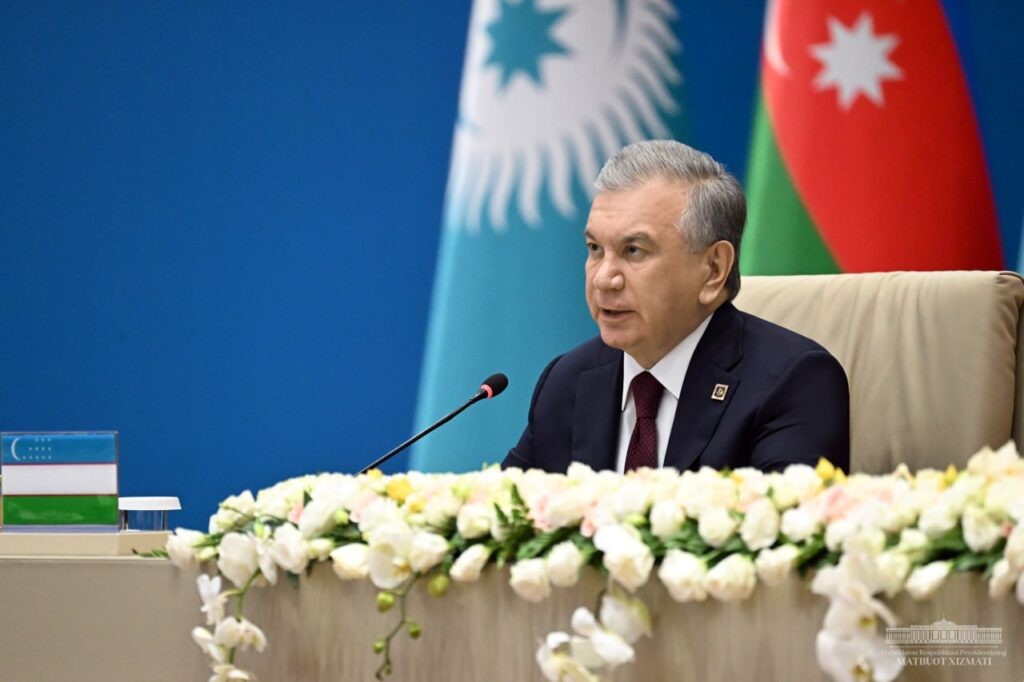
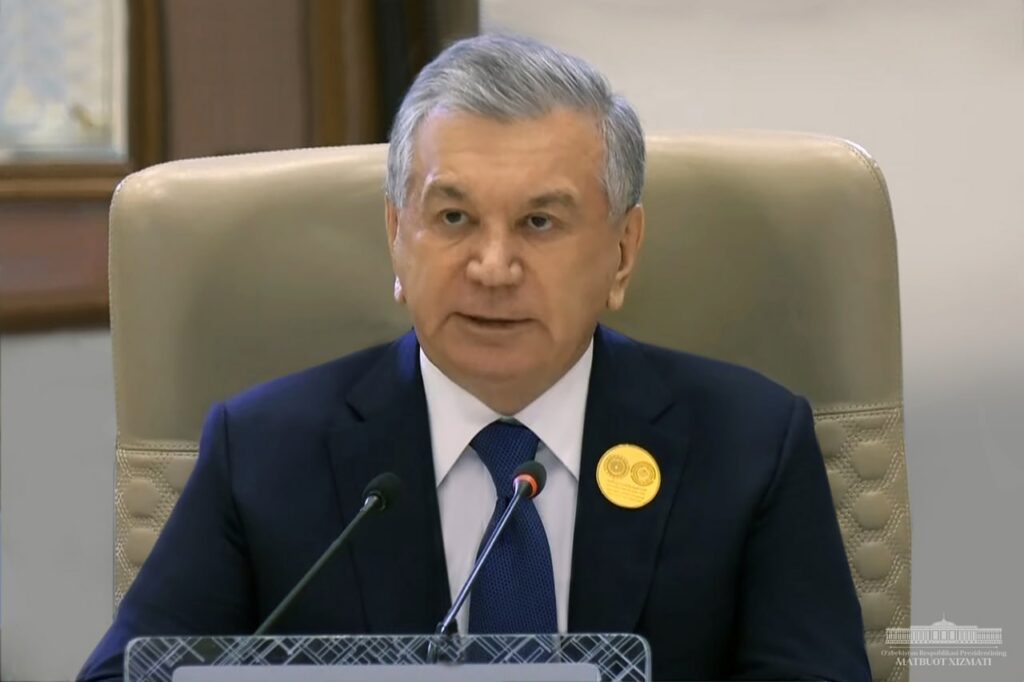
On November 11, Uzbekistan's President Shavkat Mirziyoyev delivered a speech at the extraordinary Arab-Islamic Summit in Riyadh, Saudi Arabia, expressing concern over the spread of the Middle East conflict into Lebanon. He reiterated Uzbekistan’s support for initiatives to resolve the Palestinian-Israeli issue peacefully and diplomatically. In his speech, Mirziyoyev said, “Uzbekistan fully supports all practical initiatives to address the Palestinian-Israeli problem through peace and diplomacy. We believe today’s Summit will demonstrate common political will and unity, develop effective global and regional mechanisms and specific solutions, and swiftly put them into practice.” Mirziyoyev called for the United Nations and the Security Council to play an increased role in ending hostilities. He emphasized the need for safe humanitarian corridors and the immediate initiation of peace talks. With the Palestinian national holiday on November 15 approaching, Mirziyoyev underscored the nation’s right to an independent state with East Jerusalem as its capital, based on the 1967 borders. He also supported the Global Alliance for Implementing the Two-State Solution initiated by Saudi Arabia. Mirziyoyev called for expanding humanitarian aid to Palestine and Lebanon to prevent the escalation of the crisis and confirmed Uzbekistan’s readiness to treat wounded Palestinian children and women in its hospitals. He announced plans to discuss further assistance at the Gulf Arab States – Central Asia summit in Samarkand next year. Finally, he stressed the importance of preserving the Al-Aqsa Mosque and other cultural monuments in Jerusalem, urging members of the Organization of Islamic Cooperation to prioritize protecting these historic sites. Mirziyoyev concluded by urging an urgent and unified response to the crisis and highlighting Uzbekistan’s commitment to peace and humanitarian support in the region.

Mirziyoyev Calls for Independent Palestinian State with East Jerusalem as Capital

Speaking at this week's summit of the Organization of Turkic States in Bishkek, Uzbekistan's president Shavkat Mirziyoyev has once again discussed the situation in the Middle East. Mirziyoyev noted that global geopolitical processes have become increasingly complex since the start of the war in the region. The atmosphere of competition and mistrust between countries is intensifying, the hotbeds of conflict and war are increasing, and various dangers are growing. "These problems are a severe obstacle to our joint plans and big projects in trade, investment, transport, energy, agriculture, and other fields; this is the truth," Mirziyoyev said. “It is, first and foremost, about the ongoing war in the Middle East and the double standards that we see. Nothing can justify the unprecedented humanitarian tragedy in Gaza and Lebanon, the devastating attacks against civilians, especially the death of innocent children, the elderly, and women. We strongly condemn the actions aimed at restricting the activities of the United Nations Relief and Works Agency for Palestine Refugees. The only solution to this long-standing conflict is the establishment of an independent State of Palestine with East Jerusalem as its capital, based on the 1967 borders, by international regulations and resolutions,” noted Mirziyoyev. He hoped the Arab-Islamic Summit in Riyadh next week would find a clear political solution to this problem. He also highlighted the importance of Afghanistan’s stability: “When it comes to security, we believe Afghanistan should always be at the focus of our Organization. In this regard, it is crucial to establish a regular dialogue mechanism at the ministerial and expert levels. We believe that the issues of providing support to de facto authorities in addressing acute problems in Afghanistan, integrating this country into regional economic processes, and implementing social and infrastructure projects should be considered.”

Tajikistan’s Rahmon: No Military Solution to Palestinian Conflict

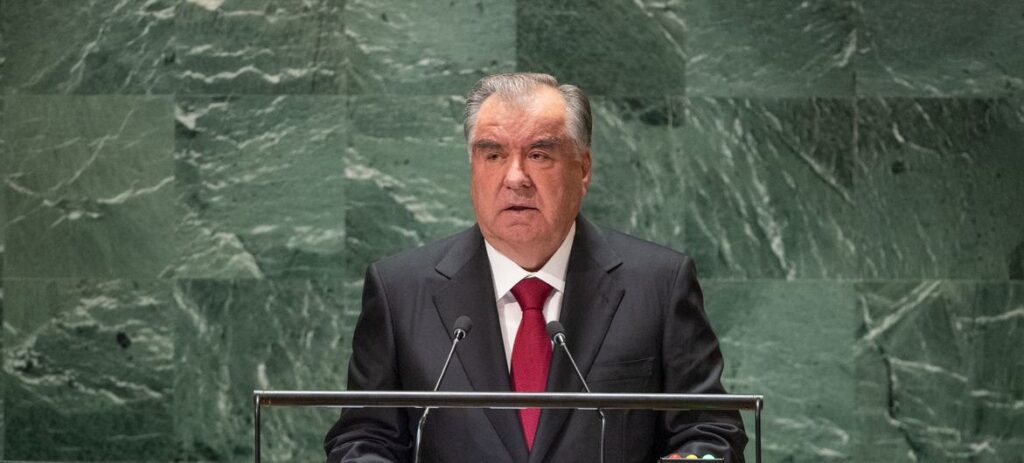
The President of Tajikistan, Emomali Rahmon, has said that the current situation in the Middle East proves that there is no military solution to the Palestinian conflict. Speaking at the 79th session of the UN General Assembly in New York, Rahmon said that the Palestinian crisis is a deep concern among Tajikistan's people. “Tajikistan believes that the final and real solution of this issue is possible only by fulfilling the decisions of the United Nations on the creation of an independent Palestinian state based on the borders of 1967,” the Tajik leader said. He hopes the parties will stop fighting, work on peace talks, and take adequate measures to restore stability in Palestine. He added that Dushanbe supports global stability and socio-economic development in Afghanistan. “For this purpose, Tajikistan is always ready to contribute to restoring and developing various aspects of a peaceful life in Afghanistan,” Rahmon said. Rahmon called on the international community to help the “long-suffering people of Afghanistan, including those affected by natural disasters,” to prevent a humanitarian crisis. The Times of Central Asia has reported that Kyrgyz President Sadyr Japarov addressed the 79th session of the UN General Assembly and called on the world community to reduce weapons and international tension.

Central Asian Views on Pro-Palestinian Protests in the West

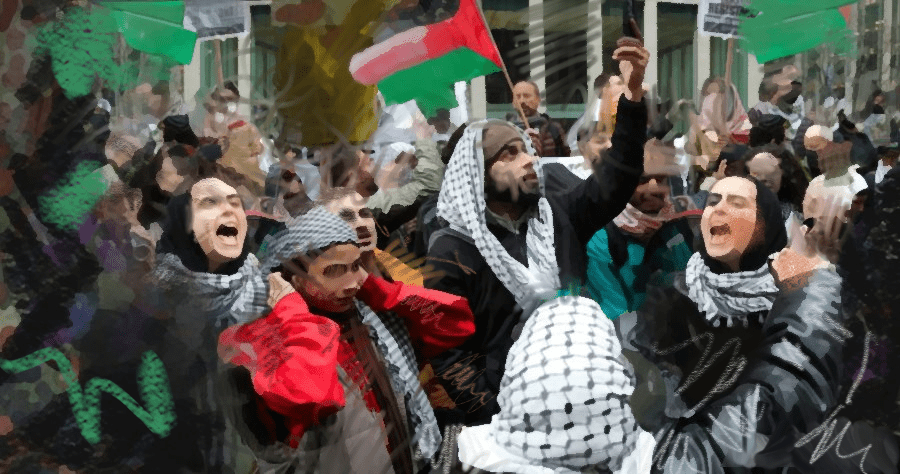
Pro-Palestinian protests erupted in university campuses and other locations worldwide in response to the ongoing conflict involving the Israeli Defense Forces and Palestinians in Gaza. European cities, including in the United Kingdom, the Netherlands, Switzerland, Germany, and Belgium, have been major flashpoints where, in some cases, the police resorted to using batons, shields and tear gas on protestors. In the U.S., The New York Times has reported on May 13 that since April 18, over 2,500 individuals had been arrested or detained at 54 college campuses nationwide. The increasingly violent nature of the protests causes alarm. A poll conducted by USA Today and Suffolk University, published on May 8, has revealed that almost 32% of Americans express "very concerned" sentiments about the potential for the protests to lead to violence, while slightly over 35% say they are "somewhat concerned". Some of the messaging coming out of the protests has also been characterized as antisemitic, leading to a congressional bill in the U.S. known as the Antisemitism Awareness Act, which aims to expand the legal definition of antisemitism to curb any speech that provokes violence. Free speech advocates, including some international human rights organizations, have challenged these measures.   Remembering their own turbulent times, Central Asians generally support state measures to maintain order Central Asians' perspectives on the pro-Palestinian protests sweeping through Western cities, and the way various governments respond to them, are naturally influenced by their own historical and political contexts, shaped by decades of political transition and international rivalry. Emerging as new democracies just three decades ago, these nations have witnessed a tumultuous mix of violent power struggles among oligarchs, and intense competition from foreign actors vying for control over the region's abundant natural resources and strategic geopolitical position. At the same time, the region hosts a large Muslim population who may sympathize with the Palestinians, even though many do not know the history of the conflict in the Middle East, according to Daniyar Kumpekov, a 46-year-old economist in Kazakhstan. “The Arab-Israeli conflict is beyond the attention of most citizens,” says 21-year-old Kazakhstani student, Anar Zhakupova, adding that they are more concerned about the confrontation between Ukraine and Russia. In Kyrgyzstan, 29-year-old merchant, Dmitry Povolotsky, says that there were only small rallies in support of the Palestinians. There also seems to be a sense of skepticism towards the protests. Kumpekov, for instance, draws attention to a trend of “Islamization” in Kazakhstan’s society”.  Mahmut Orozbayev, a Kyrgyz civil servant in his 50s, cautions about terrorist cells in the country, which, he says, “should be feared” from a security perspective. “We have a majority of Muslim citizens. They can gather and condemn Israel's actions. But all this [should be done] within the limits of what is permissible, so that there is no unrest,” he adds. According to Donokhon Ruziboyeva, an Uzbekistan resident in her 20s, pro-Palestinian protests raise awareness, but “they don’t stop the conflict in Palestine”. While the devastation in the Gaza Strip seen on social networks deeply moves Ruzboyeva,...