• KGS/USD = 0.01144 0%
  • KZT/USD = 0.00200 0%
  • TJS/USD = 0.10494 0%
  • UZS/USD = 0.00008 0%
  • TMT/USD = 0.28490 0%
  • KGS/USD = 0.01144 0%
  • KZT/USD = 0.00200 0%
  • TJS/USD = 0.10494 0%
  • UZS/USD = 0.00008 0%
  • TMT/USD = 0.28490 0%
  • KGS/USD = 0.01144 0%
  • KZT/USD = 0.00200 0%
  • TJS/USD = 0.10494 0%
  • UZS/USD = 0.00008 0%
  • TMT/USD = 0.28490 0%
  • KGS/USD = 0.01144 0%
  • KZT/USD = 0.00200 0%
  • TJS/USD = 0.10494 0%
  • UZS/USD = 0.00008 0%
  • TMT/USD = 0.28490 0%
  • KGS/USD = 0.01144 0%
  • KZT/USD = 0.00200 0%
  • TJS/USD = 0.10494 0%
  • UZS/USD = 0.00008 0%
  • TMT/USD = 0.28490 0%
  • KGS/USD = 0.01144 0%
  • KZT/USD = 0.00200 0%
  • TJS/USD = 0.10494 0%
  • UZS/USD = 0.00008 0%
  • TMT/USD = 0.28490 0%
  • KGS/USD = 0.01144 0%
  • KZT/USD = 0.00200 0%
  • TJS/USD = 0.10494 0%
  • UZS/USD = 0.00008 0%
  • TMT/USD = 0.28490 0%
  • KGS/USD = 0.01144 0%
  • KZT/USD = 0.00200 0%
  • TJS/USD = 0.10494 0%
  • UZS/USD = 0.00008 0%
  • TMT/USD = 0.28490 0%

Viewing results 1 - 6 of 21

Opinion: Kazakhstan’s Constitutional Referendum – Strategic Reset or Institutional Consolidation?

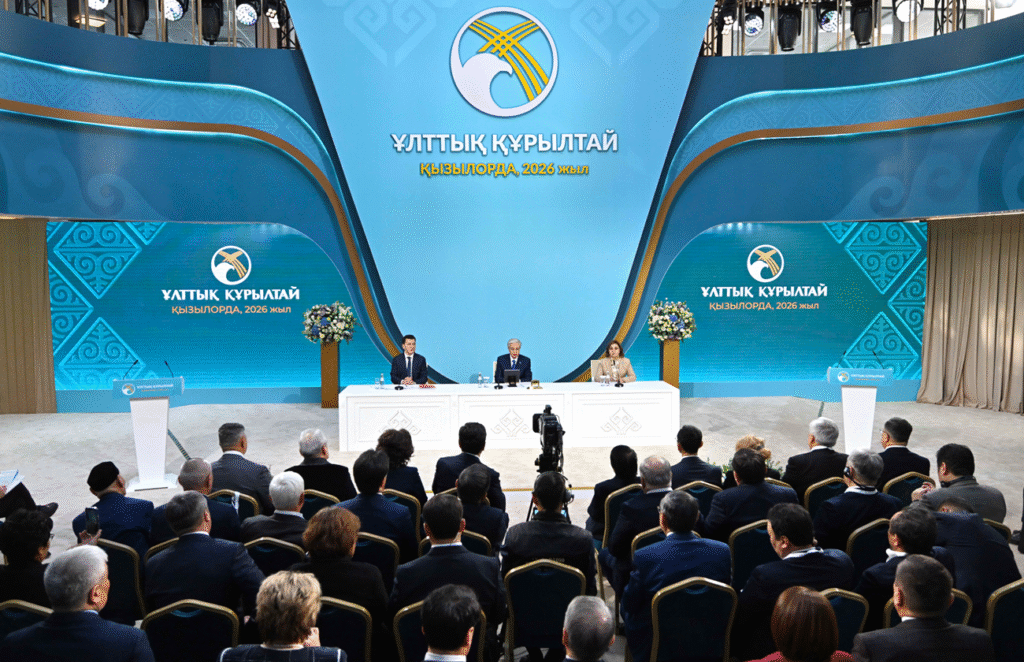
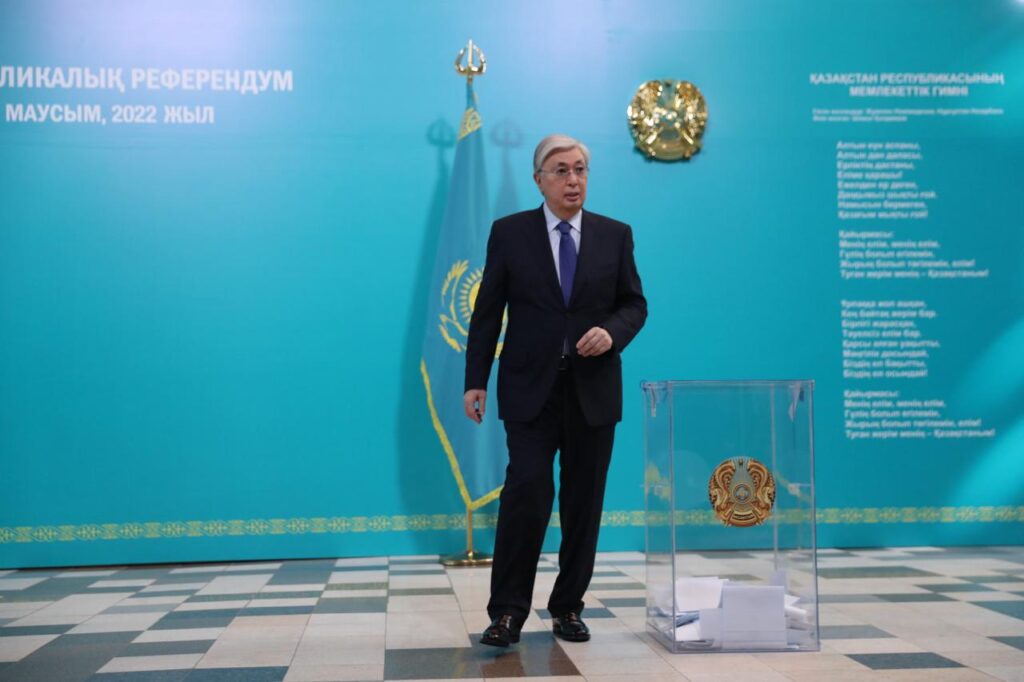
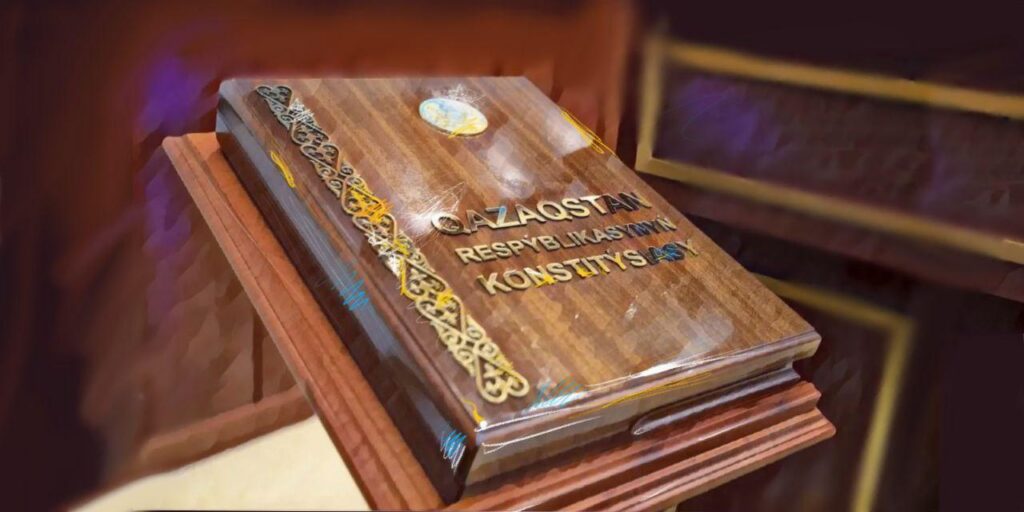
Kazakhstan will hold a nationwide referendum on March 15 to adopt an entirely new constitution – an initiative President Kassym-Jomart Tokayev describes as a decisive break from the country’s super-presidential legacy. The draft, published on February 12 after deliberations by a Constitutional Commission, proposes far-reaching institutional reforms. Among the most notable changes are the replacement of the bicameral parliament with a unicameral body known as the Kurultai; the reinstatement of a vice presidency; and the constitutionalization of commitments to digital transformation, economic modernization, and strengthened sovereignty. The government presents the reform as a necessary modernization of the state in response to global turbulence. Yet the scope and timing of the proposal indicate that the referendum is as much about strategic recalibration as it is about institutional redesign. The Accelerated Timeline The speed of the process has drawn considerable attention. In September 2025, Tokayev advised against rushing constitutional reform and suggested that 2027 would allow sufficient time for public consultation. However, by February 2026, the referendum had been scheduled for mid-March. This abrupt shift suggests a deliberate political calculation rather than simple administrative urgency. One factor under discussion is the legal effect of adopting a wholly new constitution. While reforms in 2022 limited presidents to a single seven-year term, the introduction of a new constitutional order could create ambiguity regarding the continuity of those limits. Even if not explicitly intended as a reset mechanism, such a transformation inevitably introduces flexibility into questions of tenure and succession. Geopolitical pressures also help explain the acceleration. Tokayev has pointed to profound changes in global trade, security alignments, and technological competition. In a world increasingly shaped by sanctions regimes and geoeconomic fragmentation, Kazakhstan seeks to project institutional coherence and responsiveness. Constitutional reform, in this sense, becomes a signal of adaptive capacity. At the same time, the draft completes the political transition that began after the unrest of January 2022. Although earlier amendments removed former President Nursultan Nazarbayev’s constitutional privileges, the 1995 framework remained largely intact. The new proposal replaces that structure altogether, extinguishing residual legal ties to the Nazarbayev era and consolidating a distinct political phase under Tokayev’s leadership. Sovereignty as Constitutional Doctrine A defining feature of the draft is the elevation of sovereignty, independence, territorial integrity, and the unitary nature of the state to foundational, effectively immutable principles. This language carries clear geopolitical resonance, particularly in the aftermath of Russia’s invasion of Ukraine. While Kazakhstan continues to pursue a multi-vector foreign policy, the constitutional entrenchment of territorial integrity reinforces the state’s insistence on inviolable borders. The draft also expands restrictions on foreign financing of political parties and introduces stricter transparency rules for foreign-funded non-governmental organizations. These provisions reflect a doctrine of symmetrical distance: limiting political influence from any external actor, whether Russia, Western governments, or other international stakeholders. The emphasis is not ideological alignment but institutional insulation. Language and Identity: Managed Ambiguity The most domestically sensitive amendment concerns the status of Russian. The draft alters the phrasing from Russian being used “on an equal...
Six Months to Rewrite the State: Kazakhstan Accelerates Its Constitutional Reset

Speaking on September 8, 2025, in his Address to the People of Kazakhstan in Parliament, President Kassym-Jomart Tokayev outlined plans for new political reforms. At the time, nothing in his remarks suggested either the scale of the changes his initiative would entail or the speed with which they would be implemented. Yet on March 15 of this year, Kazakh citizens will vote in a referendum on a new draft Constitution, developed at high speed over roughly six months, including a period of state-organized public consultations and expert review. According to materials published on the Constitutional Court’s page on the state portal, where the final version of the draft Basic Law was published, the starting point for constitutional reform was Tokayev’s proposal to create a unicameral Parliament. The president announced the idea on September 8, 2025. A month later, on October 8, an order was signed establishing a working group on parliamentary reform. Over the following months, the group reviewed more than 2,000 proposals from citizens and experts. At the fifth session of the National Kurultai in January 2026, Tokayev summarized the proposals on parliamentary reform, the scope of which had already expanded beyond restructuring Parliament to revising the Constitution as a whole. On January 21, a Constitutional Commission was established, comprising 130 members, including representatives of the National Kurultai, legal experts, officials from central government agencies, media executives, chairpersons of maslikhats, members of regional public councils, and academics. The first draft of the Basic Law was published on January 31. On February 11, a “referendum” version of the draft was presented to the president, incorporating comments received, including his own. Tokayev had outlined his remarks the previous day during an expanded government meeting. The question to be put to voters in March is: “Do you accept the new Constitution of the Republic of Kazakhstan, the draft of which was published in the mass media on February 12, 2026?” What is particularly notable is that on September 8, the president had cautioned against haste, calling parliamentary reform a “very serious issue” and stating that rushing it would be inappropriate. “This reform must be the subject of detailed discussion in civil society, among experts, and, of course, in the current Parliament… I believe that, given the extraordinary nature of the reform, the discussion will take at least a year, after which a nationwide referendum could be held in 2027, and then the necessary amendments could be made to the Constitution,” Tokayev said at the time. A little over five months later, however, the country is preparing for changes that extend beyond the initial proposal to abolish the upper house. At a government meeting, Tokayev emphasized that “no one is setting the task of negating the significance of the current Constitution, which has played a huge role in all of our country's achievements over the past 30 years. “Nevertheless, it should be noted that it was adopted when our country was just getting on its feet and bears the imprint of the first...

Kazakhstan’s Draft Constitution and the Reordering of State Authority

Kazakhstan’s current constitutional reform is no longer limited to parliamentary redesign. A draft updated basic law has been released for public discussion, and it presents the effort as a review of the state’s political architecture culminating in a nationwide referendum. The draft is described as the product of months of work initiated by President Kassym-Jomart Tokayev, with large-scale changes proposed for the country’s political system. A replacement-style text, an explicit state-architecture rationale, and a referendum endpoint together signal a reform agenda that reaches beyond legislative mechanics to the overall distribution of authority, the protection of fundamental rights, and strengthening of the rule of law. Kazakhstan’s current constitution was adopted by referendum in August 1995, replacing the January 1993 basic law. It has been amended repeatedly, including significant revisions in 1998, 2007, 2011, and 2022. The 2022 referendum package was a particularly extensive set of amendments. It presented a model of a presidential republic with a strong parliament, redistributed selected powers from the presidency to parliament, and created new parliamentary mechanisms. It also strengthened the ombudsman, enabled direct citizen appeals to the Constitutional Court, established a commissioner framework for socially vulnerable categories, established a ban on the death penalty, and set a single seven-year presidential term without the possibility of reelection. From Proposal to Draft Basic Law The current draft emerged from a process launched under Tokayev in late 2025. In September 2025, he proposed moving to a unicameral parliament, which set the reform’s initial direction. A working group was established in October 2025 to develop proposals, and in January 2026, a commission was formed to carry the work forward. The commission was chaired by Elvira Azimova, head of the Constitutional Court of Kazakhstan, linking the drafting process to the institution that reviews the basic law. The commission’s work moved beyond incremental amendments. It reviewed proposals affecting seventy-seven constitutional articles, about 84% of the current text, and that breadth drove the decision to prepare a fundamentally new basic law rather than another package of revisions. Rewriting most of the operative text shifts the reform from a parliamentary adjustment to a redesign of the state’s governing framework. The resulting draft is structured as a replacement-style document, with an updated preamble and a reorganization into eleven sections and ninety-five articles. The institutional centerpiece of the draft is a shift from a two-chamber parliament to a single chamber and to proportional representation for electing deputies. The proposed supreme legislative body, the Kurultai, would have 145 deputies, slightly fewer than the combined 148 members of the current Mazhilis and Senate of Kazakhstan. The draft also grants the Kurultai expanded powers, pairing structural consolidation with a change in how legislative authority is organized, including oversight, political accountability, and approval of key state appointments and conciliation procedures. Alongside the proposed legislature, the draft creates a national dialogue platform, the People's Council of Kazakhstan, described as the highest advisory body representing citizens’ interests and granted the right of legislative initiative. This adds a second channel for agenda-setting with...

Opinion: Tokayev’s National Kurultai Address: A Moral Message, Not a Political One

On January 20, 2026, Kassym-Jomart Tokayev, the President of Kazakhstan, addressed the nation at a session of the National Kurultai, an age-old platform for public dialogue, akin to a wise men’s council – at any rate, that’s how it’s often billed. To no one’s surprise, Tokayev pressed ahead with his stated agenda of political reform, highlighting foreign, economic, and development policies and goals. While not devoid of interest, those parts of the speech felt like little more than window dressing that tended to obscure the address’s underlying fire and true import. Tokayev’s oration seemed at points to echo Alexis de Tocqueville’s ideas in Democracy in America: nations endure only when citizens pair civic participation with moral virtue and personal responsibility, because unchecked individualism ultimately weakens free societies and institutions, regardless of the presence of law and order. On closer examination, Tokayev’s thinking reflects Tocqueville’s view that building democracy is hard but doable. As Tocqueville wrote: “nothing is more wonderful than the art of being free, but nothing is harder to learn how to use than freedom,” pointing towards the belief that nation-building depends on freedom bound to virtue. Tokayev’s Kurultai message went far beyond a list of technical fixes, platitudes about the economy, and empty cheerleading. Nor did it read as a sleight of hand or bait-and-switch tactic to preserve power in the face of a failing democracy. Those familiar with Tokayev know he has called for Tocquevillian-like responsible citizenship for years, which, to be sure, requires at times tough love. Tokayev drove home a familiar theme, that the nation’s fate rests on the character and outlook of its people—not just on its economy, wealth, and politics. He maintained that traditional values present the vital adhesive of society, without which, every effort at statecraft withers—or worse, becomes easy prey to unsavory ambitions or certain secular ideologies which have taken on religious force in modern culture. At the heart of Kazakhstan’s future, Tokayev thinks, there must lie a commitment to enduring human principles and timeless truths: unity, selflessness, sharing, mutual understanding, patience, compromise, and common sense. These values are not solely theoretical constructs but qualities evident for successful outcomes. They positively shape family formation, social relations, conflict resolution, and citizens’ engagement with the state and outsiders. What’s more, economic and institutional strength is only possible when built upon a society united by common values, clarity of purpose, and a spirit of service. Transforming Public Consciousness President Tokayev stressed that changing minds matters more than changing laws and hollow pep talks. Without a common moral compass, nation-building is fragile. Strong cultural and spiritual roots foster social cohesion, building trust, identity, and civic duty. Towards this end, he urged the older generation “to promote the values of work and enterprise, and wean young people from verbosity, glorification, laziness, indifference, and idleness.” Tokayev’s strategy for consolidating national consciousness focuses on two core investments: on advancing cultural infrastructure (museums, theatres, libraries) and creative capital, thereby recharging towns and schools as sites of learning, dialogue, and shared...

Tokayev Unveils Major Political Reforms as Kazakhstan Moves to Replace the National Kurultai

The fifth and final session of the National Kurultai in Kazakhstan, held on January 20, marked the announcement of plans to dismantle and replace two key institutions: the National Kurultai and the Assembly of the People of Kazakhstan, structures that have played central roles in the country’s civic dialogue, particularly over the past three decades. In a sweeping address, President Kassym-Jomart Tokayev declared that these legacy institutions would be replaced by new mechanisms for state-society interaction, crafted with an eye toward modern governance models and constitutional reform. The move reflects Tokayev’s long-running criticism of consultative bodies that, while symbolically inclusive, have often duplicated functions or lacked clear decision-making authority. Tokayev’s address, which included references to U.S. President Donald Trump, prompted analysts to draw deeper geopolitical and institutional parallels. As Tokayev enters the second phase of his presidency, analysts note a shift in strategy and control. His first term (2019-2022) was marked by attempts to correct the excesses and structural stagnation of his predecessor, Nursultan Nazarbayev. At the time, Tokayev faced entrenched resistance from the political establishment, with some officials reportedly appealing directly to Nazarbayev to circumvent presidential directives. The January 2022 unrest, an attempted power shift, marked a turning point. Tokayev consolidated power and launched a comprehensive reform agenda across the political and economic spectrum. The analogy with Trump, some analysts argue, lies in this dual-phase leadership: an initial struggle with the establishment, followed by a more assertive, transformation-driven second term. Since then, Tokayev has framed political reform as a safeguard against elite capture and institutional paralysis, arguing that fragmented authority contributed to the crisis. Yet Tokayev continues to face political resistance, particularly to structural reforms. Political analyst Daniyar Ashimbayev, commenting on Tokayev’s Kurultai speech, described the president’s evolving approach as both methodical and tactical. “Sometimes, the head of state announces strategic steps he has been considering for over a year, but only unveils them at the last moment, when no one has the opportunity to influence the message,” Ashimbayev observed. He cited Tokayev’s September 2025 proposal for a unicameral parliament as an example of such strategic maneuvering, an initiative that caught even senior officials by surprise. Ashimbayev argues that Tokayev’s aim was to sideline speculation about succession by announcing long-term institutional reforms. The president further solidified this strategy by reviving the position of vice president, abolished under Nazarbayev, while proposing the dissolution or merging of overlapping structures such as the Senate, the Assembly of the People, and the Kurultai into a proposed National People’s Council. This consolidation, Ashimbayev notes, serves both symbolic and strategic purposes. “The image of a 'lame duck' has vanished, and a self-confident Uncle Scrooge, so to speak, with complex plans, has returned. Everyone expected the discussions to take a year or a year and a half, but the president decided to seize the initiative again and unexpectedly moved the Kurultai to January, where he announced a huge package of new ideas,” he remarked. The announcement of the vice presidency, one of the most consequential changes, reportedly...

Opinion: Kazakhstan’s Electoral Reforms – Why Officials and Experts Are Reconsidering Local Democracy

The metaphor that history moves in a spiral has resurfaced in Kazakhstan, where ongoing debates over electoral reform and information policy are testing the boundaries of the country’s democratic trajectory. Recent official messaging points toward a more managed model of political participation, framed as a necessary response to emerging challenges. This trajectory was articulated by State Councilor Erlan Karin in his article, "The Politics of Common Sense," published in the state-run Kazakhstanskaya Pravda. In the piece, Karin reflects on the formation of public values in Kazakhstan, portraying it as an evolutionary process. Simultaneously, Karin references government-led social programs, such as “Law and Order,” “Clean Kazakhstan,” and “Adal Azamat” - a program focused on building character, promoting civic responsibility, and fostering national unity - as instruments of state-directed civic education. Karin reiterates his previously stated position on the existence of “red lines” in public discourse, sensitive subjects such as interethnic relations, religion, language, and foreign policy. While insisting that these topics should not be off-limits, he calls for “common sense” in how they are discussed. “When it comes to public stability, the state will not compromise,” he asserts, adding that the government will lawfully oppose any attempts at “destructive information influence and incitement to hatred.” Karin also highlights what he describes as a new category of problematic actors: "This spring, I drew attention to a phenomenon known as ‘inforeket,’ in which certain bloggers and activists engage in outright extortion. This practice stems from past policies of appeasement toward disruptive elements, which encouraged the rise of pseudo-public figures, bloggers, and ‘tame oppositionists.’ Now abandoned by their once-powerful patrons and wealthy clients, they continue to seek income using outdated methods." In the same article, Karin names a group of experts, deputies, and public figures who contributed input to the new internal policy principles. Several of these individuals are currently advancing proposals to revise aspects of Kazakhstan’s electoral system—particularly the mechanisms for selecting district akims. Among them is Berik Abdygaliuly, political scientist, historian, and director of the National Museum of Kazakhstan. In a recent podcast, Abdygaliuly argued for reconsidering the model of electing district akims. He noted that while more than 3,000 rural akims and maslikhat deputies have been elected in recent years, the outcomes have been mixed. Voter fatigue is mounting, he said, and the financial costs of repeated campaigns - amounting to hundreds of millions of tenge - have not corresponded with visible improvements in local governance. His proposal is that district akims should be chosen not by direct popular vote but by maslikhats, the local representative bodies empowered to demand reports, assess performance, express no confidence, and initiate dismissals. This idea quickly gained support from other commentators participating in public discussions of governance reform. Political analyst Marat Shibutov wrote on his Telegram channel that the electorate is “simply getting tired of elections” after several consecutive voting cycles since 2021. Shibutov supported the idea of “revising or freezing” the election mechanism for district akims as “rational.” Meanwhile, political scientist Andrey Chebotarev highlighted...