• KGS/USD = 0.01144 0%
  • KZT/USD = 0.00212 0%
  • TJS/USD = 0.10864 0%
  • UZS/USD = 0.00008 0%
  • TMT/USD = 0.28571 0%
  • KGS/USD = 0.01144 0%
  • KZT/USD = 0.00212 0%
  • TJS/USD = 0.10864 0%
  • UZS/USD = 0.00008 0%
  • TMT/USD = 0.28571 0%
  • KGS/USD = 0.01144 0%
  • KZT/USD = 0.00212 0%
  • TJS/USD = 0.10864 0%
  • UZS/USD = 0.00008 0%
  • TMT/USD = 0.28571 0%
  • KGS/USD = 0.01144 0%
  • KZT/USD = 0.00212 0%
  • TJS/USD = 0.10864 0%
  • UZS/USD = 0.00008 0%
  • TMT/USD = 0.28571 0%
  • KGS/USD = 0.01144 0%
  • KZT/USD = 0.00212 0%
  • TJS/USD = 0.10864 0%
  • UZS/USD = 0.00008 0%
  • TMT/USD = 0.28571 0%
  • KGS/USD = 0.01144 0%
  • KZT/USD = 0.00212 0%
  • TJS/USD = 0.10864 0%
  • UZS/USD = 0.00008 0%
  • TMT/USD = 0.28571 0%
  • KGS/USD = 0.01144 0%
  • KZT/USD = 0.00212 0%
  • TJS/USD = 0.10864 0%
  • UZS/USD = 0.00008 0%
  • TMT/USD = 0.28571 0%
  • KGS/USD = 0.01144 0%
  • KZT/USD = 0.00212 0%
  • TJS/USD = 0.10864 0%
  • UZS/USD = 0.00008 0%
  • TMT/USD = 0.28571 0%

Viewing results 1 - 6 of 35

Kazakhstan Debates Parliamentary Reform as Inflation Pressures Living Standards

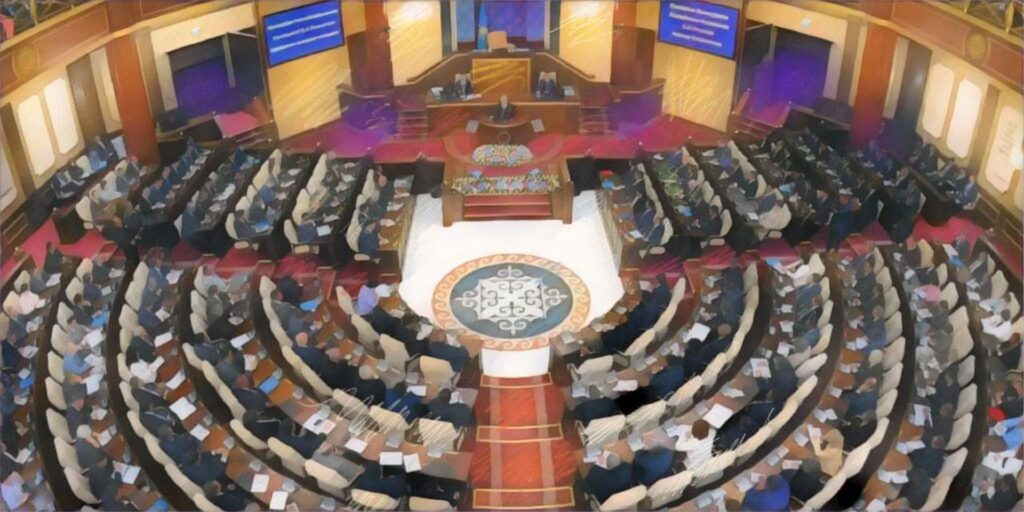
The Kazakh government is actively developing the framework for a future unicameral parliament, working to define its status, powers, and functions. Currently, Kazakhstan’s legislative branch consists of two chambers: the Senate and the Mazhilis.  The proposed transition to a unicameral system has been positioned by authorities as a step toward democratization. However, many citizens remain unclear about the details and implications of the reform, particularly as inflation and declining living standards dominate public concern. Uncertain Details of Reform In September 2025, President Kassym-Jomart Tokayev proposed holding a nationwide referendum on transitioning to a unicameral parliament in 2027. While some analysts have speculated about a faster timeline, no official acceleration beyond 2027 has been announced. "The establishment of a parliamentary republic is not under consideration. The foundational model of a 'Strong President, Influential Parliament, Accountable Government' remains unchanged," Tokayev previously stated. According to political analyst Gaziz Abishev, pivotal developments are expected on January 20, when the National Kurultai (Assembly) convenes. He believes this meeting will outline the contours of constitutional reform and potentially signal a date for the referendum. “If the decree on holding a referendum is signed during the Kurultai, the vote could be held on March 22 [2026],” Abishev stated. Under the current system, the Senate represents regions and appointive quotas, reviewing legislation passed by the Mazhilis and serving as a constitutional buffer. Any move to unicameralism would require redefining how regional interests are represented and how legislative oversight is maintained without an upper chamber. The National Kurultai serves as a platform for dialogue between the government and society, addressing national identity, economic development, social justice, and improving the quality of life. Historically, the Kurultai was a gathering of Turkic and Mongol tribes. Over 500 Public Proposals Submitted Public discussion around the proposed unicameral parliament has been active. Since the launch of a dedicated “Parliamentary Reform” section on the state portals e-Otinish and Egov, over 500 proposals have been submitted by citizens, experts, and public organizations. Despite this engagement, tangible benefits for ordinary citizens remain vague, aside from a potential reduction in government spending. Globally, more than half of national parliaments operate as unicameral systems. According to IPU Parline, 107 out of 188 legislatures follow this model, primarily in unitary states with smaller populations. Unicameral systems are often praised for faster legislative processes, lower administrative costs, and increased transparency. Kazakhstan previously had a unicameral legislature under the 1993 Constitution. Following the invalidation of the 1994 elections, the Supreme Council was dissolved. In 1995, the country transitioned to its current bicameral system. The Senate, as the upper house, plays a stabilizing and arbitration role. Analysts caution that without a second chamber, legislative processes may be vulnerable to hasty or populist decisions. Potential for Early Elections Abishev suggests that a referendum in March 2026 could prompt an early electoral cycle. "Under the current schedule, the next Mazhilis elections are set for January 2028. However, they could be moved up to summer 2026 if Parliament adopts a constitutional amendment package in April...

Uzbek Professor Hits Back at Vladimir Solovyov for Central Asia “Military Operation” Comments

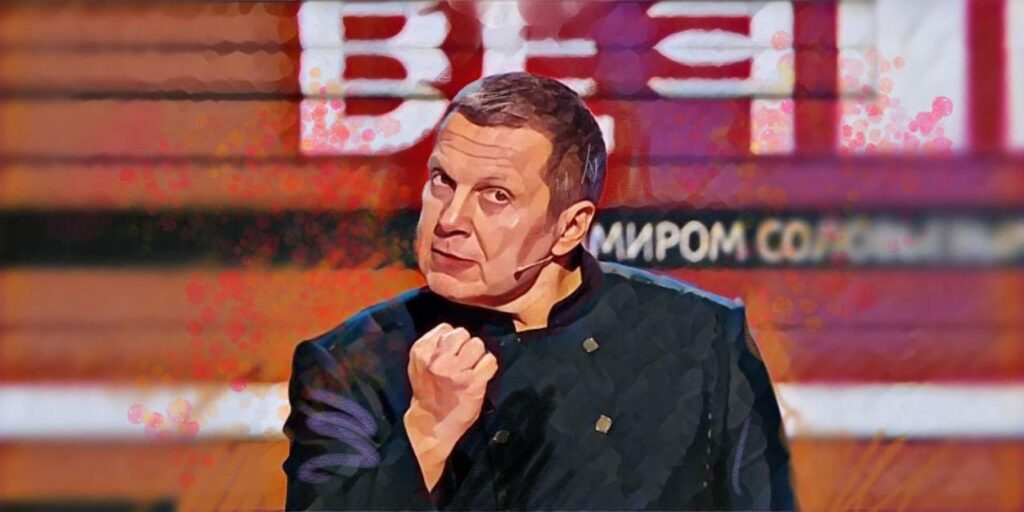
Controversial remarks by Russian television host Vladimir Solovyov, suggesting that Moscow could conduct “special military operations” in Central Asia and Armenia, have continued to provoke a strong reaction in Uzbekistan. Scholars, journalists, and political analysts have all weighed in on the rhetoric as indicative of a dangerous political mindset developing in Russia. During a recent broadcast, Solovyov referred to Russia’s role in the region in terms that some Uzbek experts interpret as veiled threats of interference in the affairs of sovereign Central Asian states. The comments drew immediate responses from Uzbek academics, who underscored their nations' independence and territorial integrity. Political scientist and university professor Sherzodkhon Qudratkhodja issued a detailed rebuttal, emphasizing the historical and strategic gravity of Solovyov’s words. “As a citizen of a sovereign state, such remarks are unacceptable,” he said. “They challenge our independence, our territorial integrity, and our peoples' right to determine their own futures.” Qudratkhodja rejected the notion of Central Asia as a geopolitical periphery. “We are not subjects of external governance. Central Asia is a region with its own history and geopolitical agency. We are no longer objects in foreign policy, we are actors.” He warned that such public commentary normalizes the concept of military intervention by gradually expanding the so-called Overton window, the range of ideas tolerated in public discourse. “When statements like this are introduced as provocation, then normalized through discussion, and ultimately proposed as policy, it becomes a form of normalizing violence through public speech,” he said. Qudratkhodja also highlighted Central Asia’s long-standing sovereignty and global contributions. “Our history spans at least 3,500 years. Turkic peoples, including Uzbeks, pioneered the domestication of horses, early metallurgy for agriculture and warfare, and other advancements. Our ancestors were defenders of their lands and civilizations.” Turning to the geopolitical relationship between Russia and Central Asia, he said that strategic partnerships must be based on mutual respect. “Partnerships are not built on public threats or innuendo. Statements like Solovyov’s are unacceptable, especially when made about strategic partners in an increasingly multipolar world.” While Qudratkhodja acknowledged that Solovyov’s views do not represent official Russian policy, he warned that silence from Russian authorities allows such rhetoric to gain legitimacy. “Even when expressed as personal opinion, if such statements go unanswered by officials, they gain undue influence and risk becoming perceived signals that can destabilize the region.” Uzbek experts also pointed to the cultural and historical resilience of the region. Qudratkhodja invoked the legacy of Tamerlane, arguing that Central Asia has played pivotal roles in shaping regional history. “If our ancestor Tamerlane had not defeated Tokhtamysh in 1395, there would be no Russian Federation as we know it today. Our strategic role in Eurasia cannot be dismissed.” He also directly addressed Solovyov, rejecting any sense of professional kinship. “I do not consider Mr. Solovyov a colleague. His worldview belongs to the propaganda of the past. Today, discourse must be grounded in historical fact and mutual respect, not threats or insinuations.” The reaction in Uzbekistan has extended beyond academia. Social...

Russian TV Host’s Talk of ‘Military Operations’ in Central Asia Triggers Backlash in Uzbekistan

Controversial remarks by Russian television host Vladimir Solovyov, suggesting that Moscow could launch “special military operations” in Central Asia and Armenia, have provoked a strong backlash in Uzbekistan, where scholars, journalists, and political analysts warn that such rhetoric reflects dangerous political tendencies. Speaking on his Solovyov Live program, the prominent pro-Kremlin commentator claimed that regions like Armenia and Central Asia are far more critical to Russia’s national interests than distant allies such as Syria or Venezuela. He urged Russian authorities to abandon international law if it stands in the way of what he described as Russia’s national security. Solovyov was born in Moscow in 1963 and trained in economics and philosophy; after the collapse of the Soviet Union, he spent part of the early–mid-1990s living in the United States, where he worked as a businessman involved in commercial ventures rather than journalism or politics, before returning to Russia following financial difficulties. In the late 1990s and early 2000s, he entered radio and television, initially presenting himself as a liberal, pro-market commentator, but over time evolving into one of Russia’s most prominent pro-Kremlin television hosts, known for his hardline nationalist rhetoric and for aggressively promoting state narratives on domestic and foreign policy. “We must say openly: the games are over. International law and the international order mean nothing to us,” Solovyov declared, openly questioning why, if a so-called special military operation was justified in Ukraine, similar actions should not be carried out elsewhere within Russia’s claimed zone of influence. Solovyov characterized Central Asia as “our Asia,” framing it as part of Russia’s rightful sphere of influence. He warned that instability in the region represents a direct threat to Russia’s security and advocated for the Kremlin to clearly define the boundaries of its “zone of influence,” regardless of international norms. He also criticized Russia’s approach to the war in Ukraine, arguing that a lack of early harsh measures prolonged the conflict and resulted in greater losses. “We should stop casting pearls before swine and openly state that we do not care what Europe thinks,” he added. In recent years, tensions over Russian attitudes toward Central Asia have surfaced in regional discourse. In 2024, Uzbek political figure Alisher Qodirov publicly criticized what he called rising “Russian chauvinism,” responding to televised statements by Russian nationalists such as Zakhar Prilepin advocating territorial claims on Uzbekistan and Russian commentators on state TV asserting that peoples like the Uzbeks and Kazakhs did not exist before 1917, comments that Qodirov said were enough to call for cutting Russian broadcasts into Uzbekistan. Observers have also linked broader social trends in Russia - including xenophobic attacks on Central Asian migrant workers and statements by Russian officials linking Central Asian migration and security to Russia’s interests - to a narrative among some Russian public figures framing Central Asians as outsiders within Russia and Central Asia as a contested space. The remarks triggered immediate condemnation in Uzbekistan. Sherzodkhon Qudratkhodja, a political scientist and professor, said Solovyov had expressed, in plain terms, ideas...

Attitudes Toward Children with Special Needs in Kazakhstan Are Beginning to Shift

An appalling call by an Almaty-based blogger to "kill autistic people" has reignited public debate over attitudes toward children with special needs in Kazakhstan, revealing deep-rooted prejudices that persist in society despite ongoing reforms. Shocking Comments and a Criminal Case “There are too many autistic people, they need to be treated, and if they cannot be cured, they should be killed or autism hospitals should be opened. Children with autism have no feelings!” wrote Almaty blogger Raihan Zhumamuratova in a now-deleted post on social media. Her remarks sparked outrage online and drew swift condemnation from authorities. Zhumamuratova's post followed a disturbing incident on August 23, when a mother posted on Instagram that her two-year-old son was attacked in a courtyard by a teenager who picked him up, threw him in the air, and then fled while covering his ears. The act was captured on video. Initial reports suggested the 13-year-old boy may have a mental health condition, possibly an autism spectrum disorder, though no official diagnosis has been confirmed. The Auezov District Police Department opened a criminal case, and the teenager’s parents were held accountable for failing to properly fulfill their parental duties. Zhumamuratova's comments were widely condemned. The Autism Kazakhstan association filed a formal complaint, prompting Almaty police to launch an investigation. Minister of Labor and Social Protection Svetlana Zhakupova stated, “I think law enforcement agencies will take the right decisions regarding this blogger. The harshest ones.” “You know, we are building an inclusive society together. We do not tolerate discrimination against people with disabilities,” Zhakupova added. “Children with autism are currently under the special supervision of several government agencies, the Ministry of Education, our Ministry of Labor, and the Ministry of Health. We fully support these children.” A Pattern of Neglect and Violence While Zhumamuratova’s statements have drawn near-universal condemnation, this is not the first time a child has been seriously harmed by a teenager with a psychiatric condition. In February 2025, a teenager attacked a five-year-old with a knife inside an elevator in a residential building in Astana. The assault was also recorded and widely circulated online. The attacker, who is registered at a psychoneurological clinic, was later placed in a psychiatric hospital. His legal guardian was held accountable, according to Children’s Rights Commissioner Dinara Zakieva. Parents of children with special needs frequently report being left to cope alone. Rehabilitation services are limited, oversight is weak, and resources are stretched thin. A Long Road to Inclusion Kazakhstan faces systemic challenges in building an inclusive society. For decades, people with psychiatric or developmental diagnoses were kept out of public view. Traditional nomadic culture stigmatized them, and under the Soviet regime, psychiatric diagnoses often carried punitive implications that brought shame upon families. Many citizens today remain uninformed about developmental disorders like autism. As a result, people with such conditions are often met with fear or hostility. Compounding the issue, disability benefits remain low, making private care and quality rehabilitation inaccessible for most families. As of March 1, 2025, Kazakhstan...

Uzbekistan Approves Controversial ‘Sea Breeze Project’ at Charvak Reservoir

The Uzbek government has approved the contentious “Sea Breeze Uzbekistan” project at the Charvak reservoir in Tashkent region, despite vocal opposition from environmental activists and mounting public concern. Prime Minister Abdulla Aripov signed Cabinet of Ministers Resolution No. 490, granting “Sea Breeze Uzbekistan” LLC a 25-year direct lease on 577 hectares of land to develop a $5 billion all-season resort complex. Amid widespread protests, the Ministry of Ecology and the Ministry of Water Resources released back-to-back statements pledging strict government oversight throughout the project’s implementation. The Ministry of Ecology stated that it will supervise adherence to environmental legislation, including the monitoring of air quality, resource efficiency, and public health safeguards. The ministry reiterated its commitment to transparency and public engagement, stating: “Environmental protection remains an absolute priority for the state.” “The Ministry of Ecology will conduct continuous monitoring to identify any risks related to pollution, misuse of resources, or potential threats to citizens’ health,” the statement added. The Ministry of Water Resources affirmed that the Charvak reservoir will remain under full state control. It assured the public that all wastewater generated by the project will be diverted to a centralized treatment facility, with no discharge permitted into the reservoir. The ministry stated that construction will take place outside protected water zones and comply fully with sanitary and hydraulic engineering standards. Officials also noted that an inter-agency task force will conduct ongoing monitoring, with immediate responses promised in the event of any violations. Safeguarding drinking water and maintaining the reservoir’s water quality are described as “absolute priorities.” Despite assurances, the project continues to provoke heated debate under the viral hashtag #SaveChorvoq. Government officials have pledged strict oversight, but environmental groups remain skeptical as construction proceeds.

Uzbek-Born Author Dina Rubina’s Tashkent Event Suspended Amid Outrage Over Gaza Comments

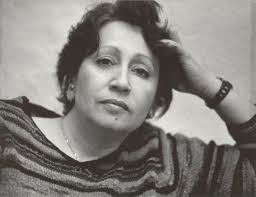
Ticket sales for an upcoming literary event in Tashkent by Israel-based writer Dina Rubina have been suspended following widespread controversy over her remarks about the Gaza conflict. Rubina, born in Tashkent in 1953, was formerly a member of the Uzbekistan Writers’ Union. She moved to Moscow in 1984 and currently resides in Israel, continuing to write in Russian. Rubina was scheduled to perform at Turkiston Palace in Tashkent on October 10, with tickets sold through box offices and online via iTicket.uz, according to Anons. However, online sales have since been discontinued, and promotional materials on Afisha.uz have been taken down. The backlash emerged after excerpts from Rubina’s recent interview with Russian television channel Dozhd were widely circulated and criticized. In the interview, aired on July 20, Rubina discussed the Hamas attacks on Israel on October 7, 2023, and the ensuing violence. Journalist Mikhail Kozyrev, who conducted the interview, later revealed on his Facebook page that some of Rubina’s more inflammatory statements had been edited out. According to Kozyrev, Rubina had said: “Israel has the right to defend itself. It has the right to dissolve them all in hydrochloric acid, clean Gaza and turn it into a parking lot. There is no civilian population there! One teacher kept an Israeli soldier’s head in a refrigerator, another stored body parts for sale, they are expensive, in a basement. Don’t talk to me about ‘peaceful civilians’.” Kozyrev explained that the phrases were removed from the broadcast due to their extreme nature, but he later published the full transcript online. This prompted backlash, with some accusing the channel of censorship. Russian musician Andrei Makarevich criticized Dozhd’s editorial choices, arguing that they “cut out the most important parts.” Kozyrev responded that the remarks were omitted because “such statements should not be made about anyone.” As the controversy intensified, Rubina posted a statement on July 29 accusing Kozyrev of misrepresenting her words: “Apparently, the interview seemed too mild to the interviewer, so he hastily filled his Facebook page with dirty distortions of my various words and phrases. This is not just falsification; it’s deliberate manipulation of meaning.” Kozyrev later issued an apology, acknowledging that publishing the unedited transcript was a mistake: “Generalizing about entire nations is destructive. There are no bad nations, only bad people. Even war cannot justify statements like ‘they all must be destroyed’.” In response, Russian journalist Ilya Azar called for a more humane approach from supporters of Israel. “I saw photos of starving children in Gaza and then read Rubina’s comments,” he wrote on social media. “How can an educated adult, especially Jewish, aware of their history, say or even think this? Yes, the October 7 attack was horrific, but it has already been answered, terrifyingly. People must stop this genocide.” Kazakh journalist and activist Aigerim Bukeyeva compared Rubina’s remarks to Russian war propaganda: “To the fans of Dina Rubina, who is apparently planning another tour in Kazakhstan, are you eager to see the ‘talented writer’ because of her work or because...