• KGS/USD = 0.01144 0%
  • KZT/USD = 0.00202 0%
  • TJS/USD = 0.10626 -0.19%
  • UZS/USD = 0.00008 0%
  • TMT/USD = 0.28571 0%
  • KGS/USD = 0.01144 0%
  • KZT/USD = 0.00202 0%
  • TJS/USD = 0.10626 -0.19%
  • UZS/USD = 0.00008 0%
  • TMT/USD = 0.28571 0%
  • KGS/USD = 0.01144 0%
  • KZT/USD = 0.00202 0%
  • TJS/USD = 0.10626 -0.19%
  • UZS/USD = 0.00008 0%
  • TMT/USD = 0.28571 0%
  • KGS/USD = 0.01144 0%
  • KZT/USD = 0.00202 0%
  • TJS/USD = 0.10626 -0.19%
  • UZS/USD = 0.00008 0%
  • TMT/USD = 0.28571 0%
  • KGS/USD = 0.01144 0%
  • KZT/USD = 0.00202 0%
  • TJS/USD = 0.10626 -0.19%
  • UZS/USD = 0.00008 0%
  • TMT/USD = 0.28571 0%
  • KGS/USD = 0.01144 0%
  • KZT/USD = 0.00202 0%
  • TJS/USD = 0.10626 -0.19%
  • UZS/USD = 0.00008 0%
  • TMT/USD = 0.28571 0%
  • KGS/USD = 0.01144 0%
  • KZT/USD = 0.00202 0%
  • TJS/USD = 0.10626 -0.19%
  • UZS/USD = 0.00008 0%
  • TMT/USD = 0.28571 0%
  • KGS/USD = 0.01144 0%
  • KZT/USD = 0.00202 0%
  • TJS/USD = 0.10626 -0.19%
  • UZS/USD = 0.00008 0%
  • TMT/USD = 0.28571 0%
12 February 2026

Viewing results 1 - 6 of 26

Rhetoric, Disinformation, and Regional Responses: Central Asia Reacts to Debates in the Russian Media Space

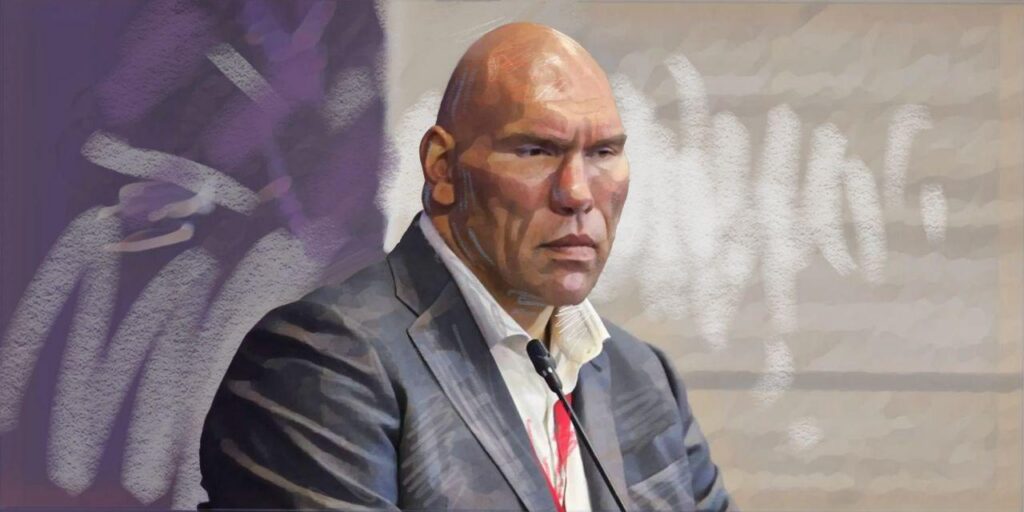
In recent months, a series of sharp and at times openly threatening statements circulating within the Russian media space have drawn growing attention in Central Asia. As previously reported by The Times of Central Asia, rhetoric targeting several Central Asian states has become increasingly frequent on Russian television and social platforms, raising concern among analysts and the public over issues of sovereignty, coercive tactics, and broader regional security. Russian officials have repeatedly stressed that commentary aired on television talk shows or circulated on social media does not necessarily reflect official state policy. Moscow has, on several occasions, distanced itself from provocative remarks made by media personalities, emphasizing that Russia’s foreign policy is articulated only through formal government channels. Analysts note that such episodes unfold within a highly polarized information environment, where sensational or confrontational statements can spread rapidly online, often detached from their original context or intent. Even when later denied or debunked, these narratives can contribute to heightened tensions by reinforcing existing anxieties and testing political and societal reactions in neighboring states. One recent and widely discussed episode involved a video that went viral on social media, allegedly showing Russian State Duma deputy and former heavyweight boxing champion Nikolai Valuev calling for a shift in Russia’s approach toward former Soviet republics from “carrots” to “sticks”, while also hinting at the possibility of a “special operation” in Central Asia. The footage sparked an immediate backlash and skepticism, particularly in Uzbekistan. According to RIA Novosti, Valuev later publicly denied the authenticity of the video, asserting that it was a deepfake. The Russian news agency quoted him as saying the video “has nothing to do with me” and had been produced using AI. “I’m glad that technologies are developing so fast, but this was done with artificial intelligence,” he said, noting that he often discusses AI and deepfakes and that “apparently, AI has taken offense at me.” Doubts about the video’s authenticity emerged almost immediately. Among those questioning it was Ruslan Chagaev, the former world boxing champion from Uzbekistan and one of Valuev’s former opponents, who publicly expressed his disbelief that the statements reflected Valuev’s actual views. Nonetheless, the incident fueled broader discussions in Central Asia about information manipulation, the role of deepfakes, and how aggressive narratives can gain traction, even when later debunked. These concerns were echoed at a recent session of the analytical forum “Fikrat,” held in Tashkent under the theme National Interest and Global Pressure. The gathering brought together political scientists, economists, and historians to assess the growing volume of inflammatory rhetoric emerging from Russia and its implications for Central Asia. Participants stressed that, even when such narratives do not reflect or translate directly into policy, they can shape public perception and test societal and governmental responses. [caption id="attachment_43140" align="aligncenter" width="1598"] The Firkat Forum in Tashkent; image: TCA, Sadokat Jalolova.[/caption] Economist Abdulla Abdukadirov, First Deputy Director General of Uzbekistan’s Agency for Strategic Reforms under the President, addressed the ideological underpinnings of these narratives, identifying Russian nationalist figure Alexander Dugin...

Russian TV Comments on Central Asia Trigger Strong Reaction from Uzbek Analysts

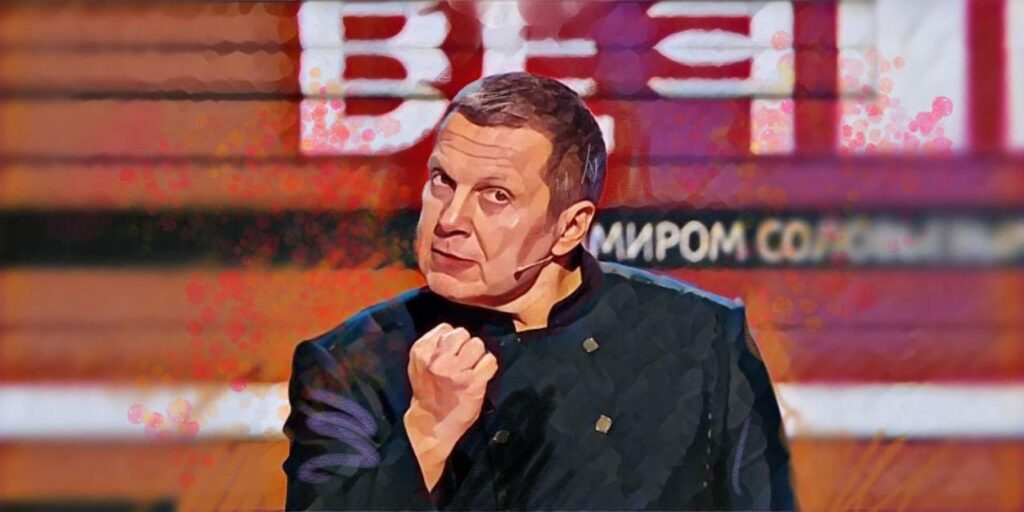
A recent broadcast on Russia’s state television channel Russia-1 has sparked strong backlash in Central Asia after inflammatory remarks aired on the political talk show Evening with Vladimir Solovyov questioned the independence and foreign policy choices of post-Soviet countries in Central Asia and the South Caucasus. The controversy began when political analyst Sergey Mikheyev, who served as a representative for President Vladimir Putin during Russia’s 2024 election campaign, criticized Moscow’s approach toward former Soviet republics, calling it “ineffective” and overly generous. “Our policy toward the post-Soviet space was not very effective,” Mikheyev said. “The situation where Russia owes everyone and no one owes Russia anything is a dead end. We solve many of their problems, labor migration, assistance, many other things and yet we are always the ones who must give.” He added, “We spoiled them. We spoiled them too much. We will not tolerate this anymore.” Program host Solovyov supported the tone of Mikheyev’s remarks, adding: “If I am forced to speak about you like this, then think about what you are doing wrong.” The broadcast quickly spread across social media platforms in Central Asia, prompting swift reactions from regional analysts, particularly in Uzbekistan, who criticized the rhetoric as imperial and patronizing. Uzbek political scientist and university professor Sherzodkhon Qudratkhodja called the discussion an emotional outburst rooted in nostalgia for a lost empire. “They spoke like sentinels, bitterly offended by the entire former Soviet Union,” he wrote on social media. He added that Mikheyev’s phrase “we spoiled them” infantilized independent states, framing them as unruly children rather than equal partners. “The logic is simple: if you don’t obey, you’re ‘nervous.’ If you want independence, you’re ‘spoiled.’ Their favorite phrase is that others ‘must know their place,’” Qudratkhodja wrote. He also rejected the idea that Central Asian countries are exploiting Russia or living at its expense. “No one is blackmailing anyone. No one owes us anything, and we owe no one anything,” he stated, emphasizing Uzbekistan’s commitment to “equal rights and mutual respect in international relations.” Another Uzbek analyst, G‘ayratxo‘ja Saydaliyev, argued that Mikheyev’s comments reflect a broader worldview within segments of the Russian political elite. “This is an open expression of a geopolitical mindset where Central Asia is not seen as a partner, but as a subordinate,” he wrote. “Independent foreign policy is treated not only as ingratitude but as illegitimate.” Saydaliyev noted Mikheyev’s additional remarks on Iran and Turkey, interpreting them as evidence of growing Russian anxiety over shifting alliances. He argued that Moscow views Iran as a counterbalance to the U.S. and Turkey, and fears that losing influence over Tehran could further weaken Russia’s position, potentially prompting it to exert more pressure on post-Soviet neighbors. Turkey’s rising role in Central Asia and the concept of a “Turkic world” were also framed by Mikheyev as a geopolitical threat. Saydaliyev concluded that deeper regional ties with Ankara are being viewed in Moscow not as legitimate foreign policy, but as a challenge to Russian dominance. “The biggest challenge for Central...

Uzbekistan Clarifies Nuclear Plant Timeline After Reports of Delay

Uzbekistan’s plans to begin construction of its first nuclear power plant have come under renewed scrutiny following the publication of a draft state program suggesting the start of work could be postponed until December 2026. The draft made public on the regulation.adliya.uz portal prompted widespread media speculation. According to the document, Uzbekistan intends to spend 2026 negotiating, signing, and registering an additional agreement with Russia’s state nuclear corporation, Rosatom. The proposed agreement would revise the configuration of the integrated nuclear power plant project, combining a large-capacity VVER-1000 reactor with small modular RITM-200N reactors. Some outlets interpreted this language as a sign that the pouring of the first concrete might not occur until the end of 2026. In response, the Uzatom nuclear energy agency issued an official clarification, stating that previously announced timelines remain unchanged. In a statement released after the draft’s publication, Uzatom stressed that the document does not stipulate any postponement of construction. The agency noted that the December 2026 date reflects a conservative planning scenario in which all preparatory and licensing procedures are finalized by that time. Uzatom emphasized its adherence to national legislation and international standards on nuclear and radiation safety. It added that the first concrete pouring, considered a key milestone, will only proceed after receiving all necessary permits and approvals from relevant authorities. “We clearly understand the level of responsibility involved in this stage,” the agency said, adding that work on the project is advancing across all areas. The clarification comes amid sustained public interest in Uzbekistan’s nuclear energy plans. Speaking at World Atomic Week in Moscow in September last year, Uzatom Director Azim Akhmedkhadjaev stated that Uzbekistan aims to fully commission a high-capacity nuclear power plant by 2035. According to him, the first small modular reactor in the Jizzakh region is expected to begin operations in 2029, with a second unit following six months later. The first reactor of the large-scale facility is scheduled to come online in 2033, with full capacity reached by 2035, though Akhmedkhadjaev noted that final timelines are contingent on the completion of contractual agreements. Uzatom said it will continue to provide timely updates as the project progresses through its key phases.

Kazakhstan Debates Parliamentary Reform as Inflation Pressures Living Standards

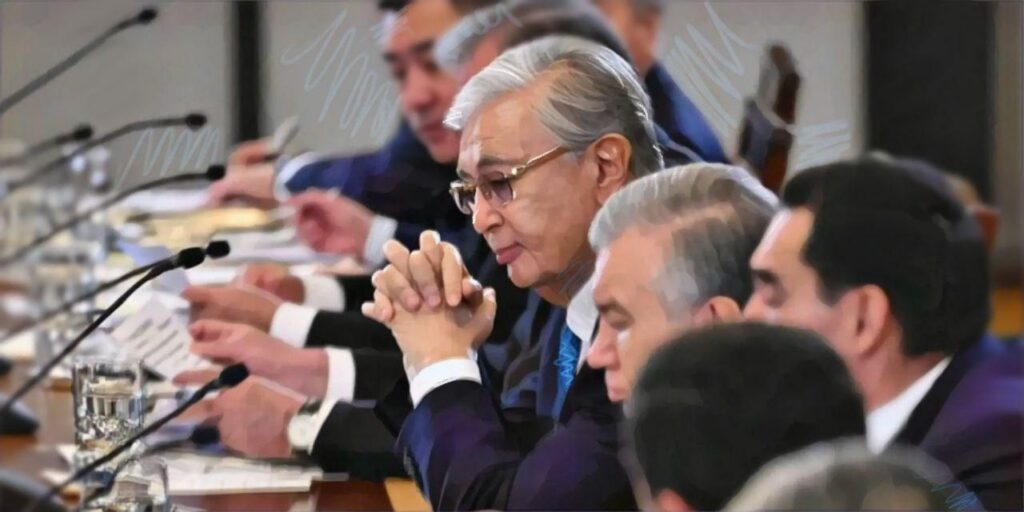
The Kazakh government is actively developing the framework for a future unicameral parliament, working to define its status, powers, and functions. Currently, Kazakhstan’s legislative branch consists of two chambers: the Senate and the Mazhilis.  The proposed transition to a unicameral system has been positioned by authorities as a step toward democratization. However, many citizens remain unclear about the details and implications of the reform, particularly as inflation and declining living standards dominate public concern. Uncertain Details of Reform In September 2025, President Kassym-Jomart Tokayev proposed holding a nationwide referendum on transitioning to a unicameral parliament in 2027. While some analysts have speculated about a faster timeline, no official acceleration beyond 2027 has been announced. "The establishment of a parliamentary republic is not under consideration. The foundational model of a 'Strong President, Influential Parliament, Accountable Government' remains unchanged," Tokayev previously stated. According to political analyst Gaziz Abishev, pivotal developments are expected on January 20, when the National Kurultai (Assembly) convenes. He believes this meeting will outline the contours of constitutional reform and potentially signal a date for the referendum. “If the decree on holding a referendum is signed during the Kurultai, the vote could be held on March 22 [2026],” Abishev stated. Under the current system, the Senate represents regions and appointive quotas, reviewing legislation passed by the Mazhilis and serving as a constitutional buffer. Any move to unicameralism would require redefining how regional interests are represented and how legislative oversight is maintained without an upper chamber. The National Kurultai serves as a platform for dialogue between the government and society, addressing national identity, economic development, social justice, and improving the quality of life. Historically, the Kurultai was a gathering of Turkic and Mongol tribes. Over 500 Public Proposals Submitted Public discussion around the proposed unicameral parliament has been active. Since the launch of a dedicated “Parliamentary Reform” section on the state portals e-Otinish and Egov, over 500 proposals have been submitted by citizens, experts, and public organizations. Despite this engagement, tangible benefits for ordinary citizens remain vague, aside from a potential reduction in government spending. Globally, more than half of national parliaments operate as unicameral systems. According to IPU Parline, 107 out of 188 legislatures follow this model, primarily in unitary states with smaller populations. Unicameral systems are often praised for faster legislative processes, lower administrative costs, and increased transparency. Kazakhstan previously had a unicameral legislature under the 1993 Constitution. Following the invalidation of the 1994 elections, the Supreme Council was dissolved. In 1995, the country transitioned to its current bicameral system. The Senate, as the upper house, plays a stabilizing and arbitration role. Analysts caution that without a second chamber, legislative processes may be vulnerable to hasty or populist decisions. Potential for Early Elections Abishev suggests that a referendum in March 2026 could prompt an early electoral cycle. "Under the current schedule, the next Mazhilis elections are set for January 2028. However, they could be moved up to summer 2026 if Parliament adopts a constitutional amendment package in April...

Uzbek Professor Hits Back at Vladimir Solovyov for Central Asia “Military Operation” Comments

Controversial remarks by Russian television host Vladimir Solovyov, suggesting that Moscow could conduct “special military operations” in Central Asia and Armenia, have continued to provoke a strong reaction in Uzbekistan. Scholars, journalists, and political analysts have all weighed in on the rhetoric as indicative of a dangerous political mindset developing in Russia. During a recent broadcast, Solovyov referred to Russia’s role in the region in terms that some Uzbek experts interpret as veiled threats of interference in the affairs of sovereign Central Asian states. The comments drew immediate responses from Uzbek academics, who underscored their nations' independence and territorial integrity. Political scientist and university professor Sherzodkhon Qudratkhodja issued a detailed rebuttal, emphasizing the historical and strategic gravity of Solovyov’s words. “As a citizen of a sovereign state, such remarks are unacceptable,” he said. “They challenge our independence, our territorial integrity, and our peoples' right to determine their own futures.” Qudratkhodja rejected the notion of Central Asia as a geopolitical periphery. “We are not subjects of external governance. Central Asia is a region with its own history and geopolitical agency. We are no longer objects in foreign policy, we are actors.” He warned that such public commentary normalizes the concept of military intervention by gradually expanding the so-called Overton window, the range of ideas tolerated in public discourse. “When statements like this are introduced as provocation, then normalized through discussion, and ultimately proposed as policy, it becomes a form of normalizing violence through public speech,” he said. Qudratkhodja also highlighted Central Asia’s long-standing sovereignty and global contributions. “Our history spans at least 3,500 years. Turkic peoples, including Uzbeks, pioneered the domestication of horses, early metallurgy for agriculture and warfare, and other advancements. Our ancestors were defenders of their lands and civilizations.” Turning to the geopolitical relationship between Russia and Central Asia, he said that strategic partnerships must be based on mutual respect. “Partnerships are not built on public threats or innuendo. Statements like Solovyov’s are unacceptable, especially when made about strategic partners in an increasingly multipolar world.” While Qudratkhodja acknowledged that Solovyov’s views do not represent official Russian policy, he warned that silence from Russian authorities allows such rhetoric to gain legitimacy. “Even when expressed as personal opinion, if such statements go unanswered by officials, they gain undue influence and risk becoming perceived signals that can destabilize the region.” Uzbek experts also pointed to the cultural and historical resilience of the region. Qudratkhodja invoked the legacy of Tamerlane, arguing that Central Asia has played pivotal roles in shaping regional history. “If our ancestor Tamerlane had not defeated Tokhtamysh in 1395, there would be no Russian Federation as we know it today. Our strategic role in Eurasia cannot be dismissed.” He also directly addressed Solovyov, rejecting any sense of professional kinship. “I do not consider Mr. Solovyov a colleague. His worldview belongs to the propaganda of the past. Today, discourse must be grounded in historical fact and mutual respect, not threats or insinuations.” The reaction in Uzbekistan has extended beyond academia. Social...

Russian TV Host’s Talk of ‘Military Operations’ in Central Asia Triggers Backlash in Uzbekistan

Controversial remarks by Russian television host Vladimir Solovyov, suggesting that Moscow could launch “special military operations” in Central Asia and Armenia, have provoked a strong backlash in Uzbekistan, where scholars, journalists, and political analysts warn that such rhetoric reflects dangerous political tendencies. Speaking on his Solovyov Live program, the prominent pro-Kremlin commentator claimed that regions like Armenia and Central Asia are far more critical to Russia’s national interests than distant allies such as Syria or Venezuela. He urged Russian authorities to abandon international law if it stands in the way of what he described as Russia’s national security. Solovyov was born in Moscow in 1963 and trained in economics and philosophy; after the collapse of the Soviet Union, he spent part of the early–mid-1990s living in the United States, where he worked as a businessman involved in commercial ventures rather than journalism or politics, before returning to Russia following financial difficulties. In the late 1990s and early 2000s, he entered radio and television, initially presenting himself as a liberal, pro-market commentator, but over time evolving into one of Russia’s most prominent pro-Kremlin television hosts, known for his hardline nationalist rhetoric and for aggressively promoting state narratives on domestic and foreign policy. “We must say openly: the games are over. International law and the international order mean nothing to us,” Solovyov declared, openly questioning why, if a so-called special military operation was justified in Ukraine, similar actions should not be carried out elsewhere within Russia’s claimed zone of influence. Solovyov characterized Central Asia as “our Asia,” framing it as part of Russia’s rightful sphere of influence. He warned that instability in the region represents a direct threat to Russia’s security and advocated for the Kremlin to clearly define the boundaries of its “zone of influence,” regardless of international norms. He also criticized Russia’s approach to the war in Ukraine, arguing that a lack of early harsh measures prolonged the conflict and resulted in greater losses. “We should stop casting pearls before swine and openly state that we do not care what Europe thinks,” he added. In recent years, tensions over Russian attitudes toward Central Asia have surfaced in regional discourse. In 2024, Uzbek political figure Alisher Qodirov publicly criticized what he called rising “Russian chauvinism,” responding to televised statements by Russian nationalists such as Zakhar Prilepin advocating territorial claims on Uzbekistan and Russian commentators on state TV asserting that peoples like the Uzbeks and Kazakhs did not exist before 1917, comments that Qodirov said were enough to call for cutting Russian broadcasts into Uzbekistan. Observers have also linked broader social trends in Russia - including xenophobic attacks on Central Asian migrant workers and statements by Russian officials linking Central Asian migration and security to Russia’s interests - to a narrative among some Russian public figures framing Central Asians as outsiders within Russia and Central Asia as a contested space. The remarks triggered immediate condemnation in Uzbekistan. Sherzodkhon Qudratkhodja, a political scientist and professor, said Solovyov had expressed, in plain terms, ideas...