• KGS/USD = 0.01144 0%
  • KZT/USD = 0.00212 0%
  • TJS/USD = 0.10864 0%
  • UZS/USD = 0.00008 0%
  • TMT/USD = 0.28571 0%
  • KGS/USD = 0.01144 0%
  • KZT/USD = 0.00212 0%
  • TJS/USD = 0.10864 0%
  • UZS/USD = 0.00008 0%
  • TMT/USD = 0.28571 0%
  • KGS/USD = 0.01144 0%
  • KZT/USD = 0.00212 0%
  • TJS/USD = 0.10864 0%
  • UZS/USD = 0.00008 0%
  • TMT/USD = 0.28571 0%
  • KGS/USD = 0.01144 0%
  • KZT/USD = 0.00212 0%
  • TJS/USD = 0.10864 0%
  • UZS/USD = 0.00008 0%
  • TMT/USD = 0.28571 0%
  • KGS/USD = 0.01144 0%
  • KZT/USD = 0.00212 0%
  • TJS/USD = 0.10864 0%
  • UZS/USD = 0.00008 0%
  • TMT/USD = 0.28571 0%
  • KGS/USD = 0.01144 0%
  • KZT/USD = 0.00212 0%
  • TJS/USD = 0.10864 0%
  • UZS/USD = 0.00008 0%
  • TMT/USD = 0.28571 0%
  • KGS/USD = 0.01144 0%
  • KZT/USD = 0.00212 0%
  • TJS/USD = 0.10864 0%
  • UZS/USD = 0.00008 0%
  • TMT/USD = 0.28571 0%
  • KGS/USD = 0.01144 0%
  • KZT/USD = 0.00212 0%
  • TJS/USD = 0.10864 0%
  • UZS/USD = 0.00008 0%
  • TMT/USD = 0.28571 0%

Viewing results 1 - 6 of 35

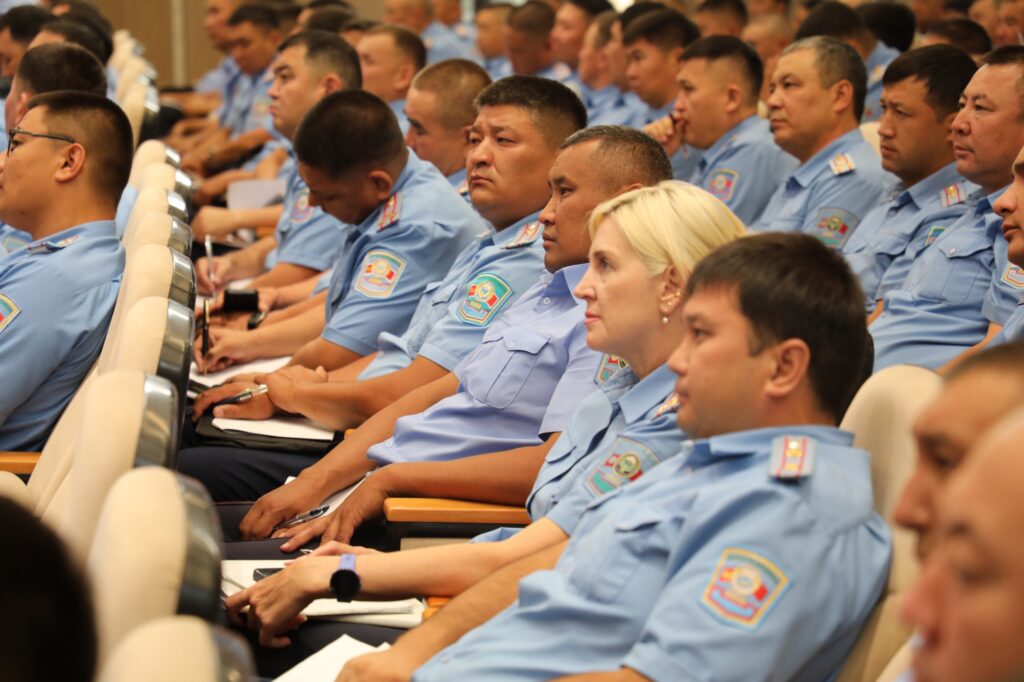
Kyrgyzstan Proposes Controversial Criminal Code Changes Targeting Recidivism, Limiting Official Liability

Kyrgyzstan’s Interior Ministry has submitted a bill aimed at restoring the concept of recidivism to the Criminal Code and limiting the liability of civil servants if their actions are deemed to protect national security. The proposal has sparked heated debate in both parliament and the public. Proposed Changes The draft law would reintroduce harsher penalties for repeat offenders. Recidivism, abolished in 2019 to ensure fairer treatment of convicted criminals, would once again become a legal category. According to the explanatory note, the earlier reform failed to yield the desired outcomes. "The abolition of the concept of recidivism did not have the expected effect," the note states. "Excluding harsher liability for members of organized criminal groups, who are often repeat offenders, has enabled them to consolidate and expand their influence." According to the bill's proponents, nearly 90% of inmates in Kyrgyzstan have prior convictions. They argue that current parole and probation policies treat repeat offenders too leniently. Combating organized crime has been a major priority in recent years. Dozens of so-called 'thieves-in-law' have been detained or neutralized, and suspects are now publicly compelled to renounce their criminal status. President Sadyr Japarov has already signed a law criminalizing the support or financing of criminal organizations. "Organized crime poses a serious threat to national security and affects virtually all sectors of society," the Cabinet said. Under the proposed legislation, penalties for recidivism would be no less than half the maximum sentence for a given crime. In cases of “particularly dangerous recidivism,” the minimum would be two-thirds. Moreover, reconciliation between victim and perpetrator would no longer be grounds for dismissal of charges. Authorities claim the measures will deter crime and diminish the appeal of criminal subcultures, particularly among young people. Public Criticism The most controversial element of the bill, however, is a provision that would exempt individuals from criminal liability if their actions were taken in defense of national sovereignty, the constitutional order, or environmental, economic, informational, or other forms of security. Former MP Felix Kulov criticized the vague language of the proposal on social media, warning it could lead to legal abuse. He cited a hypothetical case in which an environmental activist seriously injures or kills a litterer, arguing the act could be wrongly justified as "defending environmental security." "Such additions clearly do not belong in Article 18 of the Criminal Code," Kulov wrote. "The code already includes provisions for exceeding the limits of necessary defense and abuse of authority, and these new clauses would contradict them." Current MP Dastan Bekeshev reacted more bluntly: "This is crazy. If the law is passed, what is the point of justice at all?" The draft law is now under review in the parliament. If adopted, it would represent one of the most significant overhauls of Kyrgyzstan’s criminal legislation in recent years.

Charvak Resort Plan Sparks Public Outcry in Uzbekistan

A proposed tourism development at Uzbekistan’s Charvak reservoir has drawn widespread public scrutiny following an announcement by Azerbaijani businessman Emin Agalarov. The project, dubbed “Sea Breeze Uzbekistan,” envisions a vast resort complex covering 500 to 700 hectares and featuring hotels, cottages, pools, sports facilities, restaurants, retail outlets, a bridge across the reservoir, and event venues. Public reaction has been swift, with critics raising concerns over transparency and environmental impact. The hashtag #SaveChorvoq has gained traction as citizens question the lack of open consultation. Minister Calls for Transparency and Public Input Speaking at a July 23 press conference near the Charvak reservoir, Uzbekistan’s Minister of Ecology, Aziz Abdukhakimov, addressed the mounting concerns. He clarified that the project has not yet been formally submitted to the government. “Frankly speaking, we’ve only heard about the project informally,” said Abdukhakimov, as quoted by Kun.uz. “That’s why we asked the investor to submit official documents. Once we receive them, our ministry, along with the Construction and Water Management Ministries, will conduct a thorough review.” Abdukhakimov urged the public not to rush to judgment. “Before saying no, let’s see what exactly is being proposed,” he stated. “Once the proposal is submitted, it will be opened for public discussion. No one can secretly approve this project overnight.” He emphasized that Agalarov was approached due to his track record of developing environmentally compliant projects in other countries. “Otherwise, he has many other offers,” the minister added, noting that Agalarov is also in talks with Kyrgyzstan, Kazakhstan, Turkey, and Montenegro. Safeguards and Planning To mitigate environmental risks, Abdukhakimov proposed developing a master plan to delineate zones for recreation and conservation. “We suggest designating specific areas for modern recreation facilities while imposing a moratorium on construction in protected zones,” he said. “This approach ensures the entire shoreline won’t be overtaken by buildings.” Addressing rumors that construction has already begun, Abdukhakimov clarified that only minor landscaping work has taken place to create a model beach area with umbrellas and leveled ground. “This is not major construction,” he stressed. On reports that a sales office had opened in Tashkent, Abdukhakimov explained it is linked to Agalarov’s existing Sea Breeze project in Baku, Azerbaijan. “They cannot sell anything in Uzbekistan yet because they don’t own land here and no project has been approved,” he said. Land Ownership and Oversight Jo'rabek Ahmedov, governor of the Bostanlyk district where Charvak is located, confirmed that most of the proposed site consists of public reserve land, along with some farmland and plots managed by the forestry service. “Around 100 hectares are under consideration for the first phase,” he said. “But nothing official has been submitted yet.” Deputy Construction Minister Davronjon Odilov reassured that there are no plans to build within local villages. “Future development will be guided by a comprehensive master plan that aligns with design and environmental standards,” he said. Officials have committed to full transparency and public participation once the project proposal is formally submitted for review.

Experts Warn of Rights Violations in Kyrgyzstan’s Language Reform Push

The Jogorku Kenesh, Kyrgyzstan’s parliament, has adopted a sweeping package of 18 bills that overhaul the country’s language policy. The new measures significantly curtail the use of Russian, the official language, across key sectors including education, healthcare, the judiciary, and administrative processes. The legislation has drawn sharp criticism from both experts and the wider public. According to the government, the changes are necessary to align existing laws with the constitutional provisions on the state language, Kyrgyz. All 18 bills passed through parliament in a single session comprising three readings. They now await the signature of President Sadyr Japarov. Parliament Speaker Nurlanbek Turgunbek uulu emphasized the urgency of the reforms, warning that the Kyrgyz language is in a “dangerous” state. “Many of us have children and grandchildren who do not speak Kyrgyz. This is shameful. If we continue to neglect our state language, we risk losing our national identity,” he said. Sweeping Language Reforms The adopted laws stipulate that individuals who do not speak Kyrgyz will be barred from holding a wide range of public positions, including parliamentary seats, government posts, judicial and prosecutorial roles, and employment at the National Bank. The legislation mandates Kyrgyz-language proficiency exams for students at the point of admission and grade-level advancement in schools and kindergartens. Public signage, geographic names, and announcements must now appear in Kyrgyz first, with Russian and other languages allowed only as supplementary. All notarized contracts must be drafted in Kyrgyz, with translation into other languages permitted only when necessary. State institutions, including medical facilities, must maintain records exclusively in Kyrgyz. Mounting Concerns Some lawmakers have voiced concerns over the practicality of these reforms. The deputy Gulya Kozhokulova cautioned that insufficient development of medical terminology in Kyrgyz could jeopardize patient safety due to potential errors in diagnoses and prescriptions. MP Dastan Bekeshev highlighted risks to citizens unfamiliar with Kyrgyz when handling legally binding documents, such as loan agreements. Under the new regulations, initial violations of language norms will result in warnings, with repeat offenses drawing fines of up to 17,000 KGS (approximately $200). Public Backlash The legislation has triggered a wave of criticism on social media and among civil society groups. At a roundtable hosted by the Oi Ordo Center for Expert Initiatives, participants asserted that the measures infringe on the rights of at least 1.5 million citizens. An open letter urging President Japarov to reject the legislation was submitted by members of the public, academia, and Bishkek City Council. “Most of the amendments initiated by the National Commission on the State Language lack public backing and have sparked criticism for sharply limiting the use of Russian in socially vital sectors,” the letter stated. Expert Commentary Speaking to The Times of Central Asia, Igor Shestakov, director of the Oi Ordo Center, warned that the amendments contain internal contradictions and ultimately undermine the Kyrgyz language’s development. “These measures primarily restrict the use of Russian. If implemented, they will have far-reaching consequences for banking, legal services, and education, affecting daily life and bureaucratic procedures....

Kyrgyz Authorities Step Up Pressure on Kloop: Searches, Arrests, and International Outcry

In late May, Kyrgyz security forces conducted coordinated raids on the homes of eight current and former employees of the independent media outlet Kloop. Operatives from the State Committee for National Security (GKNB) simultaneously entered apartments in Bishkek and Osh. Video journalist Alexander Alexandrov and former cameraman Joomart Duulatov were detained and remain in custody on charges of “public calls for mass unrest” under Article 278 of the Criminal Code. The other six individuals were released after hours of interrogation but were compelled to sign non-disclosure agreements. According to Kloop’s editorial staff, five minutes before the raids began, the outlet received an anonymous email with the subject line: “You have crossed the line.” The incident drew swift condemnation from human rights groups. The Committee to Protect Journalists (CPJ) demanded an immediate end to what it described as persecution, while other international organizations called for the charges to be dropped. From Student Project to Investigative Powerhouse Founded in 2007 by journalists Bektur Iskender and Rinat Tukhvatushin, Kloop began as a training platform for aspiring reporters. The outlet gained prominence during its around-the-clock reporting on the 2010 uprising. It later evolved into a leading investigative publication, exposing high-profile cases such as the 2017 “Samaragate” voter data scandal and the 2019 financial network linked to customs official Raiymbek Matraimov. Despite legal threats, including lawsuits from the Matraimov family that were later withdrawn, Kloop’s reporting bolstered its credibility and amplified its visibility, making it increasingly unwelcome in official circles. Escalating Crackdown Tensions escalated in August 2023 when the Bishkek Prosecutor’s Office filed a lawsuit to dissolve the Kloop Media Foundation, accusing it of “negative coverage of government activities.” The Oktyabrsky District Court approved the request in February 2024, and the Supreme Court upheld the decision that July in a closed session. The ruling remained classified for a month. The Ministry of Culture subsequently ordered Kloop’s website to be blocked within Kyrgyzstan, despite assurances that the foundation’s removal from the official register would not impede freedom of expression. In response, the editorial team relocated servers abroad and registered a new legal entity. Nevertheless, the authorities resumed the pressure in January 2024 with searches targeting other independent outlets, including Temirov Live and 24.kg. By May, the security forces were back at Kloop. The investigation now alleges that Kloop continued to operate illegally post-liquidation, publishing materials purportedly aimed at “inciting public discontent.” This echoes the case against Temirov Live, where several journalists were imprisoned, including director Makhabat Tazhibek Kyzy, who is serving a six-year sentence. Human rights advocates argue the charges are part of a broader strategy to criminalize dissent. International Reactions The arrests have provoked international condemnation. Amnesty International, Human Rights Watch, Civil Rights Defenders, and Reporters Without Borders were among more than a dozen NGOs that issued a joint statement decrying a “new wave of repression” threatening the future of independent journalism in Kyrgyzstan. The statement urged the immediate release of detained journalists and called on international partners, particularly the European Union, to adopt a...

Parents of Imprisoned Tajik Journalist Rukhshona Khakimova Urge Rahmon to Intervene

The parents of Rukhshona Khakimova, a Tajik journalist sentenced in February 2025 to eight years in prison on charges of treason, have issued an open letter to President Emomali Rahmon, urging him to reconsider their daughter’s case and facilitate her release. Family Appeals for Clemency A copy of the letter, signed by Khakimova’s parents, Zokir Khakimov and Makhsuda Sharopova, was published on social media on May 3. In the letter, the couple described their daughter’s upbringing in a family of educators committed to national values, patriotism, and humanism. Khakimov, a former school director in Kanibadam, and Sharopova, a retired teacher, emphasized their daughter’s achievements. “Our daughter graduated from school and university with honors, received a presidential scholarship, and always worked honestly and within the law,” they wrote. “We can say with complete confidence that Rukhshona could not have committed treason.” They appealed to Rahmon to intervene, especially considering that Khakimova is the mother of two young children. “We respectfully request and implore you, as the supreme leader of the nation, to take steps for her release,” the letter states. Background on the Charges Khakimova, 31, was convicted under Article 305, Part 2, Paragraph “c” of Tajikistan’s Criminal Code, “treason using her official position.” She was sentenced to eight years in prison following a closed trial. Human rights groups claim the charges were linked to her journalistic investigation into China’s influence in Tajikistan. Complicating the case is the fact that Khakimova is reportedly the niece of an opposition figure sentenced to 18 years for attempting a coup. Prior to her arrest, she had been placed under house arrest, her documents were confiscated, and on February 5, she was detained in the courtroom immediately following the verdict. An appellate court upheld the decision. Subsequently, about 230,000 somoni, savings intended for purchasing a home, were withdrawn from her bank account. On April 22, she was transferred from a pre-trial detention center in Dushanbe to a women’s correctional facility in Nurek. Public and International Reaction Khakimova’s sentencing has sparked condemnation both domestically and abroad. Journalists and human rights advocates described the case as emblematic of worsening conditions for press freedom in Tajikistan. Activists claim she faced repeated threats prior to her arrest. Earlier this year, a group of women and civil society activists also submitted a letter to Rahmon requesting leniency. International organizations including Human Rights Watch, Reporters Without Borders, and The Observatory for the Protection of Human Rights Defenders have called for her immediate release. Despite multiple appeals, Tajik authorities have yet to respond, and the sentence remains in effect.