• KGS/USD = 0.01144 0%
  • KZT/USD = 0.00204 0%
  • TJS/USD = 0.10422 -0.1%
  • UZS/USD = 0.00008 0%
  • TMT/USD = 0.28571 0%
  • KGS/USD = 0.01144 0%
  • KZT/USD = 0.00204 0%
  • TJS/USD = 0.10422 -0.1%
  • UZS/USD = 0.00008 0%
  • TMT/USD = 0.28571 0%
  • KGS/USD = 0.01144 0%
  • KZT/USD = 0.00204 0%
  • TJS/USD = 0.10422 -0.1%
  • UZS/USD = 0.00008 0%
  • TMT/USD = 0.28571 0%
  • KGS/USD = 0.01144 0%
  • KZT/USD = 0.00204 0%
  • TJS/USD = 0.10422 -0.1%
  • UZS/USD = 0.00008 0%
  • TMT/USD = 0.28571 0%
  • KGS/USD = 0.01144 0%
  • KZT/USD = 0.00204 0%
  • TJS/USD = 0.10422 -0.1%
  • UZS/USD = 0.00008 0%
  • TMT/USD = 0.28571 0%
  • KGS/USD = 0.01144 0%
  • KZT/USD = 0.00204 0%
  • TJS/USD = 0.10422 -0.1%
  • UZS/USD = 0.00008 0%
  • TMT/USD = 0.28571 0%
  • KGS/USD = 0.01144 0%
  • KZT/USD = 0.00204 0%
  • TJS/USD = 0.10422 -0.1%
  • UZS/USD = 0.00008 0%
  • TMT/USD = 0.28571 0%
  • KGS/USD = 0.01144 0%
  • KZT/USD = 0.00204 0%
  • TJS/USD = 0.10422 -0.1%
  • UZS/USD = 0.00008 0%
  • TMT/USD = 0.28571 0%

Viewing results 1 - 6 of 22

Opinion – Qosh Tepa Canal: Transboundary Impacts Without a Transboundary Mechanism

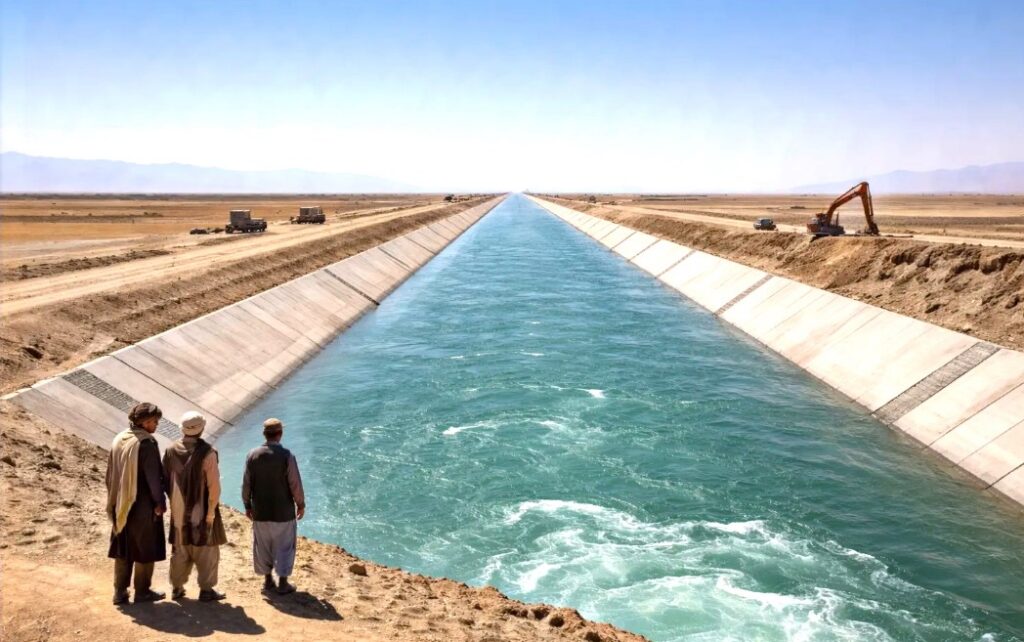
In recent months, media attention has increasingly focused on infrastructure projects underway in Afghanistan. Chief among them is the Qosh Tepa Canal, widely seen not only as an irrigation initiative but as a development with significant transboundary implications for the Amu Darya River basin. The canal draws water from one of Central Asia’s most critical transboundary rivers. For downstream countries, primarily Uzbekistan and Turkmenistan, the Amu Darya is a vital water source, directly linked to agricultural output and the sustainability of rural communities. As such, the conversation surrounding Qosh Tepa extends well beyond Afghanistan’s domestic agenda. Concerns voiced by experts and analysts stem from both the scale of the project and the absence of an inclusive, basin-wide mechanism that includes Afghanistan, which is not a party to the main post-Soviet Amu Darya allocation frameworks. As a result, discussions regarding the canal’s potential impacts are taking place largely outside formal multilateral frameworks. One positive development is the increasing presentation of Qosh Tepa within a broader context, where water flow management is recognized as a factor shaping regional political and economic relations. However, these assessments often highlight not the canal’s stated purpose, but rather the absence of a sustainable mechanism for coordinating discussion of its cross-border effects. [caption id="attachment_43173" align="aligncenter" width="1280"] Image: TCATCA[/caption] A recurring concern among experts is the lack of a structured multilateral platform that enables early-stage evaluation of such projects before they are perceived as risks. Infrastructure development in the region frequently outpaces the establishment of mechanisms for joint impact assessment and management. In this light, Kazakhstan’s initiative to establish a specialized structure within the UN system, the International Water Organization, acquires particular relevance. This proposal is not about building a theoretical global agenda but about addressing a specific institutional gap: the lack of a neutral forum for technical and expert discussion of transboundary water projects at an early stage. The Qosh Tepa Canal, currently a unilateral infrastructure undertaking rather than the result of an international agreement, could serve as a test case for such a preventive mandate. While the project is already underway and its transboundary implications are actively being discussed among experts, it has not yet escalated into a regional dispute. This creates an opportunity for professional dialogue, without entanglement in political or status-related debates. The present situation can be summarized as one of “transboundary implications without a transboundary mechanism.” The project, while entirely within Afghan territory, objectively affects the interests of downstream states, yet it remains disconnected from any multilateral framework for consultation or agreement. Is it in Afghanistan’s interest to engage in multilateral formats? Though the question is often left unanswered, the answer is a clear “yes.” Such engagement would help dispel suspicion not only among Central Asian states, but also in Iran and Pakistan, both of which have voiced concerns over shared water resources. First, it would reduce negative external rhetoric. Currently, Qosh Tepa is largely discussed via external media with alarmist scenarios and with little to no Afghan participation. This reinforces the image...

Why Regional Connectivity Is Reshaping Central Asia: Insights from ISRS Director Eldor Aripov (Part Two)

The Times of Central Asia presents the second part of an interview in Washington, D.C. with Eldor Aripov, Director of the Institute for Strategic and Regional Studies under the President of Uzbekistan. Dr. Aripov sat down with our Washington Correspondent, Javier M. Piedra, to discuss Uzbekistan’s geoeconomic and geopolitical strategic thinking. The conversation focused on Uzbekistan’s and the region’s efforts to cooperate diplomatically to maintain peace and stability with neighbors, irrespective of historical “hotspots,” cultural sensitivities, or the all-important matter of water resources. Aripov comments on Afghanistan, Chabahar Port (Iran), Ferghana Valley, and business development – key for U.S. investors thinking about Uzbekistan and the broader Central Asian region. TCA: What message do you have for businesses and private investors who do not have any experience in Central Asia? Many companies are sniffing around at this time – what do you want to tell them? Aripov: Uzbekistan is ready for committed investors - those who deliver lasting benefits, quality jobs, and shared prosperity. A decade of reforms has strengthened our fiscal discipline, boosted SMEs, and anchored stability. Coupled with our focus on good relations and a secure, integrated Central Asia, we offer a reliable platform for long-term, sustainable investment. While we have more work to do, we invite you to be part of our momentum. TCA: What are the risks that companies might face when considering long-term investment? Aripov: No country is immune to downside risks – not only in the developed but developing world. Having said that, downside risks, including trade shocks, commodity price volatility, tighter external financing, and contingent liabilities from state-owned enterprises, are mostly exogenous factors driven by global conditions. Risks are mitigated through political stability, diversification of the economy, prudent macroeconomic management, and reforms to state-owned enterprises and governance. For more in-depth commentary, I refer you to recent IMF, World Bank, and Asian Development Bank assessments about our economic conditions and trends. TCA: Let me move on to more regional issues. The first Ferghana Peace Forum was held in October 2025. How can it serve as a replicable model for other regions seeking sustainable peace? Aripov: First of all, I’d like to put this important forum on everyone’s radar. I’d like to underscore that peace is possible when hard work, respect for others, and a commitment to understanding guide our actions, despite historical memories and past differences. Someone should write a case study about our ability to bring consensus into an otherwise challenging region. In any event, the inaugural Ferghana Peace Forum brought together over 300 participants from more than 20 countries — representatives of Central Asian governments, international organizations, leading think tanks, research institutions, and local communities. A joint communiqué was adopted, confirming the intention to institutionalize the Forum as a permanent platform with rotating hosts. This broad participation highlighted an important reality: the Ferghana Valley is no longer viewed as a fragile zone; it is now viewed as a model of pragmatic peacebuilding. The Forum demonstrated how regional leadership — particularly the openness and...

Russia Revives Plan to Redirect Siberian Rivers as Central Asia Faces Worsening Water Crisis

The long-contested idea of diverting Siberian rivers to Central Asia has re-emerged after the Russian Academy of Sciences announced on November 14 that it is studying a new version of the project. The updated proposal revives elements of a Soviet-era plan from the 1970s and 1980s that aimed to channel water from the Ob River basin to arid regions of Central Asia. This time, however, the focus is on a closed pipeline system, rather than open canals, to transport large volumes of water to countries facing acute shortages, particularly Uzbekistan, according to Fergana News. Discussions within the Russian Academy had reportedly already begun prior to the announcement. Researchers are now calling on Russia’s Ministry of Science and Higher Education to include a full study of the project in its state research plan. They argue that Central Asia is entering a critical phase of water scarcity that demands long-term strategic solutions. The renewed interest comes amid escalating water stress across the region. Rapid population growth, retreating glaciers, and intensifying irrigation demands have pushed existing water systems to their limits. While some view the proposed pipeline as a potential lifeline for stabilizing regional water supplies, environmental concerns remain central to the debate, echoing the very reasons the original project was shelved. A Long History of Controversy The idea of redirecting northern rivers is not new. It was first proposed in the 19th century by Ukrainian-born engineer Yakov Demchenko, who envisioned transferring water from the Ob and Irtysh rivers to replenish the shrinking Aral Sea. In the Soviet period, the concept gained political traction. By the late 1960s, it had entered official planning discussions, prompting detailed studies by the Academy of Sciences, the State Planning Committee, and the Ministry of Water Resources. In 1970, the project was formally designated a state priority, with plans for transferring up to 25 cubic kilometers of water annually. Extensive technical documentation was produced, and construction began on supporting infrastructure, including the Irtysh-Karaganda canal. Designs for the main channel envisioned a span of more than 2,500 kilometers and a capacity exceeding 1,000 cubic meters per second. However, by 1986, the project was halted due to mounting economic pressures, scientific opposition, and growing awareness of potential environmental risks. Experts warned of large-scale flooding, disruptions to groundwater, damage to fish stocks, displacement of Indigenous communities, and unpredictable impacts on permafrost and regional climate systems. Renewed Debate in a Region Under Stress Though shelved in the late Soviet era, the project has resurfaced multiple times since the collapse of the USSR. Former Moscow mayor Yuri Luzhkov advocated for its revival in 2002, and Russian and Kazakh presidents discussed it publicly in 2010. Yet concerns about environmental and geopolitical ramifications have consistently stalled progress. Meanwhile, the water crisis in Central Asia has only deepened. Glaciers in the Tien Shan and Pamir mountains which feed the Amu Darya and Syr Darya rivers have shrunk by more than 25% in recent decades. The region’s population has grown to approximately 80 million, nearly 50% higher...

Central Asia Faces Growing Water Risks as Qosh Tepa Canal Nears Completion

Kazakh media, Inbusiness.kz, reports that discussions within the Russian Academy of Sciences have revived a decadesold idea to redirect Siberian rivers toward Central Asia. Researchers have proposed that Russia’s Ministry of Science and Higher Education include a study of the project in its state research plan, arguing that the region is entering a critical phase of water scarcity. This renewed debate comes as Afghanistan advances construction of the Qosh Tepa Canal, a massive irrigation project in the country’s north. The first 108 kilometer section began operating in 2023, and work on the second phase is nearing completion. Once fully operational, the 285 kilometer canal is expected to divert more than 15% of the Amu Darya river’s flow to irrigate around 550,000 hectares of farmland in Afghanistan’s drought-prone regions. Construction began in March 2022 and its impact is already being felt across Central Asia. Experts warn the canal could reduce Uzbekistan’s water supply by around 15% and Turkmenistan’s by up to 80%, which may lead to lower crop yields, job losses, rising poverty and even potential migration or tensions. Scholars in Kazakhstan note rising alarm. Ravshan Nazarov, an associate professor based in Tashkent, said that failure to address water shortages could trigger mass population movements. He argued that redirecting Siberian rivers, though technically complex and costly, may become unavoidable. He warned that if Russia does not share its water resources, it might eventually face “an influx of 100 million refugees.” Data from the Food and Agriculture Organization (FAO) show that Turkmenistan is the region’s largest water consumer, using 53 cubic kilometres annually despite a population of just about 7 million. Experts attribute this to ageing infrastructure, high evaporation losses and a lack of concrete-lined canals. Meanwhile, Kyrgyzstan has faced water shortages since 2020.

Afghanistan’s Qosh Tepa Canal Raises Water Security Fears

Water has long been one of Central Asia’s most contested resources, shaping agriculture, energy policy, and diplomacy across the region. Recently, Afghanistan’s Qosh Tepa Canal project has emerged as a central point in this debate. Promoted by the Taliban as a vital step toward achieving food security and economic growth, the canal also raises alarm bells among downstream neighbors who heavily depend on the Amu Darya River. Now, according to Islamic Emirate spokesman Zabihullah Mujahid, the second phase of the project is expected to be completed within five months, raising further concerns among downstream countries about its potential impact on regional water security. Progress on the Ground In August, the Afghan authorities stated that 93% of the second phase had been completed. Videos show the canal lined with concrete and stone in some sections, alongside the construction of large and medium-sized bridges to link surrounding settlements. The project spans 128 kilometers from Dawlatabad district in Balkh province to Andkhoy district in Faryab province and involves over 60 contractors, making it one of Afghanistan’s largest infrastructure projects. Origins and International Support The canal’s roots trace back to earlier international efforts. While some sources attribute its conceptual origins to Soviet or British engineers in the 1960s, significant development began in 2018 under President Ashraf Ghani. The project was supported by the U.S. Agency for International Development (USAID) and Indian engineering firms. According to the Scientific-Information Center of the Interstate Commission for Water Coordination (SIC ICWC), a $3.6 million feasibility study was launched in Kabul in December 2018, funded by USAID and conducted by AACS Consulting and BETS Consulting Services Ltd. The study was coordinated with several Afghan ministries, but has not been published. Following the Taliban’s takeover, the Islamic Emirate held an official inauguration ceremony on March 30, 2022. The full canal is designed to stretch 285 kilometers, measuring 100 meters wide and 8.5 meters deep, and is expected to divert an estimated six to ten cubic kilometers of water annually from the Amu Darya. Afghan media have quoted water management expert Najibullah Sadid, who projected the canal could generate between $470 million and $550 million in annual revenue. Regional Concerns and Environmental Risks The project has raised alarm in Uzbekistan, Turkmenistan, and Tajikistan, countries that depend heavily on the Amu Darya for irrigation. Experts at SIC ICWC point out that no environmental impact assessment was conducted for downstream states, nor were they formally notified of the construction, as required by international water conventions. In December 2022, Uzbek President Shavkat Mirziyoyev called for practical dialogue with Afghanistan and the international community to strengthen regional water security. Adroit Associates estimates that the canal could eventually divert up to 13 billion cubic meters annually, nearly one-quarter of the Amu Darya’s average flow. Environmental risks are also mounting. Analysts warn that Uzbekistan, which relies heavily on the river for agriculture, could face soil degradation and declining crop yields. Turkmenistan, where agriculture accounts for 12% of GDP, may also suffer severe disruptions. Some studies suggest Uzbekistan and...

Rail, Water, and Helicopters – Uzbekistan’s “Limited Recognition” of the Taliban

Uzbekistan has spent the middle of September embroiled in an increasingly tetchy press battle over an unusual topic: helicopters. The Taliban, who run the de facto government in Kabul, have long claimed that several dozen military aircraft and helicopters currently residing in Uzbekistan are rightfully theirs. On September 11, a Taliban official announced publicly that Uzbekistan had agreed to hand them back. This was reported widely in the regional media, with the Uzbek foreign ministry slow off the mark in denying these claims. The dispute goes back to the fall of Kabul in August 2021, when a total of 57 aircraft were flown from Afghanistan to Uzbekistan and Tajikistan as Ashraf Ghani’s government collapsed. “The helicopters came from the Afghan territory to Uzbek territory illegally, so actually we had the right to confiscate them,” Islomkhon Gafarov, an Afghanistan expert at the Center for Progressive Reform, a Tashkent think tank, told the Times of Central Asia. However, Gafarov adds that the aircraft were the property of the U.S. military loaned to the previous government of Afghanistan, and therefore, Washington will have a say in their return. This has not stopped the Taliban from continuing to demand the helicopters back for use in “humanitarian operations,” in the words of Foreign Minister Amir Khan Muttaqi. Such wrangling is part of the daily diplomatic in-tray for Tashkent when dealing with a neighbor whose government has not been recognized by almost the entire world. “Afghanistan is our neighbor,” said Gafarov. “According to the geopolitical situation, we have to conduct a dialogue with this government. It’s true, Uzbekistan hasn’t recognized the Taliban government, but de facto, we work with them; we’ve had diplomatic relations with them since 2018.” Tashkent certainly has reasons to work with the Taliban. Helicopters are a mere sideshow compared to two far larger issues that will define their relations for years to come: rail and water. Railway On the positive side of the ledger, the Taliban have brought to Afghanistan a reasonable degree of stability - enough to start contemplating large-scale infrastructure projects. In July, an agreement was struck between Pakistan, Afghanistan, and Uzbekistan to conduct a feasibility study for a trans-Afghanistan railway, with 647 kilometers of new track being laid to link Uzbekistan with Pakistan’s Indian Ocean ports. This railway could bring significant benefits to Uzbekistan, one of only two double-landlocked countries in the world. Currently, sea-bound exports must travel via Turkmenistan to Iran. Other routes almost all rely on going via Kazakhstan. The China-Kyrgyzstan-Uzbekistan railway, currently being constructed, should remove some of the need for sea-bound routes, but the Pakistan route would be faster. “The trans-Afghan route is the shortest way to the seaports of Karachi and Gwadar,” Gafarov told TCA. With a line from Termez, Uzbekistan, to Mazar-i-Sharif in Northern Afghanistan already operational, this only leaves two sections unbuilt - from Mazar to Kabul, and then from Kabul to Peshawar in Pakistan. The teams are still only at the feasibility stage right now, and have, with some chutzpah, predicted...