The World Bank Backs Kazakhstan’s Rail Shortcut
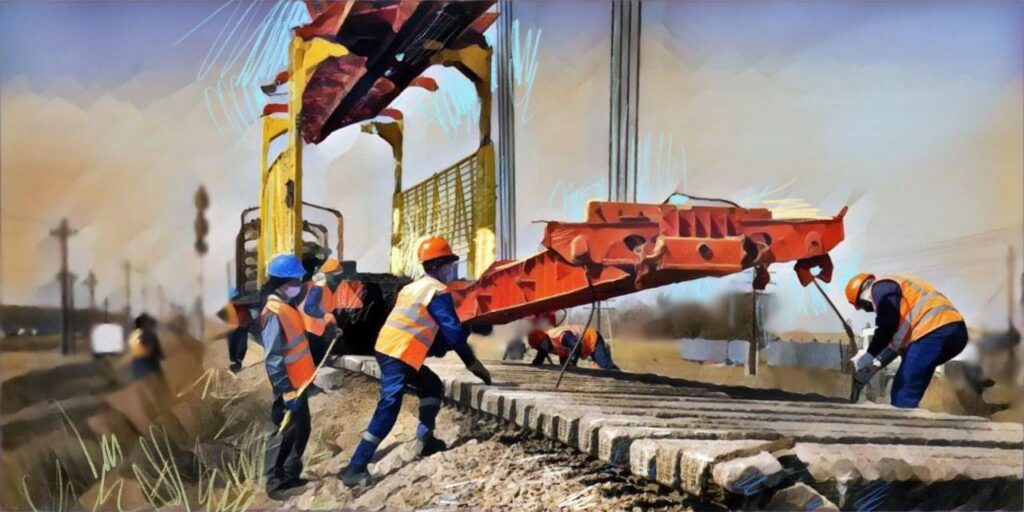
On February 19, 2026, the World Bank Board approved an $846 million IBRD guarantee to help the state-owned railway company Kazakhstan Temir Zholy (KTZ) mobilize $1.41 billion in long-term commercial financing. The financing is linked to a KTZ reform program under the umbrella “Transforming Rail Connectivity in Kazakhstan (Middle Corridor Development)” initiative. The purpose is to expand rail connectivity and upgrade logistics on Kazakhstan’s segment of the Trans-Caspian International Transport Route (TITR, Middle Corridor). The Asian Infrastructure Investment Bank (AIIB) will add a $564 million co-guarantee that shifts the financing away from a classic sovereign-loan model and toward private credit backed by multilateral risk coverage. The Multilateral Investment Guarantee Agency (MIGA) presents this operation as part of a wider World Bank Group approach that pairs corridor capital expenditure with steps to strengthen the operator’s financial sustainability and commercial viability. The operation is structured as a two-part package. First, it finances a new 322.3-kilometer railway on a new segment between Mointy and Kyzylzhar in central Kazakhstan. This segment is meant to remove a major network detour, shorten the TITR route within Kazakhstan by 149 kilometers, ease congestion on heavily used sections, and support double-stack container operations. The line is planned with modern signaling and telecommunications, plus design provisions for later expansion and electrification. Second, it ties the construction to a reform program at KTZ, including tariff reform, exploration of alternative financing mechanisms, stronger financial and environmental management, and preparatory work for a potential initial public offering. The World Bank is structuring delivery through a Multi-Phase Programmatic Approach with the stated aim of tripling freight volumes and halving end-to-end transit times on Kazakhstan’s Middle Corridor segment by 2030. Why This Segment Matters for the Middle Corridor Inside Kazakhstan, the Mointy–Kyzylzhar line is a central connector in the Trans-Kazakhstan east–west trunk carrying traffic from the China-facing gateways at Dostyk and Khorgos toward the Caspian outlets at Aktau and Kuryk. Mointy itself is a pivotal junction where train paths, locomotives, and crews are redistributed across multiple directions; as a result, any congestion there propagates quickly into corridor-wide delays. In early 2025, President Kassym-Jomart Tokayev directed acceleration of the Trans-Kazakhstan corridor. KTZ says the expected benefits include decreased pressure on heavily used central segments, fewer locomotive changeovers at key junction points, and, on some routings, the potential to cut more than a day from transit time between the Chinese border and Aktau. The World Bank’s 2023 Middle Corridor study stressed that the corridor’s most durable growth driver is regional trade among the core corridor economies: China–Europe movements remain important, but they compete with multiple alternatives, above all maritime shipping. An infrastructure upgrade adds economic value only if it reduces variability at the handoff points where delays accumulate, including rail-to-port interfaces, Caspian coordination, and national borders. Relieving the domestic bottleneck in Kazakhstan is economically meaningful only insofar as it stabilizes arrival times to Caspian terminals, creates more room for dispatching, and helps logistics providers offer shippers more predictable end-to-end service along the TITR. The emphasis is...