• KGS/USD = 0.01143 0%
  • KZT/USD = 0.00216 0%
  • TJS/USD = 0.10633 -0.28%
  • UZS/USD = 0.00008 0%
  • TMT/USD = 0.28571 0%
  • KGS/USD = 0.01143 0%
  • KZT/USD = 0.00216 0%
  • TJS/USD = 0.10633 -0.28%
  • UZS/USD = 0.00008 0%
  • TMT/USD = 0.28571 0%
  • KGS/USD = 0.01143 0%
  • KZT/USD = 0.00216 0%
  • TJS/USD = 0.10633 -0.28%
  • UZS/USD = 0.00008 0%
  • TMT/USD = 0.28571 0%
  • KGS/USD = 0.01143 0%
  • KZT/USD = 0.00216 0%
  • TJS/USD = 0.10633 -0.28%
  • UZS/USD = 0.00008 0%
  • TMT/USD = 0.28571 0%
  • KGS/USD = 0.01143 0%
  • KZT/USD = 0.00216 0%
  • TJS/USD = 0.10633 -0.28%
  • UZS/USD = 0.00008 0%
  • TMT/USD = 0.28571 0%
  • KGS/USD = 0.01143 0%
  • KZT/USD = 0.00216 0%
  • TJS/USD = 0.10633 -0.28%
  • UZS/USD = 0.00008 0%
  • TMT/USD = 0.28571 0%
  • KGS/USD = 0.01143 0%
  • KZT/USD = 0.00216 0%
  • TJS/USD = 0.10633 -0.28%
  • UZS/USD = 0.00008 0%
  • TMT/USD = 0.28571 0%
  • KGS/USD = 0.01143 0%
  • KZT/USD = 0.00216 0%
  • TJS/USD = 0.10633 -0.28%
  • UZS/USD = 0.00008 0%
  • TMT/USD = 0.28571 0%

Viewing results 1 - 6 of 121

Uzbekistan Gains ASEAN Approval to Join Cooperation Treaty

Uzbekistan’s efforts to strengthen its ties with Southeast Asia advanced significantly this week after all member states of the Association of Southeast Asian Nations (ASEAN) approved Tashkent’s application to join the Treaty of Amity and Cooperation in Southeast Asia (TAC). The decision was made during a meeting of ASEAN foreign ministers chaired by Malaysia in Kuala Lumpur, according to the Dunyo news agency. Signed in Bali in 1976, the TAC outlines core principles for regional cooperation, including peaceful dispute resolution, non-interference, renunciation of force, and respect for sovereignty. ASEAN now comprises 11 countries with a combined population nearing 700 million, forming one of the world’s most dynamic economic regions. Uzbekistan’s accession to the TAC is expected to enhance its political and economic presence in Southeast Asia, facilitate state-to-state cooperation, boost trade and investment, and increase confidence among international companies operating in or considering expansion into Central Asia. Political analyst Jahongir Akramov described the approval as a significant diplomatic achievement for Uzbekistan. Speaking to The Times of Central Asia, he said the move aligns closely with Uzbekistan’s foreign policy principles: “Uzbekistan’s joining this treaty can be seen as a very significant diplomatic success. One of the key reasons is that the core principles of the TAC fully match the principles set out in Article 17 of Uzbekistan’s Constitution, non-use of force, resolving conflicts peacefully, negotiating disputes, and respecting the sovereignty of states.” Akramov noted that since 2016, Uzbekistan’s foreign policy has evolved along three strategic vectors, all of which are reinforced by the TAC: “First, Uzbekistan adopted a multi-vector foreign policy. Second, the country has taken major steps to develop economic diplomacy. Third, we have been deepening regional integration. All three of these trends are fully consistent with joining the TAC.” He emphasized that the timing is especially relevant amid growing geopolitical strains: “Geopolitical tensions have intensified, particularly among the United States, China, and Russia. In this situation, participating in platforms such as ASEAN can help reduce pressure and maintain diplomatic balance.” Akramov also positioned Uzbekistan’s move as part of a broader Global South cooperation trend. “Central Asian and ASEAN countries are both part of the Global South. Building closer relations ensures our interests are better represented in shaping new international norms.” Economically, Akramov pointed to ASEAN’s size and diversity as highly advantageous. “ASEAN includes Indonesia, the world’s most populous Muslim-majority country, Singapore, a global innovation hub, Malaysia, an advanced and diversified economy, and Thailand, a leading tourism destination. Closer ties with these states could expand tourism, improve Uzbekistan’s international image, and boost the competitiveness of Uzbek products.” He added that ASEAN’s extensive experience with regional integration offers a model for Central Asia. “As one of the first Central Asian countries to join the TAC, Uzbekistan could take a leading role in fostering ASEAN-Central Asia cooperation. A regional office or cooperation structure based in Tashkent or Samarkand would be a major diplomatic achievement.” However, Akramov cautioned that the partnership would require careful navigation. “Southeast Asia has its own geopolitical tensions, such...

Kazakhstan Trades Electricity for Water in Bid to Mitigate Summer Drought Risks

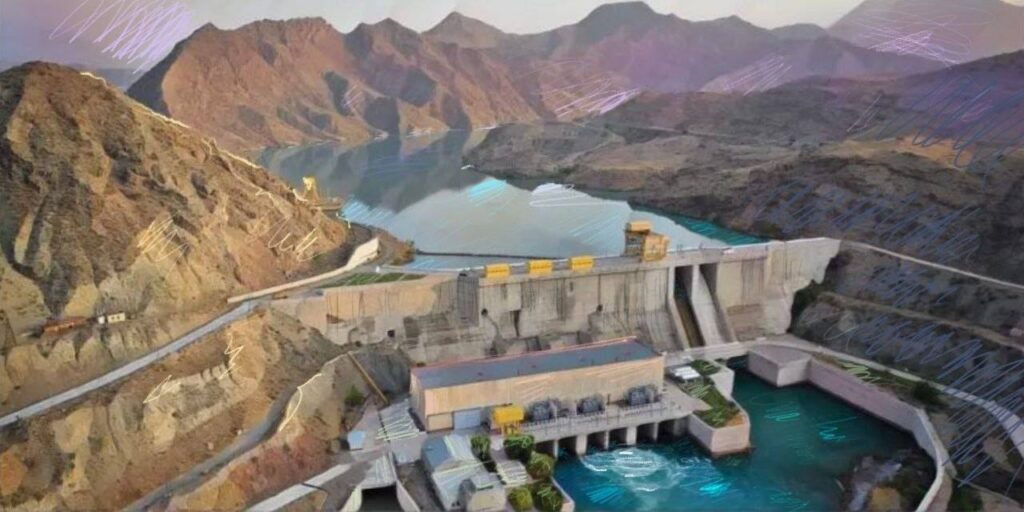
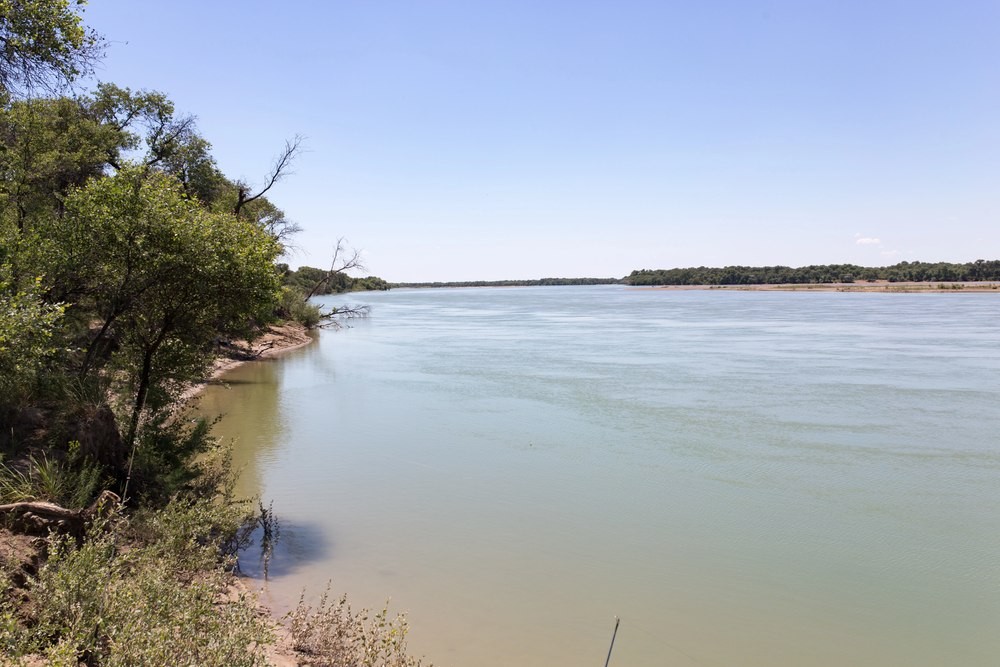
Central Asia is entering a new phase in the management of its water-energy nexus, moving from declarations to practical coordination. A trilateral protocol signed in Almaty by Kazakhstan, Kyrgyzstan, and Uzbekistan marked a significant step toward stabilizing the region’s water regime amid escalating climate risks. Brokered under Kazakhstan’s chairmanship, the agreement aims to balance the load on the Toktogul Reservoir, the main regulating structure of the Syr Darya basin. Kyrgyzstan typically increases winter water discharges to generate electricity, which reduces irrigation water availability downstream during summer. Under the new deal, Kazakhstan and Uzbekistan will supply Kyrgyzstan with electricity during winter, in return for Kyrgyzstan's commitment to store water and ensure its release during the 2026 growing season. The Almaty Protocol complements the existing plan for filling the Shardara Reservoir, which aims to accumulate 11 cubic kilometers of water by April 1, 2026. Achieving this target hinges on Toktogul’s operations. Without external support, Kyrgyzstan’s energy infrastructure would struggle to meet the requirement. Supplemental electricity from Astana and Tashkent thus forms the economic backbone of this arrangement. Longstanding disparities in regional water and energy needs remain a source of instability. Kyrgyzstan requires water in winter for hydropower, while Kazakhstan, especially its Turkestan and Kyzylorda regions, relies on it in summer for irrigation. Recent water shortages have pushed the countries toward more pragmatic coordination. Uzbekistan has committed to managing the technical conditions for transit and balancing inter-system flows. Despite facing its own energy shortfall and aging infrastructure, Kazakhstan is participating in regional stabilization to avert socio-economic risks in its southern provinces. External factors are adding urgency to regional cooperation. Afghanistan’s construction of the Qosh-Tepa Canal is expected to reduce the Amu Darya’s water balance by 20-25%. Although Uzbekistan is most directly affected, the resulting pressure on water systems could also impact the Syr Darya, on which southern Kazakhstan heavily depends. Internally, Kazakhstan faces persistent challenges. Water loss during transport reaches up to 40-50% due to outdated canal infrastructure. Rice cultivation continues in the water-intensive Kyzylorda region, while water-saving technologies are used on only about 30% of irrigated land. These new agreements suggest that Central Asian countries can rapidly implement collective mechanisms in response to shared threats. In effect, elements of a regional Water and Energy Consortium are already operating in a de facto, ad hoc manner. Water, energy, and food security are increasingly seen as interconnected resources requiring coordinated governance. For Kazakhstan, the priority now is to institutionalize these provisional agreements. If the “electricity-for-water” model can be formalized into a durable framework, it could stand as one of the most significant accomplishments of the country’s regional diplomacy.

From Glaciers to Green Goals: Central Asia at COP30

The UN Climate Change Conference (COP30) in Belém, Brazil, concluded with a hard-fought global deal that boosts climate finance for developing countries but avoids any promise to phase out fossil fuels. Amid this uneasy compromise, the Central Asian nations worked to get their priorities heard. Their delegations pressed for more climate funding, recognition of their unique vulnerabilities, and support for regional initiatives, with mixed results. A United Regional Voice on Climate Home to over 80 million people, Central Asia entered COP30 with a goal outlined as “five countries, one voice,” after a regional dialogue in Dushanbe ahead of the summit forged a common stance on shared threats such as melting glaciers and water stress. The region has already warmed about 2.2 °C – faster than the global average – and glaciers are shrinking by roughly 0.5% each year, Uzbekistan’s environment minister Aziz Abdukhakimov warned in Belém. He noted worsening land degradation and vanishing water resources, underscoring Central Asia’s acute climate vulnerability. In response, Uzbekistan unveiled a new pledge to cut its greenhouse gas emissions by 50% by 2035 (from 2010 levels) by expanding renewable energy and forests. Such actions align with COP30’s call for developed nations to triple adaptation finance by 2035 to help vulnerable countries cope. “COP30 showed that climate cooperation is alive and kicking, keeping humanity in the fight for a livable planet,” UN climate chief Simon Stiell said in his closing speech, praising delegates for persisting despite global divisions. National Commitments and Initiatives Kazakhstan, Central Asia’s largest economy and emitter, took on a visible role at COP30. Its delegation was led by Minister of Ecology and Natural Resources Yerlan Nyssanbayev, who addressed the summit’s opening session. Nyssanbayev reaffirmed Kazakhstan’s commitment to the Paris Agreement goals, noting the country has adopted a “Revised Nationally Determined Contribution (NDC) and a National Adaptation Plan” with more ambitious targets to cut emissions and bolster resilience. “It is crucial for us to consistently work toward achieving our climate goals,” he stated. Nyssanbayev emphasized the importance of climate finance for developing countries, highlighting the new “Baku–Belém Roadmap” to mobilize $1.3 trillion annually by 2035 and urging support for a significantly increased funding mechanism.  Kazakhstan also became one of only seven nations – and the sole Central Asian country – to sign a joint declaration pledging “near zero” methane emissions from its fossil fuel sector. In a sign of ongoing regional leadership, Nyssanbayev invited all delegates to attend a Central Asia Regional Environmental Summit that Kazakhstan will host in 2026, aiming to sustain climate cooperation beyond COP30. Kyrgyzstan, given its geography, used the summit to champion the mountain agenda and the plight of high-altitude communities on the frontlines of climate change. The Kyrgyz Republic chairs the UNFCCC’s Mountain Group and sent a delegation led by Deputy Chairman of the Cabinet of Ministers, Edil Baisalov, and Dinara Kemelova, the President’s Special Representative for the Mountain Agenda. In the first week of COP30, Kemelova delivered keynote remarks at multiple high-level sessions, calling for strengthened international support and...

ADB Approves $56.4 Million Disaster-Response Package for Tajikistan and Kyrgyzstan

The Asian Development Bank (ADB) has approved a $56.4 million program aimed at strengthening disaster-response capacity in Tajikistan and Kyrgyzstan, the bank announced in an official statement. According to the ADB, both countries face high exposure to earthquakes, floods, and other climate-related hazards. Their ability to respond effectively remains limited by constrained fiscal resources and a lack of risk-transfer mechanisms. The newly approved program is designed to enhance financial preparedness through two pre-arranged ADB financing instruments, each tailored to different levels of disaster risk. Innovative Tools for Disaster-Risk Financing The program incorporates two key components: Contingent Disaster Financing (CDF) and Disaster Resilience Bonds (DRB). CDF provides budgetary support during medium-scale natural disasters or public health emergencies. DRBs, issued on international capital markets, offer rapid liquidity for major, high-severity disasters. “This program will help reduce the fiscal burden on both countries following natural disasters, including geophysical events, extreme weather, and health emergencies,” said Leah Gutierrez, ADB Director General for Central and West Asia. She emphasized that the combination of policy reforms, institutional strengthening, and innovative financing marks a shift from reactive response to proactive disaster-risk management. Focus on Institutional Reforms and Regional Cooperation The initiative also emphasizes strategic policy reforms, capacity building, and governance improvements to ensure a coordinated and transparent disaster-risk management system. It was developed under ADB’s technical assistance program to establish disaster-risk transfer mechanisms in the Central Asia Regional Economic Cooperation (CAREC) region, a partnership supporting sustainable development and regional integration. The program will be financed through a $53.1 million grant from the Asian Development Fund (ADF), with an additional $3.3 million from the Asia-Pacific Climate Fund. ADF grants are targeted at the poorest and most vulnerable countries in the Asia-Pacific. From 2021 to 2024, the fund supported the lifting of 384,000 people out of poverty and the creation of approximately 500,000 jobs.

Azerbaijan Joins Central Asia to Build a C6 Corridor Core

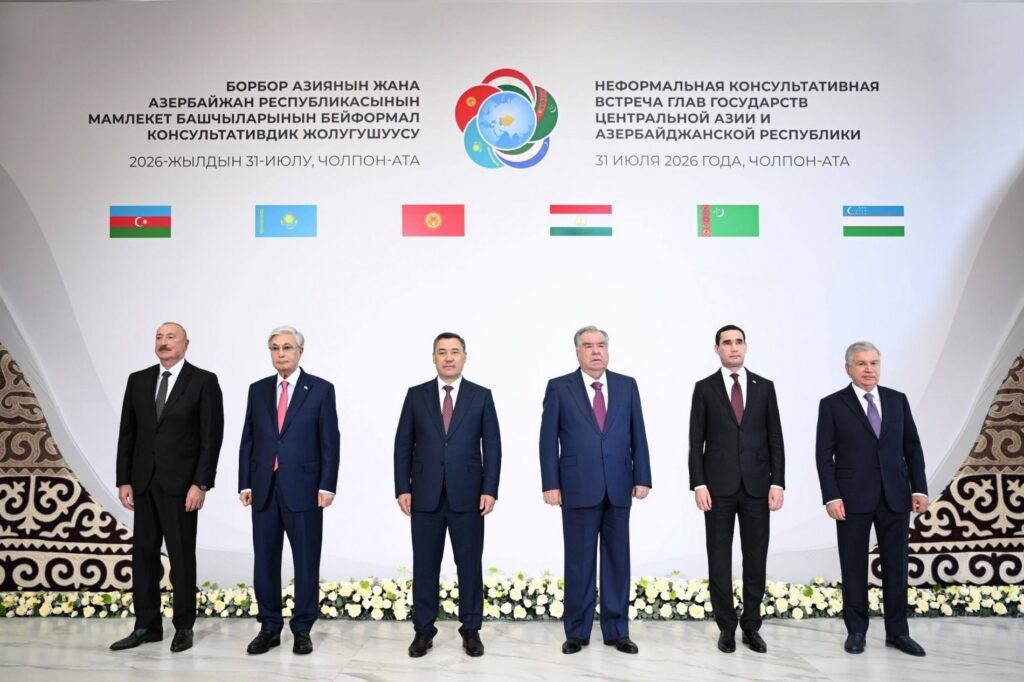
Central Asian leaders met in Tashkent on November 15–16 for the seventh Consultative Meeting of Heads of State. Azerbaijan attended as a guest with full rights, as it had done at the meetings last year and the year before. This time, the leaders agreed that Azerbaijan would sit as a full participant in future meetings, transforming the C5 into the C6. In his opening remarks, Uzbekistan’s President Shavkat Mirziyoyev proposed turning the loose consultative mechanism into a formal regional body under the working title, the “Community of Central Asia.” Mirziyoyev went further and suggested extending the mandate from economic integration to include security and environmental cooperation for the region as a whole. The Uzbek President called the decision to admit Azerbaijan “historic,” as the leaders framed the welcoming of Azerbaijan not as a courtesy to a neighbor but as part of a wider integration project that already runs across the Caspian and that is now seeking to bring a South Caucasus transit and energy hub directly into the frame. The consultative format is thus being asked to carry a heavier load than when it was created in 2018 as a careful space for political dialogue and security confidence-building. For governments and external partners, the practical question is whether this emerging “Central Asia plus Azerbaijan” geometry can evolve into a corridor community with its own regional rules, or whether it will remain largely declaratory while decisions continue to track external finance and great-power projects. Azerbaijan and Central Asia Begin to Co-Author the Agenda From the start, the consultative meetings of the Central Asian heads of state were conceived as a modest, leader-level forum to ease regional tensions and reopen direct dialogue after a decade of drift. The first gathering in Astana in March 2018 focused on borders, water management, and security issues that had festered since the 1990s, and that format’s agenda had mainly remained focused on political reconciliation and crisis management. The seventh meeting in Tashkent was different in kind. By bringing Azerbaijan formally into the room on a continuing rather than one-off basis, and by placing corridor and digital questions at the center of proceedings rather than on the margins, it reframed the forum from an inward-looking confidence-building device into a platform that aspires to shape external connectivity. Azerbaijan’s presence at earlier summits in 2023 and 2024 created a transitional phase in which Baku could test how far its own transit and energy agenda resonated with Central Asian priorities. In Tashkent, that ambiguity effectively ended. President Ilham Aliyev’s speech, delivered after the leaders had agreed that Azerbaijan would participate in future meetings as a full member, described Central Asia and Azerbaijan as forming “a single geopolitical and geo-economic region whose importance in the world is steadily growing.” He tied that claim to concrete developments along the Middle Corridor segment through Azerbaijan, the Alat port complex, upgraded customs procedures, and cross-Caspian energy and data links. For Kazakhstan, the Tashkent meeting offered a complementary opportunity. President Kassym-Jomart Tokayev used his speech...

With Shared Goals, Azerbaijan Draws Closer to Central Asia

Then there were six. The five Central Asian countries of Kazakhstan, Kyrgyzstan, Tajikistan, Turkmenistan, and Uzbekistan are widely thought of as a group, united by geography, their shared history as former Soviet republics, and growing collaboration in recent years. Now, Azerbaijan is emerging as a sixth member of the group, even though it is in the South Caucasus. At a summit on Sunday, Central Asian leaders supported Azerbaijan’s accession to the region’s Consultative Meeting format as a full participant, “forming a unified space for interaction between Central Asia and the South Caucasus,” Uzbekistan’s presidency said. The Consultative Meeting format is a vehicle for high-level collaboration among Central Asian countries, which have taken steps to resolve border disputes and other sources of tension between them over the years. The format addresses trade, security, and other issues. All five Central Asian leaders, as well as President Ilham Aliyev of Azerbaijan, attended the annual meeting in Tashkent on Sunday. In a speech, Aliyev noted that he had visited Central Asian countries 14 times in the last three years, and that Central Asian leaders had visited Azerbaijan a total of 23 times during the same period. He said Azerbaijan and Central Asia “today form a single geopolitical and geo-economic region, whose importance in the world is steadily growing.” Azerbaijan, which is also a former Soviet republic, shares the Turkic background of some of the Central Asian nations. While all the countries have distinct national identities, they covet the goal of more robust trade routes linking Asia and Europe, as well as regional solidarity in an uncertain geopolitical environment where China, Russia, and the United States are dominant powers. After Azerbaijan was admitted to the Central Asian talks format, Azerbaijani presidential adviser Hikmet Hajiyev posted on X: “From now on, Central Asia stands as 6.”