• KGS/USD = 0.01144 0%
  • KZT/USD = 0.00191 -0%
  • TJS/USD = 0.10866 0.18%
  • UZS/USD = 0.00008 0%
  • TMT/USD = 0.28571 0%
  • KGS/USD = 0.01144 0%
  • KZT/USD = 0.00191 -0%
  • TJS/USD = 0.10866 0.18%
  • UZS/USD = 0.00008 0%
  • TMT/USD = 0.28571 0%
  • KGS/USD = 0.01144 0%
  • KZT/USD = 0.00191 -0%
  • TJS/USD = 0.10866 0.18%
  • UZS/USD = 0.00008 0%
  • TMT/USD = 0.28571 0%
  • KGS/USD = 0.01144 0%
  • KZT/USD = 0.00191 -0%
  • TJS/USD = 0.10866 0.18%
  • UZS/USD = 0.00008 0%
  • TMT/USD = 0.28571 0%
  • KGS/USD = 0.01144 0%
  • KZT/USD = 0.00191 -0%
  • TJS/USD = 0.10866 0.18%
  • UZS/USD = 0.00008 0%
  • TMT/USD = 0.28571 0%
  • KGS/USD = 0.01144 0%
  • KZT/USD = 0.00191 -0%
  • TJS/USD = 0.10866 0.18%
  • UZS/USD = 0.00008 0%
  • TMT/USD = 0.28571 0%
  • KGS/USD = 0.01144 0%
  • KZT/USD = 0.00191 -0%
  • TJS/USD = 0.10866 0.18%
  • UZS/USD = 0.00008 0%
  • TMT/USD = 0.28571 0%
  • KGS/USD = 0.01144 0%
  • KZT/USD = 0.00191 -0%
  • TJS/USD = 0.10866 0.18%
  • UZS/USD = 0.00008 0%
  • TMT/USD = 0.28571 0%
12 December 2025

Viewing results 1 - 6 of 91

Azerbaijan Joins Central Asia to Build a C6 Corridor Core

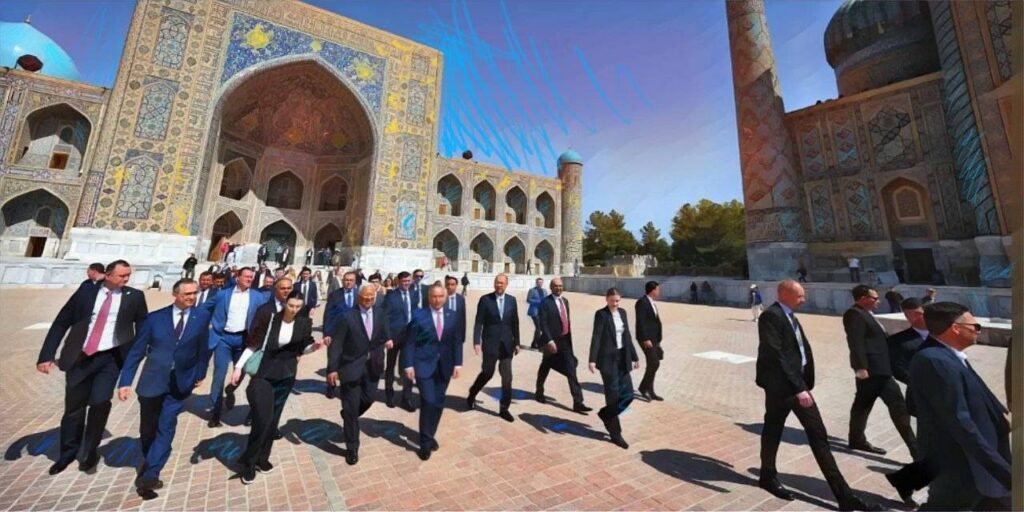
Central Asian leaders met in Tashkent on November 15–16 for the seventh Consultative Meeting of Heads of State. Azerbaijan attended as a guest with full rights, as it had done at the meetings last year and the year before. This time, the leaders agreed that Azerbaijan would sit as a full participant in future meetings, transforming the C5 into the C6. In his opening remarks, Uzbekistan’s President Shavkat Mirziyoyev proposed turning the loose consultative mechanism into a formal regional body under the working title, the “Community of Central Asia.” Mirziyoyev went further and suggested extending the mandate from economic integration to include security and environmental cooperation for the region as a whole. The Uzbek President called the decision to admit Azerbaijan “historic,” as the leaders framed the welcoming of Azerbaijan not as a courtesy to a neighbor but as part of a wider integration project that already runs across the Caspian and that is now seeking to bring a South Caucasus transit and energy hub directly into the frame. The consultative format is thus being asked to carry a heavier load than when it was created in 2018 as a careful space for political dialogue and security confidence-building. For governments and external partners, the practical question is whether this emerging “Central Asia plus Azerbaijan” geometry can evolve into a corridor community with its own regional rules, or whether it will remain largely declaratory while decisions continue to track external finance and great-power projects. Azerbaijan and Central Asia Begin to Co-Author the Agenda From the start, the consultative meetings of the Central Asian heads of state were conceived as a modest, leader-level forum to ease regional tensions and reopen direct dialogue after a decade of drift. The first gathering in Astana in March 2018 focused on borders, water management, and security issues that had festered since the 1990s, and that format’s agenda had mainly remained focused on political reconciliation and crisis management. The seventh meeting in Tashkent was different in kind. By bringing Azerbaijan formally into the room on a continuing rather than one-off basis, and by placing corridor and digital questions at the center of proceedings rather than on the margins, it reframed the forum from an inward-looking confidence-building device into a platform that aspires to shape external connectivity. Azerbaijan’s presence at earlier summits in 2023 and 2024 created a transitional phase in which Baku could test how far its own transit and energy agenda resonated with Central Asian priorities. In Tashkent, that ambiguity effectively ended. President Ilham Aliyev’s speech, delivered after the leaders had agreed that Azerbaijan would participate in future meetings as a full member, described Central Asia and Azerbaijan as forming “a single geopolitical and geo-economic region whose importance in the world is steadily growing.” He tied that claim to concrete developments along the Middle Corridor segment through Azerbaijan, the Alat port complex, upgraded customs procedures, and cross-Caspian energy and data links. For Kazakhstan, the Tashkent meeting offered a complementary opportunity. President Kassym-Jomart Tokayev used his speech...

With Shared Goals, Azerbaijan Draws Closer to Central Asia

Then there were six. The five Central Asian countries of Kazakhstan, Kyrgyzstan, Tajikistan, Turkmenistan, and Uzbekistan are widely thought of as a group, united by geography, their shared history as former Soviet republics, and growing collaboration in recent years. Now, Azerbaijan is emerging as a sixth member of the group, even though it is in the South Caucasus. At a summit on Sunday, Central Asian leaders supported Azerbaijan’s accession to the region’s Consultative Meeting format as a full participant, “forming a unified space for interaction between Central Asia and the South Caucasus,” Uzbekistan’s presidency said. The Consultative Meeting format is a vehicle for high-level collaboration among Central Asian countries, which have taken steps to resolve border disputes and other sources of tension between them over the years. The format addresses trade, security, and other issues. All five Central Asian leaders, as well as President Ilham Aliyev of Azerbaijan, attended the annual meeting in Tashkent on Sunday. In a speech, Aliyev noted that he had visited Central Asian countries 14 times in the last three years, and that Central Asian leaders had visited Azerbaijan a total of 23 times during the same period. He said Azerbaijan and Central Asia “today form a single geopolitical and geo-economic region, whose importance in the world is steadily growing.” Azerbaijan, which is also a former Soviet republic, shares the Turkic background of some of the Central Asian nations. While all the countries have distinct national identities, they covet the goal of more robust trade routes linking Asia and Europe, as well as regional solidarity in an uncertain geopolitical environment where China, Russia, and the United States are dominant powers. After Azerbaijan was admitted to the Central Asian talks format, Azerbaijani presidential adviser Hikmet Hajiyev posted on X: “From now on, Central Asia stands as 6.”

Made In Central Asia: Leaders Eye $20 Billion Trade Milestone as Regional Cooperation Deepens

The first meeting of trade and investment ministers from Central Asian countries, joined by Azerbaijan, has taken place in Tashkent, where participants agreed to nearly double mutual trade to $20 billion and discussed launching a regional brand, Made in Central Asia. Opening the session, Uzbekistan’s Minister of Investment, Industry, and Trade, Laziz Kudratov, highlighted the substantial potential for increased trade due to the complementarity of regional economies and growing business interest in joint initiatives According to Uzbek data, intra-regional trade doubled between 2017 and 2024, reaching approximately $11 billion. Kudratov proposed developing an action plan to raise trade turnover to $20 billion. The proposed strategy includes harmonizing customs procedures, implementing digital document management, mutually recognizing permits, and developing “single window” systems at borders. Additional measures under discussion include creating a regional electronic catalog of goods and producers and integrating the digital platforms of chambers of commerce, industry, and export agencies. Uzbekistan also proposed hosting the Central Asia and Azerbaijan Investment Forum in Samarkand in 2026, positioning it as a platform to launch the Made in Central Asia brand. Kazakhstan’s Minister of Trade and Integration, Arman Shakkaliev, urged countries to shift from a “buy-sell” model to an “invest-produce-sell” approach. He noted that Kazakhstan is entering a new investment cycle aimed at building export-oriented industries and sustainable value chains. Shakkaliev added that the upcoming industrial cooperation development program with Uzbekistan could be expanded to other Central Asian countries and Azerbaijan. Kazakhstan also supported the common branding initiative and proposed a pilot project using digital trading platforms. Tajikistan’s Minister of Economic Development and Trade, Zavki Zavkizoda, underscored the importance of digital technologies and cited examples of regional companies operating at an international level. Nazar Agakhanov, Turkmenistan’s Minister of Trade and Foreign Economic Relations, stressed that simplifying trade procedures and developing electronic platforms are essential to meeting shared goals. Ashgabat expressed its readiness to join the working group to be established following the meeting. Kyrgyzstan was represented by its ambassador to Uzbekistan, Duishonkul Chotonov, who noted that Bishkek views the format as a platform for collective decisions that advance regional economic development. Azerbaijan’s First Deputy Minister of Economy, Elnur Aliyev, reported that trade with Central Asian states grew by 58% in the first nine months of 2025, surpassing $1 billion. He said Azerbaijan is prepared to expand its transport infrastructure through new logistics hubs and the promotion of joint ventures. The meeting concluded with the signing of a joint communiqué expressing intentions to deepen economic ties, establish joint ventures, and develop new instruments for investment cooperation. The seventh Consultative Meeting of the Heads of State of Central Asia will be held in Tashkent on November 15-16. Azerbaijani President Ilham Aliyev is also expected to attend.

How the Ferghana Valley Might Become Central Asia’s Laboratory of Peace

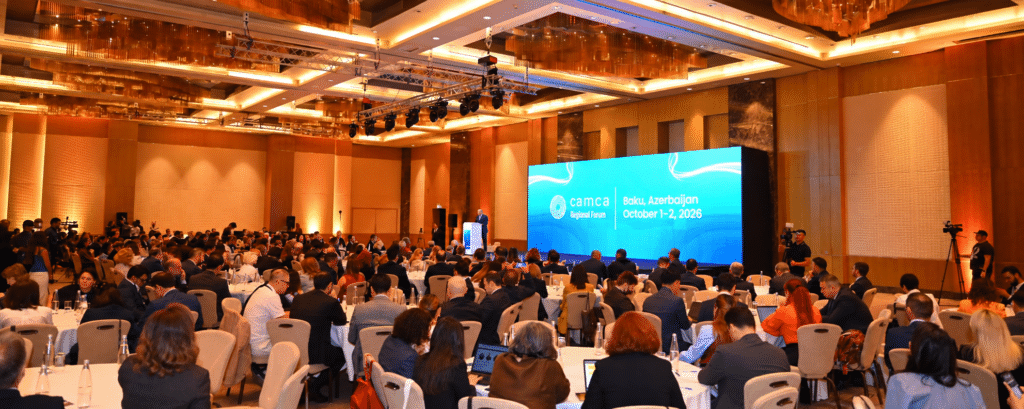
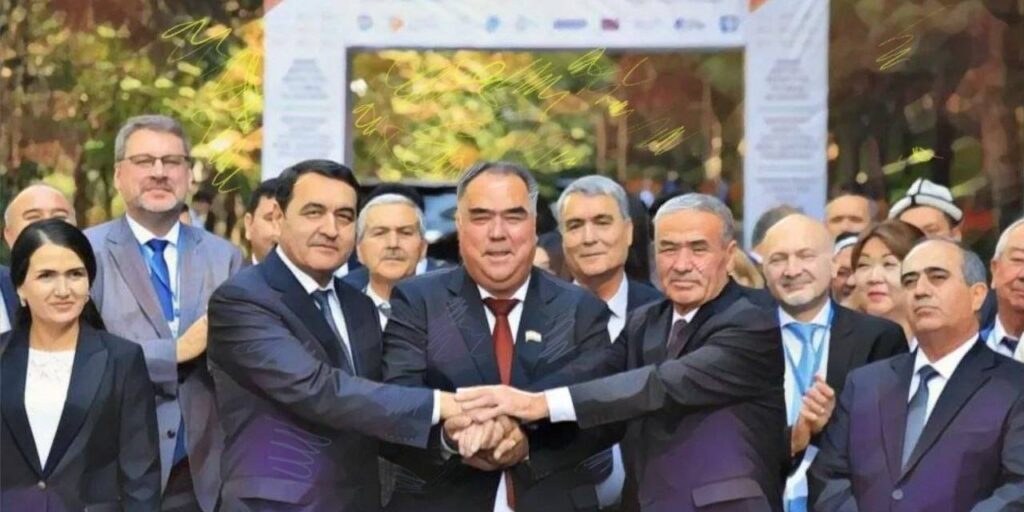
On October 15-16, in the heart of the Ferghana valley, which for decades has been associated with border conflicts, mistrust, and unresolved issues, the heads of Ferghana (Uzbekistan), Batken (Kyrgyzstan), and Sughd (Tajikistan) gathered to discuss the further peaceful development of the region. The forum brought together not just officials but also experts, diplomats, civil society, and international organization representatives from Central Asia, Europe, and other regions. The first Ferghana Peace Forum, entitled “Ferghana Valley: Joining Forces for Peace and Progress”, was not simply another gathering behind closed doors but a table where everyone was offered a seat. The valley, with territory of roughly 20,000-22,000 km² shared by three countries, was one of the main routes for the ancient Silk Road. It embodies diverse cultures and fertile lands, but also, until recently, the unresolved problems and deep contradictions of Central Asia. Complex issues, including water management, border demarcation, and conflicting national narratives. People's connections were severed by visa regimes and land mines. It was, until recently, impossible to imagine today's reality where people are crossing borders without long lines or bureaucratic barriers. The Khujand Declaration, signed in early 2025 by the presidents of Kyrgyzstan, Tajikistan, and Uzbekistan, paved the way for the forum. The document marked a historic shift, reflecting the countries' desire for dialogue, open borders, economic cooperation, and cultural exchange. However, it remained only a vision without an implementation mechanism that would turn the declaration into sustainable interaction. The Ferghana Peace Forum promises to fill this gap by becoming the first peacebuilding platform designed specifically for the territory, and managed by the three countries themselves with support from external organisations, rather than by external intermediaries or actors. The Forum's founding communiqué defines its goal as creating a permanent platform for building trust, developing a common development strategy, attracting investment, and forming a new political climate in Central Asia. It is a rare occasion when Central Asian countries organize inclusive platforms for open discussions and the participation of civil society, academia, and business. With more than  300 participants, including officials from the UN, EU, and OSCE, as well as leading international NGOs, the forum promises to become a truly historical event. As one of the Forum participants noted, “If peace is possible in Ferghana, it is possible anywhere in Central Asia, and perhaps anywhere in the world.” Discussions were focused on the practical implementation of regional cooperation. Participants addressed issues that have long fueled tensions in the valley: border procedures, joint water management, trade facilitation, labor migration, and crisis prevention. At the same time, the platform created a space for exploring new areas of cooperation, such as digitalization, education, renewable energy, and tourism. There was a shared understanding that peace cannot be sustainable without economic opportunities and social integration. The timing of the forum could not have been better. With the flow of current geopolitical events, Central Asian countries have a narrow window of opportunity to strengthen the internal cooperation and to institutionalize it, while Russia is distracted by...

Kazakhstan Proposes ‘Expert Alliance’ to Reform Global Governance

Zhandos Shaimardanov, director of the Kazakhstan Institute for Strategic Studies (KazISS) under the President of the Republic of Kazakhstan, has called for the formation of an international network of think tanks to act as an intellectual capacity for reforming the global governance architecture. He said the proposal stems from lessons learned in regional cooperation efforts across Central Asia. Speaking at the session “Central Asia in the Changing Architecture of Global Security: Challenges and Opportunities” during the Astana Think Tank Forum 2025, Shaimardanov said the world is experiencing a period of geopolitical flux. The old global rules no longer function effectively, while new norms have yet to take shape. “History is giving our region a chance to show leadership,” he said. “Central Asia is realizing its agency and unity, ready to formulate collective responses to global challenges and offer a positive agenda. Trust and mutual respect have made us resilient, and now this political capital must be transformed into institutional resources.” Shaimardanov stressed that the existing global security architecture is in crisis, with mechanisms such as the UN Security Council and arms control frameworks losing effectiveness. “In September, at the UN General Assembly, the President of Kazakhstan rightly observed that serious violations of international law have become the new norm. This is a sign that global institutions need intellectual renewal. When multilateral mechanisms fail, it is the regions that retain the potential for agreement,” he said. From Regional Unity to Global Contribution Shaimardanov recalled that at the sixth Consultative Meeting of the Heads of State of Central Asia, held in Astana last August, regional leaders adopted the "Central Asia 2040" concept, which sets out a long-term vision for cooperation across the region. “Now is the time not just to implement this document without slogans,” he said, “but to present this regional experience to the broader world.” He said that Central Asia’s cooperative model could help redefine the principles of global governance. As a bloc of “middle powers,” the region can offer a constructive and non-hegemonic voice. “In this context, Kazakhstan proposes creating an expert alliance of middle powers, a global network of think tanks and institutions that could help rethink international systems,” Shaimardanov said. He suggested that such a body could cooperate with international organizations, including the United Nations, to develop joint strategies on security, sustainable development, and institutional accountability. “Central Asia can not only adapt to new realities but also offer new ideas that security can be built not on fear but on trust,” he said. Focus Areas: Digital Trust, Water Security, Human Capital Shaimardanov noted that an expert network would help Central Asian countries coordinate on key development challenges, including digitalization, water management, and innovation. He highlighted the example of Kazakh startup Higgsfield AI, which recently achieved unicorn status with a valuation exceeding $1 billion. The company developed a generative AI tool that creates videos from text prompts. “This is a major milestone not only for Kazakhstan but for the entire region,” he said. “It reflects Central Asia’s growing...

New Kazakh-Chinese Lab to Streamline Agricultural Exports to China

A joint Kazakh-Chinese veterinary laboratory has opened in the East Kazakhstan region, aiming to streamline and accelerate the export of Kazakh agricultural products to China. According to the Ministry of Agriculture of Kazakhstan, the facility was outfitted with modern equipment and furniture provided by the Chinese government. Accredited under Chinese and international ISO 17025 standards, the laboratory is equipped to conduct high-precision veterinary diagnostics, quality control, and food safety testing. Chinese specialists assisted with the installation and provided training for local staff. The facility can perform up to 550,000 tests annually on particularly dangerous infections, along with approximately 4,000 food safety tests. The new laboratory is expected to remove technical trade barriers and boost Kazakhstan’s export potential for agricultural and livestock products to China and other international markets. Speaking at the opening ceremony, Minister of Agriculture Aidarbek Saparov said: “The opening of this laboratory is the result of the strategic partnership between Kazakhstan and China, aimed at advancing science and technology and enhancing the competitiveness of domestic products. I am confident that this new facility will play a key role in ensuring the quality and safety of agricultural goods.” Kazakhstan’s agricultural exports to China have been rising steadily. According to the Ministry of Agriculture, bilateral trade in agricultural products increased by 10.5% in 2024, reaching $1.4 billion. Of that, Kazakh exports accounted for $1.05 billion, primarily consisting of animal feed, grain, oilseeds, and vegetable oil. Kazakhstan has also made progress in ensuring its meat exports meet Chinese quality and safety standards. In May 2025, Minister Saparov and Sun Meijun, head of China’s General Administration of Customs, signed the Protocol on Inspection, Quarantine, and Food Safety Requirements for the Import and Export of Poultry Meat. The agreement opened the Chinese market to Kazakh poultry products. Since 2019, Kazakhstan has aligned its veterinary standards with Chinese requirements, signing 11 bilateral protocols regulating the trade of meat and livestock products. These agreements now cover 29 categories of plant and animal goods approved for export to China. Currently, over 2,400 Kazakh enterprises are registered as exporters to China, supplying products such as safflower meal and cake, peas, lentils, and rapeseed. In 2025, Kazakhstan plans to open the Chinese market to sugar beet cake, and in 2026 to rice, mung beans, cotton, and melons. Additionally, regional restrictions related to foot-and-mouth disease and avian influenza have been lifted, further clearing the path for meat and meat product exports to China.