• KZT/USD = 0.00221
  • TJS/USD = 0.10860
  • UZS/USD = 0.00008
  • TMT/USD = 0.29760
  • KZT/USD = 0.00221
  • TJS/USD = 0.10860
  • UZS/USD = 0.00008
  • TMT/USD = 0.29760
  • KZT/USD = 0.00221
  • TJS/USD = 0.10860
  • UZS/USD = 0.00008
  • TMT/USD = 0.29760
  • KZT/USD = 0.00221
  • TJS/USD = 0.10860
  • UZS/USD = 0.00008
  • TMT/USD = 0.29760
  • KZT/USD = 0.00221
  • TJS/USD = 0.10860
  • UZS/USD = 0.00008
  • TMT/USD = 0.29760
  • KZT/USD = 0.00221
  • TJS/USD = 0.10860
  • UZS/USD = 0.00008
  • TMT/USD = 0.29760
  • KZT/USD = 0.00221
  • TJS/USD = 0.10860
  • UZS/USD = 0.00008
  • TMT/USD = 0.29760
  • KZT/USD = 0.00221
  • TJS/USD = 0.10860
  • UZS/USD = 0.00008
  • TMT/USD = 0.29760
26 October 2026

Viewing results 1 - 6 of 2

Iranian Embassy Posts on Samarkand’s Persian Heritage Spark Uzbek Protest

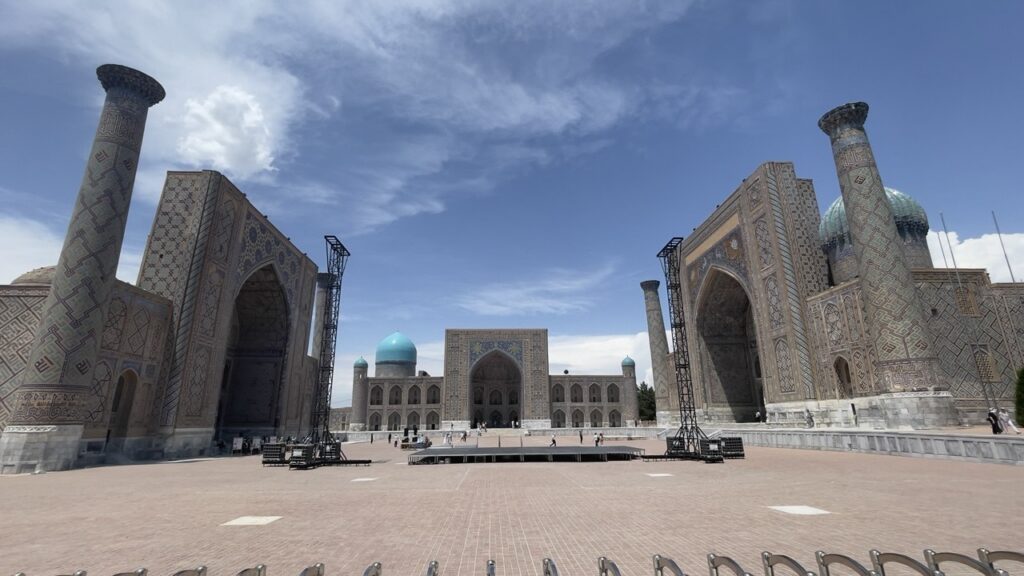
Uzbekistan has lodged a diplomatic protest with Iran over social media posts describing Samarkand's architecture as part of Persian civilization. The posts targeted United States Secretary of State Marco Rubio. On October 23, Uzbekistan's First Deputy Foreign Minister Bakhromjon Aloyev met with Iranian Ambassador Mohammad Ali Eskandari, who was handed a diplomatic note of protest. Uzbekistan's Foreign Ministry described posts published by Iranian diplomatic missions on X as a one-sided and politicized interpretation of Samarkand's history. Tashkent demanded that the posts be removed and that similar incidents be avoided in the future. The dispute followed Rubio's visit to Samarkand on October 19, when he recorded a video in Registan Square highlighting the city's historical role in international trade. Iran's embassy in Armenia described the site where Rubio stood as part of Persian civilization. The embassy in Zimbabwe called Registan's arches a "hallmark of Iranian-Islamic civilization," accusing Rubio of seeking to destroy that heritage. Iran's embassy in Bulgaria also criticized Rubio for disparaging Persian civilization while standing in front of monuments bearing its influence. Earlier, during an October 7 speech in Athens, Rubio recalled the destruction of the Acropolis by the forces of Persian King Xerxes in 480 BCE. He also attacked Iran's current clerical rulers, accusing them of promoting a "cult of death." Uzbekistan's Foreign Ministry said that the heritage of Samarkand, Bukhara, Khiva, and other historic cities reflects centuries of statehood and cultural development among the Uzbek people. Tashkent objected to the use of the country's history in political disputes between other states. Samarkand has deep ties to the Persian-speaking world. Before the Arab conquest, it was one of the centers of Sogdiana, whose inhabitants spoke a language belonging to the Iranian language family. Persian later became widely used in Central Asian cities, including in literature and scholarship. In the late 14th and early 15th centuries, Samarkand was the capital of Timur's empire. Craftsmen from various regions, including Iran and the historic region of Khorasan, participated in the construction of its monumental buildings. The Registan architectural ensemble was built between the 15th and 17th centuries, combining local artistic traditions with those of the wider Islamic world. The concept of Persian civilization encompasses a cultural area much larger than modern Iran. UNESCO describes Samarkand as a crossroads of cultures, reflecting influences from successive civilizations. The Iranian embassies did not make territorial claims against Uzbekistan; their posts concerned cultural and architectural history. Samarkand's heritage has also been a subject of debate within Central Asia. During the Soviet redrawing of Central Asia's internal borders in 1924, Samarkand and Bukhara became part of the Uzbek Soviet Socialist Republic. Both cities historically had substantial Persian-speaking populations, and Tajik continues to be spoken there today. Historians have also documented Soviet-era pressure on Tajik residents to register as Uzbeks, contributing to longstanding disputes over the cities' ethnic composition. The dispute occurred amid increased U.S. diplomatic engagement in Central Asia. During his visit, Rubio attended a C5+1 meeting with the foreign ministers of the five Central Asian countries. The talks focused on expanding economic...
Samarkand’s Sher-Dor Madrasah Restoration Reaches First Milestone With U.S. Support

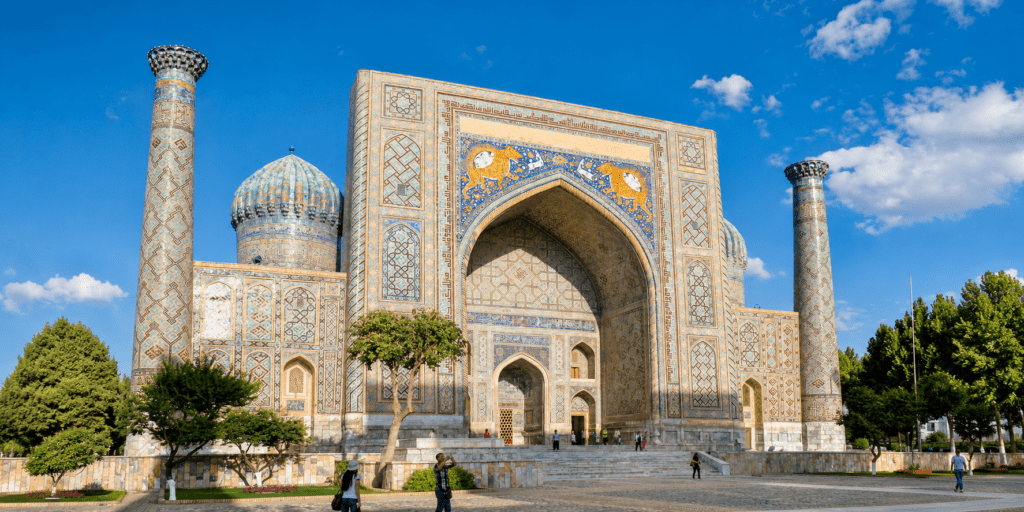
A major international effort to preserve one of Central Asia’s most iconic architectural monuments has reached a new milestone, with officials in Samarkand marking the completion of the first phase of restoration work on the façade of the Sher-Dor Madrasah, part of the historic Registan Square complex. According to a June 3 report from the Uzbekistan Art and Culture Development Foundation (ACDF), the ceremony was attended by Sarah Rogers, the United States under secretary of state for public diplomacy and public affairs, ACDF Chairperson Gayane Umerova, and U.S. Ambassador to Uzbekistan Jonathan Henick. The restoration project focuses on the conservation of the Sher-Dor Madrasah’s historic façade, including its mosaics, majolica decorations, ornamental elements, and Kufic inscriptions. The work forms part of a three-phase program supported by the U.S. Ambassadors Fund for Cultural Preservation (AFCP). During the event, ACDF and the U.S. Embassy in Uzbekistan also signed a five-year roadmap for cooperation aimed at expanding joint initiatives in cultural heritage preservation and cultural exchange. The project is one of the largest cultural heritage grants awarded to Uzbekistan by the U.S. government. According to the U.S. Embassy, the Cultural Heritage Agency of Uzbekistan secured a $500,000 AFCP grant after its proposal was selected through a global competition. The award was both the largest in that year’s competition and the largest AFCP grant ever received by Uzbekistan. The initiative is being implemented by the Cultural Heritage Agency with technical support from the International Institute for Central Asian Studies. Local craftsmen and restoration specialists are carrying out the work, while international experts are providing consultation and access to scientific documentation and conservation resources. During the ceremony in Samarkand, Henick and Umerova exchanged a letter of intent reaffirming their commitment to advancing the action plan and expanding bilateral cooperation in the field. Umerova, who is also head of the Department of Creative Economy and Tourism of the Administration of the President of Uzbekistan, said the project is about more than preserving a historic building. “We are grateful to the United States Embassy and the Ambassadors Fund for Cultural Preservation for their partnership and shared commitment to safeguarding cultural heritage. Together, we are preserving not only one of the world’s most remarkable architectural ensembles, but also the traditions and craftsmanship that give it meaning,” Umerova said. She noted that the Registan has served as a symbol of learning and cultural exchange for centuries and described the restoration project as an example of international cooperation built on mutual respect and a shared responsibility to protect cultural heritage. “We are thrilled to be part of the restoration efforts of the beautiful and iconic Sher-Dor Madrasah in the historic Registan Square,” Henick said. “These efforts will help preserve this important monument for many generations to come and for all humanity.” The Sher-Dor restoration forms part of a 2023 cultural property agreement between Uzbekistan and the U.S. The agreement created a framework for cooperation on protecting cultural heritage, including measures to combat the illicit trade in archaeological and ethnological material...
