• KZT/USD = 0.00215
  • TJS/USD = 0.10800
  • UZS/USD = 0.00008
  • TMT/USD = 0.29850
  • KZT/USD = 0.00215
  • TJS/USD = 0.10800
  • UZS/USD = 0.00008
  • TMT/USD = 0.29850
  • KZT/USD = 0.00215
  • TJS/USD = 0.10800
  • UZS/USD = 0.00008
  • TMT/USD = 0.29850
  • KZT/USD = 0.00215
  • TJS/USD = 0.10800
  • UZS/USD = 0.00008
  • TMT/USD = 0.29850
  • KZT/USD = 0.00215
  • TJS/USD = 0.10800
  • UZS/USD = 0.00008
  • TMT/USD = 0.29850
  • KZT/USD = 0.00215
  • TJS/USD = 0.10800
  • UZS/USD = 0.00008
  • TMT/USD = 0.29850
  • KZT/USD = 0.00215
  • TJS/USD = 0.10800
  • UZS/USD = 0.00008
  • TMT/USD = 0.29850
  • KZT/USD = 0.00215
  • TJS/USD = 0.10800
  • UZS/USD = 0.00008
  • TMT/USD = 0.29850
15 August 2026

Viewing results 1 - 6 of 79

Uzbek Chess Player Apologizes to Indian Opponent After Handshake Stir

A chess grandmaster from Uzbekistan who declined to shake hands with his Indian female opponent ahead of their game and later cited “religious reasons” has kicked up debate and criticism of his conduct on Indian social networks and media. Nodirbek Yakubboev, a Muslim, later tried to atone for what had looked like a snub by giving flowers to grandmaster Vaishali Rameshbabu in a filmed street encounter on Jan. 30 after she had beaten him days earlier at the 2025 Tata Steel Chess Masters, in Wijk aan Zee, Netherlands. “I’m sorry,” Yakubboev, 23, said in the video posted by ChessBase India. “It’s very understandable. I didn’t take it that way,” replied Vaishali, who is also 23. She was accompanied by her brother Praggnanandhaa, 19, who is also a grandmaster and went on to win the Masters category in Wijk aan Zee. The tournament there ended on Sunday. The polite exchange among the three chess players, who were bundled against the cold, might have been the end of it. But some Indians felt that Vaishali had been disrespected, and they said so on social media, while also reveling in Vaishali’s fourth-round victory over the Uzbek in the tournament’s Challengers category. Vaishali was playing with the black pieces. “You absolute queen,” one admirer said. The Hindustan Times said Vaishali had the “last laugh” by winning and that the video of Yakubboev’s apology was “like a Bollywood movie,” but The Times of India thought the apology was “heartfelt.” A few online commentaries mused on the interaction between sports and religion, in particular the display of religious faith or symbols during competition. International chess luminaries also gave their opinions. One perspective came from Hungary-born Susan Polgar, who was the women’s world chess champion for several years in the 1990s. “This is my opinion: I have less of an issue with the religious excuse. Others may disagree,” Polgar said on X. “BUT, he could have informed the organizers, chief arbiter, and/or his female opponents in advance. This is NOT an Open Swiss event. This is a prestigious invitational when he knew in advance that he would face 4 female opponents. If he wanted an exception then be proactive. Otherwise, he has to expect criticism.” In the ChessBase India video, Yakubboev is interviewed about what he acknowledged was an awkward situation. “I didn’t shake her hand because of religious reasons,” he said. “It was my fault that I could not inform her or the arbiter” before the game. Yakubboev was asked about a 2023 incident in Abu Dhabi in which he shook the hand of another Indian female opponent, Divya Deshmukh. Photos of that handshake circulated online in the last week, prompting comments that the Uzbek grandmaster was inconsistent in encounters with women facing him across the chess board. Yakubboev clarified that, starting in 2024, he began “following the rules of my religion” and that he now considered it wrong for him to shake the hands of other women. He said the fallout since his game with...

Kyrgyzstan Tightens Regulations on Religious Activities

Kyrgyzstan’s President Sadyr Japarov has signed into law a series of amendments regulating the religious sphere. The amendments, approved by the Kyrgyz parliament on December 26, 2024, aim to ensure the rights of citizens while establishing clear responsibilities for religious associations in accordance with the Law "On Freedom of Religion and Religious Associations." Key Provisions of the Amendments The new legislation introduces several notable restrictions and guidelines: Prohibition of Face-Covering Clothing: Clothing that obscures a person’s identity, such as the niqab, is now banned in government offices and public places. Exceptions include clothing required for work or for medical purposes. Prohibition of Coercion in Religious Conversion: The amendments ban any form of coercion aimed at converting individuals to a particular religion. This includes targeting followers of other faiths, religiously neutral individuals, or atheists. Restrictions on Religious Ceremonies: Religious ceremonies, meetings, and other religious events are now prohibited in nursing homes, homes for the disabled, correctional institutions, pre-trial detention centers, and military units. Invitations to religious figures or preachers from foreign religious organizations for such events are also prohibited. Limitations on Religious Organizations: Religious organizations are prohibited from interfering in the activities of state authorities or local governments. Dissemination of religious literature, audio, and video materials in public places, educational institutions, or through door-to-door efforts is banned. Restrictions on Political and Electoral Activities: Political parties cannot be established on a religious basis, nor can they be financed by foreign entities. Civil servants are barred from engaging in religious activities, and religious materials cannot be used in electoral campaigns. Prohibition on Religious Terms in Business Names: The Kyrgyz Cabinet of Ministers approved list of religious words and terms that cannot be used in the names of businesses or legal entities. Prohibited terms include references from various religions, such as “Jesus Christ,” “The Bible,” “Jihad,” “Krishna,” “Kosher,” “Hajj,” and “Caliphate,” among others. Expanding Oversight of Religious Activities The new laws reflect the Kyrgyz government’s growing efforts to exert control over the religious sphere in the predominantly Muslim nation. Kyrgyzstan leads Central Asia in terms of the number of mosques per believer, with 3,593 mosques across the country as of 2024. Of these, 46 are registered in Bishkek and 89 in Osh. The country also has 220 religious educational institutions, most of which are located in the southern Osh region. The restrictions on religious literature, events, and political activity come amid broader efforts to regulate religious influence on public and political life. Implications for Religious Organizations The prohibition on using religious terminology in business names has drawn particular attention, as the banned terms include key concepts from Islam, Christianity, and other major religions. This move could limit the visibility of religious organizations and restrict their operations in the public sphere. Additionally, the ban on foreign preachers in sensitive locations, such as prisons and military units, underscores the government’s intent to limit external religious influence and maintain tighter control over religious practices within the country. Kyrgyzstan’s amended laws mark a significant tightening of state regulation...

Spiritual Administration of Muslims of Kazakhstan Issues Statement on Quadroberism

The Spiritual Administration of Muslims of Kazakhstan (DUMK) has expressed concern over the growing spread of "quadroberism" among children and adolescents. This phenomenon involves individuals imitating the habits of animals by wearing masks, tails, and ears, as well as behaving like fictional creatures. The DUMK addressed the issue in a recent statement. In its statement, the DUMK emphasized that Islam places humans above all other creatures, granting them reason and consciousness. To support this position, the administration cited verses from the Holy Quran: “We have honored the descendants of Adam, allowed them to move on land and sea, endowed them with benefits, and granted them a great advantage over the many whom We created.” Another verse states: “We created man in the best possible image.” The DUMK argues that the deliberate imitation of animals - including their habits, sounds, and behaviors - constitutes a distortion of divine creation. It further noted that Islam forbids any form of behavior that undermines the distinct identity of humans. For example, the imitation of one gender by another is prohibited, and, by extension, imitating animals is considered equally inadmissible under Shariah. Cultural Expressions vs. Quadroberism However, the DUMK drew a clear distinction between quadroberism and metaphorical comparisons or cultural expressions. The statement clarified that comparing humans to animals in a metaphorical sense - such as likening bravery to a lion, cunning to a fox, or patience to a camel - does not fall under the definition of quadroberism. Similarly, theater performances, children’s games, and other cultural activities that do not involve a change in personal identity are not condemned. The DUMK underscored that quadroberism, which includes imitating animal sounds, moving on all fours, and adopting animal behaviors, is "strictly prohibited by Shariah." Additionally, it addressed the trend of “quadrobics,” a form of exercise that involves running on all fours to imitate animals. This activity, derived from the combination of the words "quadro" (four) and "aerobics," was described as a concerning trend among youth. Quadroberism in Central Asia and Beyond The quadrober subculture, which involves young people mimicking animal behavior by running on all fours and using animal-themed accessories, has gained traction not only in Kazakhstan, but also in neighboring Uzbekistan and Russia. Authorities in these countries are taking measures to address the phenomenon. In Kazakhstan, deputies have proposed conducting a thorough study of the quadrober phenomenon and, if deemed necessary, developing legislation to combat it. In Uzbekistan, the Ministry of Internal Affairs announced that manifestations of the quadrober subculture among children and adolescents would be treated as a failure of parental responsibility, punishable by a fine of five basic calculation units. In Russia, State Duma deputies are drafting legislation to ban the promotion of destructive ideologies, including quadroberism. Russian lawmakers and psychologists have voiced concerns that the hobby could negatively affect children’s mental health. As the debate continues across the region, the DUMK’s statement adds a spiritual perspective to the growing conversation about the implications of quadroberism.

How Orthodox Christmas Is Celebrated in Central Asia

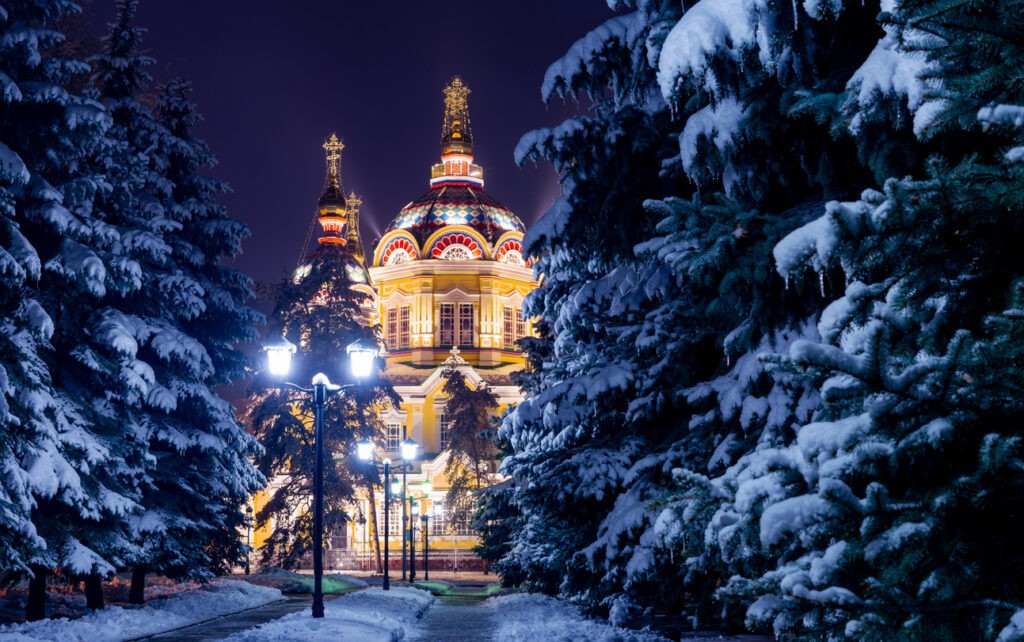
Orthodox Christmas, observed on January 7, holds a significant place in Central Asia, even in predominantly Muslim countries such as Tajikistan and Turkmenistan. This article explores how the holiday is celebrated in Kazakhstan, Uzbekistan, Kyrgyzstan, Tajikistan, and Turkmenistan. Kazakhstan Orthodox Christmas in Kazakhstan is a public holiday, alongside the Muslim celebration of Kurban-Ayt (Eid al-Adha). This recognition stems from the efforts of Kazakhstan's first president, Nursultan Nazarbayev, who proposed in 2005 during the XI session of the Assembly of People of Kazakhstan to declare both holidays as non-working days. Despite opposition from the Constitutional Court, which cited the country's secular constitution, members of the parliamentary faction Asar, led by Nazarbayev's daughter Dariga Nazarbayeva, and the presidential party Otan amended the Labor Code to accommodate these holidays. Since then, Orthodox Christmas and Kurban-Ayt have been official holidays. Celebrations in major cities include festive liturgies. In Almaty, the Ascension Cathedral holds a service beginning at 11pm on January 6, followed by a midnight procession. In Astana, the Assumption Cathedral similarly hosts a midnight service. For those unable to attend, events from the Assumption Cathedral are live-streamed on the YouTube channel “Live Broadcasts of the Orthodox Church of Kazakhstan.” Uzbekistan Orthodox Christians comprise 4-5% of Uzbekistan’s population of over 37.5 million. Uzbekistan is part of the Tashkent and Uzbekistan Diocese under the Russian Orthodox Church. The Cathedral of the Dormition of the Blessed Virgin Mary in Tashkent is the focal point of Christmas celebrations. Services begin at 11.30pm on January 6 and end at 3.30am. To ensure maximum participation, the cathedral holds five separate liturgies. Metropolitan Vikenty of the Tashkent and Uzbekistan Diocese explains, “Traditionally, the liturgy was held at night because the Nativity of Christ took place at night. But not everyone can attend a night service, so we perform several liturgies.” Kyrgyzstan Approximately 350,000 Orthodox Christians live in Kyrgyzstan, according to Bishop Daniel of Bishkek and Kyrgyzstan. The country is part of the Bishkek and Kyrgyzstan Diocese of the Russian Orthodox Church. January 7 is a public holiday in Kyrgyzstan, aligning with the extended New Year vacations, which last from January 1 to 7. Festive services are held at the Resurrection Cathedral and the Church of the Holy Prince Vladimir in Bishkek. Tajikistan In Tajikistan, the Orthodox Christian community numbers around 80,000, or 1.2% of the population, though regular church attendance is much smaller. The country is under the jurisdiction of the Dushanbe Diocese of the Russian Orthodox Church. Christmas services are held at St. Nicholas Cathedral in Dushanbe, beginning at 11pm on January 6 and lasting about three hours. The diocese oversees six churches in Tajikistan, served by five priests. Turkmenistan As of 2019, Turkmenistan’s Orthodox Christian population is about 485,000, or 9% of the total population. All Orthodox parishes are under the Patriarchal Parishes of the Russian Orthodox Church, established in 2007. Services on Christmas Eve and January 6 are conducted in all 12 Orthodox churches in Turkmenistan, adhering strictly to church traditions. According to Archpriest John, dean of...

Kazakhstan to Build Religious Memorial on Site of Stalin-Era Executions

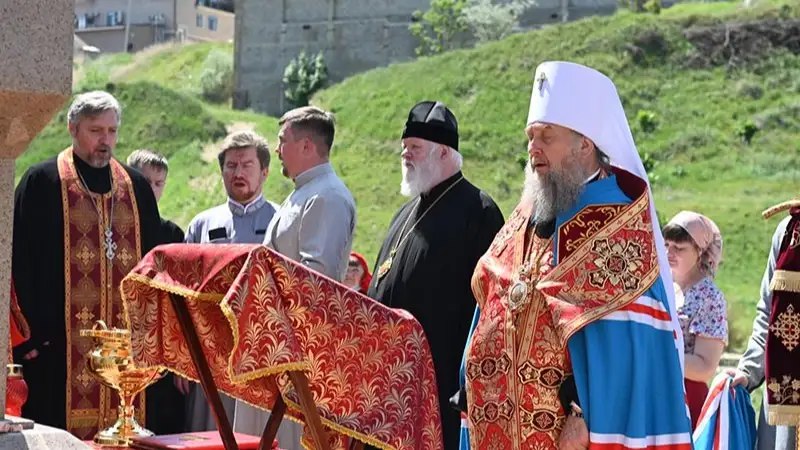
Kazakh President Kassym-Jomart Tokayev has approved the construction of a mosque and an Orthodox chapel at the historic Lisya Balka site in Shymkent, a location associated with mass executions during the years of political repression. Metropolitan Alexander, head of the Orthodox Church of Kazakhstan, announced at a press conference that the initiative was proposed by Patriarch Kirill of Moscow and All Russia. He highlighted that Lisya Balka is the final resting place for victims of repression, including representatives of Kazakhstan’s two major religious communities - Islam and Orthodoxy. “The initiative of His Holiness was considered and approved by President Kassym-Jomart Tokayev,” Metropolitan Alexander stated, adding that the chapel project has already received official approval. Lisya Balka was a site of mass shootings during 1937–1938, one of the darkest periods of Stalinist repression. Victims included individuals from various religious backgrounds, notably around 60 exiled Orthodox priests and ministers of the Russian Orthodox Church. After the Soviet Union’s collapse, the Kasiret (“Sorrow”) memorial complex was established at the site to honor those who perished. The Orthodox Church canonized several of those executed at Lisya Balka, referring to them as “innocent sufferers for Orthodoxy.” However, historians emphasize that the victims included adherents of diverse religions, such as Islam, Catholicism, Judaism, and Buddhism. The construction of the mosque and chapel seeks to preserve the memory of these tragic events while fostering interfaith harmony in Kazakhstan. By commemorating the innocent victims of various faiths, the project aligns with the country’s broader efforts to promote unity among its multi-religious population.

Government Approval Becomes Mandatory for New Mosques in Kyrgyzstan

The Kyrgyz government has introduced a new regulation requiring government approval for the construction of mosques. Azamat Yusupov, the director of the State Commission on Religious Affairs (SCRA), announced the policy during a meeting of the Jogorku Kenesh, Kyrgyzstan’s parliament. Yusupov revealed that over 1,000 religious institutions in the country are currently operating without proper authorization. Of these, around 800 have been officially registered, while approximately 120 mosques remain unregistered. “In the past, mosques were often built first and registered later. Going forward, construction must be pre-approved by state authorities to ensure legal compliance. We will evaluate the necessity of building a mosque in any given area before granting permission,” Yusupov stated. The Kyrgyz parliament is also deliberating a draft law entitled “On Freedom of Religion and Religious Associations.” Prepared by the SCRA, the bill aims to address inconsistencies in existing legislation. The proposed law consists of six chapters and 40 articles, covering a range of issues related to religious freedom and regulation. Key provisions of the draft law include: Mandatory registration of religious sites. A prohibition on combining public service with religious activities. Restrictions on wearing clothing that hinders personal identification. Regulations governing the operations of religious organizations. A ban on interference by religious groups in state affairs. President Sadyr Japarov has engaged with government officials and religious leaders to discuss the draft law, stressing the importance of balancing the interests of all societal groups while safeguarding national security and citizens’ rights. The finalized version of the draft law will soon be presented to the Jogorku Kenesh for consideration and approval. If enacted, these changes are expected to significantly reshape how religious organizations operate in Kyrgyzstan It is not yet clear how ordinary believers will react to the innovations. For example, last year, the Spiritual Administration of Muslims of Kyrgyzstan, which is in line with state policy, reacted sharply to an attempt to initiate a bill banning burkas and beards. Since 2021, the country's authorities have been attempting to strengthen the secular foundations of the state by trying to establish control over various religious organizations. However, this has not prevented certain politicians from harnessing the growing religiosity of the population for their own purposes. In terms of the number of mosques per believer, Kyrgyzstan is ahead of all Central Asian countries, with 3,593 throughout the country. The largest number of mosques is in Osh Province (1,063), the smallest in Naryn Province (194). There are 46 mosques registered in Bishkek and 89 in Osh. Kyrgyzstan also has 220 religious educational institutions, most of which operate in Osh Oblast. Such data is provided by the State Commission on Religious Affairs of the Kyrgyz Republic.