• KZT/USD = 0.00210
  • TJS/USD = 0.10810
  • UZS/USD = 0.00008
  • TMT/USD = 0.29850
  • KZT/USD = 0.00210
  • TJS/USD = 0.10810
  • UZS/USD = 0.00008
  • TMT/USD = 0.29850
  • KZT/USD = 0.00210
  • TJS/USD = 0.10810
  • UZS/USD = 0.00008
  • TMT/USD = 0.29850
  • KZT/USD = 0.00210
  • TJS/USD = 0.10810
  • UZS/USD = 0.00008
  • TMT/USD = 0.29850
  • KZT/USD = 0.00210
  • TJS/USD = 0.10810
  • UZS/USD = 0.00008
  • TMT/USD = 0.29850
  • KZT/USD = 0.00210
  • TJS/USD = 0.10810
  • UZS/USD = 0.00008
  • TMT/USD = 0.29850
  • KZT/USD = 0.00210
  • TJS/USD = 0.10810
  • UZS/USD = 0.00008
  • TMT/USD = 0.29850
  • KZT/USD = 0.00210
  • TJS/USD = 0.10810
  • UZS/USD = 0.00008
  • TMT/USD = 0.29850

Viewing results 1 - 6 of 77

Kyrgyzstan Proposes Amendment to Laws Regulating Religious Sphere

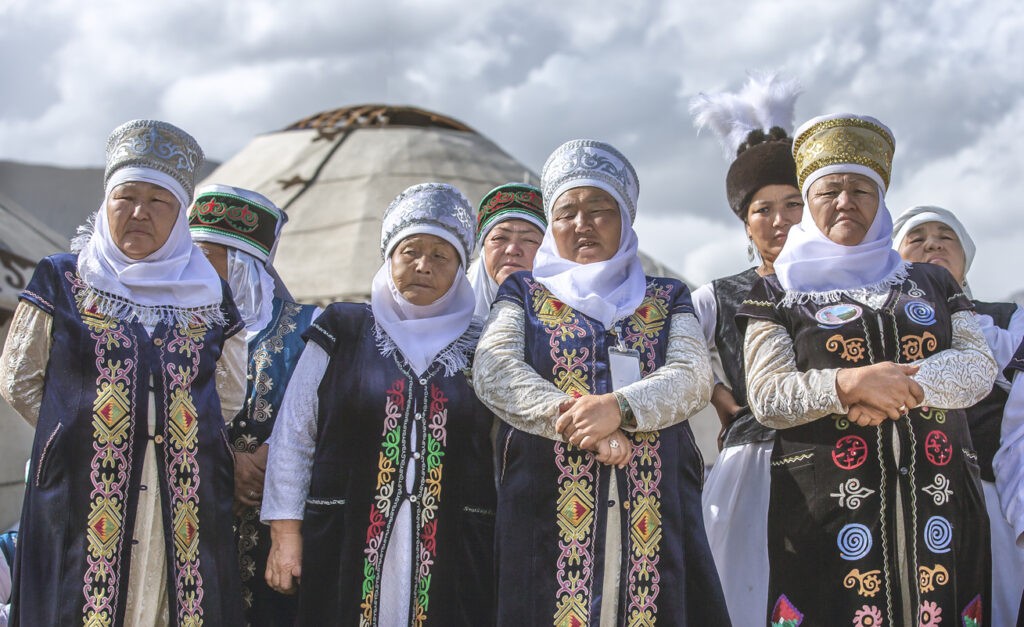
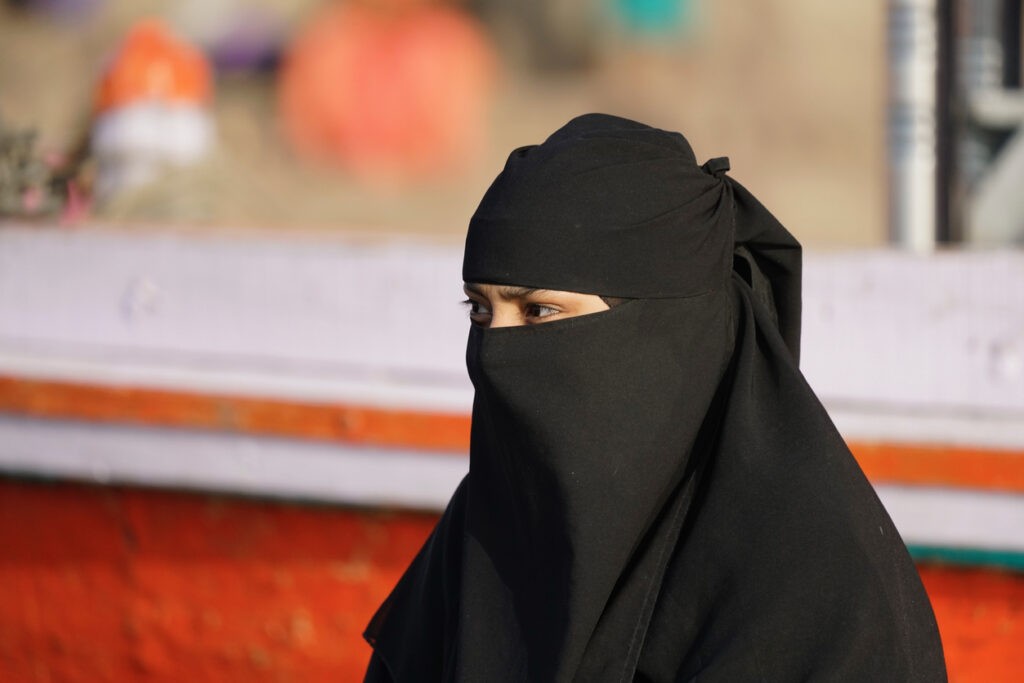
The authorities in Kyrgyzstan have moved to introduce stricter control of the religious sphere in the predominantly Muslim nation. The State Commission on Religious Affairs has submitted draft amendments to the laws regulating religion for public discussion. The Commission proposes banning the creation of political parties on a religious basis, and the participation of political organizations in spiritual activities. It also proposes banning the financing of political parties by religious activity and organizations. The proposed amendments prohibit deputies of the Jogorku Kenesh (national parliament) and local Keneshes (councils) from combining their parliamentary work with religious activities. They also ban religious figures from being elected as deputies of local Keneshes, and propose that the dissemination of religious information be prohibited in electoral campaigning. The amendments broach introducing a fine for wearing clothing that does not allow a person’s identification in government offices and public places, such as a niqab. The exceptions are clothing required for work, and clothing that covers the face for medical reasons. Authorities in neighboring Kazakhstan are also trying to restrict the wearing of religious clothing - hijabs (headscarves) and niqabs - in public places. Kazakhstan's parliament will consider a bill on the issue during the fall session. In the fall of 2023, President Shavkat Mirziyoyev of Uzbekistan signed a law prohibiting the wearing of the niqab in public places. In Tajikistan, authorities have encouraged wearing national dress and prohibited women from wearing black clothing and hijabs, considering them "alien" to Tajik culture and traditions. Earlier this year, the Tajik parliament passed a law regulating traditions and rites, banning the wearing of clothing considered to be "foreign to Tajik culture."

U.S. State Department Criticizes Tajikistan for Religious Restrictions

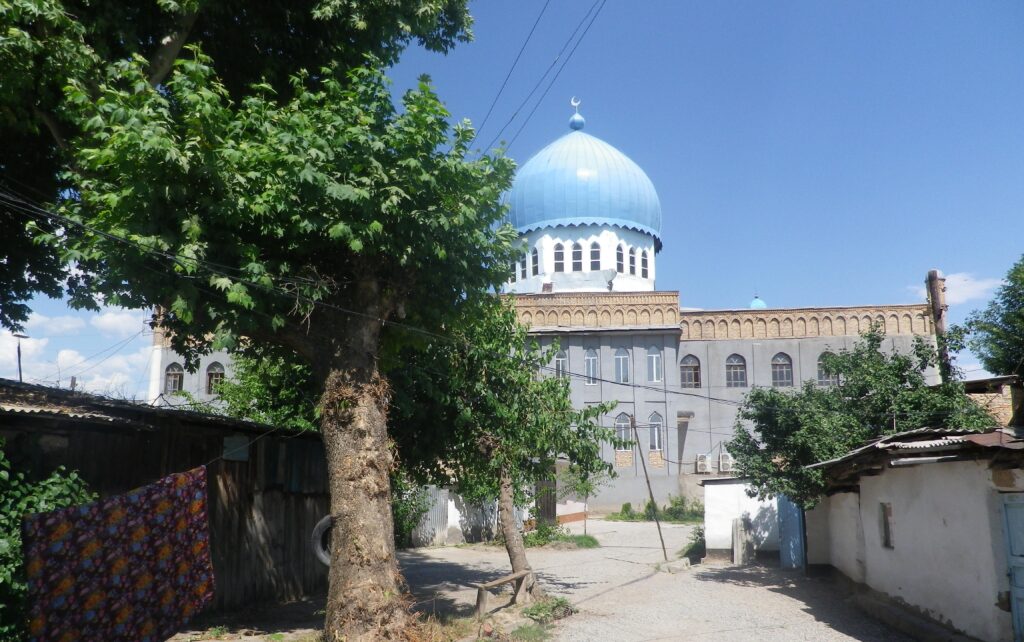
The U.S. State Department's 2023 World Religious Freedom Report lists Tajikistan as a country of "particular concern" due to "gross violations of religious freedoms." The report cited evidence of religious restrictions by the state, including a ban on the hijab, restrictions on minors and women performing namaz in mosques, and the harassment of Jehovah's Witnesses. The authors of the report also noted that residents of  Tajikistan refrain from freely discussing religion for fear of persecution by the authorities. This is not the first time the Tajik government has been criticized for restricting religious freedoms, including religious observance, but President Emomali Rahmon continues to support his government's policy on these issues. In Tajikistan, 90% of the population is Muslim, predominantly followers of the Hanafi madhhab, whilst 4% are Ismailis. The central part of the Christian community are followers of the Orthodox Church. There are 4,058 religious organizations and associations officially registered in the country, including 66 which are non-Muslim. The authors of the report noted that the activities of these organizations were under strict control. According to the Tajik Interior Minister, Ramazon Rakhimzoda, 195 alleged members of "extremist" and "terrorist" organizations were detained in Tajikistan in the first half of 2023. The Norwegian human rights NGO for religious freedom, Forum-18, reported that at least 19 people were convicted last year for exercising the right to freedom of worship.

Uzbekistan to Protect Children from Religious Extremism

The Legislative Chamber of the Oliy Majlis (Supreme Assembly of Uzbekistan) has adopted a draft law to further strengthen children's rights and prevent their becoming "victims of ideas of religious extremism, separatism and fanaticism." The bill states that "the transfer of a child for religious education to unregistered or unlicensed organizations or persons who have no special religious education and who provide religious education without permission from the central governing body of religious organizations in Uzbekistan is prohibited." Parents or guardians registering children in illegal religious education will be fined the equivalent of up to $270 and repeated offenses could result in administrative arrest for up to 15 days.  

Kazakhstan’s Parliament To Consider Ban on Religious Clothing

The Kazakh authorities are once again trying to restrict the wearing of religious clothing -- hijabs and niqabs -- in public places. There have been heated discussions on social media, and Muslim women have appealed to President Kassym-Jomart Tokayev himself. The hijab (headscarf) has long become an everyday accessory, and today, the secular part of society is trying to prevent its wearing in schools. However, women wearing niqabs -- a long, usually black cape that covers the face -- are increasingly common on the streets. Many Kazakhs consider the niqab categorically unacceptable. The issue of wearing religious clothing in public places may be considered in Kazakhstan's parliament, said Yermurat Bapi, a member of the Mazhilis (lower house of parliament). "Now, the most important issue for us is to preserve our country's national interests, traditions, and culture. And if we look at the current situation, more Kazakhs are dressed in black in society. This situation seriously harms our future national interests," Bapi said. "That is why we, a group of deputies, have prepared such a bill. It will be submitted to the Parliament at the fall session. I think that the issue of hijab, niqab, and other religious clothing in society will be solved after its adoption. Then we will be able to regulate the issues of religious dress in some way," he added. In May this year, President Tokayev spoke sharply about covered faces. "Dressing in all black contradicts the worldview of our people, is thoughtless copying of foreign norms, conditioned by religious fanaticism. We must not break away from our spiritual roots and erode our national identity," he said. Also, in October 2023, Minister of Culture and Information Aida Balayeva said that the new law on religion will prohibit wearing religious clothing in public places. Kazakhstan has been trying to solve the problem of wearing religious clothing in schools, universities, courts, and other organizations for years. In the past, the ban on wearing hijabs to school repeatedly caused clashes between school administrations, akimats (mayor's offices), and parents of female students. For example, in Atyrau region in 2023, more than 150 girls refused to attend classes without a hijab. As the Ministry of Education explained, the parents were spoken with, after which the children returned to classes. Experts believe the hijab and niqab have become fashion elements imposed by foreign influences alien to Kazakhstanis. However, local theologians are virtually unanimous: Kazakh women have never covered their faces. "After gaining independence, our youth began to study in foreign educational institutions and began to instill in our people certain clothes and dress codes, which were abroad: in Pakistan, Saudi Arabia, and other Muslim countries. These are their customs, especially about covering the face. Popularly it is called a burqa -- a headscarf with slits for the eyes -- but in Arabic it is called a niqab. The niqab, which completely covers the face, is generally unacceptable for our people, and our people do not use it. Today, in some regions of our...

U.S. Authorities Asked to Sanction Violators of Religious Freedoms in Tajikistan

In early May, the U.S. Commission on International Religious Freedom (USCIRF) published its annual report on violations of religious freedom around the world. As a result of the report, the Commission called on the U.S. government to impose targeted sanctions against government agencies and officials in Tajikistan responsible for serious violations of religious freedom. This is reported by Radio Ozodi. The U.S. Commission on International Religious Freedom (USCIRF) is an independent, bipartisan federal government organization created by the U.S. Congress to monitor, analyze, and report on religious freedom abroad. USCIRF makes foreign policy recommendations to the President, Secretary of State, and Congress to deter religious persecution and promote freedom of religion and belief. Its annual report describes and evaluates U.S. international religious freedom policy. USCIRF criticizes the Tajik authorities for punishing oppositionists and critics of Emomali Rahmon's government under the pretext of combating extremism, closing mosques due to failure to fulfill the plan to draft into the Armed Forces of Tajikistan, restricting the activities of certain Aga Khan-related facilities in the Gorno-Badakhshan Autonomous Oblast, banning the activities of Jehovah's Witnesses, etc. The Commission emphasizes that the situation of religious freedom in Tajikistan, despite earlier recommendations, did not improve in 2023. "In 2023, the government of Tajikistan continued to restrict the religious activities of citizens, including those living abroad," the report states. For this reason, the Commission recommended that the U.S. government impose targeted sanctions against government agencies and officials responsible for serious violations of religious freedom, freeze their assets, and bar them from entering the United States. A similar recommendation was announced last May. USCIRF also called on the U.S. State Department to place Tajikistan, along with 16 other countries, on a "red" list of countries "of particular concern" because their governments commit or tolerate particularly serious violations of the right to freedom of religion or belief. In addition to Tajikistan, the list includes Burma, China, Cuba, Nicaragua, North Korea, Pakistan, Russia, Saudi Arabia, Turkmenistan, Vietnam and others. The Tajik authorities have not yet responded to the report, but the Tajik Committee on Religious Affairs responded to Radio Ozodi's request in January this year that it "considers the situation with religious freedom in the country to be good" and "not all the data in the reports correspond to reality". Tajikistan's challenges with violent extremism were highlighted recently following the claim by an offshoot of the Islamic State terrorist group, known as Islamic State-Khorasan, for the April attack on the Crocus City concert hall outside Moscow, which resulted in at least 143 fatalities. Russian investigators have determined that the assault was carried out by four individuals, all of whom were identified as Tajik nationals.

Celebrating Russian Orthodox Easter in Central Asia: A Fusion of Traditions and Cultures

Russian Orthodox Easter, known as Pascha, is one of the most significant and joyously celebrated holidays among Russian communities worldwide, including those residing in the diverse tapestry of Central Asia. This celebration, deeply rooted in religious traditions, brings a unique blend of spiritual solemnity and communal festivities that stand out amidst the landscapes of Kazakhstan, Kyrgyzstan, Tajikistan, Turkmenistan, and Uzbekistan. The Heart of Russian Orthodox Easter The essence of Russian Orthodox Easter lies in its adherence to the Julian calendar, which often sets the celebration on a different date from Easter observed by Western Christian churches following the Gregorian calendar. The focal point of this celebration is the resurrection of Jesus Christ, a moment of immense spiritual rejoicing and the culmination of the Holy Week, preceded by the Great Lent, a period of fasting and penitence. Easter Traditions Transcending Borders In Central Asia, Russian Orthodox communities maintain their rich cultural heritage through distinctive Easter traditions. The ritual foods - Kulich, a tall, sweet yeast bread, and Paskha, a cheese dessert shaped into a pyramid to symbolize the Tomb of Christ, are central to the celebration. Eggs, painted in vibrant colors with a predominance of red, symbolize new life and hope, serving as both decorative items and gifts exchanged among friends and family. Easter Eve is marked by a solemn service that extends into the early hours of Sunday. The service begins in pitch darkness, symbolizing the tomb's interior. At midnight, churches and homes alike are filled with light and joyous exclamations of "Christ is Risen!" to which the response is "Indeed He is Risen!" This exchange, sometimes accompanied by threefold kisses, underscores the communal and inclusive spirit of Easter celebrations. A Celebration Amidst Diversity Despite the predominantly Muslim backdrop of Central Asia, the observance of Russian Orthodox Easter across the region is a testament to the religious freedoms and interfaith harmony that prevails. Local authorities and communities accommodate and respect these celebrations, making way for processions, services, and the public sharing of Easter foods and greetings. The open expression of such traditions fosters a sense of unity and mutual respect among the region's mosaic of cultures and religions. Cultural Fusion and Community Russian Orthodox communities in Central Asia not only preserve their traditions but also open avenues for cultural exchange. Easter festivities often see a blend of local and Russian customs, creating a rich, multicultural celebration. From the blessing of Easter baskets in churches to community gatherings and charitable acts, the essence of Easter - renewal and hope - resonates across diverse landscapes. Conclusion Russian Orthodox Easter in Central Asia is a testament to the enduring spirit of faith and community beyond geographical and cultural boundaries. It exemplifies how deeply-held religious traditions can coexist and flourish amidst diversity, bringing people together in celebration of shared values of rebirth, joy, and eternal hope. In the heart of Central Asia, Easter remains a vibrant and unifying force, showcasing the beauty of cultural convergence and the universal message of peace and renewal inherent...