• KGS/USD = 0.01144 0%
  • KZT/USD = 0.00203 0%
  • TJS/USD = 0.10685 -0.19%
  • UZS/USD = 0.00008 0%
  • TMT/USD = 0.28530 0%
  • KGS/USD = 0.01144 0%
  • KZT/USD = 0.00203 0%
  • TJS/USD = 0.10685 -0.19%
  • UZS/USD = 0.00008 0%
  • TMT/USD = 0.28530 0%
  • KGS/USD = 0.01144 0%
  • KZT/USD = 0.00203 0%
  • TJS/USD = 0.10685 -0.19%
  • UZS/USD = 0.00008 0%
  • TMT/USD = 0.28530 0%
  • KGS/USD = 0.01144 0%
  • KZT/USD = 0.00203 0%
  • TJS/USD = 0.10685 -0.19%
  • UZS/USD = 0.00008 0%
  • TMT/USD = 0.28530 0%
  • KGS/USD = 0.01144 0%
  • KZT/USD = 0.00203 0%
  • TJS/USD = 0.10685 -0.19%
  • UZS/USD = 0.00008 0%
  • TMT/USD = 0.28530 0%
  • KGS/USD = 0.01144 0%
  • KZT/USD = 0.00203 0%
  • TJS/USD = 0.10685 -0.19%
  • UZS/USD = 0.00008 0%
  • TMT/USD = 0.28530 0%
  • KGS/USD = 0.01144 0%
  • KZT/USD = 0.00203 0%
  • TJS/USD = 0.10685 -0.19%
  • UZS/USD = 0.00008 0%
  • TMT/USD = 0.28530 0%
  • KGS/USD = 0.01144 0%
  • KZT/USD = 0.00203 0%
  • TJS/USD = 0.10685 -0.19%
  • UZS/USD = 0.00008 0%
  • TMT/USD = 0.28530 0%
09 February 2026

Viewing results 1 - 6 of 8

RC Cola Launches Production Facility in Southern Kazakhstan

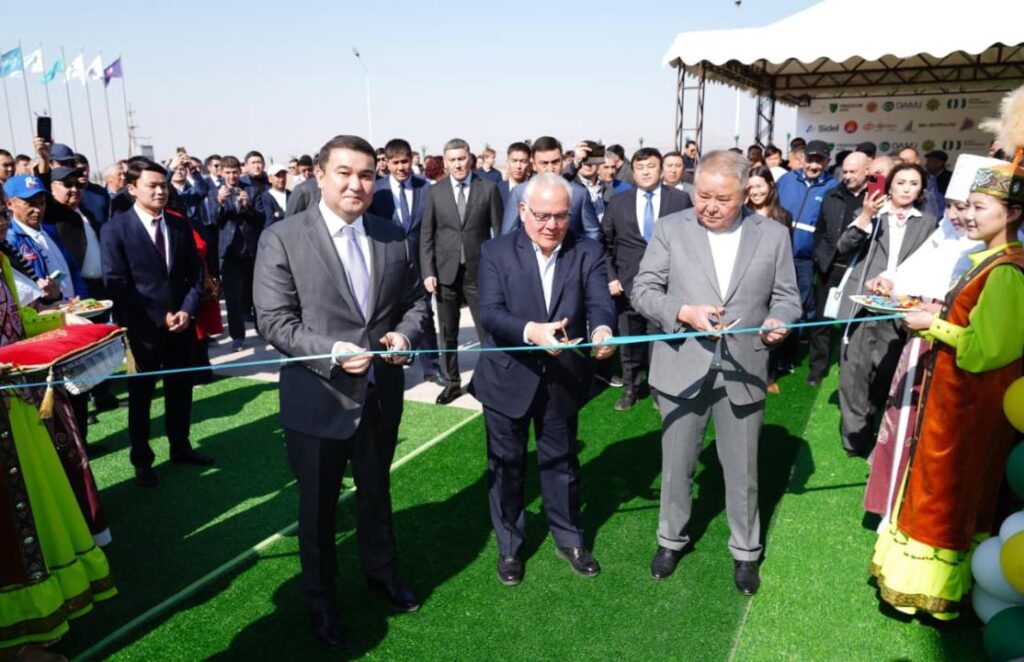
A beverage production plant under the global RC Cola brand has officially opened in the Turkestan region of Kazakhstan. Operated by Beibars Bottlers, the facility is located in the village of Kumisbastau in the Tulkubas district and is designed to produce up to 120,000 tons of beverages annually, according to the regional administration. The product line includes RC Cola carbonated drinks, bottled water, and other non-alcoholic beverages. The project attracted $16.7 million in investment, with plans to supply both the domestic market and neighboring Central Asian countries. “The new plant features production lines based on advanced German and Italian technologies, along with an environmentally friendly, multi-stage water purification system,” the local mayor’s office said. “Water is drawn from wells 170 meters deep and tested in leading laboratories in the US and Italy.” The facility has created 100 new jobs and contributed to local infrastructure development. As part of the project, more than 6 kilometers of 35 kV power lines, a new $1.3 million substation, a gas pipeline, and treatment facilities have been constructed. The opening ceremony was attended by RC Cola International General Manager Francis Lampera and project investor Amangeldy Nurov, founder of Beibars Bottlers LLP. They stated that the launch will boost RC Cola’s presence in Central Asia and solidify its footprint in the Kazakh market. RC Cola (Royal Crown Cola) was founded in 1905 by American pharmacist Claude A. Hatcher. It was the first brand to introduce canned soda and a caffeine-free diet cola. The brand is now owned by Keurig Dr Pepper and distributed internationally through RC Cola International. As previously reported by The Times of Central Asia, RC Cola competitor The Coca-Cola Company recently inaugurated a new production plant in Uzbekistan, which is also part of the company’s expansion strategy in the Turkestan region.

Kazakhstan Targets 20% E-Commerce Share by 2030

Kazakhstan aims to increase the share of e-commerce to 20% of total retail trade by 2030, according to Galya-Banu Meirbayeva, Director of the Department of Electronic and Exchange Trade at the Ministry of Trade and Integration. The announcement was made during the international summit “Access to Logistics and Business through E-Commerce,” held recently in Pakistan. Meirbayeva emphasized that advancing e-commerce is a strategic priority for Kazakhstan. She noted that implementing digital solutions, including artificial intelligence and virtual assistants, will improve cross-border trade, enhance customer experiences, and accelerate economic modernization. Over the past five years, Kazakhstan’s e-commerce sector has grown sevenfold, reaching KZT 3.2 trillion (approximately $6.1 billion) in 2024. E-commerce now accounts for 14.1% of the country's retail trade, with more than 8 million active online shoppers, predominantly younger users. “The potential for further growth is huge, and we have set an ambitious goal. By 2030, every fifth purchase in the country should be made online,” a ministry representative stated. National Strategy for E-Commerce Development In March 2025, Kazakhstan approved a national development plan for e-commerce. The plan outlines key priorities: improving legislation, expanding public education initiatives, supporting entrepreneurship, and developing modern logistics infrastructure. Ensuring consumer protection and fair market conditions for all participants are also central goals. The strategy builds on existing momentum, with a focus on equipping the population and businesses for the digital economy. In particular, the government aims to remove regulatory bottlenecks and foster innovation in digital trade. International Engagement and Regional Partnerships Kazakhstan has also been active in promoting digital trade through multilateral platforms such as the World Trade Organization (WTO), United Nations (UN), Shanghai Cooperation Organisation (SCO), and Eurasian Economic Union (EAEU). In April 2025, Kazakhstan and Pakistan signed a memorandum of understanding on e-commerce, marking a step toward deeper strategic cooperation between the two countries. “The exchange of experience and coordination of actions on international platforms will contribute to building a sustainable and inclusive digital trade architecture in the region,” the Ministry of Trade and Integration said in a statement. Earlier, the ministry had set a target of increasing e-commerce to 18% by 2029, as reported by The Times of Central Asia. However, domestic businesses continue to express concern over competitive imbalances. Many argue that foreign e-commerce platforms benefit from favorable tax regimes that disadvantage local companies in Kazakhstan’s domestic market.

Potato Hunt: Astana Restricts Potato Sales Amid Price Surge

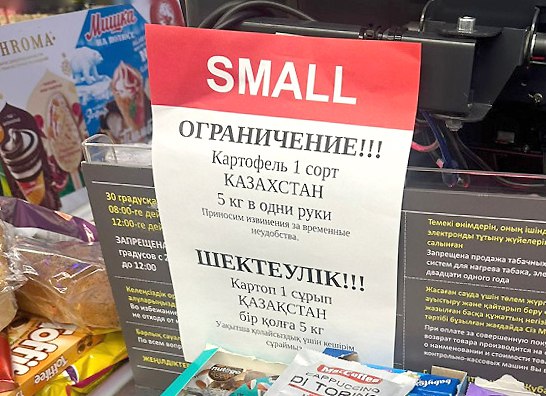
Supermarkets in Astana, including the Small and EuroSpar chains, have introduced a restriction on the sale of potatoes, limiting purchases to no more than 5 kilograms per customer. The Astana Akimat's Department of Investment and Entrepreneurship Development announced that the measure aims to prevent speculation. However, officials have not provided a timeline for when the restrictions might be lifted. A Sharp Spike in Prices The price of potatoes has surged sharply in Kazakhstan. According to the Bureau of National Statistics, this spike occurred within a single week, from January 14 to 21. The annualized price increase averaged 57.8% across the country, with some regions experiencing even steeper hikes. In Astana, the price of potatoes doubled - rising by 100% - with a kilogram costing between 400 and 500 KZT ($0.96). The Ministry of Agriculture (MOA) attributes the price surge to speculation by unscrupulous middlemen. Deputy Minister Yerbol Taszhurekov clarified that the situation cannot be classified as “price collusion” but acknowledged significant price disparities between agricultural producers and retail outlets. “This is the result of speculative activity. After the New Year, many vegetable storages and warehouses remained closed, leading to a reduced supply in the market. Resellers and speculators exploited this temporary shortage to raise prices,” Taszhurekov explained. Tackling the Reseller Problem In response, local governments (akimats) began releasing potatoes from government stabilization funds at significantly reduced prices—between 115 and 130 KZT ($0.25) per kilogram. These measures were implemented to counter speculative practices and stabilize prices until the new harvest. The MOA reported that Kazakhstan currently has more than 62,000 tons of potatoes in reserve, excluding stocks in trade networks. These supplies are deemed sufficient to meet domestic demand until the next harvest. In Astana, this intervention helped bring down prices in retail chains like Small and EuroSpar to 280 KZT ($0.54) per kilogram. However, a new issue arose: small retailers began purchasing potatoes in bulk from these supermarkets to resell them at higher prices. To address this, supermarkets imposed a restriction on potato sales, limiting purchases to 5 kilograms per customer. “All necessary measures have been taken to ensure stable potato prices in Astana. There is no shortage in the city, and products are sufficiently stocked on retail shelves and in markets. Supplies are being replenished in a timely manner. However, to prevent bulk purchases by resellers for resale in small neighborhood stores, supermarkets in the Small and EuroSpar chains have implemented temporary purchase limits,” stated the Department of Investment and Entrepreneurship Development of Astana. Collaboration Between Retail Chains and Farmers The Ministry of Trade and Integration (MTI) also took steps to address the situation. Following discussions with representatives from major supermarket chains such as Magnum, Small, Anvar, and Dina, an agreement was reached for these retailers to directly purchase 1,500 tons of potatoes from farmers. The supermarkets will independently manage the transportation of these goods to ensure steady supply. “Akimats in the regions must present their specific needs, including the required volumes, so that retail chains can promptly meet...

Uzbek Electronics Retailer Secures EBRD $10 Million Loan

On July 1, the European Bank for Reconstruction and Development (EBRD) announced its support to further develop retail standards and e-commerce in Uzbekistan by financing the expansion of one of the country’s leading consumer electronics and household appliances chains, CA-store (formerly Credit Asia). The loan of up to $10 million will finance the working capital required by CA-store for its expansion beyond the capital city of Tashkent. It is expected that in the coming years, the Uzbek retailer will extend its business to all the country’s major cities. The funds will also be used to develop CA-store’s online sales by introducing new e-commerce standards in Uzbekistan’s fast growing e-commerce market and offer online shopping to customers across the country. CA-store’s increased regional coverage will contribute to the reduction of the shadow economy by offering authentic goods and fully complying with national tax requirements. Integral to the project, is a commitment by CA-store to create equal and fair employment opportunities for staff.  

Cenomi Retail Expands its Presence in Tashkent

The largest shopping and entertainment complex in Uzbekistan, Tashkent City Mall, has partially opened. While the official opening is scheduled for later in the first quarter of 2024, part of the retail premises is already open to shoppers. Saudi-based Fawaz Alhokair Group, a retail-development company that operates under the Cenomi Retail brand in Uzbekistan and elsewhere, is already 11th in the world by revenue. Their entry onto the Uzbek market signifies that Uzbekistan has become an attractive enough retail center to bring in the world's fashion giants, including Inditex-owned brands Zara, Massimo Dutti, Oysho, Bershka, Stradivarius, and Pull&Bear. Tashkent City Mall will house an entertainment complex called Sky Park, which will include extreme sports, a virtual-reality zone, a children's science complex and playground. Given the increasing demand for global brands in Uzbekistan, the entry of Inditex brands to the market may create a platform for future foreign investments in the country's retail trade. According to the INFOLine consulting agency, Uzbekistan, Kyrgyzstan and Tajikistan are becoming increasingly attractive for global retailers. The main reason for this is the robust population growth rates found in the region. In addition, the population's income on a nationwide scale continues to increase, which, in turn, encourages consumers to spend more money. Urbanization holds another reason for the popularity of retail in Central Asia, as the population is increasingly more willing to shop online and in shopping malls.

Russian E-Commerce Giant Wildberries Heads for Tajikistan, Turkmenistan

The founder of the Russian e-commerce platform Wildberries Tatyana Bakalchuk has mentioned in an interview with RIA Novosti that the company is planning on entering the Tajikistan and Turkmenistan markets. "We recognize that we must increase the geographic area in which we operate in order to sustain [our] growth rate. First, we are examining the bordering nations. We are already present throughout the nations that make up the EAEU (Eurasian Economic Union). We are now heading to the CIS (Commonwealth of Independent States) nations; for instance, we will be entering the market of Tajikistan and Turkmenistan," Bakalchuk said. Furthermore, RIA cited Bakalchuk as saying that the organization is presently attempting to establish a logistics network in Azerbaijan. “The Persian Gulf nations and the UAE market both pique our interest. Representatives from the Middle East, for instance, attended the forum 'Russia - Islamic World' in May, and many of them showed interest in our work. Thus, we will carefully consider the UAE and the Persian Gulf countries in this regard. We have already begun negotiations with a few nations." Wildberries currently operates in Uzbekistan, Kyrgyzstan, Belarus, Kazakhstan, and Russia. The company is an international online store that sells clothing, footwear, electronics, home furnishings and other items across thousands of categories. As of April 2023 it was the ninth-most visited e-commerce portal in the world, according to Statista data. The company was established in Russia in 2004 by husband-and-wife team Vladislav and Tatyana Bakalchuk.