• KZT/USD = 0.00217
  • TJS/USD = 0.10830
  • UZS/USD = 0.00008
  • TMT/USD = 0.29760
  • KZT/USD = 0.00217
  • TJS/USD = 0.10830
  • UZS/USD = 0.00008
  • TMT/USD = 0.29760
  • KZT/USD = 0.00217
  • TJS/USD = 0.10830
  • UZS/USD = 0.00008
  • TMT/USD = 0.29760
  • KZT/USD = 0.00217
  • TJS/USD = 0.10830
  • UZS/USD = 0.00008
  • TMT/USD = 0.29760
  • KZT/USD = 0.00217
  • TJS/USD = 0.10830
  • UZS/USD = 0.00008
  • TMT/USD = 0.29760
  • KZT/USD = 0.00217
  • TJS/USD = 0.10830
  • UZS/USD = 0.00008
  • TMT/USD = 0.29760
  • KZT/USD = 0.00217
  • TJS/USD = 0.10830
  • UZS/USD = 0.00008
  • TMT/USD = 0.29760
  • KZT/USD = 0.00217
  • TJS/USD = 0.10830
  • UZS/USD = 0.00008
  • TMT/USD = 0.29760
25 November 2026

Viewing results 1 - 6 of 64

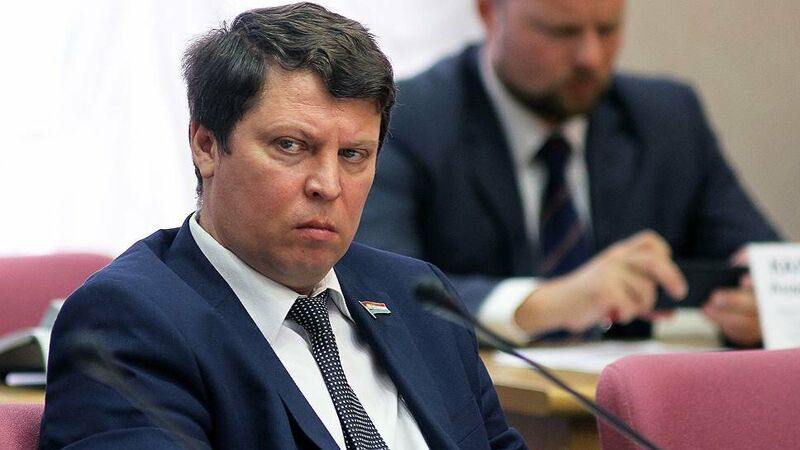
Russian MP Blames Central Asians for Ruble Depreciation

Mikhail Matveyev, a member of Russia’s State Duma, has attributed the depreciation of the Russian ruble in part to remittances by labor migrants from Central Asia and the Caucasus. In a statement on his Telegram channel, Matveyev argued that millions of migrants working in Russia transfer their earnings abroad, removing significant sums from the Russian economy. According to him, these remittances fuel demand for foreign currencies, such as the dollar, thereby weakening the ruble. Citing statistics, Matveyev claimed that in 2023, labor migrants sent $5.7 billion from Russia to Tajikistan - nearly half of Tajikistan’s GDP. Kyrgyzstan received remittances equal to about one-third of its GDP, while Uzbekistan received over $14.5 billion, accounting for 12-15% of its GDP. Other significant recipients included Georgia (over $2 billion), Armenia (over $3 billion), and Kazakhstan. Matveyev also criticized some of these countries for their stance on Western sanctions against Russia. He noted that several countries in the Eurasia region have joined sanctions targeting Russian banks and refuse to process transactions using the Russian Mir payment system. This, he said, forces migrants to withdraw cash dollars from Russia to transfer home, exacerbating the pressure on the ruble exchange rate. The MP’s remarks came amid a sharp drop in the ruble’s value against the dollar last week. For more than 30 years, millions of Central Asian citizens have migrated to Russia for work. However, recent trends indicate an increase in return migration, driven by Russia’s deteriorating economic conditions, stricter immigration rules, worsening attitudes toward Central Asian workers, and attempts by Russian authorities to recruit immigrants - both with and without Russian citizenship - for military service in Ukraine.
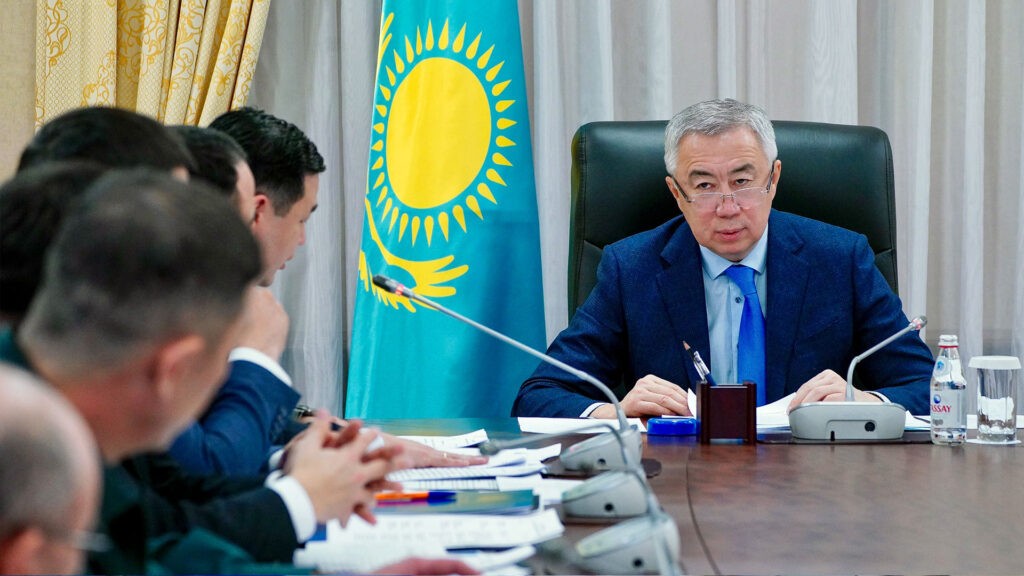
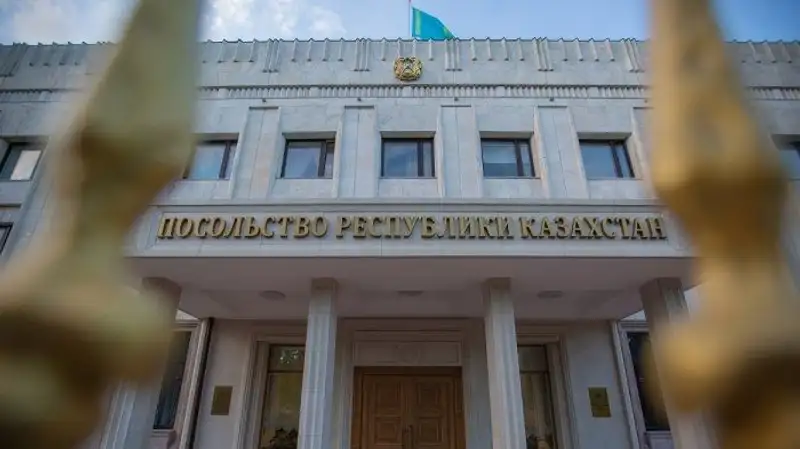
Kazakh Deputy PM Zhumangarin: Our Industries Come Before Sanctions

Kazakhstan has clarified its position on sanctions against Russia imposed as a result of Russia's invasion of Ukraine. Primarily, Kazakhstan will not support measures that could negatively impact its economy. Speaking to Russian state media outlet Tass, Deputy Prime Minister Serik Zhumangarin underscored that Kazakhstan will not act as a conduit for circumventing sanctions, as doing so could severely affect its domestic industries. However, he emphasized the nation's commitment to safeguarding its economic interests, particularly in sectors where products might fall under sanction restrictions. “We have explicitly stated that we will not impose restrictions on these goods, as behind them are large labor collectives and enterprises, often located in single-industry towns,” Zhumangarin explained. During Russian President Vladimir Putin's visit to Kazakhstan on November 27-28, he met with Kazakh President Kassym-Jomart Tokayev. The leaders issued a joint statement condemning unilateral sanctions, citing their detrimental effects on global trade, economic cooperation, and sustainable development. They reaffirmed their commitment to principles of open and non-discriminatory international trade. By maintaining a neutral stance on sanctions, Kazakhstan seeks to minimize economic risks while prioritizing the interests of its workforce and industries. As The Times of Central Asia previously reported, Kazakhstan’s Ambassador to Russia, Dauren Abayev, noted that Kazakh companies aim to avoid secondary sanctions but will continue fostering close cooperation with Russia. In an August interview with Bloomberg, Zhumangarin reiterated that Kazakhstan would not blindly adhere to sanctions against Russia but would consider international restrictions. He highlighted that while Kazakhstan aims to protect its companies from trade bans, it cannot completely disregard sanctions due to the risk of economic isolation. Furthermore, Kazakhstan's Minister of National Economy, Nurlan Baibazarov, addressed concerns in early November regarding including Kazakh companies on UK sanctions lists. He emphasized that these cases mostly involved transient firms, asserting that Kazakhstan continues to comply with international regulations.

Kazakhstan’s Ambassador: Kazakh Companies Do Not Want To Be Under Sanctions

Kazakh companies seek to avoid secondary sanctions, but the country will continue to cooperate closely with Russia. This was stated by Kazakhstan's Ambassador to Russia, Dauren Abayev, at a press conference in TASS news agency. According to him, about ten companies in the country have fallen under such sanctions, but these are isolated cases. “Kazakh companies, naturally, do not want to be under sanctions, as any restrictions have a negative impact on their activities,” Abayev emphasized. Nevertheless, he noted that strategic partnership and allied relations remain between Kazakhstan and Russia, and the growth of trade turnover confirms the continuation of cooperation. Earlier in August, Kazakhstan's Deputy Prime Minister Serik Zhumangarin said in an interview with Bloomberg that the republic would not blindly follow sanctions against Russia but would take into account international restrictions. He emphasized that Kazakhstan will not allow a ban on trade for its companies, but the country cannot completely ignore the sanctions because of the risk of economic isolation. Kazakhstan's Minister of National Economy Nurlan Baibazarov commented in early November on Kazakhstan companies being placed on the UK sanctions lists, saying that these violations are not systemic. He said the sanctions were mainly one-day firms, and the republic continues to comply with international restrictions.

U.S. Sanctions Uzbek Companies Supplying Russia with Equipment

The U.S. Department of the Treasury has sanctioned 275 individuals and entities involved in supplying Russia with advanced technology and equipment that it desperately needs to support its war machine. The Uzbek companies Uzstanex and The Elite Investment Group are among the sanctioned entities. Deputy Secretary of the Treasury Wally Adeyemo emphasized that the U.S. and its allies are committed to halting the flow of essential tools and technologies that enable Russia to pursue its unlawful war against Ukraine. “As demonstrated by today’s actions, we are unwavering in our resolve to weaken Russia’s military capabilities and to penalize those attempting to circumvent or evade our sanctions and export controls,” Adeyemo stated. Uzstanex is part of the StanexGroup holding. The company sells and adjusts machine tools in Uzbekistan, Kazakhstan, Kyrgyzstan, Tajikistan, and Turkmenistan. According to the U.S. Treasury Department, the machine tools purchased by Uzstanex were delivered to Russia through the Chinese company Shanghai Winsun Imp and Exp Co Ltd (Shanghai Winsun), which is why sanctions were imposed against it. The Elite Investment Group is a non-specialized wholesaler. It is noted that from mid-March to May 2024, using GUCLU GLOBAL as a carrier agent, the company delivered approximately $190,000 worth of high-priority goods, including electrical transformers, to companies in Russia, including the GS Group.

Authorities Rail Against Use of Kazakhstan in Circumventing International Sanctions Against Russia

Kazakhstan's Deputy Foreign Minister Roman Vassilenko emphasized in an interview with the Polish publication PAP that the country seeks to prevent its territory from being used to circumvent international sanctions imposed against Russia. According to Vassilenko, although Kazakhstan has not officially imposed sanctions nor joined the anti-Russian measures, the republic's authorities consider it essential to prevent risks associated with possible secondary sanctions against its companies. This is especially important in regard to its close economic ties with Western countries. At the same time and in acknowledgement of its position concerning both its Western partners and Russia, Kazakhstan has emphasized the need for  balance and an avoidance of circumvention of restrictive measures. Vassilenko also noted that Kazakhstan is actively cooperating with the European Union on the sanctions regime, and as part of  these consultations, reported that he had been in dialog with David O'Sullivan, the EU special envoy for sanctions. Vassilenko denied speculation about growing tensions between Kazakhstan and Russia, and pointing out that the countries maintain close ties, explained: “There are different issues because we are neighbors and have diverse relations. We are working with Russia to solve these issues before they become problems. This is our approach not only to the Russian Federation but to any other country." After the start of the Russian military operation in Ukraine, Kazakhstan took a neutral stance and did not support Western sanctions against Moscow. Nevertheless, the Kazakh authorities have repeatedly stated that they will not allow the country's territory to be used to circumvent these restrictions. President Kasym-Jomart Tokayev, in his speeches, adheres to the principle of compliance with the international sanctions regime and aims to conduct a constructive dialog with the EU and the U.S. to  avoid possible secondary sanctions that could affect Kazakh companies.  

Central Asia Finesses Pressure over Russia, Sanctions

Kyrgyzstan says it will cooperate with regional heavyweight Russia despite appeals from some Western countries not to do so. The comment by President Sadyr Japarov of Kyrgyzstan reflects a broader effort by Central Asian countries to balance longstanding economic and security ties with Moscow alongside relationships with Europe and the United States, which have imposed multiple sanctions packages on Russia since its full-scale invasion of Ukraine in February 2022. “Certainly, there are Western countries that ask us not to cooperate with Russia,” Japarov said in an interview with the state-run Kabar news agency that was published on Wednesday. “However, I always openly and sincerely respond to them: ´We cannot refuse to cooperate with Russia. Our trade turnover with Russia exceeds $4 billion. We buy oil, gas, wheat and other foodstuffs from Russia. Geographically, we are in a landlocked area. Our road and rail routes to the world pass through Russia. Russia hosts about a million of our migrants. How can we not cooperate with Russia?”´ Japarov noted that trade between some European Union countries and Russia runs into billions of dollars a year despite sanctions, saying: “When you need it, you cooperate with Russia, but we are not allowed to. This is an unfair demand.” The EU says it has imposed “massive and unprecedented” sanctions on Russia, including travel bans on individuals, asset freezes on individuals and entities and economic measures that target Russia’s financial, trade, energy, transport, technology and defense areas. However, exemptions and loopholes mean that some trade continues, for example allowing EU member states that are especially dependent on Russian crude oil to continue receiving it by pipeline. Czechia has spent more than 7 billion euros on Russian oil and gas, over five times what it has provided in aid to Ukraine, according to a report released this week by the Center for the Study of Democracy, a European public policy institute. Additionally, many analysts have pointed to a surge in European exports to Central Asia and the Caucasus since 2022 as a probable indication that EU and British companies are using the regions as a conduit to send goods to Russia, including at least a portion that are subject to sanctions. The difficulty of tracking products made it hard to confirm any sanctions-dodging, though an analysis of trade data by the European Bank for Reconstruction and Development last year concluded that changes in regional trade patterns “may be used to circumvent economic sanctions but on a limited scale.” At the same time, there have been more reports of banks in Central Asian countries refusing to accept cross-border payments from Russian companies as the United States moved to impose secondary sanctions for doing business with Russian entities. Banks in China, Türkiye and the United Arab Emirates, all big trade partners with Russia, have taken similar action. Kyrgyzstan is not the only Central Asian country that has expressed frustration about Western sanctions. Last year, Kazakh President Kassym-Jomart Tokayev said his country would comply with sanctions against Russia while still...