
• KZT/USD = 0.00224
  • TJS/USD = 0.10860
  • UZS/USD = 0.00008
  • TMT/USD = 0.29850
  • KZT/USD = 0.00224
  • TJS/USD = 0.10860
  • UZS/USD = 0.00008
  • TMT/USD = 0.29850
  • KZT/USD = 0.00224
  • TJS/USD = 0.10860
  • UZS/USD = 0.00008
  • TMT/USD = 0.29850
  • KZT/USD = 0.00224
  • TJS/USD = 0.10860
  • UZS/USD = 0.00008
  • TMT/USD = 0.29850
  • KZT/USD = 0.00224
  • TJS/USD = 0.10860
  • UZS/USD = 0.00008
  • TMT/USD = 0.29850
  • KZT/USD = 0.00224
  • TJS/USD = 0.10860
  • UZS/USD = 0.00008
  • TMT/USD = 0.29850
  • KZT/USD = 0.00224
  • TJS/USD = 0.10860
  • UZS/USD = 0.00008
  • TMT/USD = 0.29850
  • KZT/USD = 0.00224
  • TJS/USD = 0.10860
  • UZS/USD = 0.00008
  • TMT/USD = 0.29850
16 November 2026

Viewing results 1 - 6 of 2

Kazakhstan’s Top Three Universities Slip in QS Asia Rankings

Kazakhstan remained the only Central Asian country with universities in the top 100 of the latest Asian rankings from higher education analysts Quacquarelli Symonds (QS), although all three of its leading institutions fell. In the QS World University Rankings: Asia 2027, released on November 3, Al-Farabi Kazakh National University fell from 38th to 46th, L.N. Gumilyov Eurasian National University slipped from 61st to 62nd, and Satbayev University dropped from 79th to 89th. Kazakhstan’s representation rose from 44 to 51 universities, putting it 10th in Asia by number of institutions listed. The rankings covered 1,722 universities from 26 countries and territories, with the University of Hong Kong retaining the top spot. Of the 44 universities in Kazakhstan listed in both editions, 24 fell, 14 rose, and six held their positions. QS told Forbes Kazakhstan that 33 had improved their overall scores, explaining that universities can fall in the rankings when competitors make bigger gains. Sarsen Amanzholov East Kazakhstan University made the biggest gain among the country’s institutions, climbing 64 places to 618th. Nazarbayev University rose 62 places to tie for 139th. QS evaluates universities using 11 indicators, including academic reputation, employer reputation, research performance, and student exchanges. Kazakhstan’s Ministry of Science and Higher Education said the country’s universities scored above the Asian average on seven of those indicators. However, their average score for citations per paper, a measure of research impact, was just 3.8 points, compared with 35.2 across Asia, QS noted. The ministry said more than 30 foreign university branch campuses had opened in Kazakhstan, expanding opportunities for student exchanges and academic cooperation. Kazakhstan accounted for eight of the top 10 universities in QS’s Central Asia table, with its three leading institutions taking the top spots. Uzbekistan’s Tashkent Institute of Irrigation and Agricultural Mechanization Engineers National Research University placed fourth, and the National University of Uzbekistan named after Mirzo Ulugbek placed ninth. In the same regional table, Kyrgyz-Turkish Manas University was Kyrgyzstan’s highest-ranked institution, placing 14th, followed by the American University of Central Asia in 15th. Tajik National University ranked 43rd. The separate QS World University Rankings 2027 included 18 universities from Kazakhstan. Al-Farabi Kazakh National University was the country’s highest-ranked institution, tying for 177th.
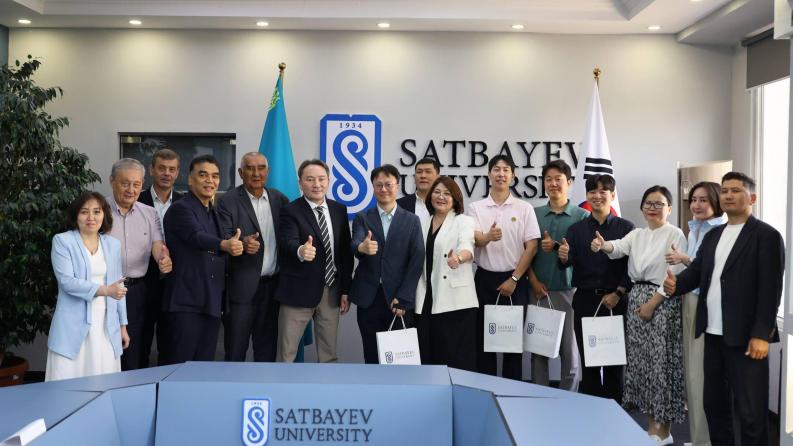

Kazakhstan and South Korea to Establish Rare Metals Research Center in Almaty

Kazakhstan and South Korea are establishing a joint research and technology center in Almaty to support the development of Kazakhstan’s rare metals and critical minerals industry. The Kazakh-Korean Center for Rare and Rare Earth Metals will be established at Satbayev University in partnership with the Korea Institute of Industrial Technology and the Korea National Institute of Rare Metals. During a meeting on July 9, representatives of the three institutions discussed how the project will be carried out. They also reviewed the purchase of modern laboratory equipment and long-term scientific and technological cooperation. The center will train specialists for Kazakhstan’s growing rare metals industry and give local researchers access to modern analytical and processing equipment. It will also support joint research with international partners. “The combined scientific potential of Kazakhstan and the Republic of Korea will enable the implementation of modern technologies for processing strategic raw materials, expand scientific research, and train world-class specialists,” Satbayev University Rector Meiram Begentayev said. According to the university, the facility will become Kazakhstan’s first full-cycle scientific and technological platform dedicated to developing, testing, and commercializing environmentally friendly technologies for the production of high-purity and ultra-high-purity rare and rare earth metals. The center will also conduct fundamental and applied research and pilot new technologies for processing mineral and industrial raw materials. The initiative is part of Kazakhstan’s effort to become a major supplier of critical minerals. Demand is rising from electric vehicle makers and renewable energy companies, while semiconductor and defense industries are also increasing their need for rare metals. Speaking at the C5+1 Critical Minerals Dialogue in Astana on June 10, Minister of Industry and Construction Yersaiyn Nagaspayev described critical minerals as a strategic priority for Kazakhstan’s industrial policy and long-term economic development. He said the country has more than 9,500 mineral deposits, including over 100 containing rare and rare earth metals. Nagaspayev has previously said Kazakhstan is capable of supplying 19 of the 50 critical raw materials identified by the United States and 21 of the 34 minerals included on the European Union’s critical raw materials list, positioning the country as an increasingly important participant in global supply chains. Kazakhstan already produces strategic materials including beryllium, titanium, tantalum, niobium, rhenium, antimony, bismuth, selenium, and tellurium, both as primary metals and as components used in advanced industrial applications.