• KGS/USD = 0.01144 0%
  • KZT/USD = 0.00214 0%
  • TJS/USD = 0.10815 0.19%
  • UZS/USD = 0.00008 0%
  • TMT/USD = 0.28571 0%
  • KGS/USD = 0.01144 0%
  • KZT/USD = 0.00214 0%
  • TJS/USD = 0.10815 0.19%
  • UZS/USD = 0.00008 0%
  • TMT/USD = 0.28571 0%
  • KGS/USD = 0.01144 0%
  • KZT/USD = 0.00214 0%
  • TJS/USD = 0.10815 0.19%
  • UZS/USD = 0.00008 0%
  • TMT/USD = 0.28571 0%
  • KGS/USD = 0.01144 0%
  • KZT/USD = 0.00214 0%
  • TJS/USD = 0.10815 0.19%
  • UZS/USD = 0.00008 0%
  • TMT/USD = 0.28571 0%
  • KGS/USD = 0.01144 0%
  • KZT/USD = 0.00214 0%
  • TJS/USD = 0.10815 0.19%
  • UZS/USD = 0.00008 0%
  • TMT/USD = 0.28571 0%
  • KGS/USD = 0.01144 0%
  • KZT/USD = 0.00214 0%
  • TJS/USD = 0.10815 0.19%
  • UZS/USD = 0.00008 0%
  • TMT/USD = 0.28571 0%
  • KGS/USD = 0.01144 0%
  • KZT/USD = 0.00214 0%
  • TJS/USD = 0.10815 0.19%
  • UZS/USD = 0.00008 0%
  • TMT/USD = 0.28571 0%
  • KGS/USD = 0.01144 0%
  • KZT/USD = 0.00214 0%
  • TJS/USD = 0.10815 0.19%
  • UZS/USD = 0.00008 0%
  • TMT/USD = 0.28571 0%

Viewing results 1 - 6 of 13

Uzbekistan Signs $78 Million Deal with Saudi and French Firms to Manage Hazardous Waste

Uzbekistan has signed a landmark $78 million agreement with Saudi Arabia’s Vision International Investment Company (VIIC) and France’s Suez International to improve hazardous industrial waste management and bolster environmental protection. The Ministry of Ecology announced the signing earlier this month. The agreement was formalized by Deputy Minister of Ecology Jusipbek Kazbekov, VIIC Director of Development Kapil Lalwani, and Paul Bourdillon, Regional Director for Europe and Central Asia at Suez. The project will be implemented in three phases. A Three-Phase Strategy The first phase will involve the construction of new waste stabilization facilities, landfills, and transfer stations to safely store and process hazardous industrial waste. The second phase will focus on developing engineering designs and piloting technologies to produce Refuse-Derived Fuel (RDF), a method that converts waste into usable energy. This phase will also test incineration and thermal treatment systems. In the third and final phase, the project will establish a full-scale RDF and waste-to-energy facility. Suez International, with over 160 years of experience, is a global leader in water and waste management, offering innovative solutions across Europe, Asia, the Americas, Africa, and the Middle East. Saudi-based VIIC, founded in 2002, manages nearly $96 billion in assets and is active in energy, infrastructure, and public-private partnership projects. The Ministry of Ecology views the agreement as a significant advancement for Uzbekistan’s environmental policy, aiming to reduce industrial pollution and support sustainable development. Broader Environmental Initiatives Uzbekistan’s Ministry of Ecology is also collaborating with the Food and Agriculture Organization of the United Nations (FAO) and the European Union to manage hazardous agricultural chemicals. A joint project launched in Tashkent last year aims to reduce pesticide use and improve waste handling in agriculture. Minister of Ecology Aziz Abdukhakimov emphasized the importance of these initiatives for public health and environmental safety. He also highlighted the need to update the national registry of contaminated areas, particularly former agricultural airfields, many of which have not been surveyed since the 1990s.

Opinion: How the Emerging Trump Doctrine Played at Astana International Forum

With His Riyadh Allocution, Trump Ripped Up the Foreign Policy Playbook The May 29–30 Astana International Forum (AIF) in Kazakhstan drew thousands of attendees — heads of state, senior diplomats, and entrepreneurs — eager for insights into Central Asia’s rising global significance. Topics ranged from foreign policy and water management to energy, trade, and economic integration. A key message from the organizers was that Middle Powers — Kazakhstan, Indonesia, Türkiye, South Africa, Argentina, and others — should serve as bridges to peace and solidarity amid growing global polarization and Great Power conflict. Unsurprisingly, lots of folk were trying to horn in on business opportunities – mainly agriculture, mining, and metals, of which there is an abundance in the region. Yet the real buzz in the hallways and cafés wasn’t about panel discussions, raw materials, or the next sound bite for the press. What had international policy mavens all atwitter was President Trump’s unexpected speech in Saudi Arabia – which might well prove to be the Trump Doctrine: global crises, he said, are better resolved through diplomacy and mutually beneficial business partnerships, not bayonets, diktat, and moral sermonizing. That message, coming from the President of the United States, landed with force. During the three days I spent in Astana, I noticed that many delegates who normally spoke in well-rehearsed sound bites designed not to offend, suddenly spoke more bluntly, even going off-script. They dropped the cautious language and the standard foreign policy group-speak. What was going on?  Was this the Trump effect? My guess is that Trump’s Riyadh allocution was intended to rip up the decades-old foreign policy playbook of Brussels, London, and prior U.S. administrations. Instead of promoting the globalist/woke agenda, which had been de rigueur at international diplomatic clambakes of the Astana sort, Trump called for détente and reciprocity – more the realism of Nixon and Kissinger (leavened with a pinch of Ronald Reagan) than the idealism of Wilson and FDR. He wanted to deliver on his promise to the American people to make America great again (including boosting domestic manufacturing) rather than squander precious resources beating down any country that looks at us cross-eyed. Trump’s Riyadh speech — like his inaugural address — called for a peaceable foreign policy.  That message reverberated in Astana: “Before our eyes, a new generation of leaders is transcending the ancient conflicts and tired divisions of the past and forging a future where the Middle East is defined by commerce, not chaos; where it exports technology, not terrorism; and where people of different nations, religions, and creeds are building cities together — not bombing each other out of existence.” Perhaps most cutting was Trump’s indictment of interventionist dogma: “This great transformation has not come from Western interventionists giving you lectures... The gleaming marvels of Riyadh and Abu Dhabi were not built by 'nation-builders,' 'neo-cons,' or 'liberal non-profits'... Instead, the birth of a modern Middle East has been brought about by the people of the region themselves – pursuing their own visions and charting...

Kazakhstan and World Bank Partner on Water Conservation at One Water Summit

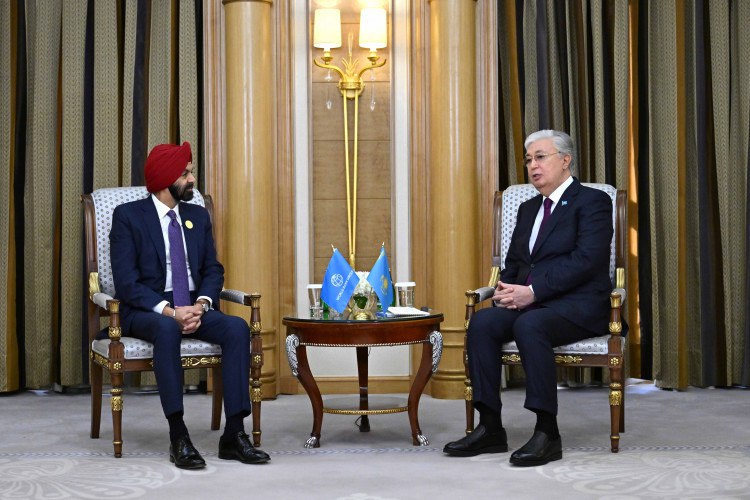
A memorandum of understanding has been signed to enhance water resource management and environmental conditions, including in the North Aral Sea and its surrounding basin, between Kazakhstan’s Ministry of Water Resources and Irrigation and the World Bank. As climate change continues to significantly impact water resources in Central Asia, exacerbating water scarcity and management challenges, this agreement underscores a shared commitment to ensuring sustainable and equitable water resource management for future generations. The memorandum was formalized following a meeting between Kazakhstan’s President Kassym-Jomart Tokayev and World Bank Group President Ajay Banga during the One Water Summit in Riyadh, Saudi Arabia, on December 3. Co-organized by French President Emmanuel Macron, Tokayev, and World Bank Group President Banga, in partnership with Saudi Arabia’s Crown Prince and Prime Minister Mohammed bin Salman, the summit sought to accelerate progress toward Sustainable Development Goal 6 (clean water and sanitation) and discuss innovative solutions ahead of the 2026 UN Water Conference. During the summit, Tokayev stressed the importance of bolstering reservoir capacity, preserving glaciers, and adopting advanced irrigation systems to secure stable water access. Tokayev proposed creating a global partnership to unite research centers focused on glacier preservation. “Glaciers are integral to the global water cycle, sustaining rivers and lakes that supply water to nearly two billion people worldwide. Collaborative research and unified policies are essential to mitigate glacier loss and support water management strategies in vulnerable regions,” he said. He warned that water scarcity poses risks to food security, energy production, and industrial growth, adding that investments in water-efficient agriculture and renewable energy can enhance economic resilience while alleviating environmental pressures. “Water knows no borders; it binds communities and ecosystems,” Tokayev remarked. As Chair of the International Fund for Saving the Aral Sea, he emphasized Kazakhstan’s commitment to fostering regional cooperation and joint action. “It is vital for countries at the forefront of combating climate change to strengthen dialogue, build international partnerships, and pool resources to implement water projects. Kazakhstan is proud to join the One Water Vision coalition, uniting stakeholders to address the global water crisis and promote integrated water resource management. As part of these efforts, with United Nations support, Kazakhstan will host a Regional Climate Conference in 2026,” Tokayev concluded.

Saudi Arabia to Build Electricity Storage Systems in Uzbekistan

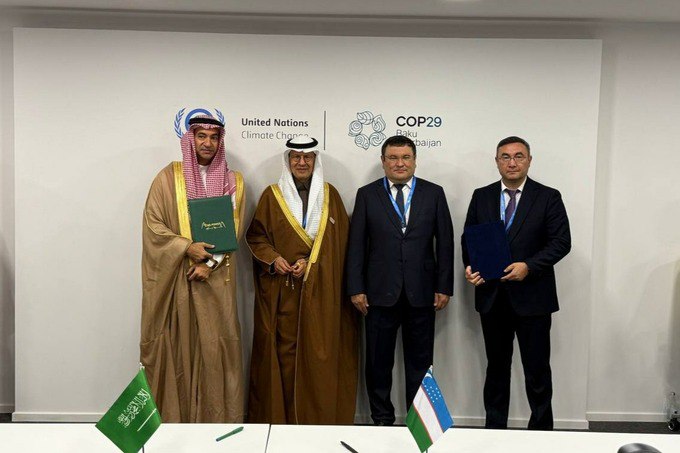
Saudi company ACWA Power has signed an agreement with Uzbekistan to construct electricity storage systems with a total capacity of 2,000 MWh. The agreement was formalized during the COP-29 climate conference in Baku, Azerbaijan. Under the agreement, ACWA Power will collaborate with Uzbekistan’s Ministry of Energy to develop energy storage systems across the country. The implementation will be based on a comprehensive analysis of the national grid’s condition. The project will begin with feasibility studies to determine the most suitable regions for phased deployment. The initiative is estimated to cost $1.1 billion and is expected to create over 1,000 jobs during its lifetime. Uzbekistan has ambitious plans to expand its energy storage capacity to 4.2 GW by 2030. The first energy storage system in the country is slated for launch in early 2025 in the Fergana region. Deputy Energy Minister Umid Mamadaminov recently noted that Uzbekistan needs to build 10 GW of backup capacity by 2030 to support the integration of renewable energy sources. He emphasized that the country’s minimum reserve should equal 50% of its solar and wind power capacity.

Uzbekistan and Saudi Arabia Strengthen Ties: $2.5 Billion Investment Expected by Year-End

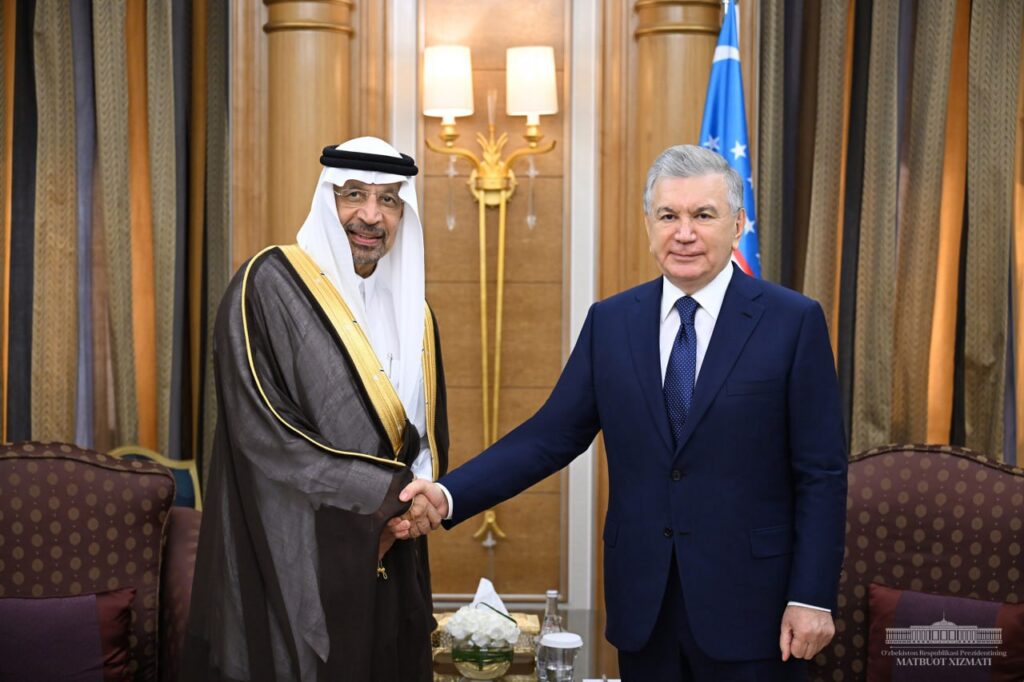
On November 11, Uzbekistan's President Shavkat Mirziyoyev met Saudi Arabia's Minister of Investments, Khalid al-Falih, during the extraordinary Arab-Islamic Summit currently being held in Riyadh. Cooperation between Uzbekistan and Saudi Arabia has rapidly developed in recent years. The volume of mutual trade, the scope of cooperation, and also the number of flights between the countries are increasing. By the end of this year, Saudi Arabian companies are expected to attract about $2.5 billion worth of investments in areas such as “green” energy, healthcare, transport infrastructure modernization, heat and water supply, agriculture, housing, and communal economy. Mirziyoyev also met with Muhammad bin Salman Al Saud, the Crown Prince and Prime Minister of the Kingdom of Saudi Arabia. Mirziyoyev noted that effective cooperation has been established with the leading company “ACWA Power,” which is modernizing Uzbekistan's energy sector through direct investments and advanced technologies. Emphasis was placed on developing wind and solar power plants across various regions of Uzbekistan and accelerating projects to produce “green” hydrogen. Additionally, an agreement was reached to engage Saudi Arabian companies and consultants to localize production and improve energy efficiency in Uzbek enterprises.

Saudi Fund Contributes $100 Million Towards Rogun Hydropower Plant in Tajikistan

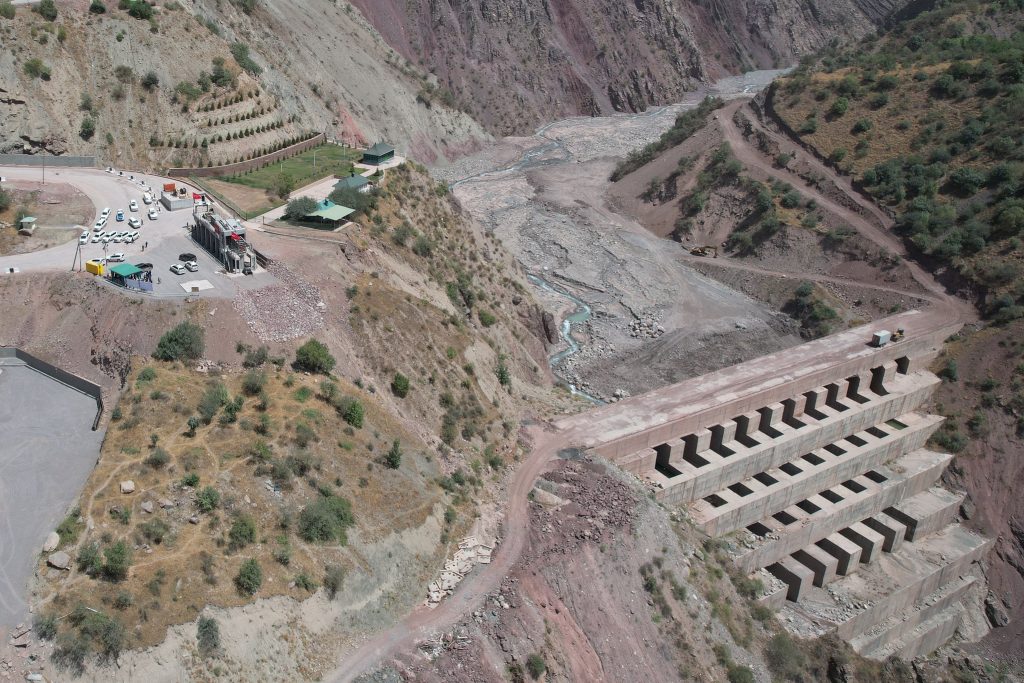
The Saudi Development Fund has allocated $100 million to finance the completion of the Rogun hydropower plant in Tajikistan. This was announced by the Ambassador Extraordinary and Plenipotentiary of the Kingdom of Saudi Arabia to the Republic of Tajikistan, Walid bin Abdulrahman Al-Rashidan, at a press conference dedicated to the 94th anniversary of the Kingdom of Saudi Arabia's founding. “This project is strategically important for the country, as it will ensure energy security and sustainable economic growth. The Rogun HPP is a key element of Tajikistan's energy infrastructure; it will significantly increase electricity production and strengthen its position regionally,” Al-Rashidan said. Saudi Arabia’s financial support strengthens bilateral cooperation in energy and economic relations. The estimated cost of completing the construction of the Rogun HPP is $6.4 billion. Once it reaches full capacity, about 70% of the electricity generated will be exported to other Central Asian countries. According to a report by the Eurasian Fund for Stabilization and Development (EFSD), the financing of the Rogun HPP is one of the main risks for Tajikistan’s budget and debt sustainability. A possible increase in the cost of hydropower construction could reduce funding for other essential infrastructure projects and social spending. Analysts emphasize that “in the face of uncertainty regarding funding sources, starting in 2025, the government of Tajikistan may have additional needs for budgetary support from international financial organizations.”