
• KZT/USD = 0.00222
  • TJS/USD = 0.10830
  • UZS/USD = 0.00009
  • TMT/USD = 0.29850
  • KZT/USD = 0.00222
  • TJS/USD = 0.10830
  • UZS/USD = 0.00009
  • TMT/USD = 0.29850
  • KZT/USD = 0.00222
  • TJS/USD = 0.10830
  • UZS/USD = 0.00009
  • TMT/USD = 0.29850
  • KZT/USD = 0.00222
  • TJS/USD = 0.10830
  • UZS/USD = 0.00009
  • TMT/USD = 0.29850
  • KZT/USD = 0.00222
  • TJS/USD = 0.10830
  • UZS/USD = 0.00009
  • TMT/USD = 0.29850
  • KZT/USD = 0.00222
  • TJS/USD = 0.10830
  • UZS/USD = 0.00009
  • TMT/USD = 0.29850
  • KZT/USD = 0.00222
  • TJS/USD = 0.10830
  • UZS/USD = 0.00009
  • TMT/USD = 0.29850
  • KZT/USD = 0.00222
  • TJS/USD = 0.10830
  • UZS/USD = 0.00009
  • TMT/USD = 0.29850
09 October 2026

Viewing results 1 - 6 of 2

Learning to Live With the Aral Sea’s Changed Landscape

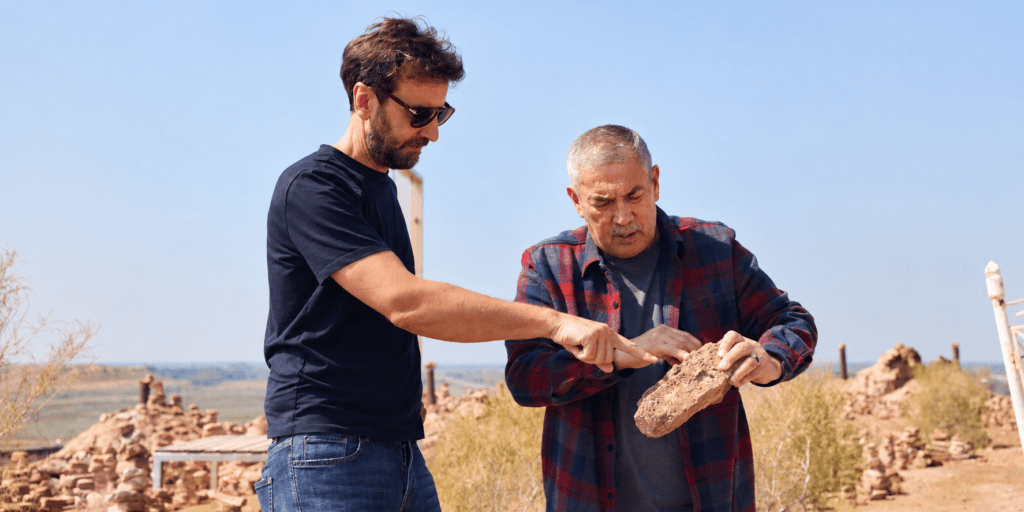
In February, participants from a new school in Nukus joined local foresters on the dried bed of the Aral Sea to plant saxaul. The shrubs can take root in salty ground and help hold down dust blowing across Karakalpakstan. Foresters from the Karauzyak State Forestry Department guided the work, drawing on years of experience in the region. The planting exercise, organized with the United Nations Development Programme, offered an early indication of how the Aral School intends to teach. Its participants work alongside people already responding to the sea’s retreat, learning from the landscape and those who live with its consequences. Now, the school is preparing for a second intake with a six-month residency in Nukus from January to June 2027. Architect and curator Joseph Grima will lead the program, which will focus on climate and landscape. Applications are open until October 25. Based in the capital of Uzbekistan’s autonomous republic of Karakalpakstan, the school brings international practitioners together with participants from the region. The Uzbekistan Art and Culture Development Foundation (ACDF), which established it, announced the new intake and Grima’s appointment during an assembly at the Savitsky Museum in Nukus. The museum owes its remarkable collection to Igor Savitsky, who rescued thousands of works rejected by the Soviet authorities, finding them a refuge in remote Nukus. Gayane Umerova, chair of ACDF, and Grima spoke to The Times of Central Asia about the school’s long-term goals and how local people will help shape its work. “The Aral School was never conceived as a single cohort or a single event. It’s a long-term commitment by the Uzbekistan Art and Culture Development Foundation (ACDF) in line with the Government’s plan for Karakalpakstan,” she told The Times of Central Asia. “The programme is designed from the ground up to avoid simply taking knowledge without giving anything back. The cohorts live in Nukus for half a year, not for a two-week field trip, precisely so that the landscape and the people in it are teachers, not subjects.” “Participants would also work directly with local professional bodies and institutions,” Umerova said. “Local experts sit inside the programme’s design, not as guest lecturers brought in to validate conclusions already reached,” she said. [caption id="attachment_56453" align="aligncenter" width="1774"] Group discussion with local community members - Aral School Assembly at the Aral School. Photo courtesy of ACDF.[/caption] Once the world’s fourth-largest lake, the Aral Sea shrank as Soviet irrigation projects diverted water from the Amu Darya and Syr Darya to grow cotton and other crops. The retreat devastated fishing communities and exposed a seabed contaminated by agricultural chemicals. Wind carried salt and dust across the surrounding land. In Moynaq, once a fishing port, fishermen dug channels through the sand to reach the retreating water. Eventually, they abandoned their grounded boats, leaving rusting hulls on what had been the seabed. [caption id="attachment_56373" align="aligncenter" width="2048"] Abandoned boats on the former Aral Sea bed at Moynaq. Photo: Stephen M. Bland[/caption] The consequences differ across the former sea. In Kazakhstan, the Kokaral Dam...

Art Against All Odds: The State Museum of Karakalpakstan’s Tale of Survival and Defiance

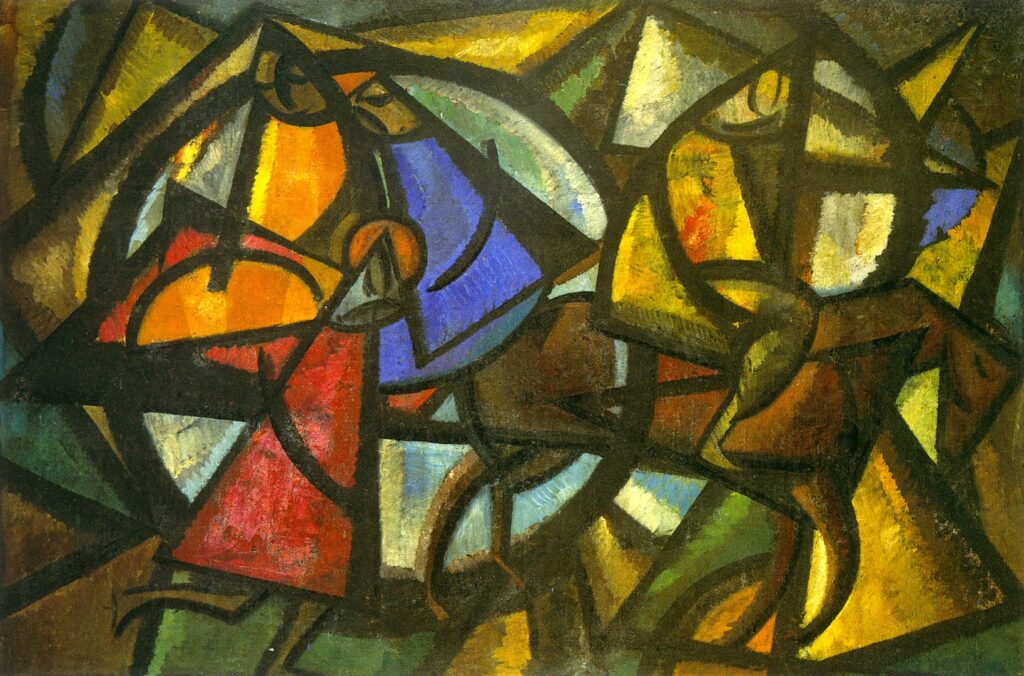
Once a flourishing hub of agriculture, Karakalpakstan has been transformed into one of the most perilous environments on Earth. Rampant health crises, including respiratory diseases, typhoid, tuberculosis, and cancer, plague its population. Birth defects and infant mortality rates are alarmingly high. The root of this devastation lies in the deliberate collapse of the Aral Sea, drained for irrigation, which has triggered toxic dust storms blanketing a 1.5 million square kilometer area. Carrying carcinogens and nitrates, these storms, once rare, now strike ten times per year, spreading sickness and despair. [caption id="attachment_27445" align="aligncenter" width="2560"] The State Museum of Karakalpakstan; image: TCA, Stephen M. Bland[/caption] Amid this harsh and desolate landscape lies a surprising beacon of cultural preservation — the State Art Museum of the Republic of Karakalpakstan, located in its capital, Nukus. Its existence is extraordinary, not least because of how it came to be and how it has endured. Protected by the remoteness of the region, this museum safeguards one of the most remarkable collections of banned avant-garde art, amassed through the daring vision of Igor Savitsky. The Ukrainian-born painter, archaeologist, and art collector defied the Soviet regime, risking being labeled an enemy of the state, to rescue thousands of prohibited works. These pieces, forged by a forgotten generation of artists, now provide an extraordinary glimpse into a turbulent period of history. [caption id="attachment_27446" align="aligncenter" width="972"] Aleksandr Volkov, Chaikhana with a Portrait of Lenin; image: TCA, Stephen M.. Bland[/caption] Among the luminaries memorialized in the museum is Aleksandr Volkov, whose vibrant oil paintings brim with the energy and colors of Central Asian life. Born in Ferghana, his Cubo-Futurist style clashed sharply with Stalin’s Soviet ideals, leading to his ostracism as a bourgeois reactionary. Dismissed from his roles and expelled from Russian galleries, Volkov lived out his final years in isolation, banned from contact with the artistic community. Though he escaped the gulags, he was silenced until his death in 1957 under orders from Moscow. Volkov’s work, a symphony of geometric brilliance, survive today as a testament to his resilience. [caption id="attachment_27447" align="aligncenter" width="500"] Lev Galperin, On His Knees; image: TCA, Stephen M. Bland[/caption] Painted defiance is also seen in Lev Galperin's surviving piece, On His Knees. A unique fusion of Dada and Cubism, it represents his bold challenge to Soviet authority. Galperin, a well-traveled artist from Odessa, returned to the Soviet Union in 1921 only to be ensnared. Arrested on Christmas Day in 1934 for his so-called counter-revolutionary art, his trial marked him as an outspoken critic of the regime. Sentenced to execution, his sole piece saved from oblivion speaks of his courage and the high cost of dissent. [caption id="attachment_27448" align="aligncenter" width="1170"] Nadezhda Borovaya, Sawing Firewood; image: nukus.open-museum.net[/caption] The gallery also hosts haunting sketches by Nadezhda Borovaya, which vividly document life in the Soviet gulags. Borovaya’s tragedy began in 1938 when her husband was executed, after which she was exiled to the Temnikov camp. There, she clandestinely captured the harrowing realities of camp life. Savitsky acquired these pieces by...