In February, participants from a new school in Nukus joined local foresters on the dried bed of the Aral Sea to plant saxaul. The shrubs can take root in salty ground and help hold down dust blowing across Karakalpakstan. Foresters from the Karauzyak State Forestry Department guided the work, drawing on years of experience in the region.
The planting exercise, organized with the United Nations Development Programme, offered an early indication of how the Aral School intends to teach. Its participants work alongside people already responding to the sea’s retreat, learning from the landscape and those who live with its consequences.
Now, the school is preparing for a second intake with a six-month residency in Nukus from January to June 2027. Architect and curator Joseph Grima will lead the program, which will focus on climate and landscape. Applications are open until October 25.
Based in the capital of Uzbekistan’s autonomous republic of Karakalpakstan, the school brings international practitioners together with participants from the region. The Uzbekistan Art and Culture Development Foundation (ACDF), which established it, announced the new intake and Grima’s appointment during an assembly at the Savitsky Museum in Nukus. The museum owes its remarkable collection to Igor Savitsky, who rescued thousands of works rejected by the Soviet authorities, finding them a refuge in remote Nukus.
Gayane Umerova, chair of ACDF, and Grima spoke to The Times of Central Asia about the school’s long-term goals and how local people will help shape its work.
“The Aral School was never conceived as a single cohort or a single event. It’s a long-term commitment by the Uzbekistan Art and Culture Development Foundation (ACDF) in line with the Government’s plan for Karakalpakstan,” she told The Times of Central Asia. “The programme is designed from the ground up to avoid simply taking knowledge without giving anything back. The cohorts live in Nukus for half a year, not for a two-week field trip, precisely so that the landscape and the people in it are teachers, not subjects.”
“Participants would also work directly with local professional bodies and institutions,” Umerova said. “Local experts sit inside the programme’s design, not as guest lecturers brought in to validate conclusions already reached,” she said.
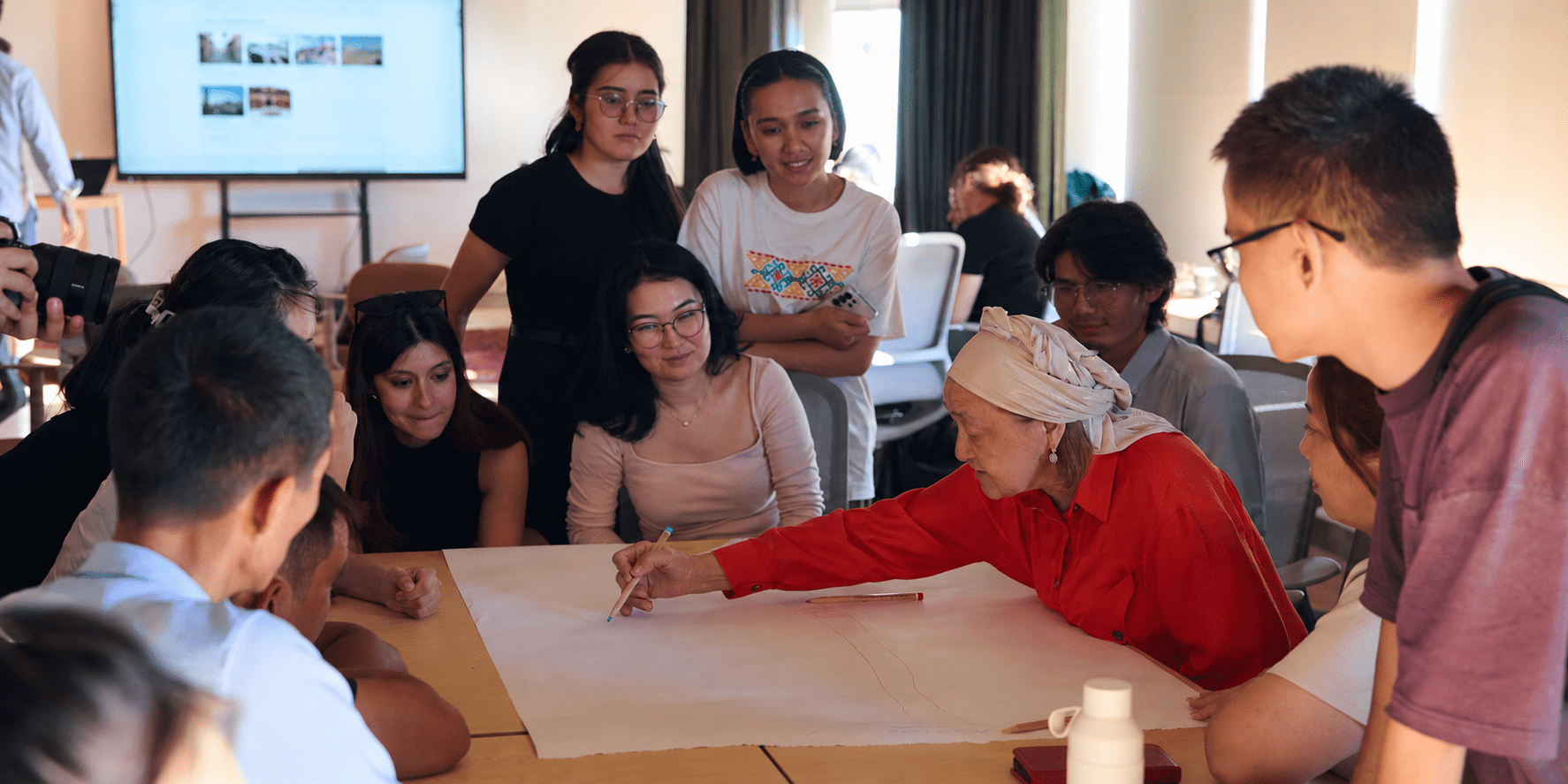
Group discussion with local community members – Aral School Assembly at the Aral School. Photo courtesy of ACDF.
Once the world’s fourth-largest lake, the Aral Sea shrank as Soviet irrigation projects diverted water from the Amu Darya and Syr Darya to grow cotton and other crops. The retreat devastated fishing communities and exposed a seabed contaminated by agricultural chemicals. Wind carried salt and dust across the surrounding land.
In Moynaq, once a fishing port, fishermen dug channels through the sand to reach the retreating water. Eventually, they abandoned their grounded boats, leaving rusting hulls on what had been the seabed.
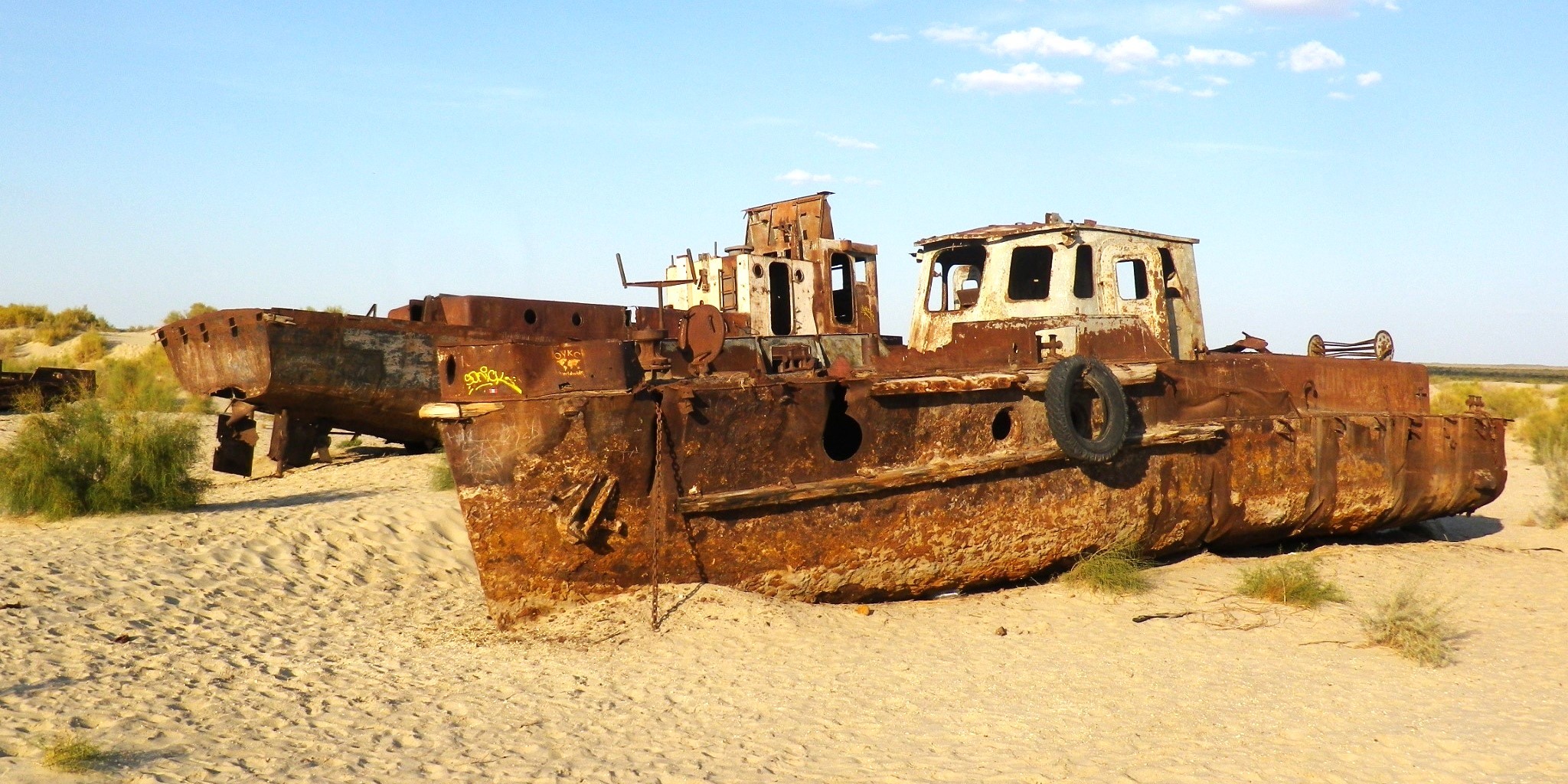
Abandoned boats on the former Aral Sea bed at Moynaq. Photo: Stephen M. Bland
The consequences differ across the former sea. In Kazakhstan, the Kokaral Dam has helped the North Aral recover, raising water levels and supporting the return of fishing. The southern basin remains severely depleted.
For the school, that damaged environment is also a place where people continue to farm and build livelihoods. Its first course concentrated on food and water at a household level. The second will examine the land and river systems that sustain them, including the effects of irrigation and the movement of salt through the landscape.
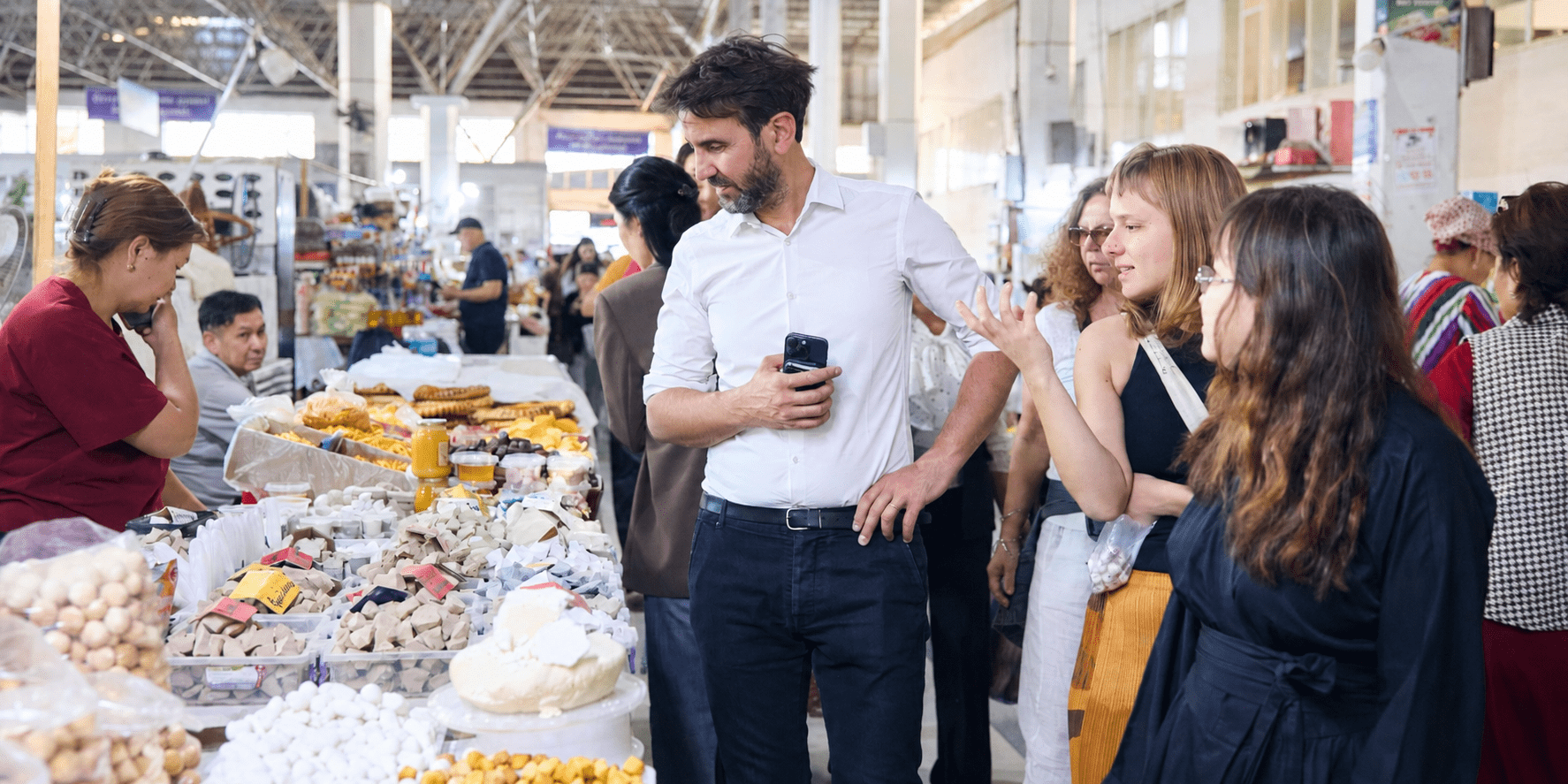
Joseph Grima, Programme Director with Aral School Participants. Photo courtesy of ACDF.
For Gulnaz Abutova, founder of the Clean Water project, those pressures became tangible while picking cotton in Turtkul in 2014. She told The Times of Central Asia in 2025 about the experience. “I even saw people using water from irrigation channels (aryks) for cooking, boiling it and adding it to their food.”
Grima told TCA he had previously thought of design education as a formula that could be applied anywhere, but “Nukus has shifted that perception.”
“It has reframed a question for me: not ‘how do we bring good design here’ but ‘how does the landscape itself teach the discipline something it doesn’t already know.’”
His background includes leading Design Academy Eindhoven and research into architecture that uses fewer finite natural resources. In Nukus, the approach will bring design into contact with environmental research, asking how changes in land use shape everyday life.
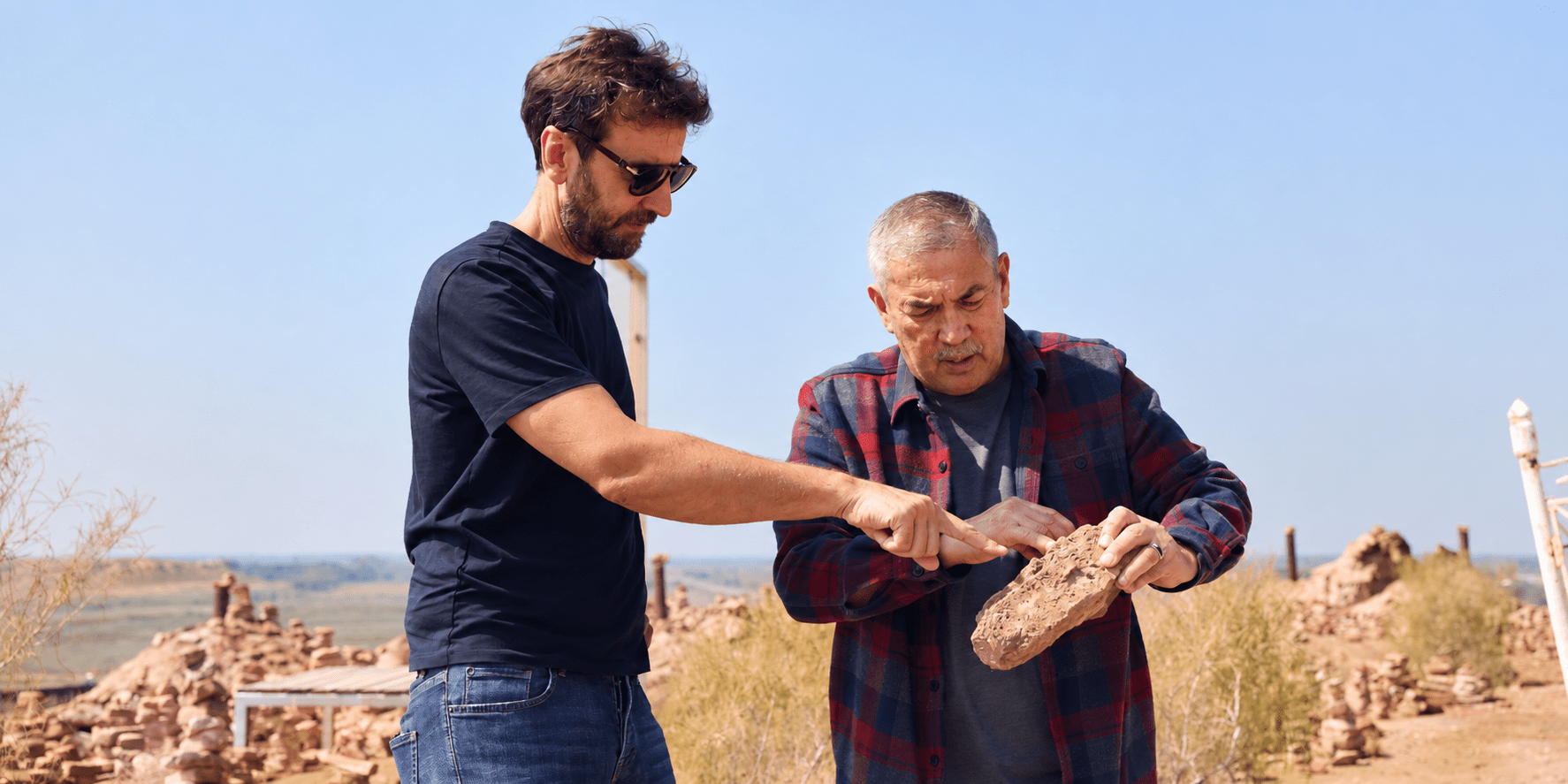
Ahead of the assembly, Grima visited the International Innovation Centre for the Aral Sea Basin and the Amu Darya. He also toured the Academy of Sciences of Karakalpakstan and met specialists from the region.
Umerova outlined how the foundation would judge the school’s progress.
“In practical terms: growth in the number of regional participants in each cohort, deeper integration with local professional bodies, and projects that move from the classroom into implementation, whether that’s in agriculture, water systems, or landscape design,” she said.
“We are hosting the Aral School Assembly this month, which is a deliberate three-day knowledge transfer programme; alumni and mentors pass on the questions they leave behind, so local insight builds and develops across the new cohort instead of resetting,” she told TCA.
“We’re building in publication/presentation and exhibition as explicit next steps and deliverables, so the method and the findings travel beyond the school, and the whole programme community and region itself gets to keep and use them,” Grima said. “The 2027 cohort will deliberately sharpen its focus toward participants from the region itself.”
Recruiting people who already live with the consequences would help keep the work rooted there, he noted.
There is already work to build on. In April, ACDF presented twelve objects developed by the first cohort at Milan Design Week. The collection grew from research into the region’s food and water systems and explored the use of accessible, sustainable materials.
The broader water problems require decisions far beyond the school. A World Bank-backed cooperation project is intended to improve the management of the Amu Darya and Syr Darya basins, with shared data and coordination between countries central to that work. The residency in Nukus operates at a smaller scale, allowing researchers to examine how those pressures affect particular places and households.
“Culture here isn’t just decoration on top of environmental policy. We see it as a way of building relationships between landscape, heritage, and the people who live with the consequences of what happened to this sea,” Umerova said.
The school forms part of a wider series of ACDF initiatives in Karakalpakstan, including the Aral Culture Summit, first held in April 2025.
“We’ll also be watching whether the Aral Culture Summit and the School continue to reinforce and complement each other, research impacting exhibitions, exhibitions feeding the next round of questions,” she said.
Alongside the postgraduate program, ACDF has announced the first Aral Artistic Research Fellowship. The nine-month fellowship has been awarded to Uzbekistan-born artists Zukhra and Fotima Sharipova, whose work examines landscape, material culture, environmental transformation and locally embedded knowledge.
Their research will continue until June 2027, with ACDF providing production and logistical support. The resulting work is expected to be presented at the second Aral Culture Summit in spring 2027.
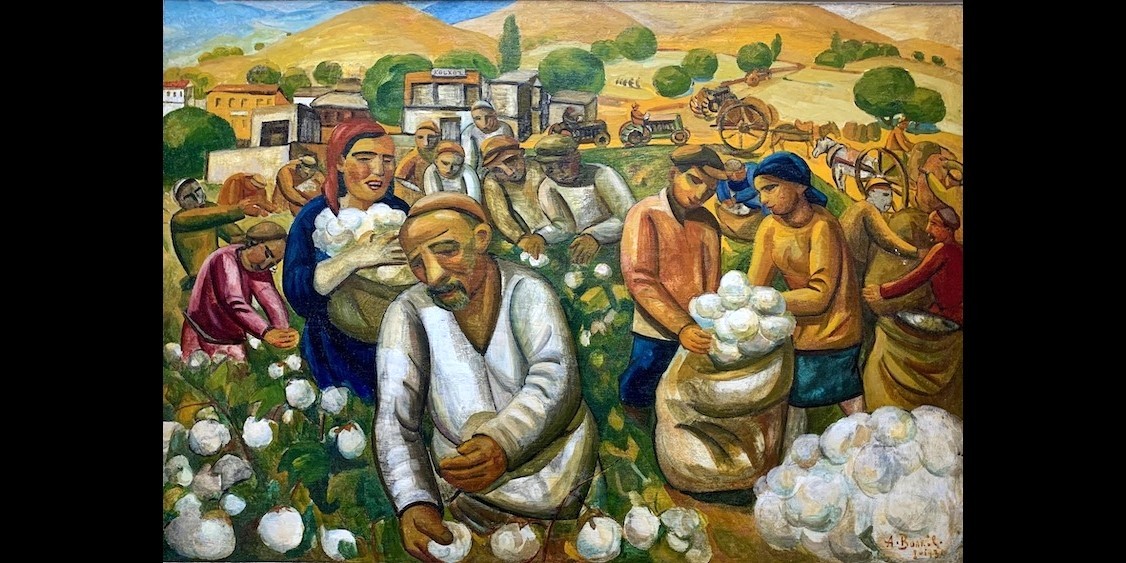
Aleksandr Volkov’s Gathering Cotton (1931), held at the Savitsky Museum in Nukus
Zukhra plans to expose raw cotton canvas to the landscape across two seasons, allowing salt and wind to alter its surface. She will also work with local craftspeople to explore Karakalpak ornament and textile traditions. Cotton gives the project a particular resonance in a region whose water systems were reshaped to support its cultivation.
Fotima will make pigments from local minerals and plants. Her research will build visual and sound archives, incorporating recorded voices into an installation. According to the foundation, both artists begin their fieldwork in Karakalpakstan in September.
The school’s application page says there is no tuition fee. Accommodation and research costs are covered, and participants receive a monthly stipend. The call is aimed at postgraduate practitioners, including people working in design and environmental research. The selected cohort is due to be announced on December 1.
“If we succeed, in a few years’ time the Aral Sea will be spoken about internationally not only for what was lost, but for what is being learned and built here,” Umerova said.