• KGS/USD = 0.01143 0%
  • KZT/USD = 0.00202 0%
  • TJS/USD = 0.10661 -0.19%
  • UZS/USD = 0.00008 0%
  • TMT/USD = 0.28575 0%
  • KGS/USD = 0.01143 0%
  • KZT/USD = 0.00202 0%
  • TJS/USD = 0.10661 -0.19%
  • UZS/USD = 0.00008 0%
  • TMT/USD = 0.28575 0%
  • KGS/USD = 0.01143 0%
  • KZT/USD = 0.00202 0%
  • TJS/USD = 0.10661 -0.19%
  • UZS/USD = 0.00008 0%
  • TMT/USD = 0.28575 0%
  • KGS/USD = 0.01143 0%
  • KZT/USD = 0.00202 0%
  • TJS/USD = 0.10661 -0.19%
  • UZS/USD = 0.00008 0%
  • TMT/USD = 0.28575 0%
  • KGS/USD = 0.01143 0%
  • KZT/USD = 0.00202 0%
  • TJS/USD = 0.10661 -0.19%
  • UZS/USD = 0.00008 0%
  • TMT/USD = 0.28575 0%
  • KGS/USD = 0.01143 0%
  • KZT/USD = 0.00202 0%
  • TJS/USD = 0.10661 -0.19%
  • UZS/USD = 0.00008 0%
  • TMT/USD = 0.28575 0%
  • KGS/USD = 0.01143 0%
  • KZT/USD = 0.00202 0%
  • TJS/USD = 0.10661 -0.19%
  • UZS/USD = 0.00008 0%
  • TMT/USD = 0.28575 0%
  • KGS/USD = 0.01143 0%
  • KZT/USD = 0.00202 0%
  • TJS/USD = 0.10661 -0.19%
  • UZS/USD = 0.00008 0%
  • TMT/USD = 0.28575 0%
08 February 2026

Viewing results 1 - 6 of 17

Bishkek City Hall Tightens School Meal Oversight After Mass Food Poisoning

A mass food poisoning incident at a Bishkek school has prompted city authorities to intensify oversight of school meal programs. Eighty children and four adults were affected after consuming shawarma (flatbread wraps filled with grilled meat) prepared with allegedly poor-quality ingredients, according to the Bishkek City Hall. The Bishkek Center for Hygiene and Epidemiology has launched an inspection of all schools in the capital. Dozens of children sought medical care, reporting symptoms such as nausea, vomiting, abdominal pain, and diarrhea. Twelve individuals were hospitalized, while the remaining victims are receiving outpatient treatment. The school cafeteria involved has been shut down pending an epidemiological investigation. Deputy Mayor of Bishkek Victoria Mozgacheva met with the school's director and underscored the zero-tolerance policy for violations of the approved meal plan and sanitary protocols. “All general education institutions in the capital, regardless of their ownership, have been ordered to strictly follow the approved meal regulations,” the mayor’s office stated. “Any deviation from the menu, which is approved in consultation with medical and epidemiological experts, is strictly prohibited.” Preliminary findings suggest the source of the poisoning may have been improperly handled chicken used in the shawarma served. In response, Bishkek authorities have instructed schools to tighten food quality control measures. The Ministry of Health of Kyrgyzstan has also initiated legislation to ban the sale of unhealthy food products in close proximity to schools.

Uzbekistan Launches $20 Million School Climate Resilience Project with Restituted Funds

Uzbekistan has launched a $20 million initiative to enhance climate resilience and improve water, sanitation, and hygiene (WASH) infrastructure in schools, marking the first major investment of restituted assets recovered from abroad. The project, titled “Modelling Climate Resilience and WASH in Schools,” officially begins on October 1. It is part of a broader commitment made in April by the Ishonch Fund Management Committee, which outlined how recovered assets from Switzerland would be used to fund education and community development initiatives. The commitment was reaffirmed during the Namangan Poverty Reduction Forum in September. Background: The Ishonch Fund The Ishonch Fund was established under a restitution agreement between Uzbekistan and Switzerland, in accordance with the UN Convention Against Corruption (UNCAC). In February, Uzbek Minister of Justice Akbar Tashkulov and Swiss Ambassador Konstantin Obolensky signed an agreement in Tashkent for the return of $182 million in confiscated assets linked to Gulnara Karimova, daughter of former president Islam Karimov. These funds, seized in Switzerland, are being transferred via the UN Uzbekistan Vision 2030 Multi-Partner Trust Fund. Project Scope and Impact The $20 million project targets 45 rural schools across Uzbekistan. Planned upgrades include access to clean water, modern sanitation, improved heating systems, and renewable energy technologies. Officials say these improvements will reduce energy consumption by 30% and cut greenhouse gas emissions by 50%. The initiative will directly benefit more than 31,500 students, particularly adolescent girls, who will have access to gender-sensitive facilities. Additionally, 2,700 teachers and administrators will be trained in climate resilience, WASH practices, and community engagement. International Support and Oversight Obolensky called the initiative a landmark achievement in the restitution process. “Switzerland is proud to see restitution resources being transformed into visible, corruption-resistant investments that directly benefit the Uzbek people,” he said. “With this project, we are ensuring that 31,500 children will learn in healthier, safer, and more dignified environments, a true symbol of restitution serving development.” At the Namangan forum, Obolensky emphasized that the school modernization project reflects Switzerland’s long-term commitment to ensuring that returned assets support public interests. Governance and Accountability Uzbekistan’s Deputy Minister of Economy and Finance, Ilkhom Norkulov, underscored the project’s alignment with the national reform agenda. “By investing in climate-resilient schools and introducing new governance tools, we are building both infrastructure and accountability for generations to come,” he said. UN Resident Coordinator Sabine Machl added, “By combining clean water, modern sanitation, and climate resilience with transparency and community oversight, we are not only investing in schools but also in trust, equity, and the future of every child.” To ensure transparency, the initiative will be tracked via My Better School, a digital platform that allows communities to monitor budgets, contractors, and timelines in real time. A pilot Integrity Pact will also be used to safeguard procurement processes. Officials say this model of restitution-financed development could guide future national school modernization efforts, while helping align Uzbekistan’s education system with international standards for climate adaptation and gender equality.

Heads Roll After Surprise School Visit by Tajikistan’s Education Minister

Several education officials in Tajikistan have been dismissed following an unannounced inspection by Minister of Education and Science Rahim Saidzoda, according to the ministry’s press service. On September 19, the minister conducted surprise visits to schools in the Yavan and Rudaki districts, inspecting teaching quality, student and staff discipline, classroom attendance, foreign language proficiency, and readiness for the autumn-winter season. At School No. 16 in Yavan, only half the students were present, and eighth and ninth-grade classes had been improperly combined. Of 21 available computers, only three were operational. Students were unable to answer basic questions in Russian and English and struggled to define “information technology.” The minister also reported poor discipline, unsanitary conditions, and inadequate winter preparedness. School director Munira Mirzozoda, who had served for over 11 years, was dismissed for what the ministry described as “irresponsible fulfillment of official duties.” At School No. 14 in Rudaki, the director was absent at the time of the visit. Classrooms were in disrepair, the transition to a 10-point grading system was delayed, and foreign language instruction was found lacking. At the kindergarten attached to the same school, the head was also absent, and the teaching staff received criticism for performance issues. On September 22, the ministry announced the dismissal of School No. 14 director Amriddin Rahmonov and kindergarten head Zarragul Faizova. Following the Yavan inspection, the ministry reported that all school computers were repaired, IT usage was improved, attendance increased, and class schedules were brought into compliance with national standards. The unauthorized practice of combining different grade levels was halted. The ministry emphasized that quality education depends on “strict compliance with standards and high responsibility from all employees of the system from management to support staff.” This was not Saidzoda’s first surprise visit. He previously inspected schools in the town of Hisor and kindergartens in Dushanbe, where similar issues were observed, including poor discipline, unsanitary conditions, and low student engagement. Experts continue to highlight long-standing problems in Tajikistan’s education sector, including shortages of qualified teachers, inadequate school infrastructure, and limited access to learning materials. Parents frequently voice concerns over the quality of instruction and are often asked to contribute funds for school maintenance and repairs.

Uzbekistan to Transition to 12-Year School System

Uzbekistan is preparing to transition to a 12-year general education system, Deputy Minister of Preschool and School Education Sardor Radjabov announced in an interview with Uzbekistan-24. The change will incorporate preparatory classes into formal education, extending schooling from the current 11 years to 12. The revised structure will include three stages: One year of school preparation Four years of primary education (grades 1-4) Five years of general secondary education (grades 5-9) Two years of full secondary education (grades 10-11), which may be completed at general schools, academic lyceums, military schools, or technical colleges According to Radjabov, the reform aims to enhance educational quality and eliminate obstacles faced by Uzbek students applying to foreign universities. Currently, graduates are often required to complete a one-year foundation program abroad before qualifying for undergraduate studies. “This means our children lose a year,” he said. “If we implement the 12-year education system, students will no longer need to study foundation courses in several countries and will be able to enter undergraduate programs directly.” He added that aligning Uzbekistan’s education system with international standards would expand opportunities for graduates and narrow the gap between local and global academic systems. The reform builds on earlier changes to Uzbekistan’s school structure. In 2017, President Shavkat Mirziyoyev proposed the reinstatement of an 11-year general education framework, emphasizing its role in improving the connection between schools and colleges. Since then, most schools have operated under the 11-year model.

Knowledge Day in Central Asia: What’s Changing in Schools This Academic Year?

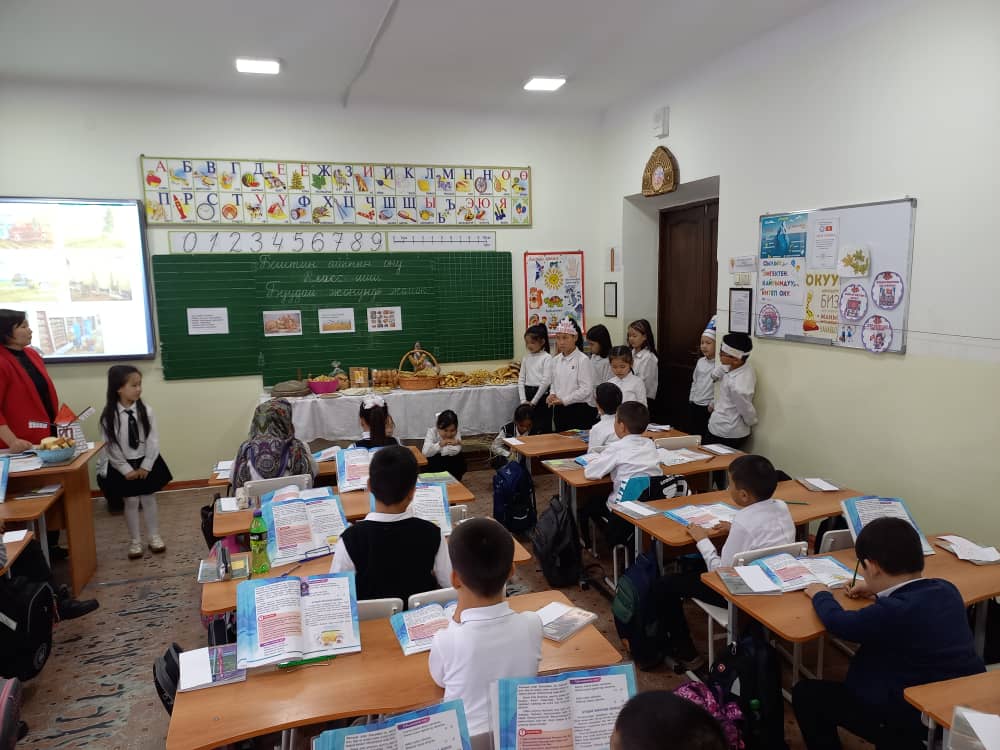
Secondary schools across Central Asia are embracing modern teaching methods and aiming to elevate the status of teachers, as the new academic year begins with a wave of reforms. Kazakhstan: AI in Classrooms and Teacher Protections In Kazakhstan, the academic year begins on September 2, as Constitution Day on the 1st is a national holiday. Over 370,000 first-graders are expected to enter school this year. As previously reported by The Times of Central Asia, significant reforms are underway in the country’s education system. Amendments to the Law “On the Status of Teachers” will shield educators from non-teaching duties and protect them from undue legal responsibility. President Kassym-Jomart Tokayev has emphasized that educators should not be held accountable for incidents involving children that occur outside school or due to parental negligence. New “personal safety” lessons will also be introduced across all educational levels, from kindergartens to colleges. These age-appropriate classes will cover topics ranging from water safety and interaction with strangers to cyberbullying, financial literacy, and legal awareness. Schools and colleges are also rolling out DosbolLIKE, an anti-bullying initiative piloted in 50 schools last year, designed to curb bullying in student communities. Artificial intelligence will be introduced into the curriculum via “Digital Literacy” and “Computer Science” classes. AI-focused online courses called Day of AI are now available for grades 1-11, with training programs also developed for teachers. Despite the construction of 1,200 new schools accommodating over a million students in recent years, the high birth rate continues to strain infrastructure. In Almaty alone, the shortage exceeds 34,000 school places. Uzbekistan: Ivy League Aspirations and Civic Values In Uzbekistan, school also starts on September 2, a customary date. The first lesson will be conducted under the motto: “In the name of the Motherland, in the name of the nation, in the name of the people!” According to the Ministry of Preschool and School Education, 738,000 first-graders will receive gifts from President Shavkat Mirziyoyev. An international school is set to open this September, initially enrolling 60 top-performing graduates of the 8th grade. The curriculum will include leadership and social activism training, with a focus on preparing students for admission to Ivy League universities. A nationwide talent identification and development program is also in development. The weekly Kelazhak Soati (“Hour of the Future”) class will debut this year, aiming to strengthen students’ moral values and encourage reflection on their future roles in society. Kyrgyzstan: Transition to 12-Year Education This academic year marks Kyrgyzstan’s official transition to a 12-year education system. The reform affects lesson structures, curricula, and textbooks. The transition, to be completed by 2028, includes the redistribution of students across grade levels. For example, third graders born in 2015 will skip to fifth grade, and sixth graders born in 2012 will advance to eighth grade. Further shifts are scheduled for the next two academic years. While the extended education model is expected to allow deeper learning and skills development, the transition period may cause confusion among students, parents, and educators. Adapting to new...

Kyrgyz Schools Face Persistent Shortages of Teachers and Textbooks

Kyrgyzstan continues to face serious shortages of qualified teachers and school textbooks, according to Deputy Minister of Education Nadira Jusupbekova, who addressed the issue during a recent press conference in Bishkek. Teacher Deficit in Key Subjects As of the end of the last academic year, schools across the country were short 947 teachers, Jusupbekova reported. The most acute gaps are in mathematics, Russian language, and history, though a shortage of history teachers is a more recent development. “The lack of mathematics teachers is particularly severe, especially in Bishkek,” she said. “Russian language comes next. We currently have teachers from Russia assisting us, and we’ve requested universities to increase training for mathematics and Russian language specialists.” Ongoing Textbook Shortage In addition to staffing challenges, many schools still lack adequate textbook supplies. Last year, the Ministry of Education admitted that general education schools were only 50% stocked with textbooks, forcing many students to rent materials. This year, 744 million KGS (approximately $8.5 million) was allocated from the national budget for textbook production. These funds have been used to publish new English language textbooks for grades 3-9, with a total print run exceeding 1.9 million copies. Among them are 158,700 textbooks for grade 4, printed with support from the British Embassy. Mathematics and science textbooks for grades 1-2 (over 1.2 million copies) have already been printed, with additional sets for grades 5 and 7 scheduled for release soon. Textbooks for Russian language and literature, adapted by a working group in Kyrgyzstan, will be printed in Russia. They are expected to be delivered by October 2025. Digital Platform Offers Interim Relief To address the immediate textbook shortage, the Ministry has launched the Okuu Kitebi online platform, which provides access to all school textbooks in digital format. Future updates will integrate the platform with other educational systems, enabling students and teachers to download and use materials offline. According to Okuu Kitebi Publishing House, the goal is to meet 110% of textbook demand in schools by 2030, with funding to continue coming from the national budget.