• KZT/USD = 0.00216
  • TJS/USD = 0.10800
  • UZS/USD = 0.00008
  • TMT/USD = 0.29760
  • KZT/USD = 0.00216
  • TJS/USD = 0.10800
  • UZS/USD = 0.00008
  • TMT/USD = 0.29760
  • KZT/USD = 0.00216
  • TJS/USD = 0.10800
  • UZS/USD = 0.00008
  • TMT/USD = 0.29760
  • KZT/USD = 0.00216
  • TJS/USD = 0.10800
  • UZS/USD = 0.00008
  • TMT/USD = 0.29760
  • KZT/USD = 0.00216
  • TJS/USD = 0.10800
  • UZS/USD = 0.00008
  • TMT/USD = 0.29760
  • KZT/USD = 0.00216
  • TJS/USD = 0.10800
  • UZS/USD = 0.00008
  • TMT/USD = 0.29760
  • KZT/USD = 0.00216
  • TJS/USD = 0.10800
  • UZS/USD = 0.00008
  • TMT/USD = 0.29760
  • KZT/USD = 0.00216
  • TJS/USD = 0.10800
  • UZS/USD = 0.00008
  • TMT/USD = 0.29760
18 August 2026

Viewing results 1 - 6 of 72

Air Pollution Research Center Opens at Osh State University with Japanese Support

A new Inter-Institutional Research Center for Air Pollution Studies (IRCAPS) has been inaugurated at Osh State University in southern Kyrgyzstan. The center is part of a five-year joint project between Osh State University and the Tokyo University of Science. Funded by the Japan International Cooperation Agency (JICA) and the Japan Science and Technology Agency (JST), the $5 million initiative includes full provision of technical equipment for the facility. The opening ceremony, held on November 18, was attended by Professor Nobutoshi Nawa, a leading scientist from the Tokyo University of Science, and Nishigato Kotaro, JICA’s representative in Kyrgyzstan. Osh State University Rector Kudaiberdi Kojobekov stated that the center's establishment represents a new phase in scientific and educational collaboration between Kyrgyzstan and Japan. The center will focus on studying the health impacts of air pollution. Monitoring equipment will be installed both indoors and outdoors in residential areas to assess air quality in Osh, Bishkek, and other regions. Japanese scientists will collaborate directly with Kyrgyz researchers, and the resulting data will be used to formulate policy recommendations for relevant institutions and stakeholders. The project is being carried out in coordination with the Ministry of Health, the Ministry of Natural Resources, Ecology, and Technical Supervision, the Hydrometeorological Service, the International Higher Medical School, the Osh City Administration, and various international partners. Air pollution remains a critical issue in Kyrgyzstan, particularly in its largest urban centers, Bishkek and Osh. Key sources include the widespread use of coal for heating and vehicle exhaust emissions.
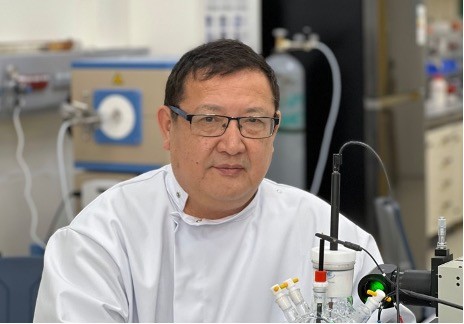

Meet Nurxat Nuraje, One of Kazakhstan’s Most Impressive Scientists

Nurxat Nuraje is a Kazakh scientist who is now well known in the global scientific community. He has spent more than two decades studying and conducting research in the United States. Drawn to science from an early age, he earned his PhD in chemistry from the City University of New York in 2008, successfully launching his research career. His main field of research is nanotechnology and its applications. At a time when nanoscience was still emerging, his bold approach to the subject quickly gained recognition. His first major publication was in the Journal of the American Chemical Society – one of the world’s leading chemistry journals. The paper introduced innovative ideas about nanocircuit fabrication, methods and challenges in their development, computational power, and potential applications. This paper was considered a major contribution to the field at the time. Soon after, he joined the Massachusetts Institute of Technology (MIT), one of the world’s foremost technology universities, as a postdoctoral researcher. There, he succeeded in finding ways to increase computer storage capacity, which is a crucial question for modern computing. His research on the development and application of specific nanoparticles was published in Advanced Materials, once again establishing his name in global science. His work was later awarded a silver medal at the International Materials Research Society conference in San Francisco. “Science doesn’t deliver results overnight. It evolves gradually,” says Nuraje. “The true mission of a scientist is to reshape the world’s thinking through discovery. In the future, we must move from oil to hydrogen energy. That is the energy of tomorrow.” Since 2013, Nuraje has worked as a research scientist at MIT. He is also credited with developing conductive polymer nanoparticles, which are now widely used. Together with his students, he continues to design and create practical, everyday-use technologies. In 2015 he received the Joseph Award for his outstanding contribution to nanotechnology. He became the first Kazakh scientist to win this American honor. Why did MIT invite him to join their team? The answer lies in his PhD dissertation, which was recognized by experts as one of the best in the field. Harvard University, the University of California, and MIT each offered him postdoctoral positions. One of Nuraje's remarkable achievements was the development of anti-fogging materials – the kind used on smartphone screens today. Working with MIT professor Angela Belcher, he co-created a new type of photocatalytic material through genetic engineering of the M13 virus. This groundbreaking work was published in Advanced Materials in 2012 and resulted in five international patents. This is a true testament to the Kazakh proverb: “Knowledge conquers all.” In 2015, he joined Texas Tech University as a professor of chemical engineering, where he established his own research laboratory, The Nurxat Nuraje Lab. There, his team developed solar-powered water-splitting technology to produce hydrogen. His breakthroughs in conductive polymers earned him the American Chemical Society’s Petroleum Research Award in 2016. In the following years, he was named “Most Distinguished Scientist” at Texas Tech University, and in 2018, the...

Ziroat Mirziyoyeva Named Among World’s Top 100 Women in Oncology

Ziroat Mirziyoyeva, the wife of Uzbekistan's President Shavkat Mirziyoyev, has been named one of the 100 most influential women in oncology by the international platform OncoDaily. Mirziyoyeva was recognized for her work as Chair of the Board of Trustees of the Zamin International Public Foundation, where she has supported initiatives focused on early detection and treatment of childhood cancers. Experts cited by OncoDaily highlighted her role in promoting international collaboration in pediatric oncology and advancing global efforts to improve survival rates for children with life-threatening illnesses. According to OncoDaily, Mirziyoyeva has emerged as a leading advocate for expanding access to cancer care for children in low and middle-income countries, where survival rates remain disproportionately low. The platform noted her leadership at a high-level forum at the United Nations General Assembly in September 2025, titled “Global Movement to Improve Survival and Reduce Suffering of Children with Cancer and Other Life-Threatening Diseases.” The event, co-hosted with the World Health Organization and St. Jude Children’s Research Hospital, called for urgent global action to increase survival rates for pediatric cancers. OncoDaily stated that her efforts have helped place Uzbekistan on the global health policy agenda, aligning the country with international goals to raise childhood cancer survival rates to 60 percent by 2030.

First Uzbek Genome Project Reveals High Rate of Hereditary Mutations

Uzbek scientists have completed the country’s first full-scale human genome study, marking a significant milestone in both national science and global genomics. Conducted by researchers at the Center for Advanced Technologies, the study identified dozens of previously undocumented genetic mutations unique to the Uzbek population. The findings have been submitted to international genomic databases and signal Uzbekistan’s growing contribution to global biomedical research. The study revealed that 50% of children examined carried a hereditary mutation, and 86% were carriers of at least one defective gene, roughly double the global average. Experts linked the elevated rate to consanguineous marriages, which occur in up to a quarter of all unions in certain regions. Professor Shakhlo Turdikulova, Director of the Center for Advanced Technologies and head of the “1,000 Genomes of Uzbekistan” project, emphasized the significance of the findings. “For the first time, we have a clear picture of the genetic makeup of our people,” she said. “If most children carry hidden hereditary mutations, we cannot reverse this trend without a system of genetic counseling and preventive screening. That is why implementing premarital genetic testing programs is essential.” Beyond rare inherited conditions, the study found strong correlations between genetic mutations and common diseases such as diabetes, cardiovascular disorders, and cancer. More than half of the participants received precise genetic diagnoses, allowing physicians to tailor treatments more effectively. Roughly one-third of the mutations identified were previously unknown to global science. The “1,000 Genomes of Uzbekistan” project is part of a broader initiative to establish a national biobank and genetic map. Its goals include advancing personalized medicine, supporting pharmaceutical development, and enabling early disease detection. The Center for Advanced Technologies, which co-developed the ZF-UZ-VAC 2001 vaccine during the COVID-19 pandemic, continues to solidify Uzbekistan’s role as a regional leader in biotechnology and genetic science. Researchers believe the project’s results will help shape nationwide preventive healthcare strategies and improve the health outlook for future generations.

Stanford University Names Two Tajik Scientists Among World’s Top Researchers

Professors Mahsud Saimdinov and Farukh Sharopov are the only scientists from Tajikistan included in Stanford University’s prestigious “World’s Top 2% Scientists - 2025” list. The ranking, compiled under the guidance of renowned Stanford epidemiologist Professor John Ioannidis, assesses the scientific productivity and impact of researchers worldwide. Conducted annually since 2019, it analyzes data from more than 100,000 scientists across disciplines using the Scopus (Elsevier) database. In 2025, just two researchers from Tajikistan, Farukh Sharopov and Mahsud Saimdinov, were included in the top 2% of global scientists based on their citation impact and publication record. Researchers in the 98th percentile or above in their field qualify for inclusion. Farukh Sharopov: Pioneer in Pharmaceutical Chemistry Born in 1976, Farukh Safolbekovich Sharopov is among Tajikistan’s leading chemists. A graduate of the Chemistry Department at the Tajik State University (1998), he defended his doctoral dissertation at the V. I. Nikitin Institute of Chemistry of the Academy of Sciences of Tajikistan in 2002. Sharopov has held positions as a senior and leading researcher at the Institute of Chemistry and has taught at the Abu Ali ibn Sina Medical University. Since 2019, he has served as a senior researcher at the China-Tajikistan Innovation Center for Natural Products. In October 2025, he successfully defended a doctoral dissertation titled “Chemical Study of Secondary Metabolites of Essential Oil Plants Using Gas Chromatography and Mass Spectrometry.” According to Scopus data as of October 14, 2025, Sharopov has authored 105 publications, which have been cited 6,881 times. He holds an h-index of 40 and ranks 692nd globally in the pharmaceutical and biomolecular chemistry field. Mahsud Saimdinov: Global Leader in Nanotechnology Mahsud Ismatboevich Saimdinov, born in 1988 in Isfara, is recognized internationally for his contributions to nanotechnology. A graduate and postgraduate of Lomonosov Moscow State University, he completed a postdoctoral fellowship at the King Abdullah University of Science and Technology (KAUST) in Saudi Arabia, served as a visiting researcher at MIT, and taught at the University of Toronto. Currently, he holds a Tier II Canada Research Chair in Advanced Functional Materials and is a faculty member in the Department of Chemistry at the University of Victoria in Canada. According to Scopus, Saimdinov has published 170 scientific papers, which have received 24,886 citations. His h-index stands at 69. In the category of nano and nanotechnologies, he ranks 630th globally, placing him among the field’s top-tier scientists.

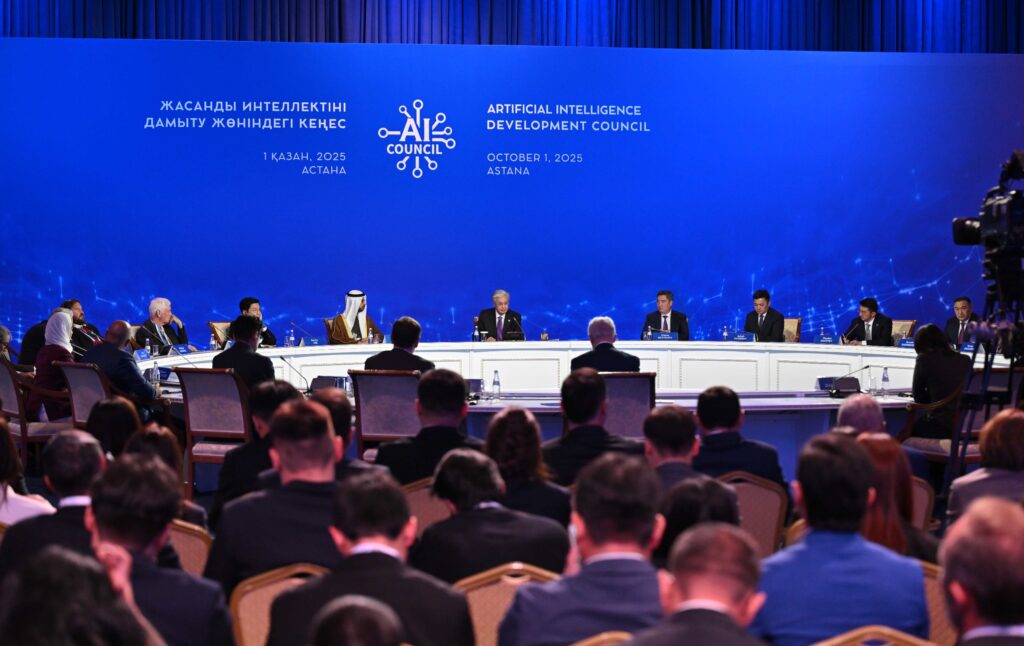
Kazakhstan Plans Artificial Intelligence University for 2025 Launch

Kazakhstan will develop proposals by the end of 2025 to establish a dedicated research university focused on artificial intelligence (AI), President Kassym-Jomart Tokayev announced during the inaugural meeting of the Artificial Intelligence Development Council in Astana. Tokayev said AI is becoming a decisive force in shaping the economy, governance, science, and education, factors that directly affect national competitiveness and sovereignty. He added that Kazakhstan needs a specialized scientific institution to systematically address all aspects of AI application. “This institution should be granted special status, and it is important to attract leading global universities as partners. I instruct the government to prepare concrete proposals by the end of this year,” Tokayev stated. The president noted that the university’s primary mission will be to train highly qualified specialists capable of applying AI technologies across all sectors of the economy. The institution is expected to serve as a hub for science, education, innovation, and international cooperation, giving talented young people the opportunity to receive world-class education within Kazakhstan rather than abroad. Tokayev also urged existing universities to intensify efforts to train a new generation of engineers, researchers, and entrepreneurs skilled in advanced technologies. He highlighted the AI-Sana program, launched earlier this year, through which more than 440,000 students have already received AI certification. According to Tokayev, such platforms can help transform student projects into startups with access to international markets. Currently, more than 63,000 students are enrolled in IT-related disciplines at 79 universities across Kazakhstan. AI has been introduced as a separate subject, and last year local researchers developed KazLLM, a large language model for the Kazakh language. However, Tokayev said a central coordinating body is still needed, citing institutions such as the Mohamed bin Zayed University of Artificial Intelligence in the UAE as examples. The president also pointed to AI’s transformative potential in education, particularly through personalized learning systems that can move beyond the “one-size-fits-all” model. These systems offer tailored programs based on individual students’ strengths and weaknesses and are already being used in countries such as the United States and South Korea. Tokayev said such approaches could help narrow the gap between urban and rural schools, including small rural institutions, and better support students with special educational needs. At the same time, he cautioned against overreliance on AI. “Relying too heavily on neural networks, students may lose skills in critical thinking and independent analysis. AI should enhance the learning process, not replace its fundamentals,” Tokayev said, calling for government safeguards to preserve academic integrity. He also outlined plans to develop digital student profiles that record academic performance, achievements, and aptitudes. These profiles would support personalized education pathways, optimize university curricula, and streamline career planning. Tokayev instructed the government to design a national digital profile system integrated with the future AI university. Tokayev has previously called for the creation of an international regulatory body to oversee the ethical dimensions of AI and establish universal legislation governing its use. Kazakhstan recently launched a Ministry for Artificial Intelligence Development, and several government ministries are...