• KZT/USD = 0.00216
  • TJS/USD = 0.10800
  • UZS/USD = 0.00009
  • TMT/USD = 0.29760
  • KZT/USD = 0.00216
  • TJS/USD = 0.10800
  • UZS/USD = 0.00009
  • TMT/USD = 0.29760
  • KZT/USD = 0.00216
  • TJS/USD = 0.10800
  • UZS/USD = 0.00009
  • TMT/USD = 0.29760
  • KZT/USD = 0.00216
  • TJS/USD = 0.10800
  • UZS/USD = 0.00009
  • TMT/USD = 0.29760
  • KZT/USD = 0.00216
  • TJS/USD = 0.10800
  • UZS/USD = 0.00009
  • TMT/USD = 0.29760
  • KZT/USD = 0.00216
  • TJS/USD = 0.10800
  • UZS/USD = 0.00009
  • TMT/USD = 0.29760
  • KZT/USD = 0.00216
  • TJS/USD = 0.10800
  • UZS/USD = 0.00009
  • TMT/USD = 0.29760
  • KZT/USD = 0.00216
  • TJS/USD = 0.10800
  • UZS/USD = 0.00009
  • TMT/USD = 0.29760
18 August 2026

Viewing results 1 - 6 of 72

New Kazakh-German Nexus Institute to Tackle Central Asia’s Climate Challenges

The Kazakh-German University (DKU), the National Academy of Sciences of Kazakhstan, and the Kazakh National Agrarian Research University (KazNARU), with support from Germany’s Hanns Seidel Foundation, have announced the creation of a new scientific and educational hub, the Kazakh-German Nexus Institute. A New Center for Sustainable Solutions The Nexus Institute will be headquartered at KazNARU in Almaty and aims to integrate the expertise of Kazakhstani and international scientists to address Central Asia’s pressing environmental issues. Its core mission is to develop comprehensive solutions in land and water management, energy, and ecology. Key priorities include: Developing effective policies for sustainable land and water use Introducing digital tools for monitoring natural resources Training professionals to respond to climate-related challenges Promoting practices that prevent land degradation and desertification German Support and Collaboration German institutions, led by the Hanns Seidel Foundation, will offer both technical and financial support. Planned initiatives include joint research projects, strategic planning sessions, and the development of modern educational platforms. The establishment of the Nexus Institute is considered a significant milestone in strengthening Kazakh-German scientific collaboration. It also contributes to building institutional capacity that aligns with the UN Sustainable Development Goals (SDGs), particularly in the areas of environmental sustainability and climate resilience. Forum in Almaty: A Platform for Regional Dialogue The initiative gained further momentum during the international forum “Central Asia’s Sustainable Development Goals in a Changing Global Order,” held in Almaty on September 19. Co-organized by DKU, the National Academy of Sciences of Kazakhstan, and Germany’s University Alliance Ruhr, the event convened stakeholders from academia, government, business, and international organizations. Participants underscored shared priorities, including: Climate resilience and energy transition Scientific integration into public policy Cross-border cooperation Development of sustainable value chains Future areas of collaboration include: Creating roadmaps tailored to the region’s mountainous and glacial ecosystems Expanding academic mobility and research exchange Strengthening technology transfer mechanisms Advancing frameworks for climate risk financing The launch of the Nexus Institute and the Almaty forum signal a new phase in Kazakh-German cooperation, focused on forging actionable strategies for sustainable development and climate adaptation across Central Asia.

Young Uzbek Engineers Set Guinness World Record with 1,946 Robots

Uzbekistan has entered the Guinness World Records after 1,946 young engineers simultaneously assembled mini-robots at a public event in Tashkent. The Ministry of Higher Education, Science and Innovation announced the achievement via its official Telegram channel. The record-setting event took place in Yangi O‘zbekiston Park, where each participant built a robot in unison, surpassing the previous record set in India in 2023, when 1,459 students completed a similar task. Describing the achievement as a “historic milestone,” the ministry said: “Our youth achieved it, Uzbekistan has broken a Guinness World Record! This success once again inscribes our country’s name in the Guinness Book of Records. It demonstrates the scientific-technical potential, creativity, and teamwork of Uzbek youth, opening the door to new achievements in technology and innovation.” The event served as both a technical showcase and a celebration of collaboration, innovation, and national pride. The accomplishment adds to a growing list of Guinness World Records from across Central Asia. In May, acrobats Batyr Zhanuzak and Marlen Maratov from the Almaty Circus earned a record in Milan for the “Fastest time climbing and descending two ladders with a person standing on their hands on the head.”

Climate Study’s Dire Forecast Undermined by Faulty Uzbekistan Data

A widely publicized climate study predicting severe global economic losses from climate change is under scrutiny following the discovery of a critical data error involving Uzbekistan. As reported by The Washington Post on August 7, the error significantly skewed the study’s projections, prompting renewed debate over the reliability of economic modeling in climate science. Published in Nature in 2023, the original study warned that unchecked climate change could reduce global GDP by 19% by 2050 and by an alarming 62% by 2100, nearly three times higher than earlier forecasts. The study attracted substantial media attention and became the second-most-cited climate paper in 2024, according to CarbonBrief. Its projections were used by U.S. government agencies and the World Bank in financial planning. However, a new commentary in Nature, led by Solomon Hsiang, director of Stanford University’s Global Policy Laboratory, revealed that the study’s extreme forecasts were largely driven by distorted GDP data from Uzbekistan. Once researchers excluded Uzbekistan from the model, the projected global GDP losses dropped sharply from 62% to 23% by 2100, and from 19% to 6% by 2050. The flawed dataset suggested that Uzbekistan’s GDP plummeted by nearly 90% in 2000, then rebounded by over 90% in certain regions by 2010, figures inconsistent with historical records. According to the World Bank, Uzbekistan’s actual annual growth between 1980 and 2020 ranged between -0.2% and +7.7%. “These extreme swings warped the study’s model, creating the illusion that global GDP was far more sensitive to climate than it really is,” Hsiang told The Washington Post. The original study’s authors, based at Germany’s Potsdam Institute for Climate Impact Research, acknowledged the error but stood by their conclusions. After revising the Uzbekistan data and adjusting the model, they reduced their 2050 forecast from a 19% to a 17% GDP loss. “We’re grateful for the scrutiny,” said co-author Leonie Wenz of the Technical University of Berlin. “But the main conclusions still hold.” Still, critics argue that retroactive methodological adjustments raise concerns about scientific integrity. “Science doesn’t work by adjusting experiments to get the answer you want,” Hsiang cautioned. The incident highlights both the power and the fragility of large-scale climate modeling and the importance of validating every data point, regardless of a country's size.

Kazakh Scientists Unveil Facility Capable of Preserving Agricultural Products for 50 Years

Researchers at Al-Farabi Kazakh National University have developed a mobile unit capable of processing and storing agricultural products for up to 50 years. The unit, named “Dayar 20,” utilizes freeze-drying technology and is designed to be transported directly to fields and orchards, an essential advantage for remote agricultural operations. Takeaway Food with a Half-Century Shelf Life The underlying technology is lyophilization, which involves removing water from frozen products by evaporation under low pressure. The process allows food to retain its taste, color, aroma, shape, and nutritional content. “Products dried using the Dayar 20 unit remain usable for a long time, retaining their taste, color, smell, shape, and vitamins,” said project manager Yerbol Ikhsanov, PhD in chemistry. The unit can process a variety of goods, including fruits, vegetables, meat, dairy products, and ready-to-eat meals. Shelf life ranges from three years at room temperature to 10 to 50 years when vacuum-sealed. The innovation is expected to improve the sustainability of Kazakhstan’s agricultural sector and enhance its export potential. Breakthrough in Hydrogen Production This is not the only recent scientific achievement in Kazakhstan. Researchers at the Institute of Combustion Problems have developed a reactor that decomposes hydrocarbon gases into hydrogen and carbon using low-temperature plasma, without the need for catalysts and with minimal energy input. Inside the plasma reactor, gases are heated to temperatures between 1,800 and 2,700°C, triggering pyrolysis. The result is hydrogen with a purity of up to 98.9% and technical carbon. Notably, scientists also identified giant carbon nanotubes, up to 100 nanometers in diameter, within the by-product. These nanotubes are considered a promising material for super-strong fibers and composites, far exceeding typical size expectations under normal conditions. The method offers nearly 100% efficiency in hydrocarbon recycling and significantly accelerates hydrogen production. Kazakh Anti-Cancer Drug Shows Early Promise In another separate development, Kazakh scientists have made progress on an anti-cancer drug that has yielded promising results in early clinical trials. Dos Sarbasov, Vice President of the National Academy of Sciences, reported that tumor growth had ceased in six patients and shrunk by 30% in one case. “After the first dose of the drug, the condition of fifteen cancer patients stabilized, and in six of them, the tumor stopped growing,” Sarbasov said. The drug targets cells that actively absorb glucose and has shown no signs of toxicity. Clinical testing began two years ago and has already passed two phases. The trials, conducted at the Kazakh Institute of Oncology and Radiology, are expected to conclude within the next two to three years. The drug has received international patent protection.

Kazakhstan Invests in Science, But Economic Impact Remains Low

Over the past five years, Kazakhstan has nearly tripled its research and development (R&D) spending, reaching $430 million in 2024. Despite this, science's contribution to the national economy remains minimal, just 0.16% of GDP. This figure is among the lowest for countries striving toward technological advancement, according to analysts at Ranking.kz. Almaty: Kazakhstan’s Scientific Hub Nearly half of last year’s R&D spending was concentrated in Almaty, which accounted for 43.1% of total investment, equivalent to $186 million. Astana followed with 20.4% ($88 million), while other regions lagged significantly. In the Ulytau region, for instance, only $67,000 was allocated to scientific endeavors. Almaty retains its status as the country’s scientific capital thanks to its concentration of research institutions. Of the 423 organizations engaged in R&D nationwide, 142 are based in the city. Almaty hosts major institutions such as the National Academy of Sciences, the Fesenkov Astrophysical Institute, the Institute of Seismology, and the Kazakh Institute of Oncology. Human Capital and Scientist Salaries Kazakhstan’s researchers are the backbone of its scientific sector. In 2024, spending on salaries for scientific personnel rose to $226 million, marking a 32.1% increase. Almaty employed 10,600 of the country’s 27,100 researchers, representing 39.2% of the national total. This figure has grown by 20% over the past five years. A key metric of scientific engagement is the number of researchers per 10,000 employed persons. In OECD countries, this figure ranges from 40 to 238. In Kazakhstan, it stands at just 23.7. Almaty leads domestically with 83.2 researchers per 10,000 employed, underscoring its pivotal role. State Dependency and Business Apathy One of the major challenges facing Kazakh science is its overwhelming dependence on public funding. More than 77% of research financing in Kazakhstan comes from the state; in Almaty, this figure is 87.5%. In contrast, government contributions in developed countries average around 40%. This imbalance limits commercialization potential, dampens private sector interest, and constrains technological progress. As noted in a national report on science, “knowledge and innovation in Kazakhstan are separated from the economy. The state’s task is to ensure that R&D results are incorporated into the real sector, to create demand for research, and to stimulate private investment in science”. Alatau: A New Frontier for Scientific Growth One proposed solution lies in the development of Alatau, a newly emerging scientific and innovation hub. Plans are underway to build a "science city" equipped with facilities for start-ups, technology parks, and manufacturing based on R&D. The area will form part of a special economic zone offering tax incentives and large-scale investment opportunities. Combining Almaty's intellectual capital with Alatau’s potential could catalyze the development of a knowledge-based economy and position Kazakhstan competitively in the global technology race.

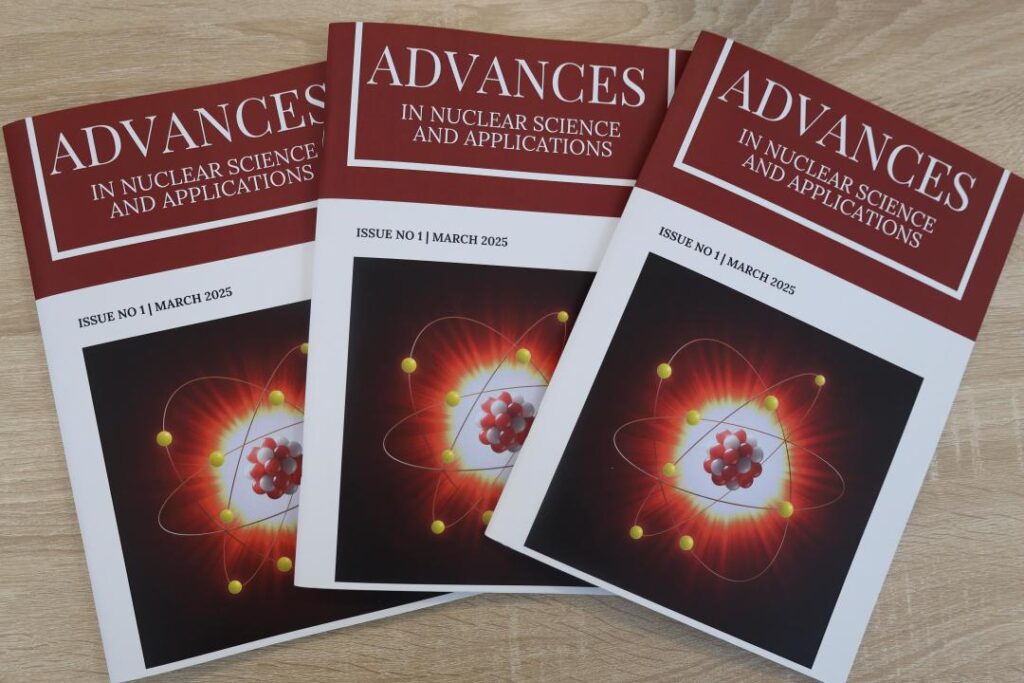
Kazakhstan’s Institute of Nuclear Physics Launches Advances in Nuclear Science and Applications Journal

Kazakhstan’s Institute of Nuclear Physics has officially launched a new international scientific journal, Advances in Nuclear Science and Applications. The presentation of the first issue took place at the Institute’s headquarters and marks a significant step in the country's efforts to promote nuclear research and academic exchange on a global scale. According to the Ministry of Science and Higher Education, the journal is designed as a high-level international platform that integrates both fundamental and applied research in nuclear science and technology. It aims to foster open knowledge exchange and collaboration across borders. The inaugural issue, published in March 2025, features six peer-reviewed articles covering current topics in nuclear science. The journal will be published quarterly in English, in March, June, September, and December, and will follow international academic publishing standards. All submitted articles undergo a rigorous double-blind peer review process, and the journal is fully open access via its official website. The publication is also seeking inclusion in major global scientific databases such as Scopus and Web of Science. The editorial board consists of more than ten recognized experts from eight countries: Russia, Italy, Japan, the United States, Turkey, Poland, Romania, and Kazakhstan, reflecting the journal’s international scope and ambitions. Sayabek Sakhiev, Director General of the Institute of Nuclear Physics, emphasized the significance of the launch: “We have been working towards creating the journal for more than a year. This is the result of serious and purposeful work. Today we have big plans and high expectations. We strictly follow international standards and are confident that Advances in Nuclear Science and Applications will take its rightful place in world science.” The journal’s Editor-in-Chief, Prof. Mikhail Itkis, has also extended an invitation to early-career scientists, encouraging young researchers to submit their work for publication in upcoming issues.