• KZT/USD = 0.00221
  • TJS/USD = 0.10860
  • UZS/USD = 0.00008
  • TMT/USD = 0.29760
  • KZT/USD = 0.00221
  • TJS/USD = 0.10860
  • UZS/USD = 0.00008
  • TMT/USD = 0.29760
  • KZT/USD = 0.00221
  • TJS/USD = 0.10860
  • UZS/USD = 0.00008
  • TMT/USD = 0.29760
  • KZT/USD = 0.00221
  • TJS/USD = 0.10860
  • UZS/USD = 0.00008
  • TMT/USD = 0.29760
  • KZT/USD = 0.00221
  • TJS/USD = 0.10860
  • UZS/USD = 0.00008
  • TMT/USD = 0.29760
  • KZT/USD = 0.00221
  • TJS/USD = 0.10860
  • UZS/USD = 0.00008
  • TMT/USD = 0.29760
  • KZT/USD = 0.00221
  • TJS/USD = 0.10860
  • UZS/USD = 0.00008
  • TMT/USD = 0.29760
  • KZT/USD = 0.00221
  • TJS/USD = 0.10860
  • UZS/USD = 0.00008
  • TMT/USD = 0.29760
26 October 2026

Viewing results 1 - 6 of 2

SCO Economic Ambitions Outpace Agreement

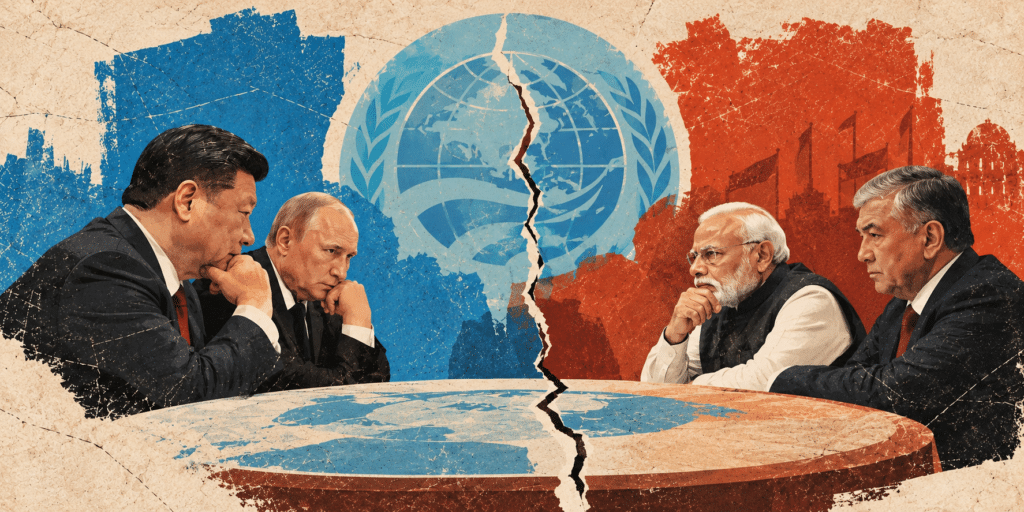
The Shanghai Cooperation Organization (SCO) renewed calls for a development bank at its October 20 heads of government meeting in Dushanbe, but the institution remains under negotiation more than a year after members reached political agreement on its creation. Participants adopted a joint communiqué and decisions on economic cooperation, including joint manufacturing and transportation. Financing those ambitions remains a central challenge. Members backed the bank at their September 2025 summit in Tianjin. A year later, the Bishkek summit ended without a founding agreement or capital commitments, and no launch date was set. The SCO brings together ten countries whose economic priorities differ sharply. China and India are among the world's largest economies, while Russia and Iran face Western sanctions. For Central Asian members, the organization offers another route to investment, but agreement on shared goals has yet to produce a common financing institution. Different Priorities Tajik Prime Minister Kohir Rasulzoda reported that SCO countries accounted for 70% of Tajikistan's foreign trade turnover in January–August 2026. Meanwhile, foreign direct investment from member states amounted to just $350 million for the whole of 2025. "These figures demonstrate the enormous untapped potential of our investment cooperation, which significantly lags behind the dynamics of trade relations," Rasulzoda said. Iran has different concerns. First Vice President Mohammad Reza Aref called for wider use of national currencies in trade, alongside export insurance and investment protection. Tehran has long sought to reduce its foreign trade dependence on Western financial infrastructure. Sanctions make this an urgent priority, but Iran's interests in international settlements differ considerably from those of India or China, for example. Beijing and New Delhi conduct extensive trade with Western countries, so a single financial model for all SCO members is unlikely to satisfy everyone. Russian Prime Minister Mikhail Mishustin encouraged joint manufacturing projects using Russia's special economic zones and investment protection agreements. Kyrgyzstan, meanwhile, is seeking investors for the Tamchy special investment and financial territory, established in July 2025 in the Issyk-Kul region. First Deputy Chairman of the Cabinet of Ministers Daniyar Amangeldiev invited SCO partners to develop joint projects there. Financing the Bank A development bank could provide a common source of funding for such projects. In Dushanbe, Belarusian Prime Minister Alexander Turchin renewed calls to accelerate its establishment. "We consider it fundamentally important that this institution become a multilateral development bank with a unique mandate, providing access to long-term investment financing without political conditions," he said. Kyrgyzstan also supported establishing the bank. Amangeldiev urged members to draw on existing financing channels, including the SCO Interbank Consortium, while negotiations continue. Kazakh Prime Minister Olzhas Bektenov confirmed Astana's willingness to host the bank's headquarters. Bishkek had already put forward its candidacy at the September summit. Choosing a headquarters is only part of the task. Members must agree on their financial contributions and how the bank will operate, including who decides which projects receive loans. China has far greater financial resources than most of its SCO partners, giving it the potential to become the bank's principal...

SCO Summit Delivers Institutional Reform but Leaves Development Bank Unsettled

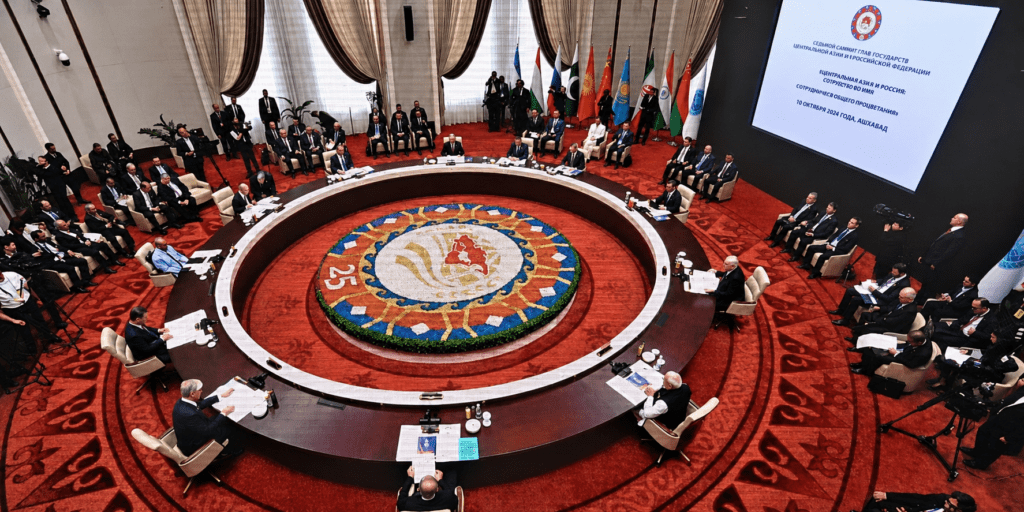
Leaders of the Shanghai Cooperation Organization adopted amendments to the bloc's Charter and approved regulations for two security bodies in Bishkek on September 1, but stopped short of launching the proposed SCO Development Bank. The official outcome list contains 28 documents. They include the Bishkek Declaration marking the SCO's 25th anniversary, a statement on assistance to countries affected by emergencies, and measures covering transport, digital policy, energy, and climate cooperation. For Kyrgyzstan, which used its fourth chairmanship to press for new financial and emergency response mechanisms, the results were mixed. The emergency statement gave political backing to a Kyrgyz initiative, while the bank remained under negotiation. Kazakhstan then made a competing offer to host its headquarters. An institutional package The member states signed a protocol amending the 2002 SCO Charter and approved regulations for the Universal Center for Countering Security Challenges and Threats. They also approved rules for the executive committee of the SCO Anti-Drug Center. The package included programs against drug addiction and synthetic narcotics through 2030, as well as amendments to the 2010 agreement on cooperation against crime. The decisions continue an institutional reorganization begun at the 2025 Tianjin summit. That meeting approved agreements establishing the Anti-Drug Center in Dushanbe and a Universal Center based on the SCO's existing regional counterterrorism structure in Tashkent. President Sadyr Japarov said the organization should remain free of bloc politics and confrontation. He called for the rapid launch of the Universal Center and said Bishkek had prepared the conditions for an SCO center against transnational organized crime. Opening the meeting, he said the anniversary should become the start of a new phase for the organization. Bank progress, but no launch The Bishkek Declaration records progress toward creating an SCO Development Bank among interested member states during Kyrgyzstan's chairmanship, though the wording is qualified. The summit did not produce a founding agreement, capital commitment, or a launch date. Japarov urged members to reach a practical decision on the bank and invited them to use Kyrgyzstan's Tamchy Special Financial Investment Territory for joint projects. Kyrgyzstan had already proposed Bishkek as the bank's headquarters. However, Kazakh President Kassym-Jomart Tokayev used his summit address to make a rival offer. Kazakhstan supports directing the proposed bank's resources toward infrastructure, technology, and industry, he said. "If there is consensus among the member states, Kazakhstan could host this institution, its headquarters," Tokayev said in the official transcript. The two bids underline how much remains unresolved. Members reached political consensus to establish the bank in Tianjin last year, but its membership, governance, capital, and location are still being negotiated. Kyrgyz emergency initiative advances The heads of state adopted a separate statement on assistance to countries affected by emergencies. Kyrgyzstan had spent its chairmanship promoting an SCO assistance mechanism and, in May, sought support for a special account to finance emergency aid after major natural disasters. The statement's adoption is a clear political success for Bishkek. Its published title does not establish whether members accepted the proposed special account or how...