
• KZT/USD = 0.00223
  • TJS/USD = 0.10830
  • UZS/USD = 0.00009
  • TMT/USD = 0.29850
  • KZT/USD = 0.00223
  • TJS/USD = 0.10830
  • UZS/USD = 0.00009
  • TMT/USD = 0.29850
  • KZT/USD = 0.00223
  • TJS/USD = 0.10830
  • UZS/USD = 0.00009
  • TMT/USD = 0.29850
  • KZT/USD = 0.00223
  • TJS/USD = 0.10830
  • UZS/USD = 0.00009
  • TMT/USD = 0.29850
  • KZT/USD = 0.00223
  • TJS/USD = 0.10830
  • UZS/USD = 0.00009
  • TMT/USD = 0.29850
  • KZT/USD = 0.00223
  • TJS/USD = 0.10830
  • UZS/USD = 0.00009
  • TMT/USD = 0.29850
  • KZT/USD = 0.00223
  • TJS/USD = 0.10830
  • UZS/USD = 0.00009
  • TMT/USD = 0.29850
  • KZT/USD = 0.00223
  • TJS/USD = 0.10830
  • UZS/USD = 0.00009
  • TMT/USD = 0.29850
04 October 2026

Viewing results 1 - 6 of 2

Why Central Asian Governments Are Regulating Religious Life

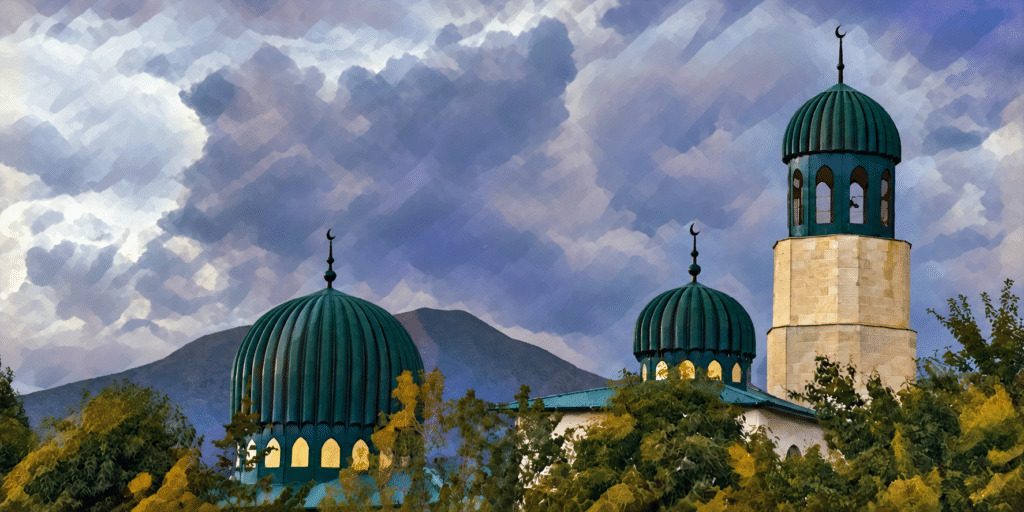
Kyrgyzstan is requiring bloggers and other social media users who publicly preach religion online to obtain a special certificate. The website of the National Agency for Religious Affairs and Interethnic Relations includes an application form for registration as a “religious preacher.” Nurgazy Kyrgyzbaev, a chief specialist at the agency, announced the measure on local radio. He said the requirement stems from the country’s new religion law, which introduced the legal category of “religious preacher.” “People who want to publicly call others to religion must obtain a special certificate. Their religious education will be considered first and foremost. Recently, people have appeared online who call themselves bloggers and create religious content,” Kyrgyzbaev said, adding that their religious qualifications had previously gone unchecked. This, he argued, created a risk of inaccurate or misleading religious information being spread. Under the new system, applicants must have higher or secondary religious education and obtain the consent of the relevant central religious authority before registering with the agency. For Muslim applicants, this means approval from the Spiritual Administration of Muslims of Kyrgyzstan, or Muftiate. Kyrgyzbaev said Muftiate employees engaged in preaching are automatically treated as religious preachers. Kyrgyzstan has traditionally allowed greater religious diversity than most of its Central Asian neighbors, including a wider range of Islamic movements. It remains the only country in the region where Tablighi Jamaat and the Nurcular movement can operate legally. Tablighi Jamaat, for example, is banned as extremist in Kazakhstan, Tajikistan, and Uzbekistan. Religious Freedom Concerns Across the Region Central Asia has long attracted criticism from international religious-freedom monitors. In its 2026 annual report, the U.S. Commission on International Religious Freedom (USCIRF) recommended that the U.S. State Department place Kazakhstan, Kyrgyzstan, and Uzbekistan on its Special Watch List for severe violations of religious freedom. It recommended that Tajikistan and Turkmenistan be designated Countries of Particular Concern, a higher category reserved under U.S. law for governments accused of particularly severe violations. According to USCIRF, Tajik authorities continued to use the country’s law on traditions and ceremonies to regulate religious life, including through fines and public campaigns. After amendments adopted in 2024 prohibited the import, sale, promotion, and wearing of clothing deemed “alien to national culture,” authorities also campaigned against what they described as foreign styles of dress. USCIRF and other religious-freedom monitors have reported even tighter state control in Turkmenistan, where religious activity outside officially approved structures remains heavily restricted. Reports have described pressure on religious leaders to provide information to the authorities about believers practicing outside state-sanctioned forms of Islam. USCIRF has argued that Tajikistan and Turkmenistan, like other Central Asian states, apply extremism laws to religious practices that involve neither violence nor incitement. Religion Moves Online in Kazakhstan In Kazakhstan, as in Kyrgyzstan, mosques are no longer necessarily the primary source of religious knowledge for younger people. At independence in 1991, Kazakhstan had only 68 mosques. The Spiritual Administration of Muslims of Kazakhstan reported 2,945 functioning mosques at the beginning of 2026. The expansion reflects the extraordinary revival of...

Kazakhstan Hijab Debate Exposes Divide Over Secularism

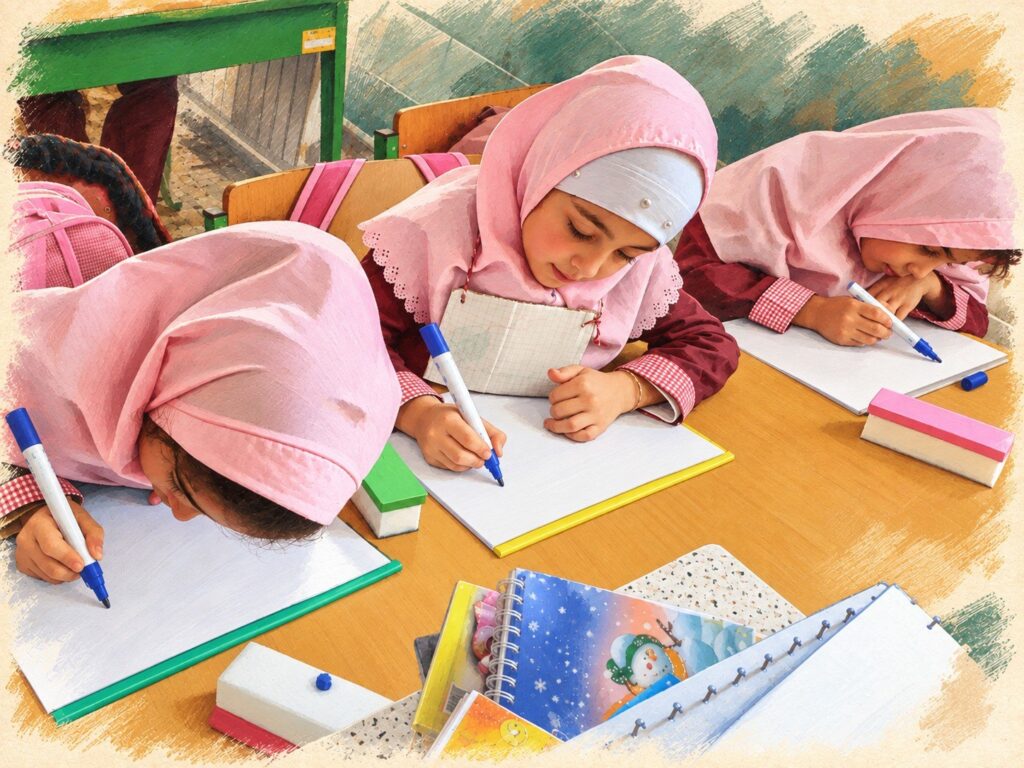
Kazakhstan’s long-running controversy over hijabs in schools has collided with a wider public argument about religion, exposing sharp differences among prominent public figures and institutions over the boundaries of the country’s secular model. The latest religious controversy in Kazakhstan’s social media space was triggered by two statements made within the span of a week. On September 3, well-known Kazakhstani film and entertainment producer and former television host Bayan Alaguzova wrote on Threads that she was “tired of religion and its propaganda.” “I’ll say this right away,” she added. “There’s no need to frighten me with hell – it doesn’t exist for me. Not a single person in the world can claim to have seen hell, or heaven for that matter. Now that is reliable information! The same goes for the 72 virgins thrown into the bargain.” She went on to sarcastically ask how a disembodied spirit was supposed to deprive the heavenly maidens of their virginity. The deliberately provocative tone used by the prominent film and entertainment figure stirred debate among social media users. Soon afterward, another Threads user posted a screenshot of an official complaint submitted through Kazakhstan’s eOtinish system against the producer, calling for Alaguzova’s posts to be examined for possible incitement of religious discord. There have so far been no official reports of further action on the complaint. Even so, Kazakhstanis on social media began joking about how the complainant intended to prove the existence of heaven and hell. Journalists and other users also spoke out in support of Alaguzova. On September 8, in response to the backlash, Alaguzova acknowledged on Instagram that her “words had hurt believers” and offered her “sincere apologies,” explaining that she respected “every person and every faith, as long as it does not harm others.” She then said her remarks had been misunderstood. “All those accusing me of ‘offending the feelings of believers,’ read carefully: I said that I am against the imposition of dogmas alien to our people, against radical and fanatical propaganda, not religion itself... Do you want girls to be married off at the age of nine? To be denied education or medical care? To be beaten supposedly ‘as a preventive measure against the influence of shaitan’? To be taken as wives without anyone assuming responsibility for them? To be easily abandoned simply by loudly saying ‘talaq’ three times? Do you want your daughter or sister not to be an individual in her own right, but simply an appendage to someone else? To be unable to appear in public or speak without permission? To be unable even to protect herself and her children? I am categorically against this!” the producer said. That same day, journalists at a government briefing asked Kazakhstan’s Education Minister Zhuldyz Suleimenova about reports that some private schools had allowed pupils to wear hijabs. Each new school year in Kazakhstan has brought renewed disputes over hijabs in schools. Some Muslim parents, particularly in western Kazakhstan, require their teenage daughters to wear hijabs to school. This conflicts...