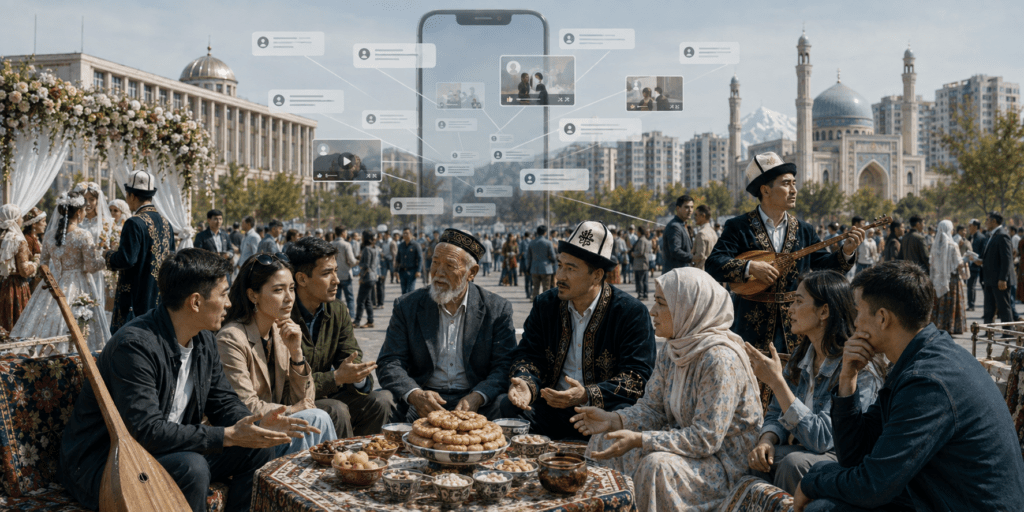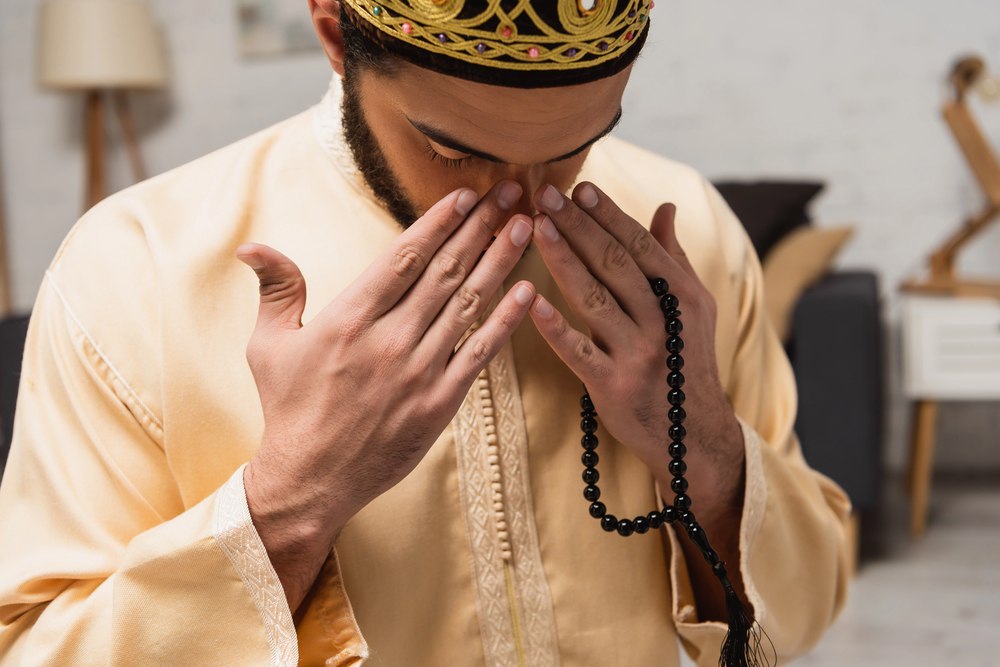
Kyrgyzstan is requiring bloggers and other social media users who publicly preach religion online to obtain a special certificate.
The website of the National Agency for Religious Affairs and Interethnic Relations includes an application form for registration as a “religious preacher.”
Nurgazy Kyrgyzbaev, a chief specialist at the agency, announced the measure on local radio. He said the requirement stems from the country’s new religion law, which introduced the legal category of “religious preacher.”
“People who want to publicly call others to religion must obtain a special certificate. Their religious education will be considered first and foremost. Recently, people have appeared online who call themselves bloggers and create religious content,” Kyrgyzbaev said, adding that their religious qualifications had previously gone unchecked. This, he argued, created a risk of inaccurate or misleading religious information being spread.
Under the new system, applicants must have higher or secondary religious education and obtain the consent of the relevant central religious authority before registering with the agency. For Muslim applicants, this means approval from the Spiritual Administration of Muslims of Kyrgyzstan, or Muftiate. Kyrgyzbaev said Muftiate employees engaged in preaching are automatically treated as religious preachers.
Kyrgyzstan has traditionally allowed greater religious diversity than most of its Central Asian neighbors, including a wider range of Islamic movements. It remains the only country in the region where Tablighi Jamaat and the Nurcular movement can operate legally. Tablighi Jamaat, for example, is banned as extremist in Kazakhstan, Tajikistan, and Uzbekistan.
Religious Freedom Concerns Across the Region
Central Asia has long attracted criticism from international religious-freedom monitors. In its 2026 annual report, the U.S. Commission on International Religious Freedom (USCIRF) recommended that the U.S. State Department place Kazakhstan, Kyrgyzstan, and Uzbekistan on its Special Watch List for severe violations of religious freedom. It recommended that Tajikistan and Turkmenistan be designated Countries of Particular Concern, a higher category reserved under U.S. law for governments accused of particularly severe violations.
According to USCIRF, Tajik authorities continued to use the country’s law on traditions and ceremonies to regulate religious life, including through fines and public campaigns. After amendments adopted in 2024 prohibited the import, sale, promotion, and wearing of clothing deemed “alien to national culture,” authorities also campaigned against what they described as foreign styles of dress.
USCIRF and other religious-freedom monitors have reported even tighter state control in Turkmenistan, where religious activity outside officially approved structures remains heavily restricted. Reports have described pressure on religious leaders to provide information to the authorities about believers practicing outside state-sanctioned forms of Islam.
USCIRF has argued that Tajikistan and Turkmenistan, like other Central Asian states, apply extremism laws to religious practices that involve neither violence nor incitement.
Religion Moves Online in Kazakhstan
In Kazakhstan, as in Kyrgyzstan, mosques are no longer necessarily the primary source of religious knowledge for younger people.
At independence in 1991, Kazakhstan had only 68 mosques. The Spiritual Administration of Muslims of Kazakhstan reported 2,945 functioning mosques at the beginning of 2026. The expansion reflects the extraordinary revival of religious infrastructure after decades of Soviet atheism.
“According to one Kazakh study, 34.7% of respondents named internet propaganda as one of the main factors leading young people toward religion. YouTube, TikTok, Instagram, and Telegram have created a transnational space where a Kazakh imam competes for the audience’s attention with Turkish theologians, Russian-speaking preachers, graduates of Arab universities, and anonymous religious channels,” political scientist Islam Kurayev wrote.
The study found that more respondents obtained religious information online than from places of worship.
The growing public visibility of religious practice has periodically created tensions in Kazakhstan’s largest cities. In Almaty, for example, police responded after worshippers near the Central Mosque prayed on the roadway in December 2024, warning that blocking streets violates traffic rules. Police said they would step up preventive and public-awareness work following the incident.
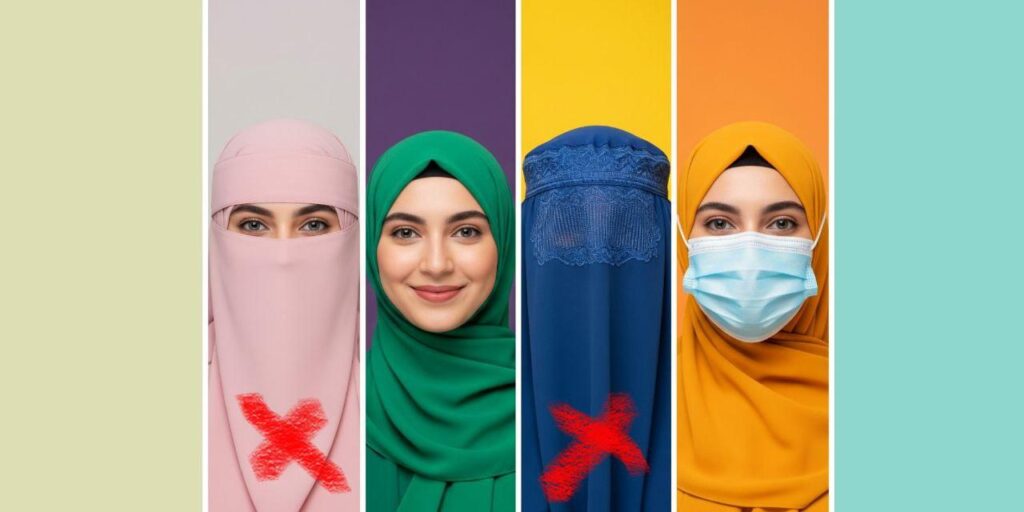
Kazakhstan has also banned face-concealing clothing in public places. The measure, which took effect in 2025, applies to garments such as the niqab and burqa but also covers nonreligious face coverings, with exceptions for medical, professional, weather-related, sporting, and cultural purposes.
Kazakhstan’s education system is legally secular, and school uniform rules do not allow religious clothing as part of the uniform. Schools may also prohibit head coverings inside their buildings. These restrictions have led to repeated disputes over the hijab. The government defends them as part of secular education, while religious-freedom advocates have criticized them as an infringement on individual religious practice.
Uzbekistan’s Religion Policy Under Karimov and Mirziyoyev
In Uzbekistan, whose cities of Samarkand and Bukhara were major centers of Islamic scholarship for centuries, state control over independent religious activity became particularly stringent under President Islam Karimov.
The 2005 Andijan events became a defining moment. On May 13, armed men attacked government facilities, seized weapons, broke prisoners out of jail, and took hostages. Thousands of people later gathered in the city’s main square, most of them unarmed, to protest poverty, repression, and the prosecution of local businessmen on religious-extremism charges.
Uzbek authorities said they were suppressing an armed Islamist uprising and put the official death toll at 173. Human Rights Watch, the UN human rights office, and the Organization for Security and Co-operation in Europe reached a sharply different conclusion, finding that government forces used indiscriminate and disproportionate force and were responsible for most civilian deaths. Human Rights Watch estimated that hundreds were killed.
“Under Shavkat Mirziyoyev, the space for public religiosity has expanded compared with the previous period, but the state continues to maintain tight control over the politicization of religion,” Kurayev wrote.
During Mirziyoyev’s first years in power, the authorities released or reduced the sentences of large numbers of prisoners convicted under religion-related provisions, although international monitors said many people remained imprisoned for peaceful religious activity.
According to Uzbek political scientist Alisher Ilkhamov, the Taliban’s return to power in neighboring Afghanistan in 2021 became one of the external factors that subsequently influenced Tashkent’s approach to religion, contributing to a gradual retreat from some of the earlier liberalization.
Since November 2023, Uzbekistan has prohibited appearing in public with the face covered to the extent that a person cannot be identified. The law provides for a fine of 10 to 15 base calculation units, with exceptions including medical, professional, safety, sporting, and cultural circumstances.
Officials generally justify tighter regulation in terms of security, social stability, and the prevention of violent extremism. International religious-freedom organizations challenge that approach when restrictions extend to peaceful worship, religious dress, education, or expression.
While governments continue to regard transnational extremist movements as a security threat, the central question is where regulation of genuine security risks ends and state interference in peaceful religious life begins.