Kazakhstan’s long-running controversy over hijabs in schools has collided with a wider public argument about religion, exposing sharp differences among prominent public figures and institutions over the boundaries of the country’s secular model.
The latest religious controversy in Kazakhstan’s social media space was triggered by two statements made within the span of a week.
On September 3, well-known Kazakhstani film and entertainment producer and former television host Bayan Alaguzova wrote on Threads that she was “tired of religion and its propaganda.”
“I’ll say this right away,” she added. “There’s no need to frighten me with hell – it doesn’t exist for me. Not a single person in the world can claim to have seen hell, or heaven for that matter. Now that is reliable information! The same goes for the 72 virgins thrown into the bargain.” She went on to sarcastically ask how a disembodied spirit was supposed to deprive the heavenly maidens of their virginity.
The deliberately provocative tone used by the prominent film and entertainment figure stirred debate among social media users. Soon afterward, another Threads user posted a screenshot of an official complaint submitted through Kazakhstan’s eOtinish system against the producer, calling for Alaguzova’s posts to be examined for possible incitement of religious discord. There have so far been no official reports of further action on the complaint.
Even so, Kazakhstanis on social media began joking about how the complainant intended to prove the existence of heaven and hell. Journalists and other users also spoke out in support of Alaguzova.
On September 8, in response to the backlash, Alaguzova acknowledged on Instagram that her “words had hurt believers” and offered her “sincere apologies,” explaining that she respected “every person and every faith, as long as it does not harm others.” She then said her remarks had been misunderstood.
“All those accusing me of ‘offending the feelings of believers,’ read carefully: I said that I am against the imposition of dogmas alien to our people, against radical and fanatical propaganda, not religion itself… Do you want girls to be married off at the age of nine? To be denied education or medical care? To be beaten supposedly ‘as a preventive measure against the influence of shaitan’? To be taken as wives without anyone assuming responsibility for them? To be easily abandoned simply by loudly saying ‘talaq’ three times? Do you want your daughter or sister not to be an individual in her own right, but simply an appendage to someone else? To be unable to appear in public or speak without permission? To be unable even to protect herself and her children? I am categorically against this!” the producer said.
That same day, journalists at a government briefing asked Kazakhstan’s Education Minister Zhuldyz Suleimenova about reports that some private schools had allowed pupils to wear hijabs.
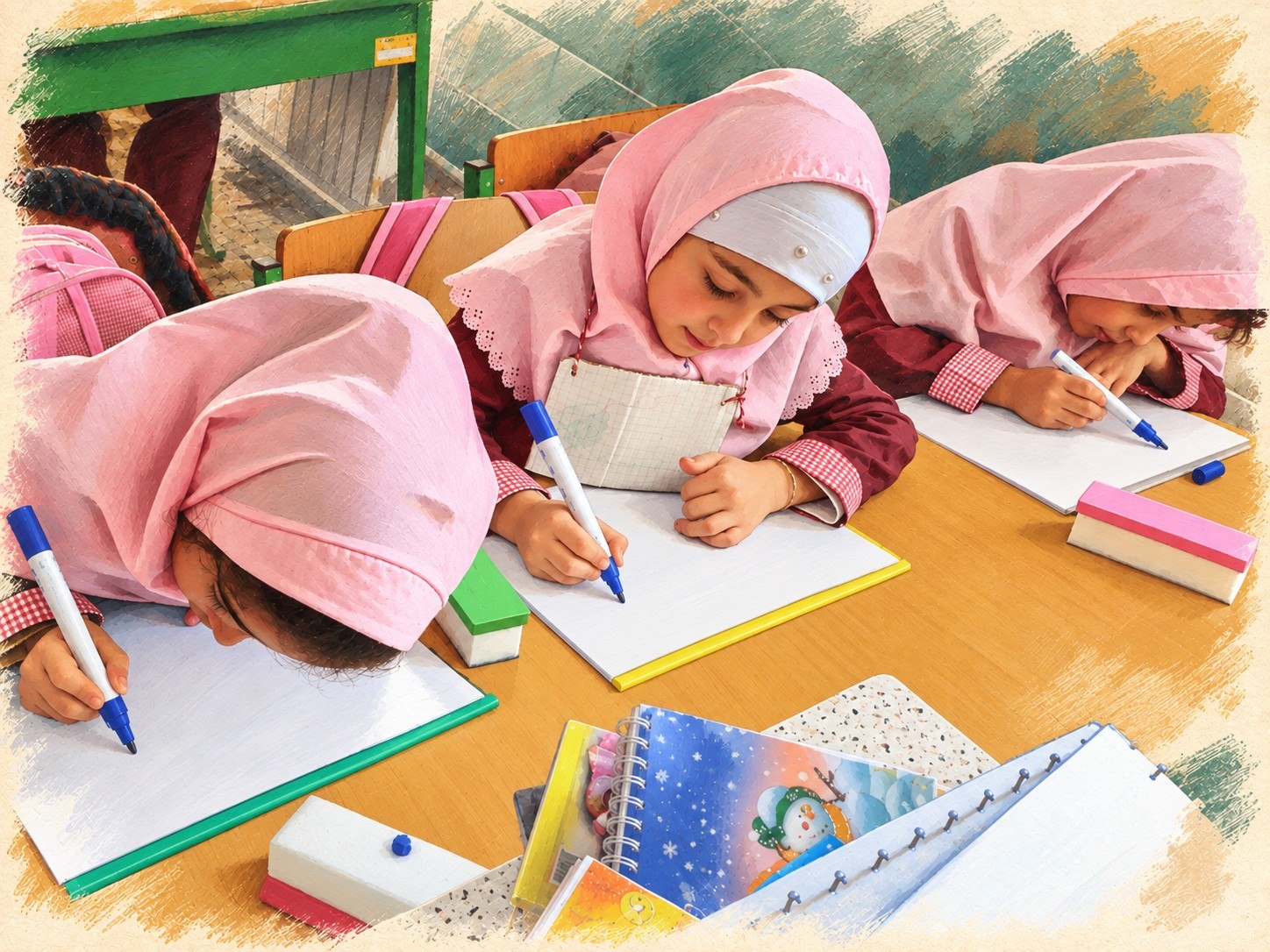
Each new school year in Kazakhstan has brought renewed disputes over hijabs in schools. Some Muslim parents, particularly in western Kazakhstan, require their teenage daughters to wear hijabs to school. This conflicts with nationwide school uniform requirements, which prohibit elements associated with religious affiliation.
Kazakhstan’s new Constitution makes the principle explicit, stating that the country’s system of education and upbringing is secular, except in religious educational institutions.
At the briefing, Suleimenova reiterated the school uniform rule. She also mentioned the National Security Committee (KNB) and said private schools that allowed hijabs and other religious clothing could lose their licenses.
“We have a uniform standard, and all schools must comply with these rules. Such cases do occur, and we are working on them. The KNB is working with us as well; we have a large commission that meets together with the akimats,” the education minister said, adding that there were no longer any such schools in the country.
This triggered another wave of heated religious debate on social media. The Spiritual Administration of Muslims of Kazakhstan (SAMK) initially entered the debate.
“According to Islamic Sharia, wearing a headscarf is an obligation (fard) for a Muslim woman who has reached puberty. The religious ruling on this issue remains unchanged… A student’s wearing of a headscarf should not prevent her from receiving an education… SAMK does not support such strict measures as revoking the licenses of private schools that allow headscarves,” said a statement published on the muftiate’s official Instagram account.
SAMK proposed that the Education Ministry and other authorized government agencies “consider a specific legal mechanism that would allow Muslim girls who have reached puberty to wear a headscarf while complying with school uniform requirements.”
The post was soon deleted, although screenshots circulated widely.
The deletion may have reflected tension between SAMK’s position and earlier statements by President Kassym-Jomart Tokayev. Tokayev has long insisted that the country’s schools should adhere to the principle of secularism.
Tokayev has also addressed the school issue directly. In October 2023, he said the principle of secularism must be strictly observed in educational institutions, arguing that schools are primarily places for acquiring knowledge and that religious belief is a private matter.
At the third meeting of the National Kurultai on March 15, 2024, the president also addressed the way Kazakhstanis dress.
“In recent years there have been many people wrapped in black robes in our country. Everyone knows about it. And these are not strangers, but our fellow citizens. Dressing in all black goes against the mindset of our people and is a thoughtless imitation of foreign norms rooted in religious fanaticism. We must not break away from our spiritual roots and erode our national identity,” Tokayev said.
Economist Olzhas Khudaibergenov, a former non-staff adviser to Tokayev, then spoke in support of SAMK’s position and allowing hijabs in schools.
“The ministry’s decision is wrong. SAMK opposed it, publishing a fairly mild statement, but the point is that in Islam, after reaching puberty, wearing a headscarf is recommended, and the headscarf itself can be made to match the color of the school uniform,” he wrote on Facebook.
Khudaibergenov’s lengthy post refers to European and Asian practices and suggests that he has studied the issue in some depth. His intervention may also indicate that the subject is discussed within expert circles close to the authorities, of which he was once a part.
Since Alaguzova also moves in circles close to the establishment, the episode presents two opposing positions that may reflect a divide within Kazakhstan’s elite. The relatively restrained rhetoric in both the muftiate’s statement and Khudaibergenov’s post may indicate that the more religiously oriented part of the establishment does not see itself as losing the debate. This contrasts with Alaguzova’s sharper language and the education minister’s invocation of the KNB in discussing enforcement.
In other words, supporters of Kazakhstan’s secular model, despite having the president’s clear backing, do not appear confident that they can reverse what they see as the Islamization of society through non-confrontational means.
The views expressed in this article are those of the author and do not necessarily reflect the official policy or position of the publication, its affiliates, or any other organizations mentioned.