• KGS/USD = 0.01144 0%
  • KZT/USD = 0.00205 0%
  • TJS/USD = 0.10771 -0.19%
  • UZS/USD = 0.00008 0%
  • TMT/USD = 0.28571 0.28%
  • KGS/USD = 0.01144 0%
  • KZT/USD = 0.00205 0%
  • TJS/USD = 0.10771 -0.19%
  • UZS/USD = 0.00008 0%
  • TMT/USD = 0.28571 0.28%
  • KGS/USD = 0.01144 0%
  • KZT/USD = 0.00205 0%
  • TJS/USD = 0.10771 -0.19%
  • UZS/USD = 0.00008 0%
  • TMT/USD = 0.28571 0.28%
  • KGS/USD = 0.01144 0%
  • KZT/USD = 0.00205 0%
  • TJS/USD = 0.10771 -0.19%
  • UZS/USD = 0.00008 0%
  • TMT/USD = 0.28571 0.28%
  • KGS/USD = 0.01144 0%
  • KZT/USD = 0.00205 0%
  • TJS/USD = 0.10771 -0.19%
  • UZS/USD = 0.00008 0%
  • TMT/USD = 0.28571 0.28%
  • KGS/USD = 0.01144 0%
  • KZT/USD = 0.00205 0%
  • TJS/USD = 0.10771 -0.19%
  • UZS/USD = 0.00008 0%
  • TMT/USD = 0.28571 0.28%
  • KGS/USD = 0.01144 0%
  • KZT/USD = 0.00205 0%
  • TJS/USD = 0.10771 -0.19%
  • UZS/USD = 0.00008 0%
  • TMT/USD = 0.28571 0.28%
  • KGS/USD = 0.01144 0%
  • KZT/USD = 0.00205 0%
  • TJS/USD = 0.10771 -0.19%
  • UZS/USD = 0.00008 0%
  • TMT/USD = 0.28571 0.28%

Viewing results 1 - 6 of 3

U.S. Convenes Critical Minerals Dialogue with Central Asian Officials in Kazakhstan

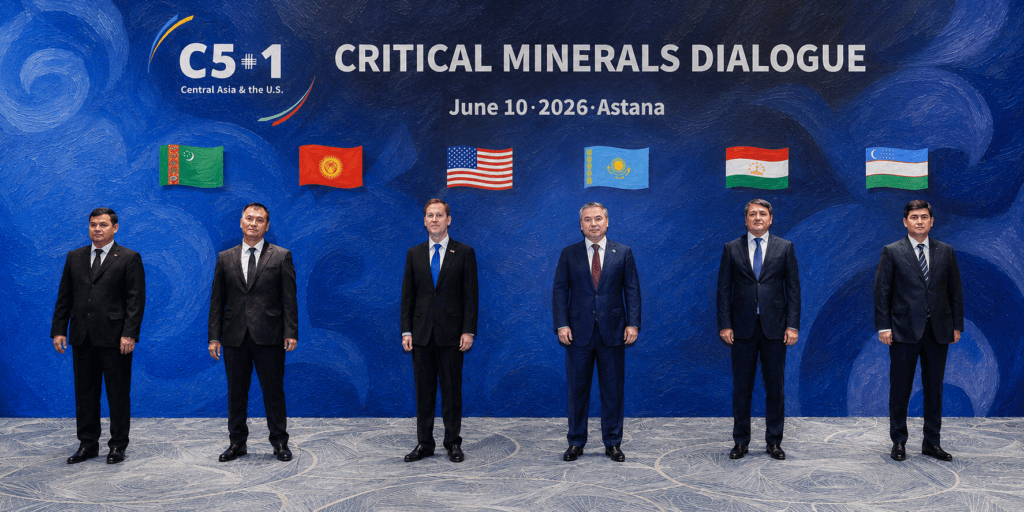
ASTANA — The United States opened a new round of high-level critical minerals talks with Central Asian governments in Astana on June 10, with U.S. Special Envoy for South and Central Asian Affairs Sergio Gor saying Washington is placing new emphasis on a region it sees as central to global commerce, connectivity, and secure supply chains. Speaking at the C5+1 Critical Minerals Dialogue, Gor said Central Asia “has not gotten the attention it deserves from the United States,” and that the Trump administration had decided to change that. “We care about this region, we want to be involved with this region, we want to identify win-win situations for the United States and your nations,” Gor said. The meeting, held at The Ritz-Carlton in Astana, brought together officials from Kazakhstan, Kyrgyzstan, Tajikistan, Turkmenistan, Uzbekistan, and the United States. The program included sessions on geological exploration, surveying and mapping, mining and processing, and global value and supply chains, followed by a government-business networking reception. Gor thanked Kazakhstan for hosting what he described as the first in-person C5+1 Critical Minerals Dialogue and said he had met with President Kassym-Jomart Tokayev shortly before the session. Kazakhstan’s Foreign Ministry said that ahead of the dialogue, Gor and Kazakh Foreign Minister Yermek Kosherbayev had discussed economic and investment partnerships, innovation, artificial intelligence, education, transport, logistics, and critical minerals. The ministry also said the sides discussed the implementation of agreements reached between Tokayev and U.S. President Donald Trump at the White House in November 2025. Gor framed the Astana meeting as part of a broader increase in U.S. engagement with Central Asia following the C5+1 leaders’ meeting in Washington last year. He said critical minerals are now a central part of that engagement because they are essential to infrastructure, advanced technologies, industry, and national defense. “Our economic security depends on our ability to diversify our access to critical minerals,” Gor said. “Ensuring reliable access to these materials requires not only expanding production, but also building resilient, transparent, and market-driven supply chains in close partnership with trusted partners.” He added that the Central Asian states represented at the table were exactly the partners Washington wants to work with. “There’s a reason we’re sitting at this table and not at another table around the world,” Gor said. “It’s because this is where we want to work. This is where we have identified trusted partners.” Gor highlighted the role of U.S. commercial and development-finance tools in supporting investment, saying Washington is prepared to back American companies working in the region. “The United States government stands behind American companies,” Gor said. “There is no such thing as a deal too small.” Gor also pointed to the U.S. International Development Finance Corporation, saying it was preparing to “invest and build” in the region and saw potential in critical minerals, telecommunications, and Trans-Caspian infrastructure. He said DFC saw “potential to transform the region’s rich deposits of critical minerals into the foundation of a new wave of industrialization.” “President Trump understands the importance of...

U.S. Envoy Gor Meets Rahmon in Tajikistan for Trade, Security Talks

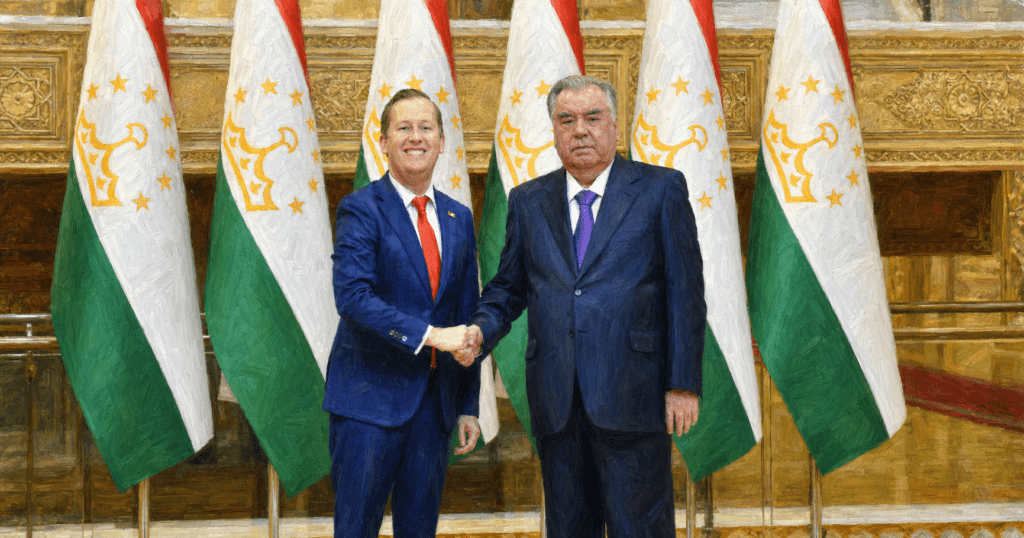
Tajik President Emomali Rahmon met Special Envoy of the President of the United States for South and Central Asia Sergio Gor in Dushanbe on April 28 for talks focused on trade, investment, security, and the next stage of cooperation under the C5+1 framework. Gor also met Tajik Foreign Minister Sirojiddin Muhriddin during the visit. “Just landed in Tajikistan!” Gor wrote on X. “Excellent meeting with Foreign Minister Sirojiddin Muhriddin in Dushanbe on deepening U.S.-Tajikistan ties. Excited to build a stronger partnership that delivers greater security and prosperity for both our countries.” The U.S. Embassy in Dushanbe said Gor’s meetings would continue over the next few days. According to the Tajik president’s press service, the meeting with President Rahmon covered the current state of bilateral relations and prospects for expanding cooperation. Particular attention was given to agreements reached through the C5+1 dialogue, which brings together the United States and the five Central Asian states. Rahmon said Tajikistan is interested in expanding ties with Washington in areas of mutual interest, noting that the United States is among Tajikistan’s top five investment partners. The sides discussed the use of the Trade and Investment Framework Agreement, known as TIFA, as a tool for developing practical cooperation. The talks pointed to several sectors where Dushanbe hopes to attract greater U.S. involvement. These include hydropower, mining, mineral processing, light industry, food production, chemicals, and pharmaceuticals. Tajikistan has long promoted its hydropower potential as a basis for regional energy trade and industrial development, while mining and processing are increasingly tied to wider U.S. interest in critical minerals and supply-chain diversification. Digital cooperation also featured, with the two sides identifying artificial intelligence, digital infrastructure, and the wider digitalization of the economy as promising areas for cooperation. They also discussed the creation of joint ventures to process agricultural products for export and attract investment. The Tajik Foreign Ministry said Muhriddin and Gor discussed political, economic, investment, humanitarian, and security cooperation. It said they also exchanged views on the regional situation, emphasizing stability and the prevention of humanitarian risks. “Particular attention was paid to the need for coordinated efforts in addressing modern challenges and threats, including terrorism, extremism, and drug trafficking,” the ministry said. Security remains a central part of Tajikistan’s relationship with Washington. Tajikistan shares a long border with Afghanistan, where narcotics trafficking, militant activity, and cross-border violence have repeatedly tested Dushanbe’s security forces. Earlier this month, Tajikistan said its security forces killed two alleged drug smugglers from Afghanistan who crossed into the Farkhor district of the Khatlon region. The State Committee for National Security said the group was trying to smuggle 25 kilograms of hashish. The Afghan border has also become a concern for foreign investors. In late 2025, several Chinese workers were killed in attacks launched from Afghan territory, prompting China to urge Tajikistan to strengthen protection for Chinese citizens and businesses. The attacks sharpened attention on Tajikistan’s ability to secure border areas where foreign-backed infrastructure and mining projects are expanding. Cooperation has also extended into health....

U.S. Envoys Hail Stronger Kazakhstan Partnership Ahead of C5+1 Summit

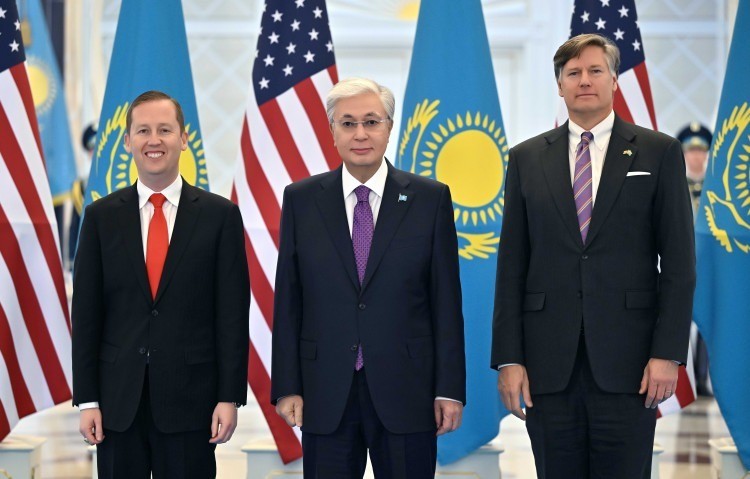
On October 29, Unites States Special Envoy for South and Central Asia Sergio Gor and Deputy Secretary of State Christopher Landau concluded their visit to Kazakhstan ahead of the upcoming C5+1 summit in Washington. During their trip, the U.S. envoys met with President Kassym-Jomart Tokayev and held discussions with representatives of Kazakhstan’s government and business community, which they described as highly productive. “We are concluding a memorable trip to Kazakhstan in the beautiful capital, Astana, which did not even exist 30 years ago and now boasts a population of more than 1.5 million,” Landau posted on social media. He also stated that bilateral relations between the U.S. and Kazakhstan “have never been so strong” and expressed gratitude for the hospitality.  Gor and Landau held talks with Prime Minister Olzhas Bektenov and key cabinet members, including Minister of Trade and Integration Arman Shakkaliev, Minister of Energy Yerlan Akkenzhenov, Minister of Transport Nurlan Sauranbayev, and Deputy Prime Minister and Minister of National Economy Serik Zhumangarin, to discuss Kazakhstan’s economic priorities and areas for expanding bilateral cooperation. According to the Kazakh government, the talks focused on expanding trade and investment cooperation between the two countries. Priority areas included transport and logistics, energy, agriculture, the digital economy, and artificial intelligence. During their visit, the U.S. envoys also met with Deputy Prime Minister Murat Nurtleu, who reaffirmed Kazakhstan’s readiness to cooperate on sustainable development and energy security. The meetings demonstrated Kazakhstan’s active engagement with the United States in the lead-up to the upcoming Central Asia–U.S. summit. Deputy Prime Minister and Minister of National Economy Serik Zhumangarin, who highlighted Kazakhstan’s economic strengths during talks with Gor and Landau, had recently returned from a high-level visit to the United States. His delegation, which included Deputy Head of the Presidential Administration Erbolat Dossaev and Chairperson of the Agency for Regulation and Development of the Financial Market Madina Abylkasymova, held meetings in New York and Washington with American business leaders and members of Congress. During the visit, the Kazakh delegation presented the country’s economic growth strategy, highlighted ongoing GDP expansion, and discussed the potential listing of government securities on the New York Stock Exchange. They also raised the possible repeal of the Jackson–Vanik Amendment, a long-standing priority for Kazakhstan’s diplomatic agenda. Against this backdrop, the White House’s decision to convene a summit between President Donald Trump and the leaders of the Central Asian republics may partly reflect Kazakhstan’s sustained diplomatic outreach. In that context, Gor and Landau’s remarks of appreciation as they departed Astana underscored recognition of Kazakhstan’s role in shaping this evolving partnership.