• KGS/USD = 0.01144 0%
  • KZT/USD = 0.00212 0%
  • TJS/USD = 0.10841 -0.46%
  • UZS/USD = 0.00008 0%
  • TMT/USD = 0.28490 0%
  • KGS/USD = 0.01144 0%
  • KZT/USD = 0.00212 0%
  • TJS/USD = 0.10841 -0.46%
  • UZS/USD = 0.00008 0%
  • TMT/USD = 0.28490 0%
  • KGS/USD = 0.01144 0%
  • KZT/USD = 0.00212 0%
  • TJS/USD = 0.10841 -0.46%
  • UZS/USD = 0.00008 0%
  • TMT/USD = 0.28490 0%
  • KGS/USD = 0.01144 0%
  • KZT/USD = 0.00212 0%
  • TJS/USD = 0.10841 -0.46%
  • UZS/USD = 0.00008 0%
  • TMT/USD = 0.28490 0%
  • KGS/USD = 0.01144 0%
  • KZT/USD = 0.00212 0%
  • TJS/USD = 0.10841 -0.46%
  • UZS/USD = 0.00008 0%
  • TMT/USD = 0.28490 0%
  • KGS/USD = 0.01144 0%
  • KZT/USD = 0.00212 0%
  • TJS/USD = 0.10841 -0.46%
  • UZS/USD = 0.00008 0%
  • TMT/USD = 0.28490 0%
  • KGS/USD = 0.01144 0%
  • KZT/USD = 0.00212 0%
  • TJS/USD = 0.10841 -0.46%
  • UZS/USD = 0.00008 0%
  • TMT/USD = 0.28490 0%
  • KGS/USD = 0.01144 0%
  • KZT/USD = 0.00212 0%
  • TJS/USD = 0.10841 -0.46%
  • UZS/USD = 0.00008 0%
  • TMT/USD = 0.28490 0%

Viewing results 1 - 6 of 3

Kazakhstan Invites Islamic Development Bank to Open New Astana Office

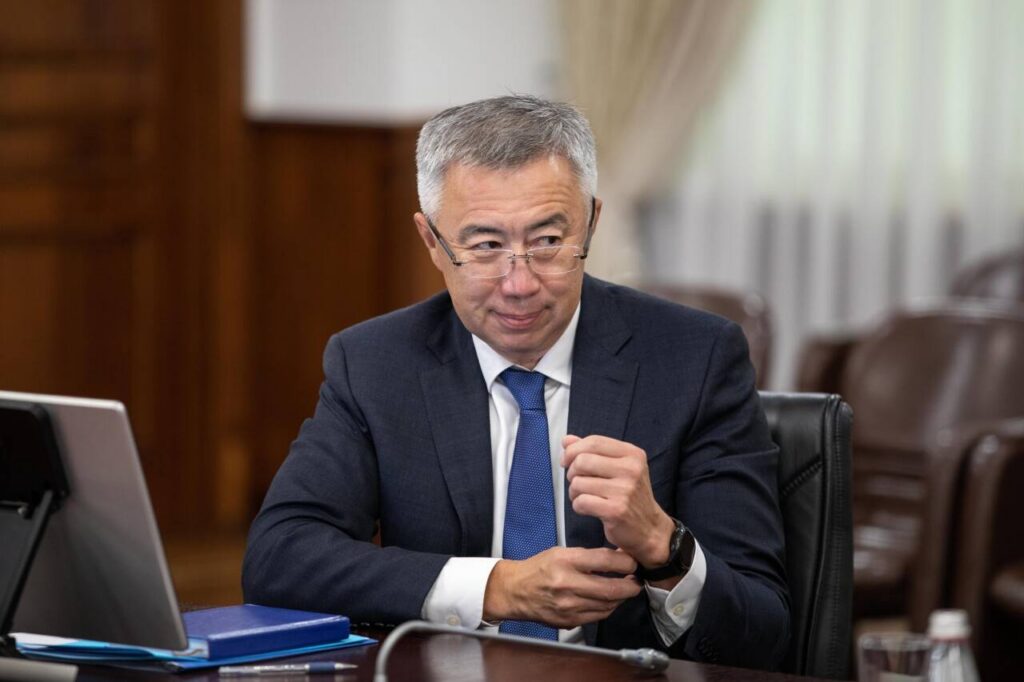
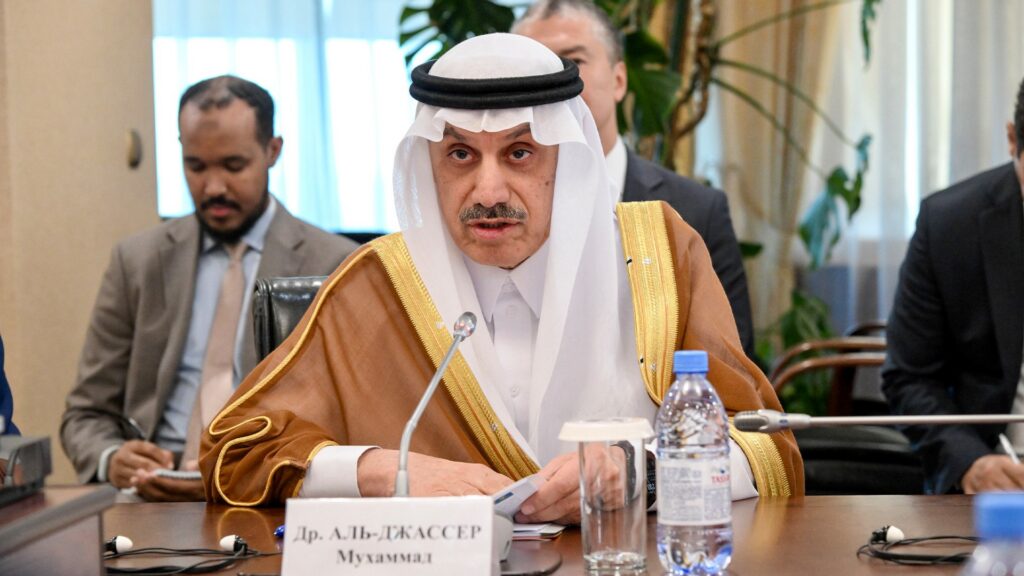
Kazakhstan has proposed that the Islamic Development Bank (IsDB) open an additional office in Astana as the country seeks to deepen cooperation on infrastructure, Islamic finance, and green technologies. Deputy Prime Minister and Minister of National Economy Serik Zhumangarin made the proposal during a meeting with Islamic Development Bank (IsDB) Group Chairman Muhammad Sulaiman Al Jasser ahead of the next meeting of Kazakhstan’s Council of Foreign Investors. According to Kazakhstan’s government, Zhumangarin said the bank’s regional office in Almaty has coordinated operations across Eastern Europe, the CIS, Mongolia, and China since opening in 1997. He said closer engagement with Kazakhstan’s central government institutions is now needed to expand cooperation. Kazakhstan has been a member of the IsDB since 1995. Between 1997 and 2026, total financing and technical assistance provided by the bank to Kazakhstan exceeded $4.2 billion. Current joint projects cover water management, transport infrastructure, and industrial development, while a new partnership strategy between Kazakhstan and the IsDB for 2027-2032 is now being drafted. Zhumangarin said Kazakhstan expects the bank’s expertise to support projects aimed at infrastructure development, food security, natural resource management, and the introduction of modern and green technologies. He noted that cooperation has accelerated significantly over the past three years. In 2024, the two sides launched a large-scale water infrastructure construction and reconstruction program worth $1.1 billion. Since February this year, Kazakhstan has also begun implementing a framework agreement worth $1.3 billion to develop infrastructure in special economic and industrial zones. In addition, the sides are discussing financing for transport projects, including the Kyzylorda-Saksaulsk railway and a bypass road around Kyzylorda. Al Jasser said the potential for cooperation goes beyond the current project portfolio. “Over the years, our specialists have built effective cooperation that allows us to expand the portfolio of projects. The Islamic Development Bank has sufficient flexibility to find solutions for many challenges facing member states,” he said. Al Jasser added that the bank prioritizes building national capacity by relying on domestic systems to prepare and implement projects. Following the meeting, the parties exchanged signed copies of a forward leasing agreement aimed at developing infrastructure in Kazakhstan’s special economic and industrial zones. As previously reported by The Times of Central Asia, the IsDB is also active elsewhere in the region. In February last year, Uzbekistan signed two agreements with the bank worth a combined $299 million to improve its education system and modernize road infrastructure.

Kazakhstan and China Aim to Double Bilateral Trade to $100 Billion

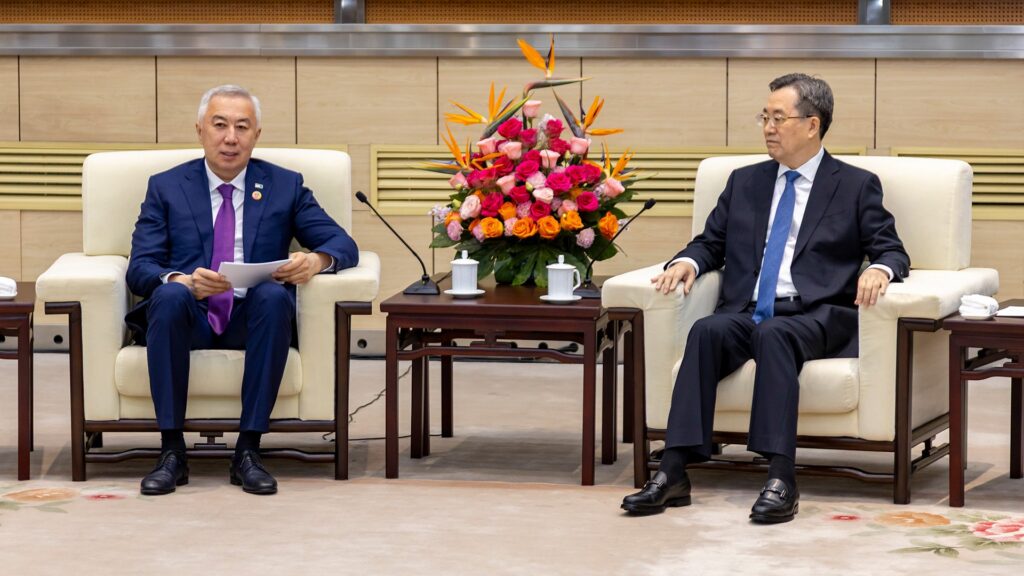
Kazakhstan and China plan to increase bilateral trade to $100 billion in the coming years, nearly doubling the expected volume for 2026, Kazakhstan’s Deputy Prime Minister and Minister of National Economy Serik Zhumangarin said. According to Kazakhstan’s government press service, Zhumangarin held talks with Chinese Vice Premier Ding Xuexiang on the sidelines of the 9th China-Eurasia Expo in Urumqi. The talks focused on expanding strategic partnership, joint investment projects, transport and logistics infrastructure, and broader trade cooperation. Kazakhstan said bilateral trade reached a record $48.7 billion in 2025. In the first five months of 2026, trade volume totaled $22 billion, up 27% compared with the same period a year earlier. Officials expect trade to exceed $50 billion by the end of this year, with more than half of total turnover linked to China’s Xinjiang Uyghur Autonomous Region, which remains the key hub of economic interaction between the two countries. “Our main task is to achieve $100 billion in mutual trade in the near future. To do this, we need to accelerate the approval of the Kazakhstan-China Trade and Economic Cooperation Program and Roadmap for 2027-2030,” Zhumangarin said. China has invested around $30 billion in Kazakhstan since independence, making it one of the country’s largest foreign investors, he added. Kazakhstan has invited Chinese businesses to expand participation in high value-added projects, including deep agricultural processing, full-cycle metallurgical production, agrochemicals, and drone manufacturing. Zhumangarin also praised the technological level of the China-Eurasia Expo and called on Chinese manufacturers and investors to localize production in Kazakhstan. Agricultural trade was another priority in the talks. Bilateral trade in agricultural products has already reached $2 billion, while China has approved imports of 34 categories of Kazakhstan's agricultural goods. Another nine categories, including chilled meat, are still under review. Zhumangarin said around 85% of all overland freight traffic between China and Europe currently passes through Kazakhstan. Following the completion of the new Bakhty-Ayagoz rail crossing, the combined capacity of border checkpoints between the two countries is expected to reach 100 million tons annually. China also confirmed its readiness to jointly implement the construction of the new railway crossing, which officials say will improve the resilience and security of international transport routes. Ding said Beijing was interested in expanding cooperation with Kazakhstan in the digital economy, artificial intelligence, energy, and navigation technologies, and encouraged Kazakhstani companies to use the China-Eurasia Expo as a platform to expand their presence in the Chinese market. As previously reported by The Times of Central Asia, China now accounts for nearly a quarter of Kazakhstan’s total foreign trade turnover. However, the growth of Chinese imports continues to outpace the increase in Kazakhstani exports.

Kazakhstan and Iran Expand Port Access to Boost Cargo Transit

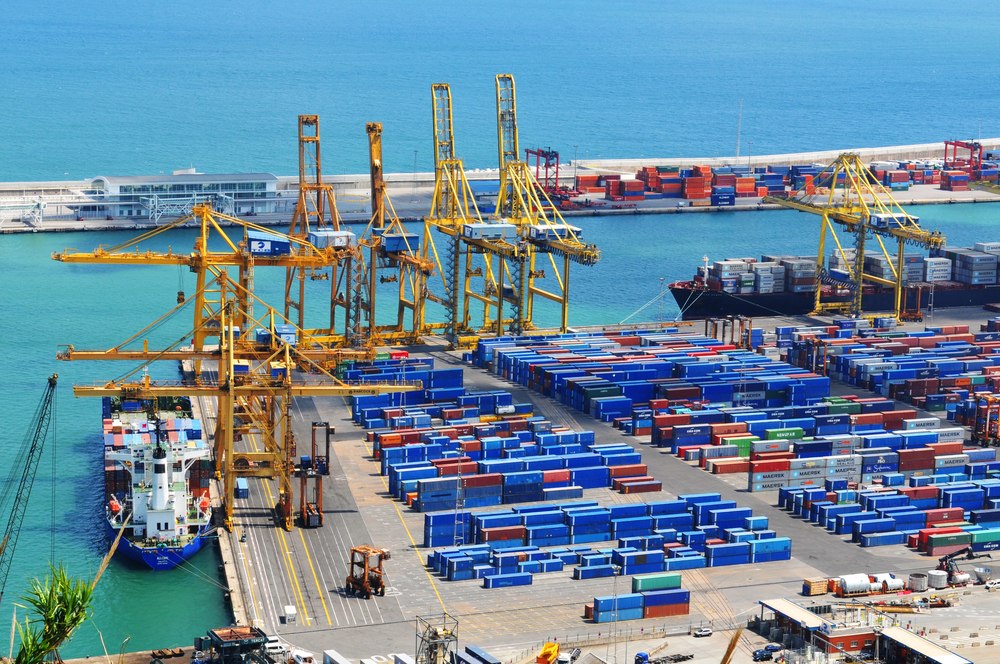
Iran is ready to provide Kazakhstan with access to its port infrastructure to support cargo shipments to international markets, Iranian Minister of Roads and Urban Development Farzaneh Sadegh said during talks with Kazakhstan’s Deputy Prime Minister and Minister of National Economy Serik Zhumangarin. The meeting took place in Astana, where transport and logistics cooperation topped the agenda. The two sides discussed the development of the International North-South Transport Corridor, port infrastructure, bilateral trade, and transport links between Kazakhstan and Iran. Iranian officials said procedures had been finalized to allocate a land plot to Kazakhstan at Shahid Rajaee Port in Bandar Abbas, Iran’s main southern port on the Persian Gulf. According to Sadegh, the site will be transferred to Kazakhstan once the remaining legal procedures are completed. Tehran also offered Kazakhstan the opportunity to operate at Chabahar Port, Iran’s strategic deep-water hub on the Gulf of Oman, which provides direct access to markets in South and Southeast Asia. Chabahar is one of the key nodes of the International North-South Transport Corridor, which links Russia, Iran, India, and other countries. According to Sadegh, construction of the Chabahar-Zahedan railway, which would connect Chabahar to wider rail networks used for regional cargo transport, is more than 90% complete and is expected to be launched in the coming months. Once operational, the railway is expected to integrate Chabahar into an international rail network linking the Indian Ocean, Central Asia, and Europe. Kazakhstan, in turn, said it was ready to consider offering Iran port facilities, berths, and terminals at the Caspian ports of Aktau and Kuryk to support Iranian logistics operations. The two sides also highlighted the recently signed five-party railway agreement between China, Kazakhstan, Turkmenistan, Iran, and Turkey, as well as an upcoming four-party tariff agreement between Kazakhstan, Russia, Turkmenistan, and Iran, aimed at boosting regional trade and transit. “Strengthening cooperation is a strategic task set by our heads of state,” Zhumangarin said. “In 2025, trade turnover between Kazakhstan and Iran grew by 26.4% to $430.2 million. This confirms significant potential for further expansion, including within the framework of the roadmap to increase mutual trade to $3 billion and thanks to the free trade agreement signed between Iran and the Eurasian Economic Union.” Sadegh said her visit was focused on implementing previously reached agreements and expanding transport and logistics cooperation, which she said had gained importance amid current geopolitical changes. Officials also noted that cargo volumes along the North-South corridor rose by 12% in 2025 to reach 3.5 million tons, while railway freight traffic between Kazakhstan and Iran increased by 69%. To increase the corridor’s potential, Zhumangarin proposed developing a joint roadmap for transport infrastructure modernization, which he said could increase the route’s capacity to 20 million tons annually. As previously reported by The Times of Central Asia, Kazakhstan and Iran have continued expanding economic ties despite recent tensions involving Iran. Iranian investors are moving forward with industrial projects in Kazakhstan, including Solico Group’s planned cheese production plant in the Almaty region, while Kazakh vegetable...