

• KGS/USD = 0.01144 0%
  • KZT/USD = 0.00211 0%
  • TJS/USD = 0.10515 0.48%
  • UZS/USD = 0.00008 0%
  • TMT/USD = 0.28530 0%
  • KGS/USD = 0.01144 0%
  • KZT/USD = 0.00211 0%
  • TJS/USD = 0.10515 0.48%
  • UZS/USD = 0.00008 0%
  • TMT/USD = 0.28530 0%
  • KGS/USD = 0.01144 0%
  • KZT/USD = 0.00211 0%
  • TJS/USD = 0.10515 0.48%
  • UZS/USD = 0.00008 0%
  • TMT/USD = 0.28530 0%
  • KGS/USD = 0.01144 0%
  • KZT/USD = 0.00211 0%
  • TJS/USD = 0.10515 0.48%
  • UZS/USD = 0.00008 0%
  • TMT/USD = 0.28530 0%
  • KGS/USD = 0.01144 0%
  • KZT/USD = 0.00211 0%
  • TJS/USD = 0.10515 0.48%
  • UZS/USD = 0.00008 0%
  • TMT/USD = 0.28530 0%
  • KGS/USD = 0.01144 0%
  • KZT/USD = 0.00211 0%
  • TJS/USD = 0.10515 0.48%
  • UZS/USD = 0.00008 0%
  • TMT/USD = 0.28530 0%
  • KGS/USD = 0.01144 0%
  • KZT/USD = 0.00211 0%
  • TJS/USD = 0.10515 0.48%
  • UZS/USD = 0.00008 0%
  • TMT/USD = 0.28530 0%
  • KGS/USD = 0.01144 0%
  • KZT/USD = 0.00211 0%
  • TJS/USD = 0.10515 0.48%
  • UZS/USD = 0.00008 0%
  • TMT/USD = 0.28530 0%

Viewing results 1 - 6 of 12

Uzbekistan Targets $50 Billion in Investment with Financial Reforms

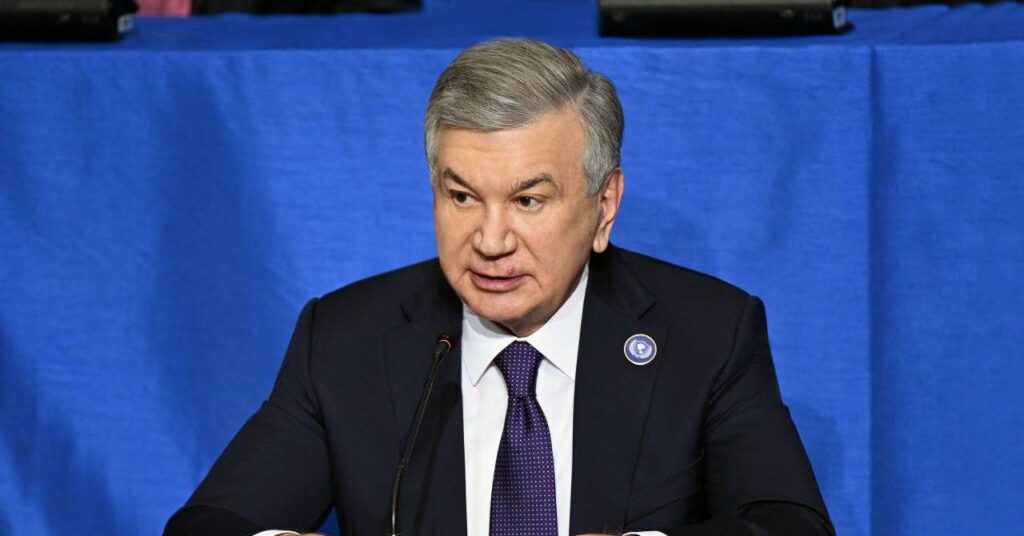
Uzbekistan is preparing to introduce Islamic finance services nationwide, with the first offerings expected in 2027. Under the country’s updated “Uzbekistan 2030” development strategy, at least three commercial banks are expected to provide Sharia-compliant financial services by the end of the decade, marking a significant shift in the structure of the banking sector. Against this backdrop, President Shavkat Mirziyoyev was briefed on March 25 on a broader set of initiatives aimed at strengthening the country’s investment climate. These include plans to establish the Tashkent International Financial Center, launch an International Center for Digital Technologies, and gradually introduce Islamic finance mechanisms. The presentation comes as Uzbekistan seeks to position itself more competitively in the global economy amid rising geopolitical uncertainty and intensifying competition for foreign investment. Officials said the country’s natural resources, economic potential, and ongoing reforms create favorable conditions for attracting international companies exploring new markets. Mirziyoyev stressed the need to act swiftly to capitalize on emerging opportunities, noting that attracting foreign investors requires modern infrastructure, a transparent business environment, and legal systems aligned with international standards. Uzbekistan aims to attract more than $50 billion in investment this year. A central component of the strategy is the Tashkent International Financial Center, which is expected to serve as a platform for new investment flows and long-term economic growth. By 2030, it is projected to attract an additional $20-25 billion, contribute up to 1% of annual GDP growth, and create as many as 15,000 highly skilled jobs. The center will operate under a special legal regime incorporating elements of the common law system of England and Wales, while allowing its governing bodies to adopt independent regulations. Plans include the establishment of a Tashkent International Commercial Court and an International Arbitration Center to handle disputes. Investors are expected to benefit from tax incentives, simplified visa procedures, and the ability to freely move and repatriate capital, alongside access to modern financial instruments, including digital assets. In parallel, Uzbekistan is developing the International Center for Digital Technologies under the Enterprise Uzbekistan brand. The center will function under a special legal framework expected to remain in place until 2100. Within a regulatory sandbox, companies will be able to test new technologies, pay salaries in foreign currency, and operate under international labor and data standards. The digital center will focus on artificial intelligence, data processing, research and development, and startup support. By 2030, it is expected to attract up to 1,000 companies, create more than 300,000 jobs, and generate export revenues of up to $5 billion. Several major international technology firms have already expressed interest in the initiative. The introduction of Islamic finance is another key pillar of the reform agenda. The proposed system includes instruments such as murabaha, mudarabah, musharakah, and Islamic leasing, all designed to comply with national legislation. Tax measures are also under consideration, including exemptions on certain transactions and investment income. To oversee the sector, an Islamic Finance Council will be established under the Central Bank, with similar bodies to be created within...
Opinion: Uzbekistan’s Strategic Reorientation in an Evolving International System

Almost as if responding to the pressures of a transforming international environment, the early twenty-first century has witnessed the emergence of Uzbekistan as a state seeking to redefine its strategic identity after decades of caution and relative isolation. When Shavkat Mirziyoyev assumed the presidency of Uzbekistan in 2016, he inherited a state possessing considerable demographic weight, a pivotal geographic position, and untapped economic potential, yet constrained by regional mistrust and international isolation. His policy has combined internal reform with a multi-vector diplomacy grounded in pragmatic calculations of national interest rather than ideological aspirations. At the global level, Mirziyoyev has pursued a diplomacy of equilibrium. Rather than aligning unequivocally with any major power, Uzbekistan engaged simultaneously with Russia, China, the United States, and Europe, seeking economic modernization and strategic autonomy in equal measure. This multivectorism is tantamount to a classical calculation: that for a state situated at the crossroads of great-power interests, independence is preserved not by isolation but by balanced engagement. In that sense, Uzbekistan’s involvement in the Board of Peace established by U.S. President Donald Trump highlights Tashkent’s readiness to engage in emerging diplomatic frameworks beyond traditional multilateral institutions. In his address during the first summit of the Board of Peace on February 19, Mirziyoyev stressed that “...Uzbekistan has supported the peacebuilding initiative of establishing the Board of Peace, and firmly declared its commitment to take a practical part in its successful implementation.” He added, “...Uzbekistan is ready to make a tangible contribution to the construction of residential buildings, kindergartens, schools, and hospitals.” Uzbekistan is driven by several motivations in joining the new organization beyond its multi-vector diplomacy. First and foremost, Tashkent seeks to elevate U.S.–Uzbekistan relations to the level of a strategic partnership grounded in economic cooperation and selective collaboration on global security and peace initiatives. In addition, Uzbekistan’s seat at the organization means its contribution to solving global crises, not just regional issues, which enhances its image as a ‘middle power’ in the foreseeable future. Secondly, this organization is aimed at maintaining international peace and stability through economic development. In this regard, it creates an opportunity for Uzbek construction and engineering firms to gain access to Middle Eastern markets and form partnerships with major global contractors by being involved in construction, engineering, and infrastructure development. This experience earns credibility for future projects. It should be noted that significant supply chains are needed for reconstruction, which presents Uzbekistan with opportunities to participate through its transport companies, air cargo services, transit routes, and railway logistics. Also, it is perfectly aligned with Uzbekistan’s vision of presenting itself as a regional connectivity hub. From a political perspective, supporting U.S.-led initiatives can secure potential diplomatic backing from international financial institutions and open avenues for partnerships across multiple sectors, particularly in technology. It sends a strong signal to Western investors that Uzbekistan is a reliable and responsible partner, which would potentially lead to increasing foreign direct investment. Political backing should be added to this list as the U.S. would assist Central Asia, including...

Uzbekistan Pledges Support for Gaza Reconstruction

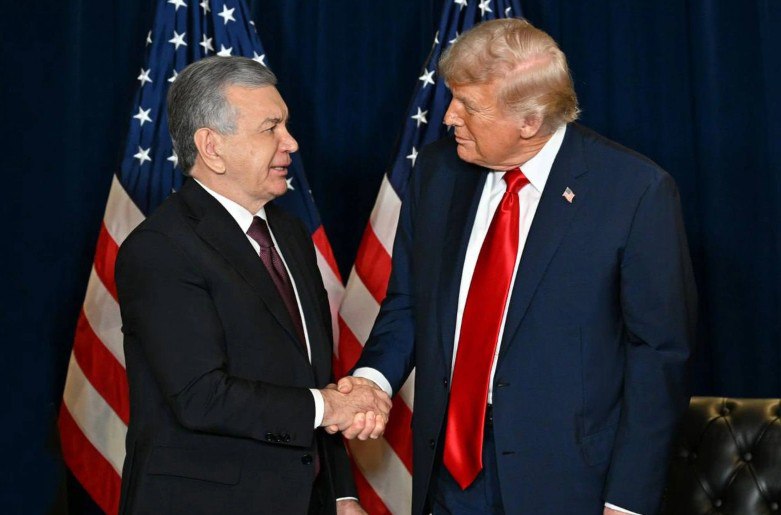
United States President Donald Trump introduced Uzbekistan’s President Shavkat Mirziyoyev as “a friend” during the inaugural meeting of the Board of Peace in Washington, setting a cordial tone for a summit focused on post-conflict recovery in Gaza. In brief remarks while welcoming Mirziyoyev, Trump said Uzbekistan was “doing great” and had “no problems.” The summit, held on February 19 at the United States Institute of Peace, brought together heads of delegations from Azerbaijan, Kazakhstan, Bahrain, Indonesia, Argentina, Paraguay, Romania, Egypt, Qatar, Pakistan, Hungary, Albania, Armenia, Vietnam, Cambodia, the United Arab Emirates, Turkey, Kuwait, Saudi Arabia, Israel, and Morocco, among others. Discussions focused on reconstruction and humanitarian assistance for the Gaza Strip, as well as broader efforts to promote stability in the Middle East. In his address, Mirziyoyev thanked Trump for convening the inaugural meeting of the Board, describing the summit as the result of his “political will and pragmatism.” Uzbekistan supported the initiative to establish the Board of Peace and declared its readiness to participate in its practical implementation. “I am confident that the Board’s work will create favorable conditions for the economic and social restoration of Gaza,” Mirziyoyev said. He stressed that any mechanism for external governance in Gaza must be based on the support of its population. Coordinated efforts by all stakeholders, he added, would help ensure that the post-conflict process remains sustainable and that reconstruction advances efficiently. Mirziyoyev also announced that Uzbekistan is prepared to contribute to the construction of residential buildings, kindergartens, schools, and hospitals in Gaza. He described the meeting as a symbol of international solidarity and urged participants to seize what he called a historic opportunity to help build a renewed Gaza with a functioning economy and improved living conditions.

UNESCO Conference in Samarkand Highlights Uzbekistan’s Heritage

At the opening ceremony of the 43rd session of the UNESCO General Conference in Samarkand, Uzbek President Shavkat Mirziyoyev highlighted Uzbekistan’s growing role in global cultural dialogue and its expanding cooperation with UNESCO. Held on October 30, the event marked the first time in four decades that the conference had convened outside UNESCO’s headquarters in Paris. The ceremony welcomed high-level participants, including UNESCO Director-General Audrey Azoulay, Serbian President Aleksandar Vučić, Slovak President Peter Pellegrini, and representatives from UNESCO member states. In his address, Mirziyoyev said that hosting such a prominent international forum reflects global recognition of Uzbekistan’s reform efforts and its active role in cultural and educational cooperation. He commended UNESCO’s decades-long contributions to education, science, culture, and media, noting Samarkand’s symbolic importance as one of the world’s oldest cities. “Samarkand has always been a crossroads of civilizations, science, and tolerance,” Mirziyoyev said. The president highlighted the 2023–2027 cooperation program between Uzbekistan and UNESCO, which focuses on cultural heritage preservation, educational reform, and digital innovation. He also noted that Khiva, Bukhara, Shahrisabz, and Samarkand are inscribed on UNESCO’s World Heritage List, and that the Zarafshan-Karakum Corridor was recently added as part of the Silk Roads network. Uzbekistan’s rich intangible heritage, including Shashmaqom music, the Lazgi dance, Navruz celebrations, and traditional crafts such as embroidery and ceramics, has also earned UNESCO recognition, strengthening the country’s identity as a cultural hub in Central Asia. During the session, Mirziyoyev proposed several initiatives for UNESCO’s consideration: Establishing a UNESCO Platform for Inclusive Education with AI-integrated learning tools; Organizing a Global Summit on Vocational Education to prepare youth for future professions; Declaring November 19 as the International Day of Documentary Heritage; Creating an International Digital Heritage Institute under UNESCO auspices; Launching a UNESCO Academy for Women Leaders to advance women’s participation in science, culture, and education; and Hosting a World Forum of Women Researchers and Artists in Samarkand. Addressing global challenges, the president called for stronger international cooperation on climate issues and proposed designating a “UNESCO Ecological Capital” each year to recognize cities promoting sustainable environmental practices. Mirziyoyev also spoke about the dangers of misinformation, calling for improved media literacy among young people and greater support for responsible journalism and intercultural dialogue. Concluding his speech, the president reaffirmed Uzbekistan’s readiness to serve as a bridge between East and West and to actively support UNESCO’s mission to promote peace, sustainable development, and mutual understanding around the world.
