• KGS/USD = 0.01144 0%
  • KZT/USD = 0.00203 0%
  • TJS/USD = 0.10563 -0.09%
  • UZS/USD = 0.00008 0%
  • TMT/USD = 0.28490 0%
  • KGS/USD = 0.01144 0%
  • KZT/USD = 0.00203 0%
  • TJS/USD = 0.10563 -0.09%
  • UZS/USD = 0.00008 0%
  • TMT/USD = 0.28490 0%
  • KGS/USD = 0.01144 0%
  • KZT/USD = 0.00203 0%
  • TJS/USD = 0.10563 -0.09%
  • UZS/USD = 0.00008 0%
  • TMT/USD = 0.28490 0%
  • KGS/USD = 0.01144 0%
  • KZT/USD = 0.00203 0%
  • TJS/USD = 0.10563 -0.09%
  • UZS/USD = 0.00008 0%
  • TMT/USD = 0.28490 0%
  • KGS/USD = 0.01144 0%
  • KZT/USD = 0.00203 0%
  • TJS/USD = 0.10563 -0.09%
  • UZS/USD = 0.00008 0%
  • TMT/USD = 0.28490 0%
  • KGS/USD = 0.01144 0%
  • KZT/USD = 0.00203 0%
  • TJS/USD = 0.10563 -0.09%
  • UZS/USD = 0.00008 0%
  • TMT/USD = 0.28490 0%
  • KGS/USD = 0.01144 0%
  • KZT/USD = 0.00203 0%
  • TJS/USD = 0.10563 -0.09%
  • UZS/USD = 0.00008 0%
  • TMT/USD = 0.28490 0%
  • KGS/USD = 0.01144 0%
  • KZT/USD = 0.00203 0%
  • TJS/USD = 0.10563 -0.09%
  • UZS/USD = 0.00008 0%
  • TMT/USD = 0.28490 0%
20 February 2026

Viewing results 1 - 6 of 2

Kazakhstan to Require Up to 3 Million Skilled Workers in Coming Years

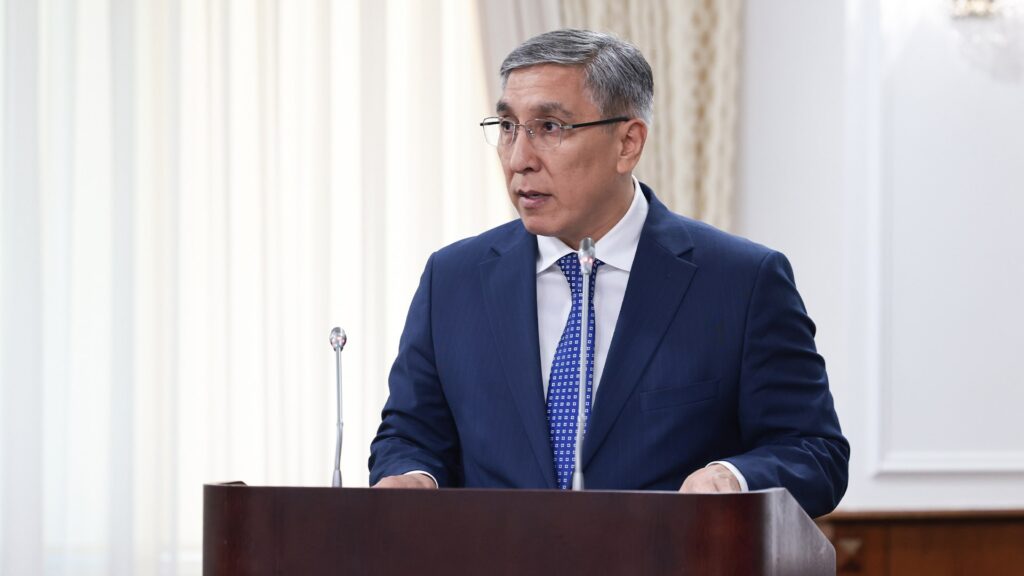
Kazakhstan will need approximately 3 million qualified specialists over the next three to five years, according to Deputy Minister of Labor and Social Protection of the Population Askar Biakhmetov. Speaking at a recent government meeting, Biakhmetov emphasized that this forecast should guide national strategies in education, vocational training, and workforce retraining. Workforce Priorities Data from the Ministry of Labor show that the highest demand (29%) will be for professionals in public services, including government administration, education, healthcare, and social security. This is followed by business services (21%), logistics and transport (16%), industry (13%), and construction and agriculture, each accounting for 7%. “These data must be taken into account when approving professional standards, developing educational programs, allocating state education grants, and organizing retraining initiatives,” Biakhmetov said. He noted the importance of prioritizing retraining programs, as automation and technological change continue to render many professions obsolete, while new sectors demand different competencies. Structural issues persist, including uncompetitive wages and regional imbalances in the labor force, particularly a labor surplus in the south and shortages in the north. Internal migration has also led to oversaturation in major urban centers, straining social and municipal infrastructure. The Ministry also flagged informal employment as a major challenge. In 2024, an estimated 30% of the working-age population were employed without pension contributions. Moreover, about 30% of university graduates are working in fields unrelated to their studies. “Often, graduates don’t study what they want due to low grant scores. As a result, they are trained in one field but work in another,” Biakhmetov explained. By 2025, Kazakhstan’s economically active population is projected to reach 11.3 million, about 60% of the total population of 20.3 million. The unemployment rate currently stands at 4.6%. Looking ahead, the annual growth of the labor force is expected to hit 360,000 by 2035. To address the evolving demands of the economy, the Ministry of Labor is developing an AI-based digital platform designed to identify skills gaps across enterprises and match individuals with relevant job vacancies or training programs. Linking Investment to Job Creation Prime Minister Olzhas Bektenov underscored the need for both foreign and domestic investors to take greater responsibility for employment generation within the scope of active and planned investment projects. He stipulated that at least 30% of investment budgets should be allocated to wages. “An Innovative Project Navigator has been developed to monitor employment trends and ensure investors meet their obligations. Currently, the system covers only large projects, but by September 1, data on all investment projects for 2025-2027 must be entered,” Bektenov said. He also ordered that key performance indicators (KPIs) for regional and municipal leaders regarding employment expansion be introduced starting in 2026. As previously reported by The Times of Central Asia, 979,000 people were employed in Kazakhstan in 2024.

Kazakhstan’s Migration Trends: Growth in Skilled Labor, No Signs of Chinese Influx

A positive migration trend is emerging in Kazakhstan, with new data indicating a significant increase in net migration. In 2024, the country recorded a migration balance of 17,200 people, an 85% increase from the previous year. The gap between arrivals and departures expanded 2.3 times, with 30,000 people moving to Kazakhstan compared to 12,800 leaving the country. Experts from the Institute of Public Policy highlighted that Kazakhstan’s emigration rate has reached a historic low in contrast to outflows observed in other countries. In 2024, net migration losses were significantly higher in Georgia (-39,200), Israel (-18,200), Uzbekistan (-14,300), and Bulgaria (-9,200). Kazakhstan has seen a significant reduction in emigration. In the early 2000s, the annual outflow was around 289,000 people, but by 2024, this number had dropped to the aforementioned 12,800. Meanwhile, the inflow of migrants continues to rise. Last year, 12,200 people arrived from Uzbekistan, 8,100 from Russia, 2,000 from China, 1,400 from Mongolia, and 1,100 from Turkmenistan. Additionally, several hundred people from Turkey, Germany, Georgia, the United States, and South Korea also relocated to Kazakhstan. Currently, 13,000 foreign specialists are employed in Kazakhstan’s economy, including 5,300 in construction, 2,600 in industry, and 700 in agriculture. The country is also attracting international students, some of whom choose to stay after graduation, suggesting that Kazakhstan is on track to become a leading destination for skilled professionals in Central Asia and the CIS. In November 2023, Kazakhstan and China implemented a visa-free regime, allowing short-term travel between the two countries. However, this agreement does not grant Chinese citizens the right to work, study, or engage in missionary activities in Kazakhstan. Despite this, social media was flooded with concerns that millions of Chinese citizens would move to Kazakhstan, take jobs, and even claim territory. Experts dismissed these fears as unfounded, arguing that the visa-free regime was primarily designed to boost trade and tourism rather than encourage large-scale migration. More than a year and a half has passed since the agreement came into effect, and no such wave of migration has occurred. Political scientist Marat Shibutov criticized the initial panic, stating: “Those who spread fear about mass Chinese migration should look in the mirror because nothing has happened. The Chinese do not need to come here.” According to Shibutov, young and ambitious Chinese migrants prefer destinations such as Singapore, the United States, Europe, Canada, and Australia. Official data further debunks fears of Chinese migration. According to the Bureau of National Statistics, the number of Chinese citizens moving to Kazakhstan permanently has been steadily decreasing since 2017. Most of those who do relocate are ethnic Kazakhs returning to their ancestral homeland, a process actively encouraged by the Kazakh government through state programs for repatriates, known as Kandas. The figures speak for themselves. In 2017, 3,000 Chinese citizens moved to Kazakhstan. By 2023, this number had dropped to just 416, of whom 398 were ethnic Kazakhs and only four were ethnic Chinese. Additionally, the vast majority of repatriated ethnic Kazakhs, 63.5%, came from Uzbekistan, while fewer than...