
• KGS/USD = 0.01144 0%
  • KZT/USD = 0.00207 0%
  • TJS/USD = 0.10440 -0.19%
  • UZS/USD = 0.00008 0%
  • TMT/USD = 0.28490 0%
  • KGS/USD = 0.01144 0%
  • KZT/USD = 0.00207 0%
  • TJS/USD = 0.10440 -0.19%
  • UZS/USD = 0.00008 0%
  • TMT/USD = 0.28490 0%
  • KGS/USD = 0.01144 0%
  • KZT/USD = 0.00207 0%
  • TJS/USD = 0.10440 -0.19%
  • UZS/USD = 0.00008 0%
  • TMT/USD = 0.28490 0%
  • KGS/USD = 0.01144 0%
  • KZT/USD = 0.00207 0%
  • TJS/USD = 0.10440 -0.19%
  • UZS/USD = 0.00008 0%
  • TMT/USD = 0.28490 0%
  • KGS/USD = 0.01144 0%
  • KZT/USD = 0.00207 0%
  • TJS/USD = 0.10440 -0.19%
  • UZS/USD = 0.00008 0%
  • TMT/USD = 0.28490 0%
  • KGS/USD = 0.01144 0%
  • KZT/USD = 0.00207 0%
  • TJS/USD = 0.10440 -0.19%
  • UZS/USD = 0.00008 0%
  • TMT/USD = 0.28490 0%
  • KGS/USD = 0.01144 0%
  • KZT/USD = 0.00207 0%
  • TJS/USD = 0.10440 -0.19%
  • UZS/USD = 0.00008 0%
  • TMT/USD = 0.28490 0%
  • KGS/USD = 0.01144 0%
  • KZT/USD = 0.00207 0%
  • TJS/USD = 0.10440 -0.19%
  • UZS/USD = 0.00008 0%
  • TMT/USD = 0.28490 0%

Viewing results 1 - 6 of 7

Russian Philosopher Sparks Outrage by Questioning Sovereignty of Former Soviet States

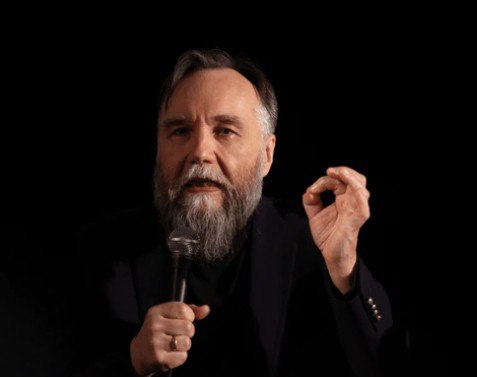
A fresh wave of controversy has erupted in Central Asia after Russian philosopher and political theorist Alexander Dugin publicly questioned the sovereignty of several post-Soviet states, including Uzbekistan. A video fragment of Dugin’s recent remarks circulated widely online, prompting strong backlash from regional analysts and commentators. In the recording, Alexander Dugin, founder of the International Eurasian Movement and often described as the ideologue of the so-called “Russian world,” said that national sovereignty should no longer apply to former Soviet republics. He specifically named Armenia, Georgia, Azerbaijan, Kazakhstan, Uzbekistan, Tajikistan, and Kyrgyzstan as states that, in his view, should not exist independently under any future political order. “Nothing sovereign can exist in this new model. That’s it. Sovereignty is over. National states are a thing of the past. This is garbage,” Dugin said, adding that “it is impossible to agree with the existence of a sovereign Uzbekistan.” Backlash from Uzbek Analysts Dugin’s remarks prompted immediate criticism in Uzbekistan. Journalist Ilyos Safarov described the comments as part of a broader ideological pattern rather than an isolated statement. “Yesterday it was Solovyov calling for a ‘special military operation’ in Central Asia. Today it is Dugin denying our sovereignty,” Safarov said. “This shows that post-imperial thinking is still alive in certain Russian political circles.” He warned that ignoring such rhetoric could further embolden these narratives. “Silence is often interpreted not as diplomacy, but as weakness. If these ideas are left unanswered, they begin to look acceptable to a wider audience,” Safarov said, noting that even unofficial figures can influence public discourse and political attitudes in Russia. Zavqibek Mahmudov, an associate professor at the Abdulla Avloniy National Institute of Pedagogical Excellence, echoed these concerns. He argued that ideological declarations, even from non-state actors, can translate into real-world political agendas. “History shows that radical political projects often begin with philosophical justifications,” Mahmudov said. He criticized Dugin’s rhetoric as part of a political chauvinism that categorizes countries as either "real" or "artificial." “When the existence of an entire nation is questioned, this is no longer academic debate, it is a direct challenge to international law and the principle of sovereign equality.” Mahmudov called for a coordinated legal and diplomatic response from all the countries mentioned in Dugin’s remarks. “A collective stance would be far more effective than individual national responses,” he noted. Official Distancing from Moscow The controversy follows recent remarks by Russian television host Vladimir Solovyov, who had floated the possibility of military action in Central Asia. That incident prompted a response from Russia’s Foreign Ministry. On January 16, ministry spokesperson Maria Zakharova stated that Solovyov’s views did not represent official Russian policy and reaffirmed that Moscow’s relationships with Central Asian countries are grounded in “partnership and respect for sovereignty.” Despite this distancing, analysts caution that repeated rhetorical assaults on Central Asian sovereignty, whether from state actors or affiliated intellectuals, may reflect deeper ideological currents that could have lasting consequences for regional stability.
Kyrgyzstan Independence Day Marked by Celebrations

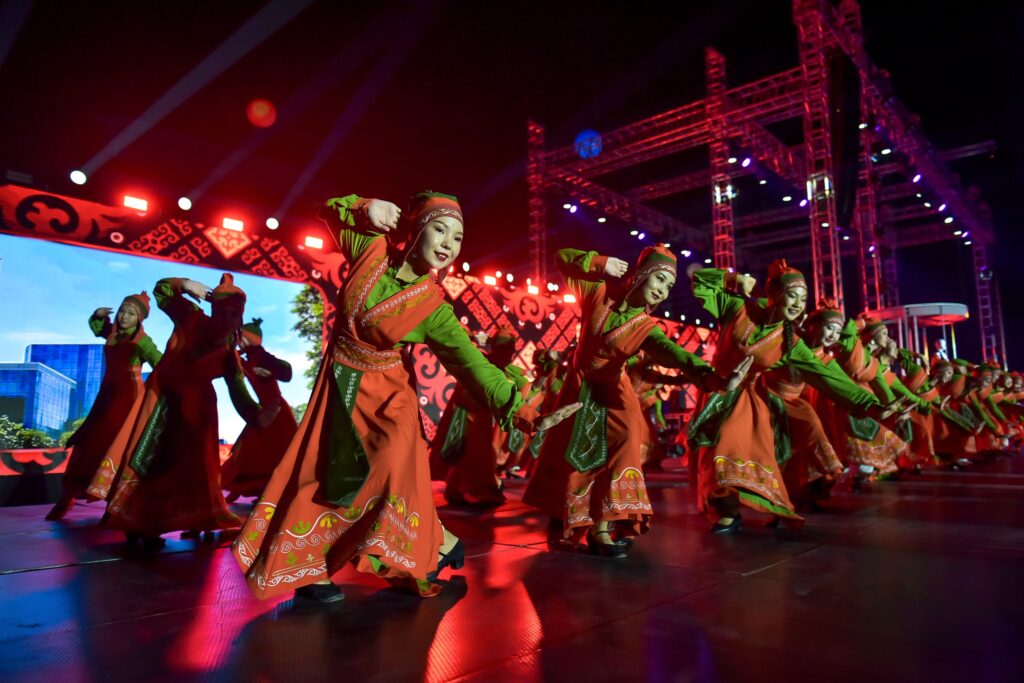
Kyrgyzstan marked the 34th anniversary of its independence on August 31 with large-scale celebrations across the country. For the first time, the central venue for the national festivities was the southern city of Jalal-Abad, the country’s third largest urban center.  The official program featured cultural, social, and sporting events, including a large-scale choreographic performance titled Future Kyrgyzstan, involving 600 dancers in the city’s main square. [caption id="attachment_35595" align="aligncenter" width="2560"] @president.kg[/caption] [caption id="attachment_35596" align="aligncenter" width="2560"] @president.kg[/caption] Celebrations Nationwide Events were held across all regions. In Bishkek, several thousand people gathered in Ala-Too Square for a garrison parade by the Internal Affairs Directorate. In the Issyk-Kul region, festivities included traditional equestrian competitions and other national games. Development and Investment During the festivities, President Sadyr Japarov inaugurated 100 new social facilities and more than 60 industrial facilities via online launch. He also encouraged domestic and foreign investors to take advantage of the country’s ready-made industrial zones: “We invite all business structures, from small to large enterprises. We have ready-made industrial zones, we can provide land, help with infrastructure and documentation,” he said. [caption id="attachment_35597" align="aligncenter" width="2560"] @president.kg[/caption] In Jalal-Abad, Japarov also opened a new art school and a 450-unit social housing complex. Concluding his address, Japarov offered a metaphor for the country's trajectory: “Kyrgyzstan is like a galloping horse,” he said. “Thirty-four years of independence is only the beginning of our long journey.”

Marking 34 Years of Independence: Uzbekistan’s Past, Present, and Future

Uzbekistan declared its independence from the Soviet Union on August 31, 1991, during the final, turbulent months of the USSR's collapse. On that day, an extraordinary session of the Uzbek SSR Supreme Council in Tashkent adopted a Declaration of Independence and passed the law “On the Foundations of State Independence.” The same session resolved that September 1 would henceforth be celebrated annually as Independence Day. The move came just days after the failed Moscow coup attempt (GKChP) against Soviet leader Mikhail Gorbachev, and in the wake of Ukraine and Belarus declaring their own independence. Uzbekistan’s then-leader Islam Karimov moved swiftly to follow suit. At the time, Karimov served both as the leader of Soviet Uzbekistan and First Secretary of the Communist Party of Uzbekistan. He presided over the landmark session on August 31 and proposed September 1 as the national holiday. Shortly afterward, his administration began establishing the institutions of statehood, including a Ministry of Defense and a National Security Service, both created in early September 1991. Later that year, on December 29, a national referendum overwhelmingly supported independence, and Karimov was elected the first president of the new republic. Karimov’s position in 1991 was not without contradictions. Earlier that year, during a USSR-wide referendum in March, he had campaigned for the preservation of the Soviet Union. At the time, he reportedly warned Uzbeks: “Our rivers will run with milk if we stay within the Soviet Union, but if we leave it, our rivers will fill with blood.” For many Uzbeks, the first Independence Day came as a surprise. The declaration was made hastily, and the celebrations of September 1, 1991, were unlike the orchestrated commemorations seen in later years. According to Kursiv, citizens awoke to an unfamiliar atmosphere, karnay horns echoed through the streets, cars were spontaneously decorated, and celebrations broke out informally. “Citizens didn’t even know they had woken up in a new independent state,” one account recalled. Emotions ranged from pride and elation to confusion and concern. The post-Soviet transition proved challenging: economic hardship and shortages left some wondering whether independence had been a mistake. “People in the villages were very unhappy, a bit scared, and already wondering if independence was a big mistake,” wrote Bruce Pannier in 2016. At the time, Pannier, now a contributor to The Times of Central Asia, was traveling through Uzbekistan in 1992. Others remained hopeful, viewing independence as a long-awaited moment of self-determination. For older generations raised under Soviet rule, the sense of historic transformation was profound. Today, 34 years later, Independence Day remains Uzbekistan’s most important national holiday, marked by public ceremonies and official remembrances. The events of 1991 continue to shape national identity and memory. Islam Karimov is remembered by some as the founding father of the republic; a legacy still debated in public discourse. For those who lived through the early 1990s, memories of watching a new flag rise and hearing a new anthem are inseparable from the hardship and promise of the era. Journalist Aziza Qurbonova reflected...

Despite War’s Challenges, Kazakhstan Says Trump-Putin Meeting Was “The Beginning”

Kazakhstan has praised Russian President Vladimir Putin and U.S. President Donald Trump for their meeting in Alaska, describing it as “the beginning of high-level negotiations on the situation in Ukraine.” President Kassym-Jomart Tokayev “regards the summit as a historic event, made possible by the political will and sincere determination of both leaders to seek common approaches to resolving contemporary global challenges, including the cessation of hostilities in Ukraine,” Tokayev´s press secretary, Ruslan Zheldibay, said on X on Saturday. Tokayev’s statement generally aligned with the positive statements made by Putin and Trump after their meeting on Friday, even though the two leaders provided few details about how they envisioned resolving the conflict when they spoke briefly to the media after their discussion. Ukraine and its European allies have been concerned that Trump could favor Putin’s terms for ending the war, leaving Ukraine vulnerable to renewed Russian pressure in the future. Ukrainian President Volodymyr Zelenskyy is expected to meet Trump at the White House on Monday. In a Truth Social post on Saturday, Trump appeared to back away from his previous demand for a Ukraine-supported ceasefire, saying it was better to “go directly to a Peace Agreement, which would end the war, and not a mere Ceasefire Agreement, which often times do not hold up.” Despite their concerns, European leaders have welcomed Trump’s negotiation efforts, noting a statement by the U.S. president that the United States “is prepared to give security guarantees” so that Ukraine can defend its sovereignty. “It will be up to Ukraine to make decisions on its territory. International borders must not be changed by force,” a joint statement by European leaders said. Kazakhstan is not directly involved in negotiations over Ukraine, but it has become an intermittent venue for international diplomacy and has offered to assist as needed since it maintains ties with both Russia and Ukraine. Tokayev has spoken in support of Ukraine’s sovereignty and territorial integrity. But in a phone call a week ago, Tokayev told Zelenskyy that “A bad peace is better than a good war,” possibly a pitch to the Ukrainian leader to consider concessions such as giving up territory in order to preserve the country’s independence. Russia occupies an estimated 20% of Ukraine and has made gains in eastern Ukraine in recent days. At least publicly, Zelenskyy has opposed the idea of giving up territory, saying the Ukrainian constitution prevents him from doing so. On Saturday, he said on X: “A real peace must be achieved, one that will be lasting, not just another pause between Russian invasions.” Kazakhstan, which has sought neutrality over the war, shares a long land border with Russia and has closer trade and diplomatic ties with Moscow than Kyiv. Since Russia’s full-scale invasion of Ukraine in February 2022, Tokayev has spoken to Zelenskyy several times in phone calls that, according to Kazakhstan’s presidency, were initiated by the Ukrainian side. Tokayev has spoken to Putin by phone on more than twice as many occasions and has also met the Russian...

Opinion: Are Kazakhstan and the U.S. Reaching Common Ground on Sovereignty and Mutual Engagement?

Kazakhstan’s President Kassym-Jomart Tokayev has made his position clear: his country must remain sovereign, and activities to exert foreign influence should be closely monitored. The message from Astana is that cultural impositions from abroad are not welcome. Tokayev’s longstanding view that Kazakhstan’s democracy should evolve on its own terms has gained new traction with the return of U.S. President Donald Trump to the White House. Washington's avoidance of values-based diplomacy in favor of a hard-nosed, transactional model reinforces Astana’s instincts and creates an opening for a new kind of engagement between the two. "The so-called democratic moral values," Tokayev said, "have been imposed on many countries for decades." Moreover, "under this guise, open interference in the internal affairs of states through international non-governmental organizations and foundations has become widespread. Its ultimate goal," he concluded, "is only theft, that is, pocketing billions of dollars in budgets." For decades, the U.S. policy in Central Asia was fixated on democratic governance, press freedoms, and minority rights, seeking to advance these objectives through NGO funding and media support. In principle, these directions align with Kazakhstan’s own institutional reforms. In practice, however, they became points of friction. Astana has pursued decentralization and anti-corruption measures on its own terms, so any tension with Washington did not concern governance itself. It was, rather, about Washington’s insistence on deeper cultural and political shifts. The unease was not hypothetical. It was spelled out in statements by U.S. officials visiting Kazakhstan. They "were glad to discuss key human rights issues including the freedoms of expression and peaceful assembly, and respect for the rights of disabled persons, members of the LGBTQI+ community, and political prisoners." Moreover, these issues were framed as non-negotiable pillars of engagement, without reference to the cultural context of Kazakhstan’s legal and political traditions. In some cases, the “political prisoners” were propped up by NGOs funded by the U.S. Government. From Washington’s perspective, these were essential democratic norms; from Astana’s, they were foreign expectations imposed from outside. In truth, Kazakhstan had seen this dynamic before. Its wariness of Western-backed NGOs was informed by patterns of events. In Astana’s view, some so-called civil society initiatives weren’t merely fostering grassroots activism. They were vehicles for political engineering. For instance, Mukhtar Ablyazov, who remains accused of embezzling $10 billion from Kazakhstan's BTA Bank, fled to Britain in the mid-2000s before escaping criminal charges to France, where he was granted asylum until being ordered to leave in 2023. Despite his history of corruption, he rebranded himself as a political opposition figure and human rights leader, cultivating a network of international NGOs and earning significant support within the European Union. As recently as February 2025, he and his NGO allies received backing from members of the Parliamentary Assembly of the Council of Europe. A similar strategy has been employed by public figures like Bergey Ryskaliyev, Akezhan Kazhegeldin, and Karim Massimov. These individuals, despite facing criminal allegations, have amassed significant wealth that appears to have been used to fund lobbyists, NGOs, media and other...
