• KGS/USD = 0.01144 0%
  • KZT/USD = 0.00205 0%
  • TJS/USD = 0.10722 0%
  • UZS/USD = 0.00008 0%
  • TMT/USD = 0.28490 0%
  • KGS/USD = 0.01144 0%
  • KZT/USD = 0.00205 0%
  • TJS/USD = 0.10722 0%
  • UZS/USD = 0.00008 0%
  • TMT/USD = 0.28490 0%
  • KGS/USD = 0.01144 0%
  • KZT/USD = 0.00205 0%
  • TJS/USD = 0.10722 0%
  • UZS/USD = 0.00008 0%
  • TMT/USD = 0.28490 0%
  • KGS/USD = 0.01144 0%
  • KZT/USD = 0.00205 0%
  • TJS/USD = 0.10722 0%
  • UZS/USD = 0.00008 0%
  • TMT/USD = 0.28490 0%
  • KGS/USD = 0.01144 0%
  • KZT/USD = 0.00205 0%
  • TJS/USD = 0.10722 0%
  • UZS/USD = 0.00008 0%
  • TMT/USD = 0.28490 0%
  • KGS/USD = 0.01144 0%
  • KZT/USD = 0.00205 0%
  • TJS/USD = 0.10722 0%
  • UZS/USD = 0.00008 0%
  • TMT/USD = 0.28490 0%
  • KGS/USD = 0.01144 0%
  • KZT/USD = 0.00205 0%
  • TJS/USD = 0.10722 0%
  • UZS/USD = 0.00008 0%
  • TMT/USD = 0.28490 0%
  • KGS/USD = 0.01144 0%
  • KZT/USD = 0.00205 0%
  • TJS/USD = 0.10722 0%
  • UZS/USD = 0.00008 0%
  • TMT/USD = 0.28490 0%

Viewing results 1 - 6 of 13

Turkmenistan Begins Seizing and Dismantling Starlink Equipment

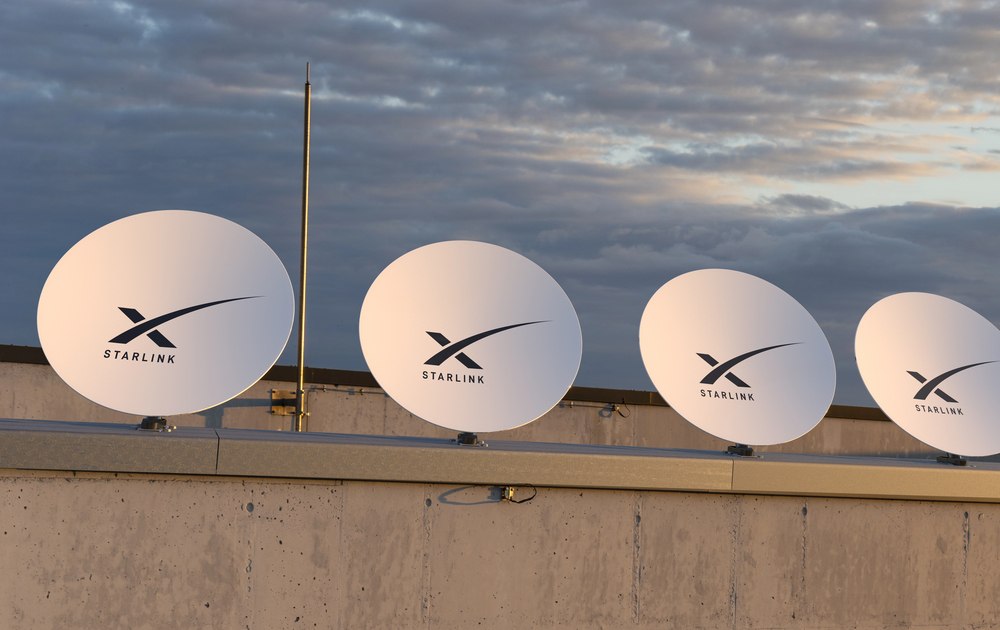
Amid ongoing connectivity issues, Turkmenistan’s authorities have intensified efforts to control alternative internet access. Since mid-April, the country has begun widespread identification and seizure of equipment used for the Starlink service. Raids are being conducted by law enforcement agencies and other relevant state bodies. According to sources, inspections are taking place in residential buildings as well as office and commercial properties, with particular attention paid to rooftops, where satellite equipment is typically installed. Although the service is not officially authorized in Turkmenistan, it has become widely used. The reason is straightforward: users are seeking more stable internet access amid low speeds and restrictions imposed by local providers. According to local residents, the shift toward satellite internet accelerated following a deterioration in network quality in February. At that time, authorities introduced what users describe as a deliberate “degradation” of connectivity, increasing demand for alternative solutions. The cost of connecting to Starlink remains high. Purchasing and installing the equipment typically requires between $1,000 and $1,500. However, users begin to see savings after several months compared to domestic tariffs. Subscribers pay around $100 per month and receive speeds exceeding 200 Mbps, while the state provider Turkmen Telecom offers the general population a maximum of 6 Mbps. Even at a monthly cost of about $112, users can expect only around 8 Mbps. Higher-speed packages are largely unavailable to ordinary users. Speeds of up to 100 Mbps are offered only to legal entities and cost approximately $6,280 per month. For foreign companies, the price can reach as much as $35,702 per month. However, the key issue extends beyond pricing. According to users, connection quality remains unstable. Frequent disruptions and blocking are reported, and in some cases even basic online activities take a considerable amount of time.

Starlink Satellite Internet Now Available in Tajikistan

Starlink, the satellite internet service operated by SpaceX, has officially launched in Tajikistan, the company announced on February 5. “Starlink’s high-speed, low-latency internet is now available in Tajikistan,” the company posted on X. The rollout expands Starlink’s coverage in Central Asia, a region where mountainous terrain and remote settlements have long made stable internet access difficult. Starlink is operated by Starlink Services LLC, a global telecommunications provider and wholly owned subsidiary of the U.S. aerospace company SpaceX, founded by Elon Musk. The service operates via a constellation of low-Earth orbit satellites, delivering broadband internet to areas underserved by traditional infrastructure. It is now active in approximately 130 countries and territories worldwide. The expansion into Tajikistan follows Starlink’s earlier rollout in Kazakhstan. On June 12, 2025, Kazakhstan’s Ministry of Digital Development, Innovation, and Aerospace Industry signed a formal agreement with Starlink, requiring the company to adhere to national telecommunications and information security regulations. This agreement paved the way for official use of the service by citizens, businesses, and government agencies, including in rural and hard-to-reach areas. In Kazakhstan, Starlink’s pricing is publicly listed on the company’s website. The most basic home internet plan starts at 23,000 tenge (around $46) per month with speed limitations. Unlimited plans begin at 31,000 tenge (approximately $62), while mobile and travel packages are available at higher price points. Starlink also plans to begin operations in Uzbekistan in 2026, although service has not yet launched there.

From the Steppe to Space: Kazakhstan Tests First Direct-to-Cell Phone Call

In a remote part of Kazakhstan, a standard 4G smartphone has made Central Asia’s first satellite-linked phone call, thanks to a field test by Beeline Kazakhstan and SpaceX’s Starlink network. The trial successfully routed a WhatsApp voice call and text messages through Starlink Direct-to-Cell satellites, demonstrating that ordinary phones can stay connected even where traditional mobile coverage ends. The demonstration was carried out in Kazakhstan’s Akmolinskaya region and confirmed the interoperability between Starlink’s satellites and Beeline’s terrestrial network. During the test, Beeline Kazakhstan CEO Evgeniy Nastradin and Kazakhstan’s Deputy Prime Minister Zhaslan Madiyev placed a WhatsApp audio call via Starlink to VEON Group CEO Kaan Terzioglu using a regular smartphone and SIM card. They also exchanged SMS and WhatsApp messages, effectively merging satellite links with the country’s mobile infrastructure for the first time. Kazakhstan has vast stretches of steppe and mountains where cell towers are sparse. Officials involved in the project say satellite-enabled connectivity offers a vital new layer of coverage for these remote regions. “Starlink’s Direct-to-Cell satellites make it possible to stay connected in places where traditional infrastructure is unavailable: in the mountains, the steppe, forests, and across long distances,” Madiyev noted, calling the technology “more than just a convenience – it is an important safety measure [that will ensure people] can stay connected in any part of the country.” Madiyev added that the ability to send a message from a dead zone without any special equipment “has the potential to save lives” in emergencies. Beeline Kazakhstan’s leadership similarly emphasized the significance of the milestone. By blending Starlink’s space-based relays with Beeline’s ground towers, customers will be able to stay connected anywhere in Kazakhstan. The initiative has government support and is backed by Kazakhstan’s Ministry of Artificial Intelligence and Digital Development as part of a push to improve nationwide connectivity. Starlink Direct-to-Cell is a new capability of SpaceX’s Starlink satellite internet constellation that effectively turns satellites into cell towers in space. The satellites carry special cellular antennas (eNodeB modems) and link with ground networks via laser backhaul, allowing a phone to connect to the satellite as if roaming on a normal network. Crucially, this works with existing phones without requiring any new hardware or apps. The technology aims to eliminate mobile dead zones, as over 50% of the world’s land area still lacks cellular coverage. The Kazakhstan trial is part of a broader wave of satellite-cellular convergence. In November, Ukraine became the first country in Europe to launch Starlink’s direct-to-phone service, with VEON’s subsidiary Kyivstar initially offering satellite-powered text messaging to keep people connected during wartime blackouts and disaster situations. Voice calling and data services are expected to follow next year, underscoring the technology’s value for resilience when traditional infrastructure is disrupted. Following this week’s successful test, Beeline Kazakhstan plans to roll out Starlink Direct-to-Cell connectivity for its own customers, beginning with SMS text services in 2026, pending regulatory approval. Data connectivity would come next, expanding to full-service coverage in phases. Beeline serves over eleven million mobile subscribers in...

Starlink Officially Launches in Kazakhstan

In a landmark step toward bridging Kazakhstan’s digital divide, SpaceX’s satellite internet service Starlink has officially begun operations in the country. As of today, residents and organizations across Kazakhstan can legitimately purchase and activate Starlink satellite terminals to access high-speed internet — even in the most remote regions. From Pilot to Public Rollout Kazakhstan's engagement with Starlink began as early as late 2023, when the government deployed the system in a pilot phase to connect rural schools with fast broadband service. By mid‑2024, over 1,700 schools were brought online under the “Accessible Internet” national program. On June 12, 2025, the Ministry of Digital Development, Innovation, and Aerospace Industry signed a formal agreement with Starlink, committing the company to fully comply with Kazakhstan’s information security and telecommunications laws. The agreement paved the way for the official rollout to citizens, entities, and government bodies. Why This Matters Kazakhstan's vast geography and dispersed settlement patterns have long challenged conventional broadband expansion. Fiber optics and cell towers reach most urban areas - but remote pastures, mountain villages, and certain infrastructure sites remain underconnected or entirely offline. Starlink's low-Earth-orbit satellite constellation provides a modern solution: delivering high-speed, low-latency internet without reliance on terrestrial infrastructure. This opens avenues not only for education and healthcare in rural schools and clinics, but also for mobile services, infrastructure projects, and remote industrial operations. Official Reactions In June, Minister Zhaslan Madiyev highlighted the significance of this milestone: “Until today, Starlink operated in Kazakhstan in pilot mode, providing internet only in schools. Now, finally, we have reached an agreement: the company agreed to comply with all the requirements of our legislation … our citizens will be able to officially and legally connect to satellite internet.” On Starlink’s official X account, the company announced: “Starlink’s high-speed, low-latency internet is now available in Kazakhstan!” The deployment aligns with President Kassym‑Jomart Tokayev’s national “Accessible Internet” initiative, aiming to ensure that no region is left behind in digital connectivity.

Kazakhstan’s Telecommunications Market Set to Slow in Coming Years

Kazakhstan’s telecommunications market is projected to experience a slowdown in the coming years, with average annual growth expected to hover around 6% for 2025-2027, nearly half the rate seen over the past two years. According to a joint study by Russian firm Nexign and the TelecomDaily agency, the sector grew by 11% in 2024, reaching $2.4 billion, the highest figure in three years. However, analysts attribute this recent surge not to organic market expansion, but to a sharp rise in communication tariffs, which increased by an average of 20%. The price hikes were largely driven by infrastructure modernization costs, the rollout of 5G networks, and increased mobile data usage. Looking ahead, sector growth is expected to be fueled by expanding the customer base, rising service consumption, and the development of digital offerings. Mobile communications accounted for 17% of telecom revenues in 2024, while internet access comprised a dominant 53%. In the past two years, mobile data consumption in Kazakhstan has doubled, placing the country among the global top ten for mobile internet usage per capita. As of March 2025, Kazakhstan had 26 million active SIM cards, more than the total population of approximately 20 million, indicating widespread use of multiple connections. Over 18 million people now have access to mobile internet, and another 3.2 million are connected to fixed broadband. The only segment in decline is fixed-line telephony, which saw a 10% drop in subscribers over the past year, falling to 2.3 million. The study notes that telecom operators will concentrate on expanding 5G coverage, enhancing service quality, and deploying fixed wireless access (FWA) technologies, seen as a more affordable alternative to fiber-optic infrastructure in rural areas. Kazakhstan is also advancing in satellite communications. In 2024, 750 rural schools were connected to the internet via Starlink, while OneWeb launched a ground control center in the country. The Times of Central Asia previously reported that Starlink’s commercial rollout in Kazakhstan is scheduled for the third quarter of 2025. The sector could also benefit from the integration of artificial intelligence in public services and various industries, offering potential new avenues for growth. Nonetheless, key challenges remain for the 2025-2027 period. These include the high costs of extending network coverage to remote areas, escalating prices for imported telecom equipment amid ongoing geopolitical tensions, and intensifying competition among major players. The primary operators in Kazakhstan’s telecom market include Kazakhtelecom JSC (and its subsidiary Kcell JSC), Beeline Kazakhstan (Kar-Tel LLP), Tele2/Altel (Mobile Telecom Service LLP), Transtelecom JSC, Alma TV (AlmaTel Kazakhstan JSC), and Jusan Mobile JSC (KazTransCom).

The Battle for Control Over Central Asia’s Digital Future

Central Asia is digitalizing quickly. Governments across the region have invested in smart cities, 5G, and AI-powered platforms. Kazakhstan ranks 24th in the world in global e-government indexes, and in Tashkent and Bishkek, young, tech-savvy populations are pushing for innovation. But such progress is not without risks. A new report from the German Marshall Fund (GMF), a Washington-based think tank, outlines how Central Asia is becoming ever more reliant on Chinese and Russian technology. These two countries, the report argues, are using digital tools not just to supply infrastructure but to shape how governments in the region manage data, surveillance, and speech. Beijing and Moscow’s tech exports act as snares, tying customers into their own economies. “Central Asian governments are aware of these challenges,” Dylan Welch, the author of the report and a China analyst at the GMF, told The Times of Central Asia. But he notes that it can be difficult to convince policymakers to prioritize the dangers of such overexposure. “For the national leaders, their imperative is to deliver economic growth because they have these young, dynamic populations that need jobs… if they don't deliver on that, then they're in for a long period of instability at home,” he said. This makes Chinese and Russian offers to develop their digital industries extremely tempting. An Entrenched Presence The report coincides with a flurry of Russian and Chinese engagement in the region. Over the weekend, Kazakhstan announced that between them, Beijing and Moscow will be responsible for delivering a new generation of nuclear reactors to the country, currently leaving French and Korean alternatives out in the cold. Then came this week’s visit of Chinese President Xi Jinping to Astana for a summit with the five Central Asian leaders. On the digital front, one notable announcement from this summit included a plan to develop an Artificial Intelligence Cooperation Center in Kyrgyzstan. China has used the term “Digital Silk Road” to describe its investments in Central Asia, and it has built much of the physical infrastructure behind the region’s digitization drive. For its part, Russia has exported its software, legal models and surveillance practices. Taken together, these systems are helping local governments tighten control over digital life. “This strategic integration makes it more difficult for regional states to diversify in the future, even though many continue to pursue multi-vector foreign policies aimed at balancing global partnerships,” Yunis Sharifli, Non-Resident Fellow at the China-Global South Project, told TCA. Where the Vulnerabilities Lie The report uses a “technology stack” framework to explain the problem. This framework looks at five layers: network infrastructure, data storage, consumer devices, digital platforms, and government policies. Across these layers, it argues, Central Asia is exposed to Chinese and Russian influence. Take Kazakhstan. It may be the most advanced digital economy in the region, but most of its internet traffic still passes through Russia. Telecom firms across the region are also required to install a Russian-made surveillance technology known as SORM (System for Operative Investigative Activities), which can intercept internet...