The Future of Kyrgyz Tech – Scaling Global Companies, Attracting Foreign Capital
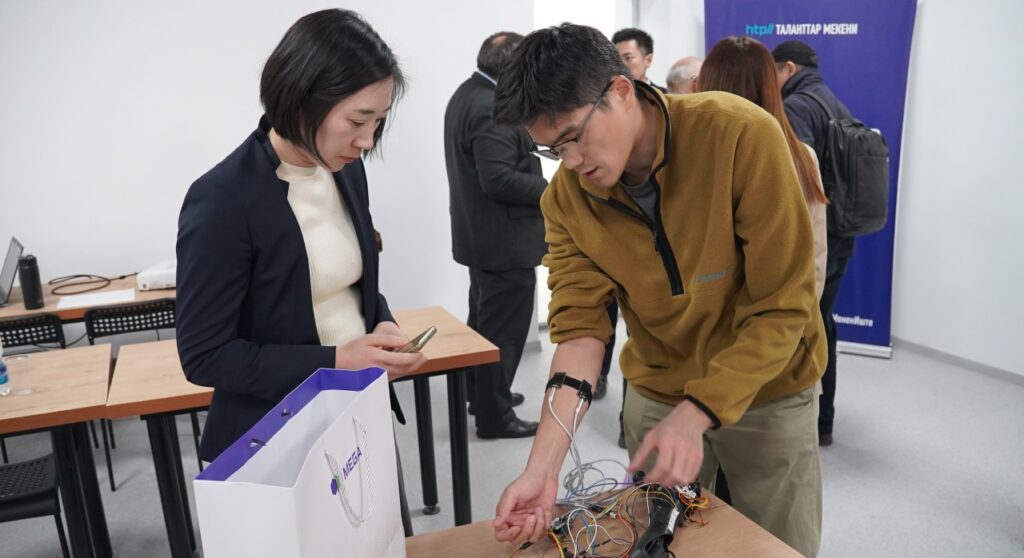
In the second installment of our exclusive two-part interview, The Times of Central Asia continues its deep dive into Kyrgyzstan’s evolving tech landscape with Elena Nechaeva, Head of Communications at the High Technology Park of the Kyrgyz Republic (HTP). Last week, we explored the startups and entrepreneurs who are currently building and scaling global businesses. If you missed it, you can read the first part of the interview here. This week, we focus on policy reform, cross-border cooperation, investor outreach, and the path ahead for Kyrgyz entrepreneurs in an increasingly globally competitive market. [caption id="attachment_40428" align="aligncenter" width="1280"] Image: The High Technology Park, Kyrgyz Republic[/caption] TCA: In terms of regulation and policy, what improvements or reforms would you like to see to better support innovation? Elena Nechaeva: There are several policy improvements that could really accelerate innovation in Kyrgyzstan, and many tech leaders have been very open about them. One of the biggest needs is a clearer national strategy for startups. Now, it’s not fully defined who exactly drives startup development and what the government’s long-term role should be. A coordinated approach with clear ownership would help the ecosystem grow much faster. Another important area is venture legislation and a stronger legal framework. Founders and investors often mention the need for a proper venture law, elements of English common law, and better protection of intellectual property. These changes would make it far easier to attract long-term capital and for investors to feel confident working with local companies. There’s also a lot of focus on the importance of modernizing higher education and expanding international partnerships. Strong engineering programs and links between academia and industry are essential for deep-tech development. And finally, Kyrgyzstan needs policies that help retain and attract talent. The digital nomad visa is already showing positive results, but it can be expanded. TCA: How does the Kyrgyz Republic's tech ecosystem compare to others in Central Asia or the wider region? Nechaeva: If you look at the region by population size, Kyrgyzstan is much smaller - about 7 million people, compared to nearly 20 million in Kazakhstan and over 36 million in Uzbekistan. And yet, with a far smaller talent pool and fewer resources, the country already exports more than $130 million in IT services, almost entirely to global markets. Whilst Kyrgyzstan’s tech ecosystem is smaller than some of our neighbors, it is one of the fastest-growing. What makes it different is that it is being developed from the bottom up - driven by founders, engineers, and communities rather than large state programs. That’s why the ecosystem is very agile, open, with a real-world focus on exports. Another difference is the mindset: Kyrgyz startups grow with a “global from day one” approach. They don’t build for a domestic market - they build for the U.S., Europe, and the wider world from day one. That creates a very different culture and pushes teams to compete internationally right from the start. So, while our ecosystem is smaller in size, it’s fast, flexible, and...