• KGS/USD = 0.01143 0%
  • KZT/USD = 0.00205 0%
  • TJS/USD = 0.10724 0.09%
  • UZS/USD = 0.00008 0%
  • TMT/USD = 0.28571 0%
  • KGS/USD = 0.01143 0%
  • KZT/USD = 0.00205 0%
  • TJS/USD = 0.10724 0.09%
  • UZS/USD = 0.00008 0%
  • TMT/USD = 0.28571 0%
  • KGS/USD = 0.01143 0%
  • KZT/USD = 0.00205 0%
  • TJS/USD = 0.10724 0.09%
  • UZS/USD = 0.00008 0%
  • TMT/USD = 0.28571 0%
  • KGS/USD = 0.01143 0%
  • KZT/USD = 0.00205 0%
  • TJS/USD = 0.10724 0.09%
  • UZS/USD = 0.00008 0%
  • TMT/USD = 0.28571 0%
  • KGS/USD = 0.01143 0%
  • KZT/USD = 0.00205 0%
  • TJS/USD = 0.10724 0.09%
  • UZS/USD = 0.00008 0%
  • TMT/USD = 0.28571 0%
  • KGS/USD = 0.01143 0%
  • KZT/USD = 0.00205 0%
  • TJS/USD = 0.10724 0.09%
  • UZS/USD = 0.00008 0%
  • TMT/USD = 0.28571 0%
  • KGS/USD = 0.01143 0%
  • KZT/USD = 0.00205 0%
  • TJS/USD = 0.10724 0.09%
  • UZS/USD = 0.00008 0%
  • TMT/USD = 0.28571 0%
  • KGS/USD = 0.01143 0%
  • KZT/USD = 0.00205 0%
  • TJS/USD = 0.10724 0.09%
  • UZS/USD = 0.00008 0%
  • TMT/USD = 0.28571 0%

Viewing results 1 - 6 of 47

Uzbekistan’s Public Debt Projected to Reach $45.1 Billion by 2025

According to the “Budget for Citizens” publication issued by Uzbekistan’s Ministry of Economy and Finance, Uzbekistan’s public debt is projected to reach $45.1 billion by the end of 2025. Updated estimates indicate that state debt will amount to $39.7 billion by the end of this year, rising to $45.1 billion, equivalent to 36.7% of GDP, in 2025. The publication’s primary focus is forecasting revenues, expenditure, and deficits in the state budget for 2025. State budget revenues are projected at 308,547 billion UZS ($24.19 billion), with the economy expected to grow by 6% in 2025, increasing to 6.1% in 2026 and 6.3% in 2027. State budget expenditure for 2025 is planned at 344,576 billion UZS ($27.02 billion), with 52% being allocated to social spending. The report provides detailed information on budget allocations by ministries and departments, their alignment with national sustainable development goals, and their impact on climate change. It also outlines how funds will be classified under development programs, ensuring transparency and adherence to Uzbekistan’s broader policy objectives.

Government Reports Steady Economic Growth in Kyrgyzstan

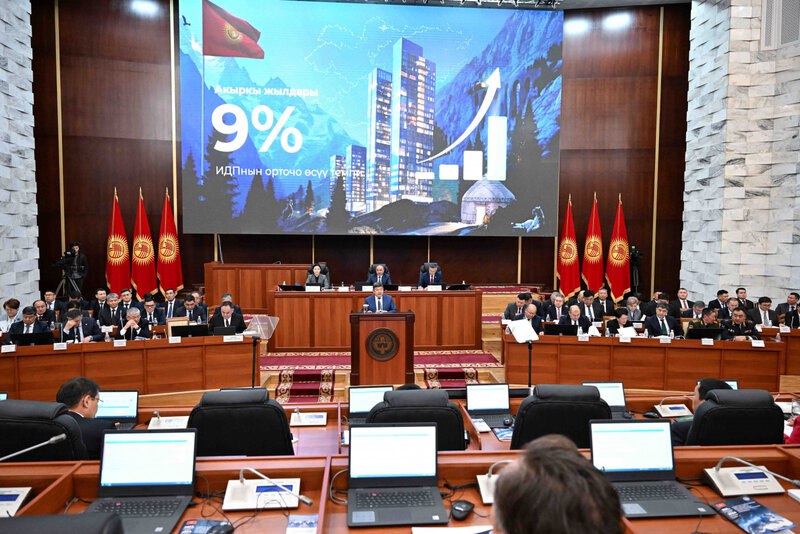
Chairman of the Cabinet of Ministers Akylbek Japarov announced in parliament on November 14 that Kyrgyzstan's GDP exceeded a historical high of 1.3 trillion KGS in 2023 and is projected to reach 1.5 trillion KGS ($17.35 billion) by the end of the year. Presenting the state budget execution for 2023 and the draft budget for 2025, Japarov reported a 9% real GDP growth rate for 2023, consistent with the growth rate in 2022. For context, Kyrgyzstan’s GDP growth was 7% in 2021. Japarov offered a conservative forecast for 2024, predicting 9.2% GDP growth. “If we divide GDP per capita, then in 2020, this figure was $1,200, and in 2024, it will exceed $2,500,” he noted. The average monthly wage in Kyrgyzstan has risen steadily from $239 (20,249 KGS) in 2021 to $316 (26,620 KGS) in 2022 and $376 in 2023. By the end of 2024, it is expected to reach $415 (35,791 KGS). From January to September 2024, Kyrgyzstan’s foreign trade volume was $12.1 billion, an 8.4% increase. Exports grew by 28.2%, totaling $2.8 billion, while imports rose by 3.7%, amounting to $9.3 billion. Inflation has significantly decreased, dropping from 14.7% in 2022 to 7.3% in 2023, and reaching 4.2% from January to October 2024. Japarov also highlighted the growth of Kyrgyzstan’s industrial sector, attributing it to investments and government support. By the end of 2024, more than 150 new enterprises are expected to open, with total investment projected at $2.2 billion and an estimated 19,000 jobs created. Further, for the first time since independence, Kyrgyzstan has started producing cars, standard gold bars, and new types of medicines. In the energy sector, Japarov reported that small hydroelectric power plants with a combined capacity of 48.3 MW were brought online in 2024. Additionally, solar and wind power projects are underway, alongside the reconstruction of the Toktogul hydroelectric power plant, the country’s largest.

Aging Kyrgyzstan: Economic Challenges and Empowering Seniors

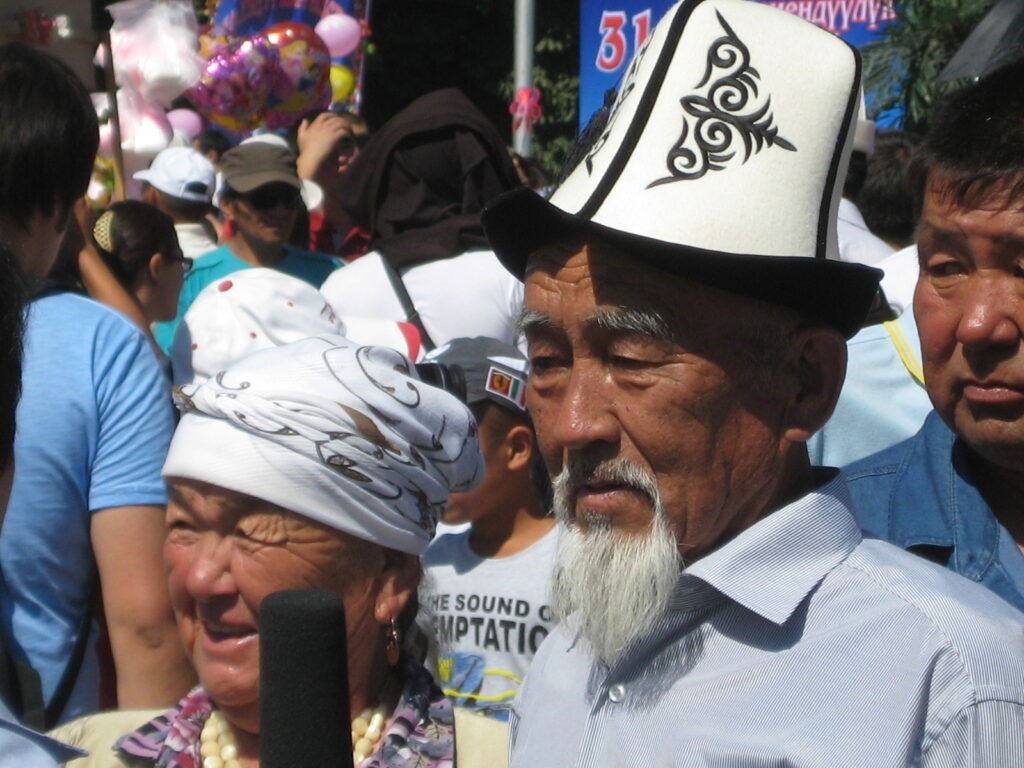
According to the National Statistical Committee of the Kyrgyz Republic, the country's population is aging quickly. Based on UN data, the agency predicts that the proportion of elderly people (65 and over) in Kyrgyzstan will significantly increase by 2030. According to the analysis, currently, 5.7% of the total population is elderly, and this figure may reach 8% by 2030. Speaking about the processes associated with an aging population, experts have highlighted social funds related to the payment of pensions, benefits, and other contributions to people who have finished their careers. Additionally, an aging population will produce fewer materials and public goods, and state tax revenues will decrease, which could lead to a decline in the country's standard of living. However, economist Kubanychbek Idinov sees this as a manageable problem. The 61-year-old believes that the increase in the average age is indicative of an improvement in Kyrgyzstan's standard of living. “The country's GDP is growing, and state budget spending on social projects is increasing. But we need to give pensioners more opportunities to work. This will be a great help to the revenue side of the budget. People who retire can work elsewhere. This allows them not to rely on their pensions alone, to have additional income,” Idinov told The Times of Central Asia. Most retirees in Kyrgyzstan continue to work. Idinov said they start small businesses or enterprises and pass on their experience to young people. According to official data, the country currently has about 150,000 working pensioners. “It is necessary at the state level to support trade unions' work in attracting retirees to work. It is possible to work at the level of local authorities. Then the issue of small pension growth will not be acute for people and the state,” Idinov said. On a related matter, Kyrgyz sociologists say that despite a slowdown, the country's population grew by almost half a million people (+7.8%) over the year. Kyrgyzstan remains the second-largest Central Asian country in terms of population growth after Tajikistan. “The increase in population, despite a slight decrease in the growth rate, is provided by the excess of births over deaths with a negative balance of external migration,” the report of the National Statistical Committee states. The large number of labor migrants returning home is also helping to combat the decrease in the number of able-bodied people. In 2007, experts from the UN Demography Department suggested evaluating countries as those with an old population if more than 7% of its citizens are over 65 years old.

Tajikistan to Increase Defense Budget

Tajik authorities plan to increase the 2025 defense, law enforcement, and judiciary budget to 4.7 billion somoni ($446 million); a rise equivalent to $92 million compared to the $354 million spent in 2024. As a percentage, spending on the army and security forces will rise to 2.8 percent of GDP, up 0.2 percent from the previous year. In adherence to the State Secrets Act, data on the breakdown of the budget remains confidential. However, issues concerning the efficient spending of allocated funds have recently come to light. In August 2024, the Agency for State Financial Control and Anti-Corruption reported that over 120 million TJS ($11.3m), intended for clothing and food for servicemen,  had been embezzled  from the Defense Ministry. In response, a criminal case was opened against 52 suspects, including ministry officials. According to documentation of increased military spending in Central Asia by the Stockholm Institute for Peace Research (SIPRI), in 2023,  Tajikistan, Kazakhstan, and Kyrgyzstan's expenditure on defense totalled  $1.8 billion. Figures for Uzbekistan and Turkmenistan remain unknown. The growth of the defense budget in the region is due to several factors, and in particular, border conflicts between Central Asian countries, the unstable situation in Afghanistan, and the war in Ukraine which have forced the region's states to strengthen their defense and revise strategic priorities regarding security. Changes in the geopolitical environment have also impacted military expenditure. Whilst Central Asian states previously relied heavily on Russia for security, the number of external partners has increased significantly. Alongside Russia, countries such as Turkey, Iran, Saudi Arabia, the United States, Germany, France, China, and Belarus, are beginning to play an essential role in the region's security. They also supply arms and military equipment. Experts note that increasing defense budgets, while necessary to maintain stability, cannot solve all security-related problems, and for the foreseeable future, political instability and internal factors remain severe challenges for Central Asian countries.

Uzbekistan’s Gold and Currency Reserves Reach Record Levels

As of September 1, Uzbekistan's international reserves reached $39.15 billion. This reserve value is a record indicator for after 2018 when data disclosure began. In August, the value of international assets increased by $1.75 billion, or about 4.7%, compared to July's increase of $1.06 billion. This increase was mainly due to gold. Although the net physical volume of gold in official reserves decreased from 12.1 ounces to 12 ounces during August, the metal's price on the world market has increased significantly. Due to this, the value of the gold part of reserves increased by $1.24 billion or 4.4% to $30.39 billion in one month. Since the beginning of 2024, the price of gold has risen by 20% on the world market. Last month, the price of standard gold bullion exceeded a million dollars for the first time in history. Uzbekistan was one of the countries that bought the most gold in July. In August, reserve assets in foreign currencies increased from $7.68 billion to $8.19 billion (+ $503.1 million). Uzbekistan’s gold-currency reserves have increased by $4.59 billion or 13.3% since the beginning of the year. The Times of Central Asia previously reported that Uzbekistan’s gold reserves reached $37.4 billion in August.

Kyrgyzstan Forecasts Five-Year Budget Surplus

The Ministry of Finance of Kyrgyzstan has published a forecast of total revenue for the next five years, indicating that by 2029, the country's state budget revenue will grow to KGS 655 billion ($7.8 billion). At the end of 2024, Kyrgyzstan's state budget surplus will amount to KGS 11.2 billion ($131.7 million), while revenue this year amounted to KGS 414 billion ($4.8 billion). As  previously reported by TCA, the introduction of cash registers and the fight against crime have impacted on growth. Another contributing factor was mentioned by Head of the Cabinet of Ministers, Akylbek Japarov, who stated, “In fiscal policy, we are adopting technology that is fit for the times. Taxpayers are pleased with these changes. They no longer have to wait in queues; they can quickly file reports and receive the necessary documents online.” He also commended the promotion of domestic and foreign investments and the development of Kyrgyzstan's industrial sector which facilitate the growth of the republic's economy and, in turn, state budget revenue: “Since the beginning of 2024, 29 enterprises have been put into operation. Major projects are being implemented, such as constructing the Kambarata hydroelectric power plant and the China-Kyrgyzstan-Uzbekistan railroad. There are plans to develop the tourism sector." The Kyrgyz Finance Ministry said in a report that the annual growth in state budget revenue will provide a surplus which will be used to repay public debt.  The state budget is currently projected to receive KGS 414.5 billion ($4.8 billion) in 2024, KGS 465 billion ($5.4 billion) in 2025, KGS 505 billion ($5.9 billion) in 2026, and KGS 655 billion ($7.7 billion) in 2029. In a statement to TCA, the Finance Minister explained, “Large expenditures are projected for the medium term to pay down public debt. The projected budget surplus will be used for expenditures related to activities of economic orientation and covering the state's liabilities."