
• KZT/USD = 0.00210
  • TJS/USD = 0.10800
  • UZS/USD = 0.00008
  • TMT/USD = 0.29850
  • KZT/USD = 0.00210
  • TJS/USD = 0.10800
  • UZS/USD = 0.00008
  • TMT/USD = 0.29850
  • KZT/USD = 0.00210
  • TJS/USD = 0.10800
  • UZS/USD = 0.00008
  • TMT/USD = 0.29850
  • KZT/USD = 0.00210
  • TJS/USD = 0.10800
  • UZS/USD = 0.00008
  • TMT/USD = 0.29850
  • KZT/USD = 0.00210
  • TJS/USD = 0.10800
  • UZS/USD = 0.00008
  • TMT/USD = 0.29850
  • KZT/USD = 0.00210
  • TJS/USD = 0.10800
  • UZS/USD = 0.00008
  • TMT/USD = 0.29850
  • KZT/USD = 0.00210
  • TJS/USD = 0.10800
  • UZS/USD = 0.00008
  • TMT/USD = 0.29850
  • KZT/USD = 0.00210
  • TJS/USD = 0.10800
  • UZS/USD = 0.00008
  • TMT/USD = 0.29850

Viewing results 1 - 6 of 9

Middle East Crisis: Kazakhstan Could Become an Alternative Supplier of Petroleum Products to Asia

The two-week ceasefire announced after Pakistani mediation between Iran and the U.S. has reduced the risk of immediate escalation in the Strait of Hormuz, but disruptions to one of the key routes of global oil trade have already triggered structural changes in energy markets. Against this backdrop, Kazakhstan and other countries in the region are increasingly being viewed as alternative suppliers of hydrocarbons, at least from the perspective of South Korea and Japan. Despite the agreement on a two-week pause, Iran has made it clear that it retains control over shipping in the strait, including the potential to impose restrictions and coordinate tanker movements with its military. This has heightened concerns among importers, many of whom depend heavily on this route. The most notable shift is taking place in Asia. South Korea, which receives about 61% of its crude imports and 54% of its naphtha imports through the Strait of Hormuz, is sending a high-level delegation to Kazakhstan, Oman, and Saudi Arabia to seek alternative sources of supply. Talks in Astana are expected to focus on oil and naphtha for industrial use. South Korea, Asia’s fourth-largest economy, has proven to be among the most vulnerable to disruptions in the Strait of Hormuz. In response, Seoul is taking urgent diplomatic and economic measures, with Presidential Chief of Staff Kang Hoon-sik traveling to Kazakhstan as a special envoy for strategic economic cooperation. The delegation includes representatives from relevant ministries and major energy companies, underscoring the urgency of the effort. The purpose of the visit is not only to address a potential short-term shortfall but also to establish sustainable alternative supply channels. South Korea has already secured a 24 million-barrel supply deal with the UAE, and shipments are already arriving at its ports, though officials say that volume is still insufficient given the ongoing instability. The government is coordinating efforts with private fuel importers and logistics operators to ensure uninterrupted supplies until tankers arrive at the country’s ports. Kazakhstan, which possesses large oil fields including Kashagan, is emerging as a key candidate to partially replace Middle Eastern volumes. However, geography imposes clear limitations: oil from the region requires more complex logistics, including transit across the Caspian Sea and onward through the Caucasus or the Black Sea. This is compounded by a projected decline in the country’s oil production. In March, Energy Minister Yerlan Akkenzhenov stated that output could fall by 2-4 million tons by the end of 2026 due to disruptions linked to attacks on infrastructure belonging to the Caspian Pipeline Consortium (CPC), as well as fires at the Tengiz field. Initial projections placed Kazakhstan’s 2026 oil production at 100.5 million tons, potentially a record level. However, the minister indicated that actual output will most likely fall short of this target. Japan is also reassessing its supply strategy. With more than 90% of its oil traditionally sourced from the Middle East, Tokyo is considering increasing imports from Kazakhstan and Azerbaijan through projects involving the national company INPEX. Japanese experts note that oil from...
Iran War Redraws Air Routes, Boosting Kazakhstan and Azerbaijan

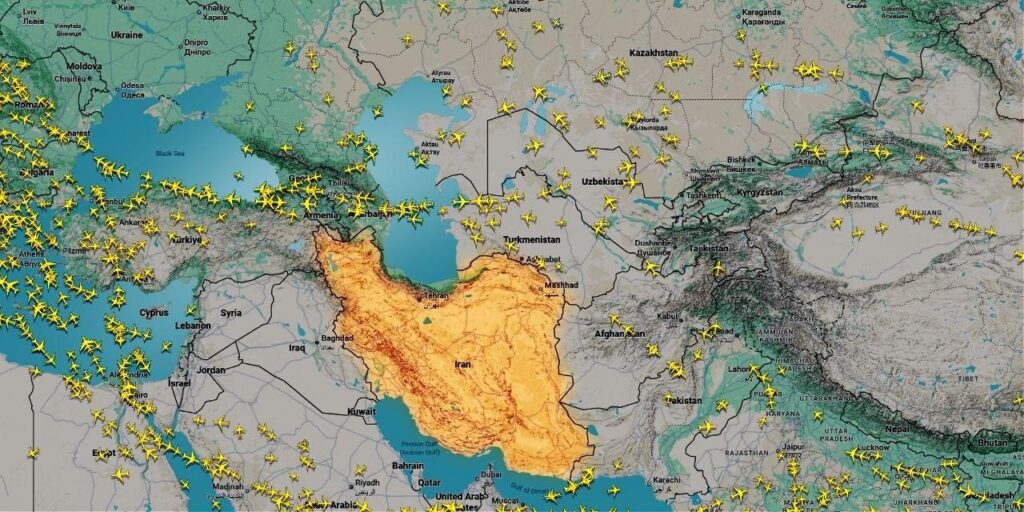
Kazakhstan and Azerbaijan are emerging as potential beneficiaries of disruptions in the global aviation fuel market as tensions around Iran force airlines to reroute flights and rethink transit hubs. The escalation of tensions in the Middle East, including heightened risks to shipping through the Strait of Hormuz, has led to sharp increases in energy prices and supply disruptions. Gas prices in the EU have risen by 70%, and oil by 60%, with additional costs reaching €14 billion. Roughly one-fifth of the world’s oil passes through the Strait of Hormuz, making any disruption critically significant for global markets. The aviation industry has been among the hardest hit sectors. According to industry sources cited by Bloomberg, Europe is expected to have sufficient jet fuel supplies in the short term, but stocks are under pressure, and supply risks could emerge if the conflict continues. The cost of jet fuel has risen from about $742 to more than $1,700 per ton in recent weeks in some markets. This increase is outpacing the rise in oil prices, intensifying pressure on airlines. As reported by The Telegraph, citing data from Cirium, around 7% of scheduled flights were canceled at the peak of recent disruptions, equivalent to more than 7,000 departures, compared with about 4.7% a year earlier. Airlines are responding by cutting flight schedules and revising their business models. Lufthansa, for example, is considering temporarily grounding part of its fleet. According to CEO Carsten Spohr, fuel shortages are likely to be felt first outside Europe, where supply chains are more vulnerable. At the same time, airfares have already risen by 15-20%, beginning to dampen demand. As passenger demand softens and costs rise, carriers are balancing route cuts with the need to maintain key markets. Fuel Costs Drive Route Shifts According to Sergey Agibalov, consulting director at Argus in the CIS, significant changes are also occurring in the geography of international air travel. Major Middle Eastern hubs, such as Dubai, Doha, and Abu Dhabi, have seen a decline in transit traffic amid safety concerns and are operating below normal capacity on key routes. Agibalov argues that this creates a window of opportunity for alternative routes between Europe and Asia, including Istanbul, Addis Ababa, and hubs in Central Asia and the South Caucasus. “Airports in Central Asia and the South Caucasus are now attractive not only to passengers, but also to airlines. Disruptions to Middle Eastern jet fuel exports linked to instability around the Strait of Hormuz have led to a sharp rise in fuel prices globally. This increase is outpacing the rise in oil prices, intensifying pressure on airlines. Recent industry data shows prices reaching as high as $1,600–1,800 per ton in some markets. Under these conditions, many airlines have begun optimizing their flight schedules; even if fuel is available, flying has become very expensive,” he noted. Against this backdrop, airports in Almaty, Astana, and Baku are seeing increased traffic and stronger airline interest. Argus estimates suggest volumes are already rising in Baku, as routes across Central...

War Reaches the Caspian: Central Asia Faces Growing Regional Risk

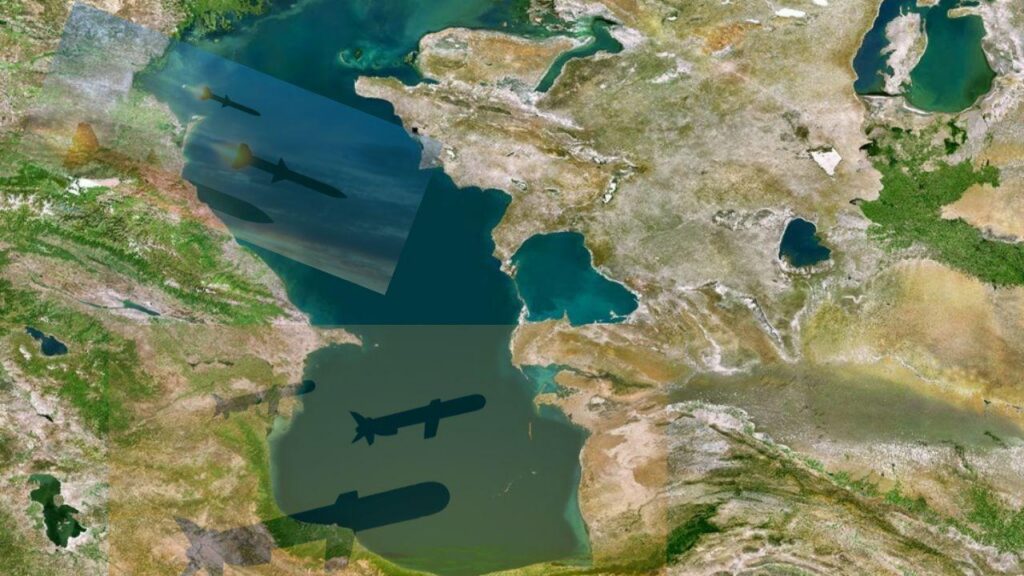
The United States and Israel's war with Iran began on February 28, 2026. The intensity of the conflict has fluctuated, but daily reports of missile strikes and explosions are increasingly resonating across Central Asia. Meanwhile, Russia’s latest war against Ukraine has continued for 1,466 days since it began on February 24, 2022. Late last year, Ukrainian drones reportedly struck a Russian oil platform at the Filanovsky field in the Caspian Sea, more than 700 kilometers from Ukraine’s nearest border. Ukraine also said the operation targeted the patrol ship Okhotnik, although the extent of the damage was not independently verified. The war in Ukraine has also created serious challenges for Kazakhstan’s oil exports via the Caspian Pipeline Consortium (CPC). Repeated attacks and disruptions have threatened export flows, increased logistical risks, and added pressure on Kazakhstan’s budget revenues. The war against Iran has now brought military action to the Caspian coast of Iran, raising concern for energy producers and transit routes across the wider region. On March 5, Azerbaijan’s Ministry of Foreign Affairs stated that drones launched from Iranian territory struck the Nakhchivan Autonomous Republic. According to the ministry, one drone hit the terminal building at Nakhchivan International Airport, while another crashed near a school in the village of Shekerabad. Azerbaijan demanded a thorough investigation. Iran later stated that it had promised to investigate the incident. Azerbaijan’s Prosecutor General’s Office subsequently opened a criminal case. As of now, tensions remain high, with both sides continuing to exchange accusations, and Azerbaijan maintaining heightened alert measures. More recently, the Israeli Defense Forces confirmed carrying out airstrikes in northern Iran, targeting naval vessels in the port city of Bandar-Anzali on the Caspian coast. The straight-line distance from Bandar-Anzali to Azerbaijan’s capital, Baku, is just over 300 kilometers, and approximately 420 kilometers to Turkmenbashi, a major international seaport and the center of Turkmenistan’s oil-refining industry. The resort zone of Avaza is also located there. By comparison, the distance from Israel to Bandar-Anzali exceeds 1,300 kilometers. These developments are contributing to rising economic uncertainty across Central Asia. The consequences extend beyond transportation and logistics disruptions, with broader implications for regional economies. The U.S. and Israel have not always appeared aligned on what would constitute victory, meaning the measure of success remains difficult to gauge. While the United States and Israel have repeatedly stated that significant damage has been inflicted on Iran’s military infrastructure (including destroying a substantial part of the Iranian navy), there is no publicly available, independently verified evidence confirming the extent of the damage to Iran’s leadership structure following the death of Ali Khamenei, Ali Larijani and other senior Iranian figures, or on Iran’s ability to mount an effective defence. Analysts have described Iran’s military resilience as decentralized, sometimes using the term "mosaic defense," meaning units can continue operating under standing orders even when senior leadership is hit. It is understood that, as part of this strategy, the Iranian military has spent decades refining its ability to operate as independent nodes, each equipped to conduct strikes under...
