• KGS/USD = 0.01143 0%
  • KZT/USD = 0.00206 0%
  • TJS/USD = 0.10811 -0.18%
  • UZS/USD = 0.00008 0%
  • TMT/USD = 0.28571 0%
  • KGS/USD = 0.01143 0%
  • KZT/USD = 0.00206 0%
  • TJS/USD = 0.10811 -0.18%
  • UZS/USD = 0.00008 0%
  • TMT/USD = 0.28571 0%
  • KGS/USD = 0.01143 0%
  • KZT/USD = 0.00206 0%
  • TJS/USD = 0.10811 -0.18%
  • UZS/USD = 0.00008 0%
  • TMT/USD = 0.28571 0%
  • KGS/USD = 0.01143 0%
  • KZT/USD = 0.00206 0%
  • TJS/USD = 0.10811 -0.18%
  • UZS/USD = 0.00008 0%
  • TMT/USD = 0.28571 0%
  • KGS/USD = 0.01143 0%
  • KZT/USD = 0.00206 0%
  • TJS/USD = 0.10811 -0.18%
  • UZS/USD = 0.00008 0%
  • TMT/USD = 0.28571 0%
  • KGS/USD = 0.01143 0%
  • KZT/USD = 0.00206 0%
  • TJS/USD = 0.10811 -0.18%
  • UZS/USD = 0.00008 0%
  • TMT/USD = 0.28571 0%
  • KGS/USD = 0.01143 0%
  • KZT/USD = 0.00206 0%
  • TJS/USD = 0.10811 -0.18%
  • UZS/USD = 0.00008 0%
  • TMT/USD = 0.28571 0%
  • KGS/USD = 0.01143 0%
  • KZT/USD = 0.00206 0%
  • TJS/USD = 0.10811 -0.18%
  • UZS/USD = 0.00008 0%
  • TMT/USD = 0.28571 0%

Viewing results 1 - 6 of 12

Kazakhstan’s Exports Rise Nearly 10% in First Quarter of 2026

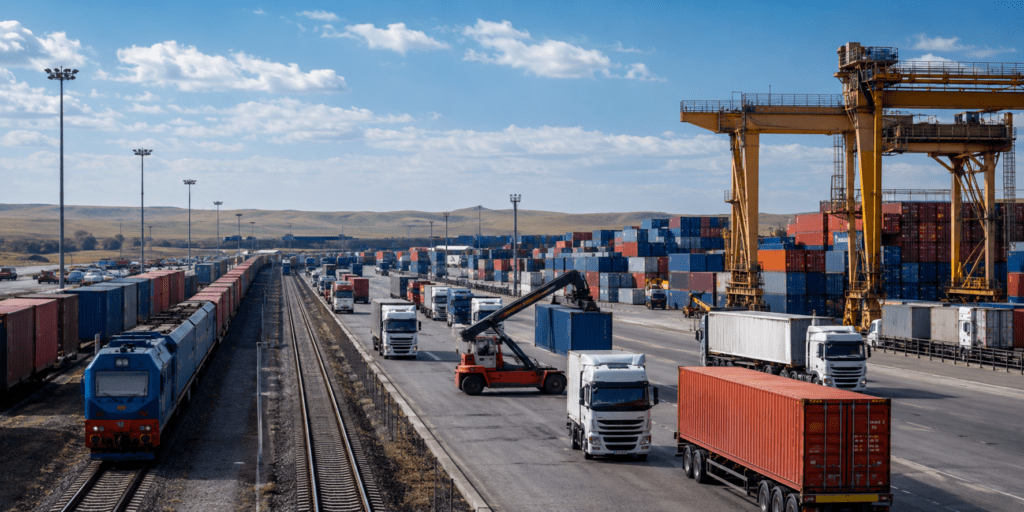
Kazakhstan increased its foreign trade turnover to $32.9 billion during the first quarter of 2026, while exports rose by nearly 10% year-on-year, according to the country’s Ministry of Trade and Integration. The ministry stated that Kazakhstan completed the January-March period with a “confident strengthening” of its foreign trade position. Amid continued strong business activity and expanding export potential, total trade turnover reached $32.9 billion, an increase of 10.5% compared to the same period in 2025, when the figure stood at $29.8 billion. “The dynamics confirm the resilience of the country’s foreign economic sector and the gradual strengthening of higher value-added products in the structure of Kazakhstan’s exports,” the ministry said. Total exports for the first quarter of 2026 rose by 9.4% to $18 billion, while imports increased by 11.8% to $14.9 billion compared to the same period last year. According to the ministry, the faster growth in imports was primarily driven by increased purchases of investment and technological goods needed for the modernization of Kazakhstan’s industrial, energy and transport infrastructure. Among the most notable increases was the import of electric generating units, which rose to $416.8 million, more than five times the previous level. Imports of gas turbines and aircraft engines, railway locomotives, and equipment for processing and sorting raw materials also increased significantly. “This structure of imports indicates sustained high investment demand within the economy and the active implementation of infrastructure and industrial projects,” the ministry said. Officials also highlighted the performance of Kazakhstan’s non-commodity trade sector. Foreign trade turnover in non-resource goods reached $20.4 billion during the first quarter of 2026, up 13.5% year-on-year. Non-commodity exports rose by 23.4% to $6.9 billion, becoming one of the main drivers of changes in Kazakhstan’s foreign trade structure. The main non-resource exports included copper and copper cathodes, silver, uranium, ferroalloys, animal feed products, and sunflower oil. Exports of sunflower oil increased by nearly 60% to $277.8 million, reflecting what the ministry described as the growing competitiveness of Kazakhstan’s processed agricultural products. Ferroalloy exports rose by 20.1%, pointing to continued growth in the metallurgical sector and wider export markets for domestically manufactured industrial goods. “Kazakhstan’s foreign trade geography remains steadily diversified,” the ministry stated. “China became the country’s largest trading partner in the first quarter, with trade turnover reaching $7.8 billion and accounting for 23.8% of total foreign trade.” Russia retained second place with bilateral trade totaling $6.5 billion, remaining Kazakhstan’s key market for imports and industrial cooperation. Italy, Turkey, and Uzbekistan also ranked among Kazakhstan’s largest trading partners. The ministry also noted Kazakhstan’s export position in Europe. Trade turnover with Italy exceeded $3.4 billion during the first quarter, with Kazakh exports accounting for more than $3 billion of that total. As previously reported by The Times of Central Asia, Kazakhstan aims to increase non-commodity exports to $52 billion by 2030.

Kazakhstan Begins Vegetable Oil Exports to Iran via Caspian Route

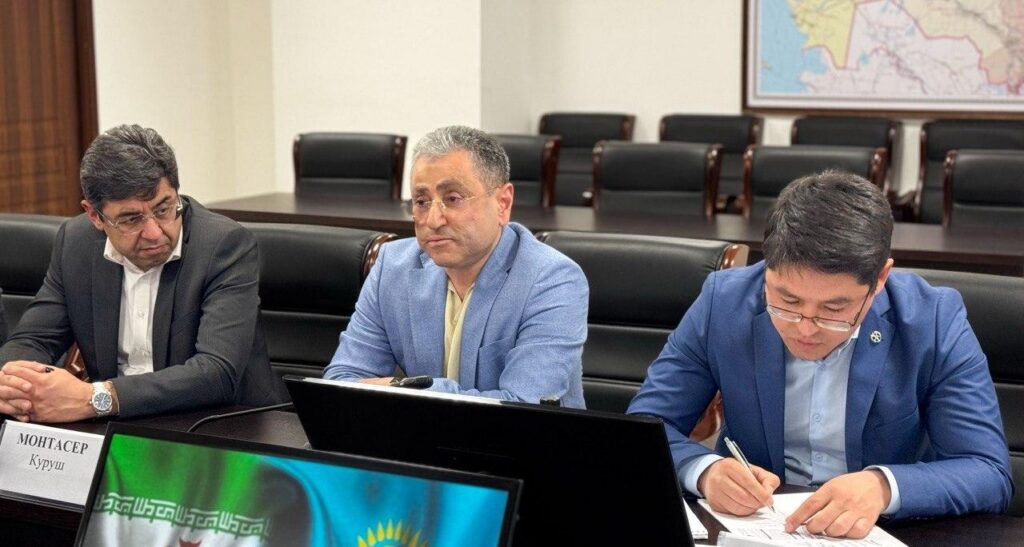
Vegetable oil producers in Kazakhstan have launched a new export route to Iran across the Caspian Sea, completing several trial shipments of rapeseed and sunflower oil in spring 2026, Kazakhstan’s Ministry of Agriculture said. According to Kazakhstan’s National Association of Oilseed Processors (NAOPK), the first shipment, consisting of 5,000 tons of rapeseed oil, departed from the Port of Aktau on April 4. The buyer was the Iranian company Kourosh Food Industry, while the supplier was one of Kazakhstan’s largest oil-processing plants affiliated with the association. On May 13, loading was completed for a second vessel carrying 5,000 tons of sunflower oil. The Agriculture Ministry said the shipments demonstrate strong interest among Iranian importers in products from Kazakhstan and point to the potential of the Caspian export corridor. NAOPK Chairman Yadykar Ibragimov said the Iranian market holds significant potential for exports of Kazakhstan’s oil and fat products. According to Ibragimov, Iran imports around 3.5 million tons of vegetable oils and oilseed meal annually, including approximately 1.5 million tons of vegetable oils. “Our countries share a border across the Caspian Sea and also benefit from a preferential customs regime under the free trade agreement between the Eurasian Economic Union and Iran,” Ibragimov said. He noted that Kazakhstan exported more than 100,000 tons of oil and fat products to Iran over the past three years, with around 94% consisting of oilseed meal. “The launch of vegetable oil transshipment through the Port of Aktau will significantly increase supply volumes,” he added. According to association estimates, the Aktau route could handle three to four shipments per month, allowing annual exports of 150,000-200,000 tons of vegetable oil through the new corridor. In the longer term, exports of vegetable oils and oilseed meal to Iran could exceed 500,000 tons annually. Kazakhstan’s Agriculture Ministry said development of the route will help diversify export destinations and reduce pressure on existing logistics corridors. “The launch of this new supply channel will help move closer to the goal of increasing the sector’s foreign currency revenues to $1 billion, as outlined in the 2026-2028 Road Map,” the ministry said. Kazakhstan previously reported record sunflower oil exports: between January and October 2025, the country exported more than 523,000 tons of sunflower oil worth approximately $532 million. Authorities aim to position Kazakhstan among the world’s top three vegetable oil exporters. At the same time, Deputy Foreign Minister Arman Issetov said in April that several joint projects between Kazakhstan and Iran had been frozen amid military tensions in the region. Despite geopolitical tensions, Astana and Tehran continue expanding trade and economic cooperation. The Times of Central Asia previously reported that Kazakhstan and Iran aim to increase bilateral trade turnover to $1 billion in the coming years, with plans to eventually double that figure.

Iranian Company to Build Oil Plant and Poultry Farm in Kazakhstan

Iranian companies are increasingly looking to Kazakhstan for investment and production as tensions between the United States and Iran continue. Iran’s Golrang Industrial Group plans to implement two major projects in Kazakhstan: the construction of a sunflower oil production plant and a poultry farm for meat production. Agreements on the projects were reached on May 4 between Kazakhstan’s Deputy Minister of Agriculture Yermek Kenzhekhanuly and Golrang’s leadership, with total investment estimated at approximately $120 million. At the meeting, Golrang Industrial Group expressed strategic interest in developing its business in Kazakhstan and localizing production. According to the Ministry of Agriculture, the first project involves the construction of an oil extraction plant with a processing capacity of up to 3,000 tons of sunflower seeds per day, with direct investment of approximately $70 million. The project is expected to increase the processing depth of Kazakh agricultural raw materials and boost the added value of finished products. Investment in the second project, a poultry meat farm, is estimated at approximately $50 million. The projects come against a backdrop of steadily growing cooperation between Kazakhstan and Iran. In 2025, bilateral agricultural trade increased by 55.8%, exceeding $341 million. Exports of Kazakh products, primarily wheat and barley, have also grown significantly.

Kazakhstan Targets Top Three Global Rank in Sunflower Oil Exports by 2028

Kazakhstan is aiming to become one of the world’s top three exporters of sunflower oil and raise its total exports of oil and fat products to $1 billion by 2028, according to the Ministry of Trade and Integration. Russia remains the global leader in sunflower oil exports, having shipped 4.4 million tons last year. In comparison, Kazakhstan achieved record results in 2025, exporting over 523,400 tons of sunflower oil between January and October, 2.4 times more than its domestic sales. These exports generated $532 million in revenue, placing Kazakhstan among the top ten sunflower oil exporters globally. To further increase output and climb into the top three, the government is shifting from fragmented support measures to a coordinated industry strategy, focused on building integrated export chains. The first meeting of the Export Headquarters for the Promotion of Non-Resource Exports in 2026 was held yesterday in Astana, chaired by Vice Minister of Trade and Integration Aidar Abildabekov. Officials discussed new strategies for expanding agricultural exports and overcoming systemic barriers faced by domestic producers in foreign markets. In 2025, a roadmap for the development of the oil and fat industry for 2026–2028 was finalized. It included an assessment of over 30 enterprises engaged in oilseed cultivation and processing in the northern, eastern, and southeastern regions, including the Abai, East Kazakhstan, Akmola, Zhetysu, and Almaty regions. The roadmap outlines concrete targets to improve processing capacity utilization, broaden export destinations, and position Kazakhstan among the top three global sunflower oil exporters by 2028. Key challenges addressed include rail cargo prioritization, phytosanitary and veterinary controls, registration of Kazakh firms in Chinese trade registries, reimbursement of export costs, and access to financial instruments for state support. Yadykar Ibragimov, a representative of the National Association of Oilseed Processors, emphasized that the roadmap provides a strategic foundation for industry growth. As previously reported by The Times of Central Asia, Kazakhstan significantly increased its sunflower oil exports to Afghanistan as early as 2023.