• KGS/USD = 0.01144 0%
  • KZT/USD = 0.00208 0%
  • TJS/USD = 0.10442 0.19%
  • UZS/USD = 0.00008 0%
  • TMT/USD = 0.28530 0%
  • KGS/USD = 0.01144 0%
  • KZT/USD = 0.00208 0%
  • TJS/USD = 0.10442 0.19%
  • UZS/USD = 0.00008 0%
  • TMT/USD = 0.28530 0%
  • KGS/USD = 0.01144 0%
  • KZT/USD = 0.00208 0%
  • TJS/USD = 0.10442 0.19%
  • UZS/USD = 0.00008 0%
  • TMT/USD = 0.28530 0%
  • KGS/USD = 0.01144 0%
  • KZT/USD = 0.00208 0%
  • TJS/USD = 0.10442 0.19%
  • UZS/USD = 0.00008 0%
  • TMT/USD = 0.28530 0%
  • KGS/USD = 0.01144 0%
  • KZT/USD = 0.00208 0%
  • TJS/USD = 0.10442 0.19%
  • UZS/USD = 0.00008 0%
  • TMT/USD = 0.28530 0%
  • KGS/USD = 0.01144 0%
  • KZT/USD = 0.00208 0%
  • TJS/USD = 0.10442 0.19%
  • UZS/USD = 0.00008 0%
  • TMT/USD = 0.28530 0%
  • KGS/USD = 0.01144 0%
  • KZT/USD = 0.00208 0%
  • TJS/USD = 0.10442 0.19%
  • UZS/USD = 0.00008 0%
  • TMT/USD = 0.28530 0%
  • KGS/USD = 0.01144 0%
  • KZT/USD = 0.00208 0%
  • TJS/USD = 0.10442 0.19%
  • UZS/USD = 0.00008 0%
  • TMT/USD = 0.28530 0%

Viewing results 1 - 6 of 17

Kazakhstan Launches High-Resolution Weather Forecast Powered by Supercomputer

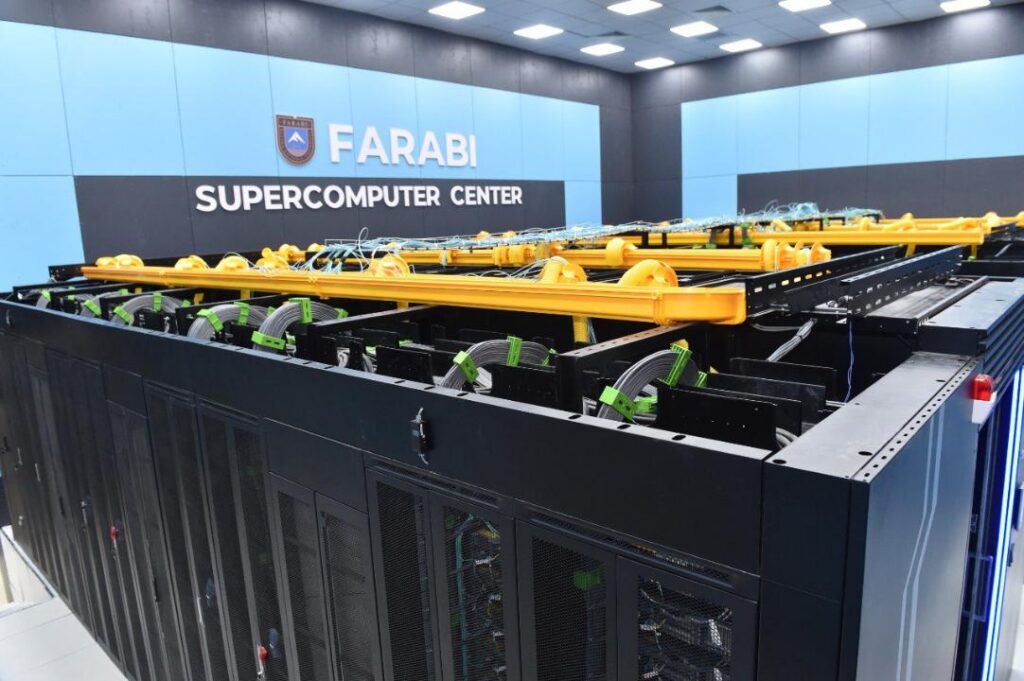
Kazakhstan has introduced a new high-resolution digital weather forecasting system powered by the country’s most powerful supercomputer, marking a significant step toward strengthening national hydrometeorological security. The National Hydrometeorological Service, Kazhydromet, has deployed the Weather Research and Forecasting (WRF) model across the entire territory of the country. The system provides forecasts with a spatial resolution of 2 kilometers, significantly enhancing the accuracy and detail of weather predictions. All computations are carried out on Central Asia’s most powerful supercomputer at the Farabi Supercomputer Center, located at Al-Farabi Kazakh National University in Almaty. According to Amirkhan Temirbayev, Director of the Farabi Supercomputer Center, the new model strengthens Kazakhstan’s ability to anticipate hazardous natural phenomena and respond more effectively to climate-related risks. “The new system improves early warnings of dangerous weather events, particularly in the mountainous regions of Almaty and southeastern Kazakhstan and enhances the country’s hydrometeorological security. Accurately modeling atmospheric processes requires millions of calculations that conventional servers cannot handle. A supercomputer is no longer just a scientific instrument, it is infrastructure of national importance,” Temirbayev said. He added that the initiative demonstrates how university-based high-performance computing resources are increasingly being used to address applied government needs. While the supercomputer is currently dedicated to weather forecasting, potential future applications include flood and mudflow modeling, climate analysis, air quality monitoring, and digital urban simulations. Kazhydromet plans to publish outputs from the new WRF model on its official website, where users will have access to interactive weather maps and detailed forecasts for all regions of Kazakhstan.


Kazakhstan Turns from Pipelines to Processors

Kazakhstan’s strategic plan for advanced computing represents a diversification of its traditional oil, gas, and transit profile and of the wider national economy. A $2 billion Nvidia-linked initiative now turns on three main elements. First is a national supercomputer using Nvidia H200 chips, with headline AI performance around 2 exaflops. Second is a planned 100 MW data-center campus, designed to expand capacity for commercial users over several years. Third is a “sovereign AI hub” concept that promises long-term chip access for sensitive public-sector workloads. Prior to this package, Kazakhstan had already moved unusually quickly to build high-end AI and computing infrastructure, treating digital capacity as central to its development policy. The national supercomputer is now the most powerful system in Central Asia and is housed in a Tier III state data center intended for use by universities, startups, and corporate tenants. The hardware push accompanies a wider digital policy agenda, including new training programs with Nvidia to expand the country’s AI talent base. Parallel initiatives with the United States seek to anchor Kazakhstan more firmly within Western regulatory and connectivity frameworks, as part of a broader attempt to move beyond hydrocarbons and build domestic capability in computation-heavy activities. Kazakhstan’s New AI Statecraft Astana is presenting the Nvidia package as an economic instrument, not just a hardware upgrade. Senior officials now describe advanced computing as a new pillar of national development, on a par with hydrocarbons and transit. Recent policy statements frame AI and digital infrastructure as central, not a side theme of “innovation” policy. In parallel, the long-running “Digital Kazakhstan” agenda has moved from e-government and broadband roll-out into a second phase where data centers, national platforms, and specialized training come to the foreground. Within that shift, “sovereign AI” is becoming a core organizing idea. Officials and local specialists talk about national language models that can handle Kazakh, Russian, and other regional languages, and about keeping sensitive public-sector data on infrastructure under national jurisdiction. The new supercomputer and the sovereign AI hub are presented as the place where that work will happen at scale: training and serving models for government services, regulatory tasks, and domestic firms, rather than relying entirely on foreign platforms. The Nvidia partnership is therefore framed as a way to secure long-term access to leading chips for these “sovereign” workloads, even as global export rules tighten. The same initiative also underwrites a shift in Kazakhstan’s self-presentation from a “pipeline corridor” to Kazakhstan as a corridor for data and high-end digital services. The government has begun to link the sovereign AI hub and supercomputer to a set of fiber-optic projects across the Caspian that aim to tie Central Asia more tightly into Eurasian data routes. The same geography that once made Kazakhstan a crucial link for oil, gas, and rail freight can now make it a regional conduit for digital traffic and AI-enabled services. Kazakhstan is also using the package to deepen a specific diplomatic track with the United States. Joint announcements and working groups on digital transformation,...

Made in Kazakhstan: Building an AI for a Nation

On a cold November morning at Al-Farabi University in Almaty, students gathered in a drafty lecture hall, many still wrapped in their coats. The setting was more reminiscent of a forgotten Soviet-era classroom than a venue for cutting-edge technology. But amid the peeling paint and rickety seats, some of the country’s most ambitious young researchers had come to discuss Kazakhstan’s latest steps into the world of artificial intelligence. The star billing came from the Institute of Smart Systems and Artificial Intelligence (ISSAI) at Nazarbayev University in Astana. Last year, the institute released KazLLM, its first Large Language Model (LLM), to much fanfare, inspired by a philosophy of building AI systems that understand the country’s language and culture rather than borrowing second-hand from Silicon Valley. But can Kazakhstan keep pace in the global AI race? And despite the government’s efforts to back local products, can it convince the population to use them over Western alternatives? Recent developments The Institute’s founder, Doctor Huseyin Atakan Varol, was keen to stress that steps have been taken to develop Kazakhstan’s native AI ecosystem over the past twelve months. “Since the release of KazLLM last year, we have witnessed what I would describe as a ‘Cambrian explosion’ of generative AI development,” he told The Times of Central Asia. “The KazLLM project enabled us to create the team and amass the know-how to build a new generation of multilingual and multimodal models tailored to Kazakhstan’s needs.” Among these, he lists Oylan, a multimodal language–audio-vision model; MangiSoz, a multilingual speech and text translation engine; TilSync, a real-time subtitle and translation engine; and Beynele, a text-to-image generation model. All these models have been fine-tuned to better reflect Kazakh culture and linguistic norms. “In short, we are building AI made in Kazakhstan, by Kazakhstani youth, for Kazakhstan –models that understand the language, culture, and needs of the people,” said Amina Baikenova, ISSAI’s Acting Deputy Director of Product and External Affairs, in an interview with TCA. [caption id="attachment_39061" align="aligncenter" width="1600"] The old lecture hall at Al-Farabi University, Almaty; image: TCA, Joe Luc Barnes[/caption] Much of this progress stems from the enthusiasm of a generation of students, whom Kazakhstan has invested heavily in training. Indeed, the country has become a magnet for young researchers from across Central Asia. “After completing my bachelor’s degree in Kyrgyzstan, I was looking for opportunities to build my research career. That’s why I moved to Kazakhstan,” said Adam Erik, an ISSAI student from Bishkek. “Kazakhstan has become a scientific center of Central Asia.” Erik believes strongly in building local language models. “There is a thing called bias in data sets,” he said. “Models from the U.S., China, or Europe are incredible, but they’re trained mostly on Western culture and literature. Local solutions are still necessary.” These sentiments reflect a common frustration among researchers: even the best global AI systems stumble when asked about Kazakh idioms, rural social norms, or local history. The data used to train the world’s most powerful models rarely includes more than a sliver...

Kazakhstan’s Higher Education Transformation – Minister Sayasat Nurbek on Attracting Global Talent and Driving Innovation

Kazakhstan is moving quickly to reposition its universities for a more competitive, tech-driven future and to become Central Asia’s study destination of choice. In an interview with The Times of Central Asia, Minister of Science and Higher Education of Kazakhstan, Sayasat Nurbek, explained that a flagship target captures this ambition: to attract 150,000 international students by 2029, nearly five times today’s level, while deepening partnerships with global universities, expanding research in critical minerals, and backing student entrepreneurship and AI talent pipelines. Kazakhstan as an Emerging Education Hub in Eurasia Government strategies and institutional partnerships frame Kazakhstan not only as Central Asia’s study destination of choice, but as a new nexus for education in Eurasia. The country’s location at the crossroads of Europe and Asia positions it to serve diverse regional markets, while rapidly multiplying branch campuses and partnerships with leading universities demonstrate how this ambition is taking shape. Inside the system, the reform agenda is anchored in greater university autonomy, modular and English-medium programs, stronger international accreditation, and a shift from rote learning to research-led, industry-connected education. As Sayasat Nurbek, Kazakhstan’s Minister of Science and Higher Education, told The Times of Central Asia: “Kazakhstan is not only Central Asia’s education leader - we are becoming a new Eurasian hub. Our partnerships with global universities and the growth of world-class campuses show that students no longer need to leave the region to access international-quality education.” Capturing Demographic Shifts and International Demand Demographics are one reason why this might work. Central Asia and the broader Eurasian neighborhood together have over a billion people under the age of 25 - a cohort that will strain capacity in nearby systems as the demand for higher education surges. Kazakhstan’s bet is to meet that need locally, in English, at global standards, and at a cost point that undercuts Western destinations. In this sense, the country is explicitly targeting an opportunity to capture demographic shifts and attract students from abroad, while positioning itself as a credible, accessible alternative to saturated or costly Western markets. Minister Nurbek emphasized this point: “With more than a billion young people across Central Asia and our neighboring regions, the demand for higher education is exploding. Kazakhstan is seizing this demographic opportunity by offering English-medium programs at global standards, and at a cost that is far more accessible than traditional destinations.” This change is visible on the ground through a rapid expansion of foreign branch campuses and deep partnerships. In September 2025, Cardiff University officially opened in Astana - the first Russell Group presence in the country. Branches of the British De Montfort and Coventry universities have already opened their doors in Almaty and Astana, whilst a campus of the South Korean university, Woosong, is set to launch in Turkestan this month. Ministerial briefings and project sheets describe a broader pipeline that includes operating collaborations as well as branches at varying stages - from Penn State and the University of Arizona to SeoulTech, TU Berlin, Queen’s University Belfast, New York Film Academy,...

Kazakhstan Launches Central Asia’s Most Powerful Supercomputer

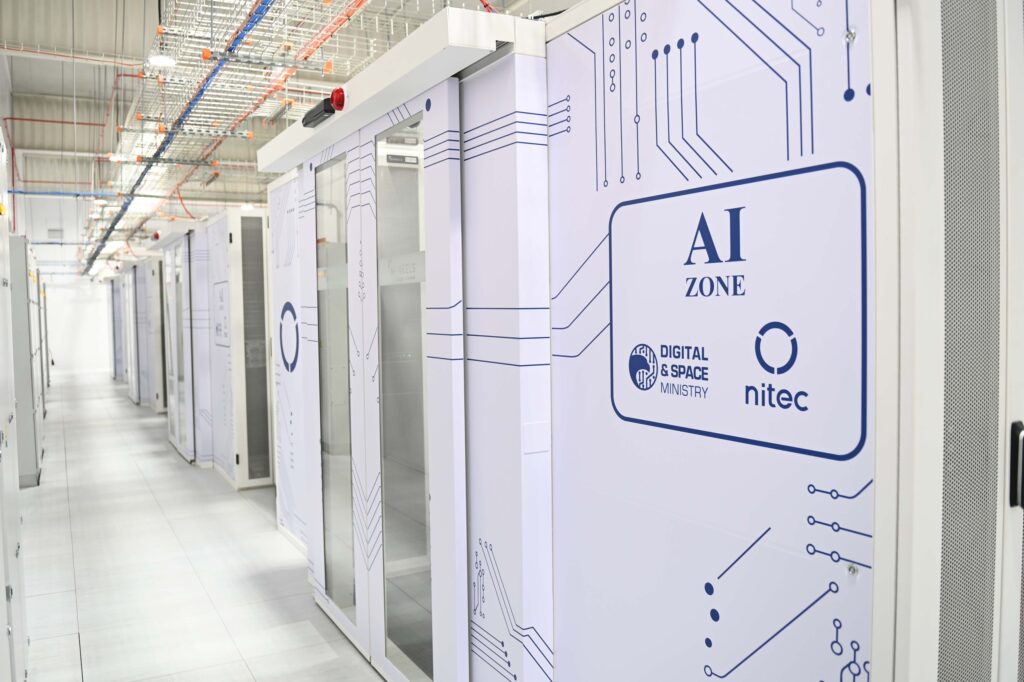
Kazakhstan has officially launched the most powerful supercomputer in Central Asia, marking a significant milestone in its push for digital sovereignty. President Kassym-Jomart Tokayev attended the inauguration ceremony at the new data center operated by the Ministry of Digital Development, Innovation, and Aerospace Industry. According to the presidential press service, the computing cluster, built on NVIDIA H200 graphics processors, can deliver up to 2 exaflops (two quintillion operations per second) of performance, making it the region’s most advanced high-performance computing system. Tokayev emphasized that the launch will catalyze digital transformation across key sectors of the Kazakh economy. The system will be accessible to startups working in neural networks, universities, research institutions, and both public and private sector enterprises. “Having our own high-performance infrastructure will accelerate the adoption of artificial intelligence, reduce dependence on foreign IT resources, and ensure the country’s technological sovereignty,” said Zhaslan Madiev, Minister of Digital Development. Boosting Domestic Capabilities Madiev noted that many Kazakh companies, including fintech firms and startups, currently rely on foreign cloud providers such as Amazon and Google for computing resources. This dependence leads to capital outflows and heightens risks related to data security. He added that local engineers have received specialized training, and full operational control of the supercomputer will be transitioned to Kazakhstani specialists over the next five years. During his visit to the National Computer Center, Tokayev was introduced to a range of domestic digital initiatives in fields such as healthcare, education, governance, and urban infrastructure. These include: SmartCity Astana: A project aimed at creating a digital twin of the capital, incorporating over 100,000 AI-enabled surveillance cameras for real-time threat detection and public safety monitoring. AlemLLM: A large language model customized for local linguistic and cultural contexts. AI Kitap: An adaptive learning platform that offers personalized digital education based on student levels and preferences. Baspana Hub: A digital ecosystem for real estate, integrating government services, property evaluations, a marketplace, and renovation support. Tokayev also viewed presentations from emerging Kazakhstani tech startups. Among them was Surfaice.pro, a construction technology firm founded by Kazakhstani entrepreneurs in Silicon Valley. The company operates in five U.S. states and has raised $1.5 million in funding from Big Sky Capital and Shadow Ventures. A Strategic Investment in Digital Sovereignty As previously reported by The Times of Central Asia, the launch of the supercomputer aligns with Kazakhstan’s broader ambition to become a regional technology hub. It was developed under a strategic partnership between the Ministry of Digital Development and UAE-based Presight AI Ltd. With its enhanced digital infrastructure and growing ecosystem of AI innovation, Kazakhstan is positioning itself at the forefront of high-performance computing and artificial intelligence in Central Asia.

Silicon Steppes: Can Kazakhstan Become Eurasia’s Next Digital Nexus?

At this month’s Eurasian Economic Forum in Minsk, Kazakh President Kassym-Jomart Tokayev urged fellow Eurasian Economic Union (EAEU) leaders to reorient toward the future. “Digitalization and artificial intelligence… should become an absolute priority of the EAEU,” he told the plenary session, warning that “we are already living in the era of AI.” Tokayev cited forecasts that AI could contribute $15 trillion to global GDP and displace 300 million jobs by 2030, arguing the EAEU bloc has a “historic opportunity” to act now. “It is important to use this window of opportunity in a timely manner… to strengthen our role in the emerging digital world order,” he stated. “A small group of countries will emerge as leaders in this field… others may be left behind. The EAEU must lead — or, at the very least, avoid lagging behind.” Tokayev’s remarks capped a speech outlining Kazakhstan’s sweeping digital agenda, which includes a national supercomputer, a high-profile artificial intelligence hub, and a “CryptoCity” pilot zone. These efforts signal not only a pivot away from extractive industries but a push to establish Kazakhstan as the heart of Central Asia’s digital and data infrastructure. Once seen as an economic hindrance, Kazakhstan’s landlocked geography is now being leveraged as a potential asset. A 3,700 km West–East Fiber-Optic Highway is under construction, connecting China’s Xinjiang province to the Caspian Sea. The project, expected to be completed in 2026, aims to provide a secure, high-speed terrestrial route for global data flows between Europe and East Asia. By pairing this with expanded redundancy and data center capacity, Kazakhstan hopes to serve as a neutral, cost-effective host for hyperscale data centers supporting global cloud providers and sovereign clients alike. With abundant energy, political stability, and growing fiber capacity, officials argue Kazakhstan can reduce regional dependence on submarine cables routed through politically sensitive chokepoints. Kazakhstan’s infrastructure investments are central to Tokayev’s vision. In Astana, the futuristic Nur Alem sphere — originally built to host the 2017 World Expo — is being converted into Alem.AI, an international artificial intelligence center focused on education, research, and applied technology. The facility will host labs, training academies, and co-working space for startups, to produce 10,000 AI specialists per year and generate $5 billion in AI-driven exports by 2029. Complementing this is the new national AI supercomputer, developed in partnership with UAE-based Presight AI. Launched in May 2025, the system is rated at up to 2 exaflops, powered by NVIDIA H200 chips, and installed within a Tier III-certified data center. Government officials say it will be used for machine learning, scientific modeling, LLM development, and cybersecurity testing, and will eventually be made available to Kazakh universities and private sector firms. Meanwhile, the CryptoCity pilot zone near Alatau will allow the regulated use of cryptocurrencies in daily life, from shopping to property purchases, within a restricted environment. It is being developed under the supervision of Kazakhstan’s Ministry of Digital Development and Samruk-Kazyna, the country’s sovereign wealth fund. Though crypto transactions currently remain largely banned in the country,...