• KGS/USD = 0.01144 0%
  • KZT/USD = 0.00216 0%
  • TJS/USD = 0.10659 0%
  • UZS/USD = 0.00008 0%
  • TMT/USD = 0.28530 0%
  • KGS/USD = 0.01144 0%
  • KZT/USD = 0.00216 0%
  • TJS/USD = 0.10659 0%
  • UZS/USD = 0.00008 0%
  • TMT/USD = 0.28530 0%
  • KGS/USD = 0.01144 0%
  • KZT/USD = 0.00216 0%
  • TJS/USD = 0.10659 0%
  • UZS/USD = 0.00008 0%
  • TMT/USD = 0.28530 0%
  • KGS/USD = 0.01144 0%
  • KZT/USD = 0.00216 0%
  • TJS/USD = 0.10659 0%
  • UZS/USD = 0.00008 0%
  • TMT/USD = 0.28530 0%
  • KGS/USD = 0.01144 0%
  • KZT/USD = 0.00216 0%
  • TJS/USD = 0.10659 0%
  • UZS/USD = 0.00008 0%
  • TMT/USD = 0.28530 0%
  • KGS/USD = 0.01144 0%
  • KZT/USD = 0.00216 0%
  • TJS/USD = 0.10659 0%
  • UZS/USD = 0.00008 0%
  • TMT/USD = 0.28530 0%
  • KGS/USD = 0.01144 0%
  • KZT/USD = 0.00216 0%
  • TJS/USD = 0.10659 0%
  • UZS/USD = 0.00008 0%
  • TMT/USD = 0.28530 0%
  • KGS/USD = 0.01144 0%
  • KZT/USD = 0.00216 0%
  • TJS/USD = 0.10659 0%
  • UZS/USD = 0.00008 0%
  • TMT/USD = 0.28530 0%

Viewing results 1 - 6 of 23

Opinion: As Water Runs Short, Uzbekistan Faces New Migration Pressure

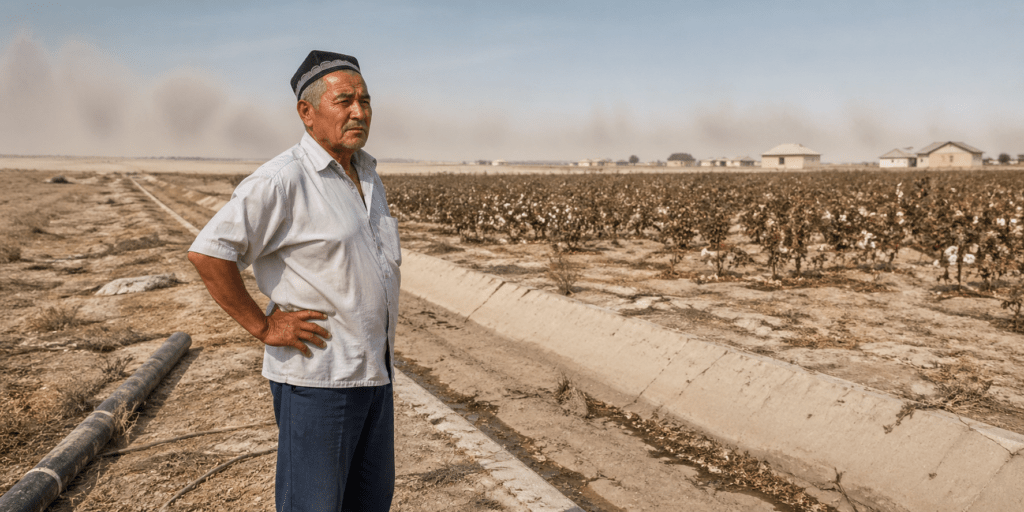
In the 21st century, Uzbekistan is no longer just confronting an ecological crisis - it is on the verge of socio-political transformations driven by water. As agricultural lands are being degraded and river flows are decreasing, the country is now facing what experts describe as a “slow-onset disaster”: internal climate migration. The roots of this crisis go back to the tragedy of the Aral Sea, once the world’s fourth-largest lake, which has shrunk to roughly 10% of its original area since the 1960s largely due to Soviet-era irrigation projects. The human toll has been enormous: not only is agriculture in decline, but the lives of the people living in the Aral Sea region have been profoundly altered. Each year, storms lift an estimated 15 million to 75 million tons of sand, dust, and salt from the dried Aral seabed, spreading it across Uzbekistan and the wider region. Now, another challenge is looming - the water supply. In 2018, 79,942 internally displaced people were reported in Uzbekistan. The dwindling water supply and the threat to agro-ecosystems are creating a new generation of climate migrants. The number of climate-related displacements is expected to reach 200,000 in the coming years. The Amu Darya and Syr Darya rivers, Uzbekistan’s hydrological lifelines, are under growing strain from climate change, inefficient irrigation, and transboundary water-distribution pressures. Experts warn that the country's water deficit could reach 7 billion cubic meters by 2030, and 15 billion cubic meters by 2050. The World Bank predicts that Uzbekistan's economy could shrink by 10% by 2050 if no meaningful action is taken to adapt to climate change. Now, another new factor threatens to accelerate this trend. The Taliban government in Afghanistan is building the Qosh Tepa Canal, a 285-kilometer irrigation project that will divert water from the Amu Darya River. According to Rieks Bosch, an international expert on natural resources and economics, the canal will divert 20% of the Amu Darya's water, which will exacerbate water shortages in some parts of Uzbekistan and negatively affect agriculture. "In any case, Uzbekistan will definitely suffer," he said.  Analyses show that up to 250,000 people could lose their jobs in agriculture as a result of water shortages. The most vulnerable regions - Bukhara, Khorezm, Karakalpakstan, Surkhandarya, and Kashkadarya - are located mainly in rural areas and depend on agriculture and livestock. With almost half of Uzbekistan’s population living outside urban centers, the loss of agricultural viability is not just an economic problem; it is the disruption of a way of life. “Water scarcity, air pollution, biodiversity loss, and a sharp decline in agricultural productivity are constantly increasing,” President Shavkat Mirziyoyev said at COP 28, acknowledging that these problems are “reaching their “critical peak.” Yet policy responses are still lagging behind the pace of environmental change. Uzbekistan’s climate migration problem cannot be solved by managing water resources alone. This requires a new strategic framework – a “Water-Migration-Security” strategy that combines regional cooperation, innovative water-saving technologies in agriculture, and proactive adaptation measures for the communities most at...

Astana Accelerates Northern Aral Sea Recovery Plan

The Kazakh government plans to accelerate the second phase of the project to restore the Northern Aral Sea. Prime Minister Olzhas Bektenov has instructed the Ministry of Water Resources and Irrigation to secure financing for the second phase of the project by the end of 2026. The goal is to increase the volume of water in the Northern Aral Sea by around 10–11 billion cubic meters over the next four to five years. History of Degradation and Early Restoration Results The Aral Sea, which straddles the border between Kazakhstan and Uzbekistan, began to shrink rapidly in the 1960s due to large-scale irrigation projects that diverted water from the Amu Darya and Syr Darya rivers for cotton cultivation and other agricultural needs. As a result of the sea’s degradation, the Northern Aral Sea separated in 1987 and has since been sustained largely through the construction of the Kokaral Dam. In 2012, the sea and the Syr Darya delta were added to the Ramsar List of Wetlands of International Importance. Since then, Kazakhstan has undertaken systematic efforts to restore the northern part of the former Aral Sea. Unlike earlier efforts to save the Aral Sea as a whole, Kazakhstan’s approach since the mid-2000s has been shaped by a narrower and more pragmatic premise: that partial restoration is environmentally and politically achievable, while attempts to revive the entire basin are not. The construction of the Kokaral Dam marked a turning point, demonstrating that targeted hydraulic interventions could stabilise water levels, reduce salinity, and revive fisheries in the northern basin, provided expectations were kept within achievable limits. The recovery has already enabled the return of small-scale fishing, improved local livelihoods, and reduced dust storms from the exposed seabed around Aralsk. This strategy reflected a deliberate acceptance that restoring the Northern Aral would come at the expense of the southern basin, prioritising long-term ecological viability over symbolic ambitions. Over the past several years, roughly 5 billion cubic meters of water have been redirected into the Northern Aral Sea basin, increasing its total volume to more than 23 billion cubic meters. This exceeds the targets set out in Kazakhstan's Water Resources Management Concept, which had forecast reaching 20.6 billion cubic meters by 2025, with that volume previously expected only by 2029. [caption id="attachment_24691" align="aligncenter" width="2560"] Tastubek Bay, Northern Aral Sea; image: TCA, Stephen M. Bland[/caption] Infrastructure Plans and International Support With the support of the World Bank, Kazakhstan is considering raising the height of the Kokaral Dam by up to two meters and constructing a new hydraulic facility. These upgrades aim to increase both the volume and quality of water in the Northern Aral Sea, rehabilitate the Syr Darya delta, and reduce salt dispersion from the exposed seabed. The second phase of the initiative targets increasing the sea’s volume to 34 billion cubic meters. Bektenov has directed the Ministry of Water Resources and Irrigation to finalize technical preparations by mid-2026 and secure financing by the end of the year, including through international partnerships. The second phase...

Kazakhstan and Uzbekistan to Install Hydro Posts on Syr Darya River

Kazakhstan and Uzbekistan are moving forward with the installation of ten automated hydro posts along the Syr Darya River, five in each country, as part of a joint initiative to enhance transparency and accuracy in transboundary water accounting and distribution for irrigation. The project is supported by the German Agency for International Cooperation (GIZ). The initiative was a key item on the agenda during a January 19 meeting between Kazakhstan’s Minister of Water Resources and Irrigation, Nurzhan Nurzhigitov, and Uzbekistan’s Minister of Water Resources, Shavkat Khamrayev, held in the Kazakh city of Turkestan. The Syr Darya River is critical for agricultural irrigation across Central Asia, particularly in Kazakhstan’s southern regions, Turkistan, Kyzylorda, and Zhambyl, which depend heavily on its waters. The river originates in Kyrgyzstan and flows through Uzbekistan before entering Kazakhstan. Nurzhigitov highlighted that Kazakhstan and Uzbekistan signed an intergovernmental agreement last year on the joint management and rational use of transboundary water resources. “The agreement is a significant contribution to the development of water diplomacy in Central Asia and clearly defines key areas for further mutually beneficial cooperation. We intend to continue developing our bilateral partnership in the spirit of good neighborliness, mutual respect, and constructive dialogue," Nurzhigitov stated. The ministers also reviewed progress on the maintenance and repair of the interstate Dostyk (Friendship) Canal, which channels irrigation water from Uzbekistan into Kazakhstan. Last year, Kazakhstan undertook mechanized cleaning of the canal’s bed, slopes, and collectors, and carried out repairs on gates and barrier structures. These efforts will continue in 2026. Given the Syr Darya’s importance to regional agriculture, Kazakhstan and Uzbekistan have also launched a joint project to revise irrigation regimes within the basin. The goal is to optimize agricultural water use and improve environmental sustainability. According to the Kazakh Ministry of Water Resources and Irrigation, the Aral-Syr Darya basin supplies water to more than 35% of Kazakhstan’s irrigated land, with agriculture accounting for 98% of water withdrawals. Kazakh officials recently presented water inflow forecasts for 2026 and emphasized the urgency of boosting water-use efficiency amid continued low-flow conditions. Declining inflows into the Naryn-Syr Darya system pose a threat to irrigation supplies for the upcoming growing season.

Kazakhstan Warns of Severe Water Shortages as Syr Darya Levels Drop

Kazakhstan’s Minister of Water Resources and Irrigation, Nurzhan Nurzhigitov, gave a sober warning to the country on January 13 that this year there could be significantly less water for agriculture in the southern parts of the country. Nurzhigitov said that as of January 12, there was 1.9 billion cubic meters (bcm) less water in the reservoirs of southern Kazakhstan than on that date in 2025. The Importance of the Syr-Darya These areas are part of the Syr Darya Basin. The Syr Darya is one of Central Asia’s two large rivers, the other being the Amu Darya to the south, which runs along the Central Asia-Afghan border. Equally alarming for Kazakhstan, Nurzhigitov noted that in the mountains of upstream neighboring countries, Kyrgyzstan and Tajikistan, where the Syr Darya originates, officials are also reporting low levels in reservoirs. According to the Kazakh Ministry of Water Resources and Irrigation, the reservoirs in those two countries are a combined 3.2 bcm lower than last year at this time. Kyrgyzstan’s Energy Minister Taalaybek Ibrayev said in November 2025 that the water level in the massive Toktogul reservoir was less than 11 bcm, nearly 2 bcm lower than in November 2024, and only at about 60% of its 19.5 bcm capacity. Water from the reservoir is released into the Naryn River, which eventually merges with the Syr Darya in Uzbekistan, and flows on further into Kazakhstan. The Toktogul hydropower plant (HPP) depends on that water to supply some 40% of Kyrgyzstan’s domestically-produced electricity, and Ibrayev called on Kyrgyzstan’s citizens to conserve electricity and help the water in Toktogul accumulate before the 2026 agriculture season. Tajikistan’s state power company, Barqi Tojik, also called in November for the country’s citizens to save electricity as the water level at the Nurek HPP’s reservoir was low. The Nurek reservoir uses water from the Vakhsh River that does not flow into the Syr Darya, but the water shortage problems at Nurek are similar throughout Tajikistan, including tributaries that do flow into the Syr Darya. Conservation and New Wells In Kazakhstan, Nurzhigitov said inspections and repairs of irrigation canals were currently underway. He also mentioned that in December, Deputy Prime Minister Kanat Bozumbayev had ordered officials in the Kyzylorda, Turkestan, and Zhambyl provinces to hold meetings with farmers and herders to discuss water conservation. There were also talks with farmers about planting crops that required less water. Water limits would be announced in February, Nurzhigitov said, and in March the Agriculture Ministry would decide how much land to sow for this year’s crops based on expected water supplies during the spring-summer period. Nurzhigitov added that work was being done to increase the use of underground water, which he claimed could amount to some 15.7 bcm of extra water for Kazakhstan annually. Currently, Nurzhigitov said, only some 7-10% of this underground water is being used. Bleak Forecast Kazakhstan gathered a record harvest in 2025, some 27.1 million tons of grain, despite planting less wheat. Given the reduction in precipitation in Central Asia in...

Central Asian Countries Agree on 2026 Water Allocations from Amu Darya and Syr Darya

Central Asian states have reached an agreement on water allocations from the Amu Darya and Syr Darya rivers for 2026. The decision was made during the 91st meeting of the Interstate Coordination Water Management Commission (ICWC), held in Ashgabat on November 13, 2025, according to Kun.uz. At the meeting, the countries agreed on how water resources will be managed during the 2025–2026 non-growing season, the period when agricultural demand is low. For the Amu Darya, the total allocation from October 2025 to October 2026 is set at approximately 55.4 billion cubic meters, with 15.9 billion cubic meters designated for the cold months from October through April. Under the agreement, Tajikistan will receive 9.8 billion cubic meters, while Turkmenistan and Uzbekistan will each receive 22 billion. A key provision is that roughly 44 billion cubic meters of the Amu Darya’s flow must reach the Kerki hydrological station in Turkmenistan to sustain downstream areas. Additionally, 4.2 billion cubic meters is allocated to support the Aral Sea and the Amu Darya delta, with half to be delivered in winter and early spring. Another 800 million cubic meters will be used for irrigation in Dashoguz, Khorezm, and Karakalpakstan. These allocations are crucial for both communities living in water-scarce regions and for preserving fragile river ecosystems. For the Syr Darya, the total allocation for the non-growing season is 4.219 billion cubic meters. Of this, Uzbekistan will receive the majority share, 3.347 billion cubic meters. Kazakhstan will receive 460 million cubic meters through the “Dustlik” canal, Tajikistan 365 million, and Kyrgyzstan 47 million. These figures are based on projected river inflows, reservoir capacities, and the need to maintain ecological flows. The ICWC also approved operational plans for key reservoirs. In Tajikistan, the Nurek Reservoir is expected to enter the non-growing season with 10.5 billion cubic meters and decline to around 9.7 billion by spring. The Tuyamuyun reservoir, located on the Uzbekistan–Turkmenistan border, will start with 4.5 billion cubic meters and reduce to 3.4 billion. Both will gradually release water to support irrigation and sustain the Amu Darya’s flow. In the Syr Darya basin, total water volume in the Toktogul, Andijan, and Charvak reservoirs at the beginning of the season is approximately 10.6 billion cubic meters, slightly below average. Tajikistan’s Bahri Tojik reservoir is expected to contain 2.6 billion cubic meters, while Kazakhstan’s Chardara reservoir will hold about 1.65 billion. Collectively, the Syr Darya basin will have around 14.9 billion cubic meters of water at the start of winter, roughly 90% of the long-term seasonal average. The 92nd ICWC meeting is scheduled to take place in Dushanbe, where officials will assess reservoir performance and water usage during the 2025-2026 season. The agenda will also include strategies to strengthen regional water security in the face of escalating climate pressures.

Planting Trees to Heal Old Wounds: Can a Desert Forest Save the Aral’s Last Residents?

In the Aralkum Desert, afforestation campaigns have multiplied since the early 2000s. They are meant to slow the sandstorms, temper a rapidly warming climate, and protect the health of those still living in the shadow of the Aral Sea. But the promised results have not appeared yet. The road from Aralsk to Aiteke Bi cuts through a palette of ochre and dust. Trucks drift forward in pale clouds, dragging the desert behind them like a long train. In these villages scattered along the former shoreline of the Aral Sea, the wind never leaves. It is abrasive, restless, and a witness to a vanished water body that once cooled the hottest corner of Kazakhstan. Respiratory diseases now run through family histories, and doctors say they can recognize lungs shaped by ecological collapse. At the polyclinic in Aiteke Bi, patients describe the same symptoms with weary precision: breath shortening too quickly, coughs that never fully recede, a fatigue that never seems to lift. Nuralay, 52, says the storms “get into the house, into the throat, into everything.” She admits she cannot remember a season without irritation in her chest. For Dr. Kuanyshqar Assilov, who has watched the pattern deepen for years, the cause is unmistakable: decades of airborne salts, pesticide residues, and industrial chemicals lifted from the dried seabed of the Aral Sea. [caption id="attachment_39897" align="aligncenter" width="1378"] In Aralsk, sand covers everything[/caption] Marat Narbaev, executive director of the International Fund to Save the Aral Sea (IFAS), recounts the disaster’s origins with a mixture of resignation and habit. He traces it back to the 1960s, when Soviet planners diverted the Amu Darya and Syr Darya to feed cotton monocultures. “The cotton was used to make clothing for soldiers and ammunition,” he says. Today, he argues, the basin faces two pressures: “climate change and demographic growth. Fifty million inhabitants… soon seventy.” In this landscape, the promise of restoring the region through afforestation has acquired symbolic weight. Saxaul trees - hardy, grey-green, capable of surviving in brackish soils - are planted by the millions on the exposed seabed. Officially, they are meant to stabilize sand, calm storms, and cool the surface. Unofficially, they carry the hope that life here might once be breathable again. Survivalist tree? On paper, the saxaul is a biological survivalist: roots plunging more than 30 feet deep, the ability to stabilize dunes, lower surface salinity, and grow dense enough within a few years to slow the wind. In Aralkum, a village east of Aralsk, residents praise the planting that lines a dozen houses. “It really worked, the storms became more bearable,” a man says. Then he shrugs: more trees should have been planted. “We asked for the other side of the village, but there’s no funding left.” Nowadays, half of the trees have died, and the rest lie buried beneath the dunes. [caption id="attachment_39896" align="aligncenter" width="1378"] In Aralkum village, half of the surviving trees barely emerge from the sand[/caption] Sometimes, past plantations have almost zero trees left. According to a 2021...